Things to Do in Stavanger, Norway: Walking Guide
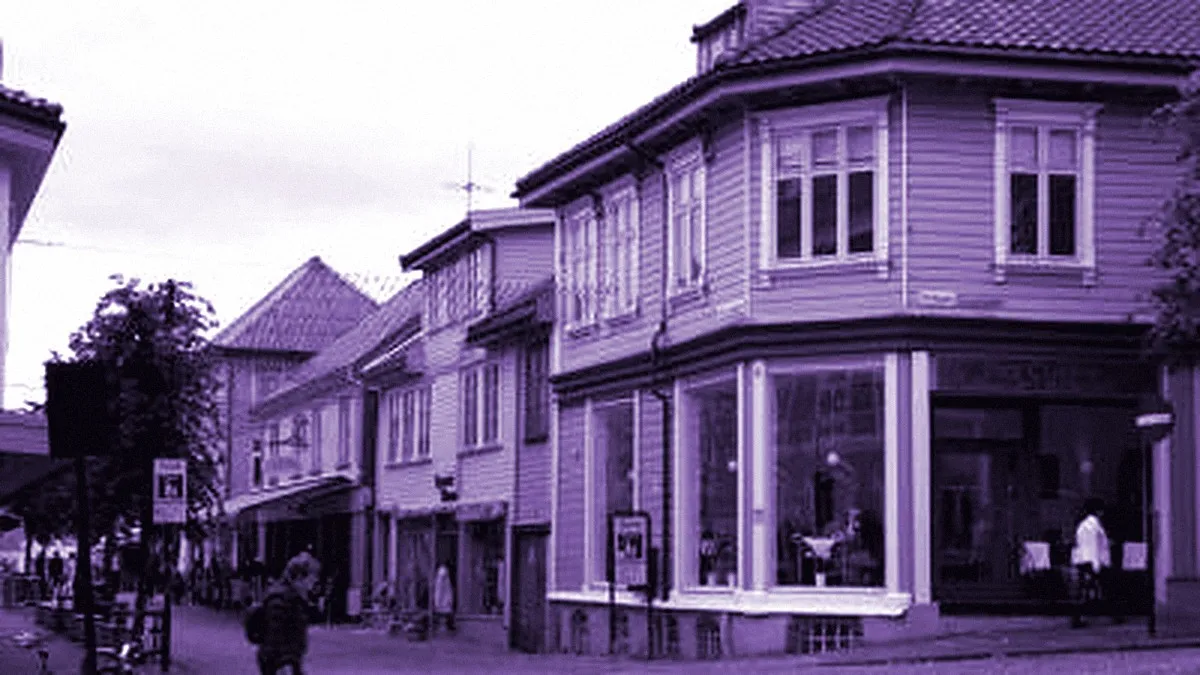
Things to Do in Stavanger: Historic Churches, Museums and Hafrsfjord
Stavanger is a coastal city in southwestern Norway, known for its medieval cathedral, historic churches, museums and connection with the North Sea oil industry. It is also a useful base for exploring the wider region, including the historic islands and Hafrsfjord. Neywo has a free audio guide for Stavanger with 79 narrated places.
What to See and Do in Stavanger
The city’s sights bring together religious history, archaeology, architecture and modern industry. These are some of the most important places to include when deciding what to see in Stavanger.
Stavanger Cathedral
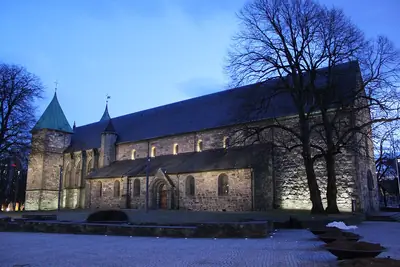
Beside Breiavatnet stands Stavanger Cathedral, also known as Stavanger domkirke. Dating from around 1125, it is Norway’s oldest surviving cathedral building and has retained more of its medieval character than any other cathedral in the country.
The mainly stone building follows a Romanesque design, with three aisles, a raised central nave and round pillars. Its capitals feature intricate carvings, including scenes connected with Ragnarök, the end of the world in Norse mythology. Two towers with narrow lancet windows frame the exterior. Stavanger Cathedral is temporarily closed for renovation.
Ledaal
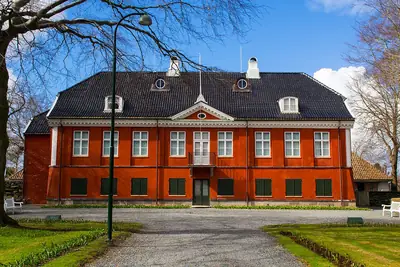
Ledaal is a historic manor house belonging to Museum Stavanger and also serves as the official residence of the King of Norway in Stavanger. The house was built between 1799 and 1803 as a summer residence and country retreat for the Kielland family.
Its name is formed from the final letter of each of the six names of Gabriel Schanche Kielland and his wife, Johanna Margaretha Bull. Before becoming Ledaal, the property was known as Egenes løkke B1 and Canaen.
Breidablikk Museum
Breidablikk Museum occupies a remarkably well-preserved mansion built between 1881 and 1882 for the merchant and shipowner Lars Berentsen. Designed by architect Henrik Nissen, it is regarded as one of Norway’s finest examples of 1880s historicism.
The mansion combines Swiss-style architecture with Romanesque and Gothic influences. Imported teak windows, mahogany doors and thick cut plate glass reflect the wealth and craftsmanship of the period. Outside, an English-style park by gardener Poul H. Poulsson includes winding gravel paths and exotic trees.
Museum of Archaeology, University of Stavanger
The Museum of Archaeology at the University of Stavanger, or Arkeologisk museum, traces the history of Rogaland from the arrival of the first people through the end of the Middle Ages.
Among its most memorable exhibits is “Meet the Man”, featuring Viste-guten, an 8,200-year-old Stone Age skeleton described as Norway’s best-preserved. Another notable object is a 12,400-year-old polar bear skeleton from Finnøy. The permanent exhibition “Warrior and Housewife” presents objects from the Migration Period, from 400 to 550.
Norwegian Petroleum Museum
The Norwegian Petroleum Museum stands at Stavanger’s harbor in a building designed to resemble a small oil platform. Its exhibitions examine Norwegian oil and gas activity, particularly offshore operations in the North Sea.
Objects, films and photographs document the development of the industry, from the first North Sea drilling platforms in the mid-1960s to steel and concrete structures, production ships and subsea systems. The museum opened on 20 May 1999 and covers about 5,000 square metres.
Stavanger Museum and the Norwegian Children’s Museum
Stavanger Museum was founded in 1877 and is now part of Museum Stavanger, known as MUST. Its wider network includes institutions devoted to maritime history, printing, schools, art and canning, as well as historic buildings and collections such as Ledaal.
The Norwegian Children’s Museum, or Norsk Barnemuseum, is one of its distinctive stops. Toys and other objects connected with childhood explore how children have played, grown up and expressed their culture in Norway.
Sverd i fjell
At Mølleberget, at the inner end of Hafrsfjord, three enormous swords rise from the bedrock. Sverd i fjell, or Swords in Rock, commemorates the Battle of Hafrsfjord in 872, when Harald Hårfagre brought Norway together under one kingdom.
Created by sculptor Fritz Røed of Bryne and unveiled by King Olav in 1983, the monument features one large sword representing the victorious king and two smaller swords representing the defeated petty kings. The swords are driven into the rock so they can never be used again, giving the monument a message of peace as well as a link to Norway’s early history.
Medieval Churches Around Stavanger
The islands and communities around Stavanger contain several historic churches. They make worthwhile additions for visitors interested in medieval architecture and the region’s religious past.
Utstein Church
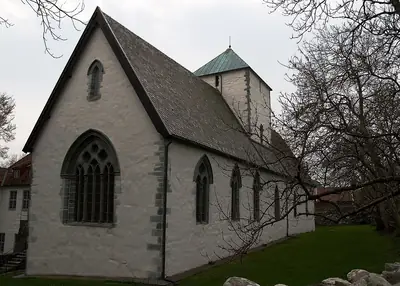
Utstein Church forms part of the historic Utstein Abbey complex on Klosterøy. Built around the thirteenth century, it is a medieval stone long church with an unusual plan: the base of its tower stands between the nave and the chancel.
The church has room for about 300 people and remains an important parish church and tourist destination.
Hesby Church
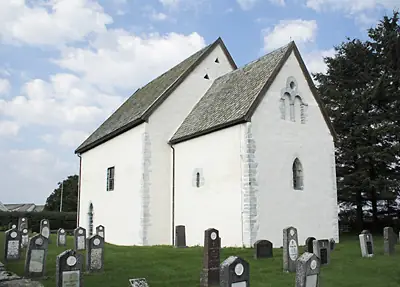
On the island of Finnøy, Hesby Church is a medieval stone parish church generally associated with the middle of the thirteenth century, around 1250. Its walls are more than a metre thick, and its pointed arches reflect a Gothic style, although the building may originally have had a Romanesque form.
Some accounts suggest that an earlier church may have stood on the site as early as around 1100. The western tower was removed in the early nineteenth century.
Sørbø Church
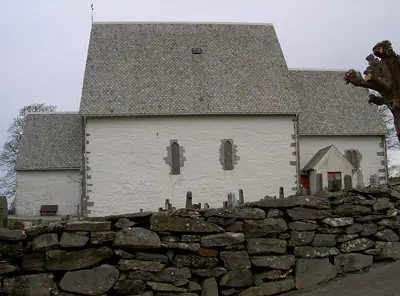
Sørbø Church stands in the village of Sørbø on the island of Rennesøy. Built around 1130 as a royal chapel, it is a simple Romanesque stone long church and one of the oldest places to encounter in this part of Stavanger Municipality.
Today, it is a parish church of the Church of Norway. Its stone construction and modest scale preserve the character of a building that has stood for nearly nine centuries.
Talgje Church
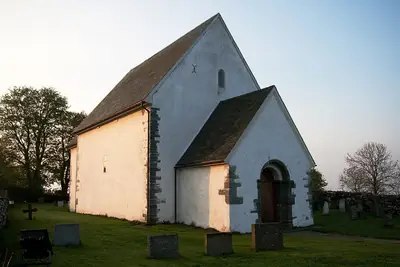
Talgje Church, on the island of Talgje, was built around 1100. The simple stone long church is dedicated to the Virgin Mary and has served the island community for centuries.
Until the Reformation, it belonged to the Roman Catholic Church. It later became part of the Church of Norway and is now a parish church with space for about 126 people.
Sjernarøy Church
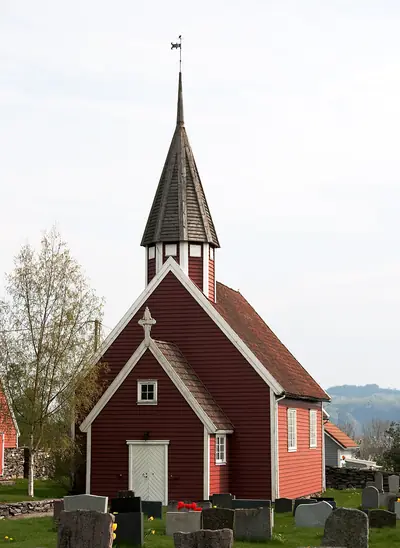
Sjernarøy Church stands on the island of Kyrkjøy and was built in 1636 as a timber long church in the Renaissance style. Its most distinctive feature is the colourful rosemaling covering its walls and ceiling.
The church has red-painted wooden panelling outside and windows only on its south wall. After the painted decoration was covered with whitewash during an earlier restoration, later work helped bring the interior closer to its original appearance.
Askje Church
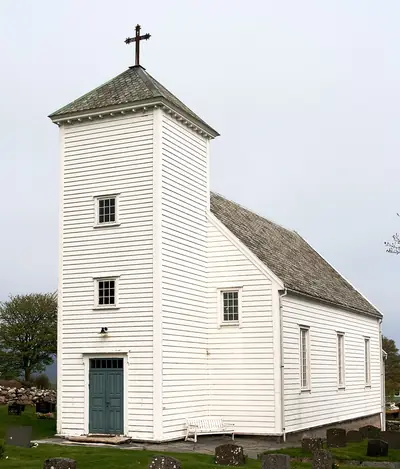
Askje Church, also known as Mosterøy Church, is a white wooden long church in the village of Askje. It has served as the main church of the Mosterøy parish since 1846.
Its design comes from type drawings by architect Hans Ditlev Franciscus von Linstow. The church received its first organ in 1906, with the funds raised through a collection.
St. Petri Church and St. Johannes Church
St. Petri Church has stood beside Hospitalsgaten since 1866. Built from red brick and designed by Fritz von der Lippe, it can hold about 900 people and was the first new church in the city after Stavanger Cathedral.
St. Johannes Church, in the Storhaug area, was built in 1909. Its neo-Romanesque design uses plastered brick and large areas of cut granite, while the treatment of its forms and surfaces shows the influence of Art Nouveau. More than ten thousand people attended the laying of its foundation stone on 8 November 1907.
Explore Stavanger with a Free Audio Guide
A Stavanger self-guided walking tour lets you explore the city without joining a group or following a fixed schedule. Neywo’s free audio guide includes 4 walking tours and 1 bike route, covering 79 narrated places in total. Narration is available in 11 languages.
The walks include:
- Vågen: sailors, sjøhus and the oil age — 1.42 km, 56 minutes and 8 stops
- Cathedral hill: Norway’s oldest cathedral and the main square — 1.58 km, 75 minutes and 9 stops
- Merchant villas, Stone Age bones and the king’s house — 2.98 km, 81 minutes and 7 stops
- Nytorget and the wooden churches of eastern Stavanger — 2.45 km, 81 minutes and 8 stops
The bike route is Hafrsfjord ride: Iron Age farm to the Swords in Rock. It covers 3.9 km, takes 20 minutes and includes 2 narrated stops.
Download Neywo and explore Stavanger at your own pace. The app tells the story of each place as you reach it, with no group and no schedule. If you are continuing through Norway, you can also compare Stavanger with Bergen, Oslo or Tromsø.
Places with an audio guide in Stavanger
8 places in Stavanger with a Neywo audio guide. Each one starts telling its story as you reach it.
Self-guided tours in Stavanger
5 tours in Stavanger, free in the Neywo app. Each stop tells its story as you reach it.
- Bike ride
Hafrsfjord ride: Iron Age farm to the Swords in Rock
A short ride on the Hafrsfjord shore path in the south of Stavanger. Start at the reconstructed Iron Age farm on Ullandhaug and finish at the three giant swords that mark the 872 battle that united Norway.
Jernaldergarden Stavanger · Sverd i fjell
Open this tour: Hafrsfjord ride: Iron Age farm to the Swords in Rock - Walk
Vågen: sailors, sjøhus and the oil age
Stavanger grew rich on herring, sails and ships, and then on North Sea oil. Walk the old merchant quay, past the maritime museum, tall wooden sjøhus and a Jugend customs house, up to Fargegata, the street painted like Miami Vice, then on to the museum shaped like an oil platform and the library and cobbled square of the modern centre.
Stavanger Maritime Museum · Rosenkildetorget · Skagenkaien · Tollboden · Øvre Holmegate · Norwegian Petroleum Museum …
Open this tour: Vågen: sailors, sjøhus and the oil age - Walk
Cathedral hill: Norway's oldest cathedral and the main square
Climb from the market stalls of Torget, where a writer's statue and a shrimp on a column stand, to a fire-watch tower and a toy museum, then into the medieval heart of the city: the Romanesque cathedral of 1125 and the tiny bishop's chapel beside it. Finish at the theatre on the hill's southern side.
Torget · Andemor · Alexander Kielland · Valbergtårnet · Childrens Museum · Domkirkeplassen …
Open this tour: Cathedral hill: Norway's oldest cathedral and the main square - Walk
Merchant villas, Stone Age bones and the king's house
A quieter walk through the western villa quarter. Start at the printing museum in an old canning warehouse, then visit two homes of Stavanger's shipping families: Ledaal, where the king stays when he visits, and the 1880s mansion Breidablikk. Pass the Catholic church of Saint Swithun and finish with Stone Age Norway at the archaeology museum and the natural history of Stavanger Museum.
Norsk grafisk museum · Ledaal · Breidablikk Museum · Museum Stavanger · St Svithun's Church · Museum of Archaeology, University of Stavanger …
Open this tour: Merchant villas, Stone Age bones and the king's house - Walk
Nytorget and the wooden churches of eastern Stavanger
Cross to the eastern side of the centre, where the Saturday flea market fills Nytorget and churches of every denomination stand within a few streets: the brick St. Petri, Methodists, Baptists and the Deaf Church. Finish at St. Johannes and the sailing ship Anna af Sand, built in 1854.
St. Petri Church · Nytorget · Methodist Church in Stavanger · Baptistkirken · Døvekirken · Frue Church …
Open this tour: Nytorget and the wooden churches of eastern Stavanger
Walk Stavanger with Neywo
Neywo turns Stavanger into a self-guided audio tour. Stories arrive as you reach the place they belong to, and the route reshapes when you wander off it.

