Visiting Narvik, Norway: Top Sights on Foot
Things to Do in Narvik, Norway: What to See and Explore
Looking for things to do in Narvik? This northern Norwegian town combines fjords, mountains, railway history, mining, churches and wartime memories. Narvik grew around an ice-free harbour and the Ofoten Railway, which carried iron ore from the LKAB mines at Kiruna in Sweden. Neywo has a free audio guide for Narvik with 18 narrated places, available in 11 languages.
What to See in Narvik
The most interesting places to visit in Narvik and its surrounding communities reveal how closely the area is connected to transport, industry, religion and conflict.
Narvik and its harbour
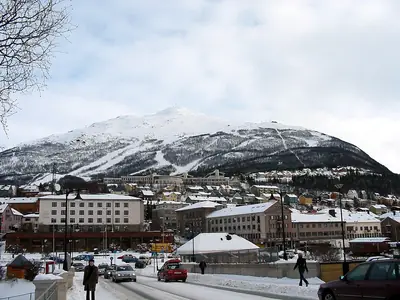
Narvik lies on a peninsula between the Rombaken and Beisfjorden fjords and is the administrative centre of Narvik Municipality in Nordland. The town developed around its ice-free harbour, which became the main port for shipping Swedish iron ore.
The Ofoten Railway helped establish Narvik’s role in transporting and transshipping ore. Its railway area still divides the town centre: Frydenlund lies to the west and Oscarsborg to the east, while Fagernes is to the south. Much of the present-day town was built after the Second World War, although its identity remains tied to the railway, harbour and surrounding mountains.
Museum Nord, Narvik
Museum Nord, Narvik, is one of the best places to understand the town’s industrial past. The museum occupies a brick building at Administrasjonsveien 3, built in 1902 as an administrative building for NSB. It has been used as a museum since 1995 and is an anchor point on the European Route of Industrial Heritage.
The exhibitions cover the construction of the Ofoten Railway, ore shipping, local trade and everyday life in Narvik. They also include displays about the former trading site at Fagernes, the construction of the Hålogaland Bridge and three local boats named Skogøy. The building was occupied by German forces from 1940 to 1945, adding a wartime chapter to its history.
Narvik Church
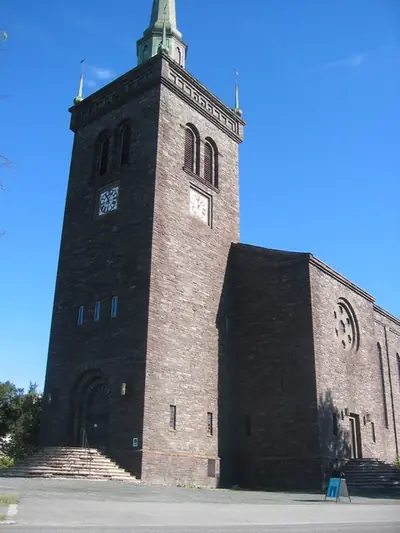
Narvik Church stands in the Frydenlund district and is the main church of the Narvik parish. The large stone building was designed by Olaf Nordhagen in the three-naved long-church style and can seat about 700 people. Its stone came from the Ofotbanen railway quarry at Djupvika.
Consecrated on 16 December 1925, the church replaced the railway’s assembly hall, which had served as an interim church from 1900 to 1925. Narvik Church survived the bombardments of the Second World War. Inside, the altarpiece was painted by Eilif Peterssen.
Fredskapellet
Fredskapellet stands beside Narvik’s main cemetery, between the E6 and the Ofoten Railway near Narvik railway station. The chapel was inaugurated on 14 December 1957, after an earlier chapel on the site was destroyed during the fighting in 1940.
Designed by Jan Inge Hovig, the building has a simple form in reinforced concrete and brick. It is a long church with 266 seats and is closely connected with Narvik’s wartime history.
Ankenes Church
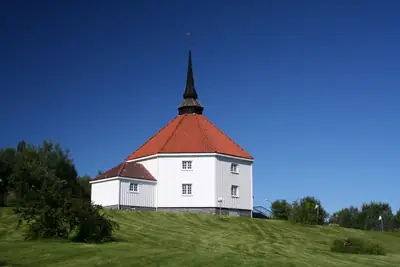
Across the fjord area in Ankenesstranda, Ankenes Church is a distinctive octagonal wooden building dating from 1842. Its onion-shaped roof turret is characteristic of Nordland church architecture from the eighteenth and nineteenth centuries.
The log-timber church has around 290 seats and was consecrated by Bishop Kjerschow on 26 September 1842. It replaced earlier churches on the site, including a small building that had stood there since sometime between 1652 and 1661. Heavy fighting took place around Ankenes on 28 May 1940, and the church still bears marks of the Second World War.
Håkvik Chapel
Håkvik Chapel is a modest wooden church built in 1980. It belongs to the Ankenes parish and follows the traditional long-church layout. Its brown wooden exterior gives it a simple and recognisable presence in the village.
Bjerkvik Church
Bjerkvik Church is a modern concrete-and-brick long church with room for about 320 people. Designed by Arnstein Arneberg and Per Solemslie, it was begun in 1952 and consecrated on 14 August 1955. The altarpiece was painted by Axel Revold.
The church’s story is inseparable from the village’s wartime past. The earlier building, constructed in 1914 as both a school and chapel, was destroyed when Bjerkvik was shelled and set on fire by the Allied fleet on the night between 12 and 13 May 1940. The bell clapper and the lid of the communion wafer box are among the surviving objects from the old building.
Bjørnfjell Chapel
Bjørnfjell Chapel, also called Bjørnfjell Sport Chapel, is a small white wooden building in the rural village of Bjørnfjell, west of the border with Sweden. Built in 1952, it serves as an annex chapel in Bjerkvik parish.
The chapel was designed in the long-church style by Bjarne Romsloe and includes rooms for overnight stays. Narvik Christian Youth Association helped raise the building through voluntary community work. Its setting among holiday cabins gives it a quiet character.
Skjomen Church
In the village of Elvegård, Skjomen Church serves the Skjomen parish. Built in 1893 and consecrated on 17 July of that year, it is a white wooden long church with room for about 240 people.
Its straightforward design and peaceful setting make it a local landmark rather than a grand monument. The building reflects the traditional wooden church architecture found in the wider Narvik area.
Ballangen and Ballangen Church
Ballangen is a former municipality in the Ofoten district, now part of Narvik Municipality. Its landscape includes fjords, mountains and forests, while its history is closely associated with mining. The area became a separate municipality on 1 July 1925 and was incorporated into Narvik Municipality on 1 January 2020, together with the northern part of the former Tysfjord municipality.
In the centre of the village, Ballangen Church stands on Storhaugen. This white wooden long church was consecrated on 6 June 1923 and has room for about 280 people. Its plans were drawn up by Høyer Ellefsen.
Ballangen Museum
Ballangen Museum occupies the former administration building of Bjørkaasen Mines, constructed in 1919. As a branch of Museum Nord, it focuses on the mining activity that took place in Ballangen from the seventeenth century onwards.
The exhibitions use photographs, texts and objects to tell the story of Bjørkaasen Mines. Exploration began in 1910, the company received its operating licence in 1913, and the mine closed in 1964. A visitors’ mine once extended about 600 metres underground, but it is no longer open to the public.
Kjeldebotn Church
Kjeldebotn Church is a white wooden long church built in 1956 for the parish community in Kjeldebotn. The plans were drawn by Liv and Alf Bugge. Sources give its capacity as about 200 people, or 202 seats.
Kjøpsvik Church and Tysfjord
Kjøpsvik Church is a modern white concrete church built in 1975. Designed by Nils Toft, it has room for around 400 people and replaced an older church that had become difficult to maintain and heat.
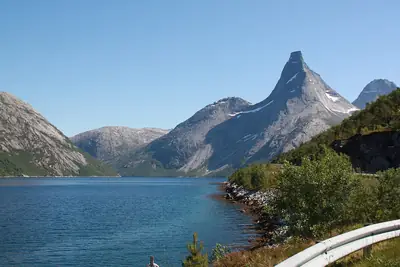
Kjøpsvik lies in Tysfjord, a landscape of steep mountains, valleys, lakes, rivers, islands and coastal headlands. Tysfjord was divided between Narvik Municipality and Hamarøy Municipality in 2020. Its former municipality existed from 1869 until its dissolution on 1 January 2020; the northern part became part of Narvik, while the southern part joined Hamarøy.
Explore Narvik with Neywo
There are no scheduled tours or group departures to organise. Neywo’s free Narvik audio guide includes 18 narrated places, and each story plays as you reach the place, at your own pace, with no group and no schedule. Narration is available in 11 languages.
Download Neywo and explore Narvik while the app tells the story of each church, museum, harbour and historic site as you arrive. For more ideas across the country, continue with Norway, or compare Narvik with Tromsø, Svolvær and Longyearbyen.
Places with an audio guide in Narvik
8 places in Narvik with a Neywo audio guide. Each one starts telling its story as you reach it.
Walk Narvik with Neywo
Neywo turns Narvik into a self-guided audio tour. Stories arrive as you reach the place they belong to, and the route reshapes when you wander off it.

