What to See in Trondheim, Norway: Free Audio Guide
Things to Do in Trondheim: Historic Churches, Museums and Riverside Walks
Trondheim is one of Norway’s most historically important cities, known for Nidaros Cathedral, medieval churches, wooden architecture and its relationship with the Nidelva River. The city is worth visiting for the way its religious, maritime and architectural history can be explored on foot. Neywo also has a free audio guide for Trondheim, with 123 narrated places.
What to See in Trondheim
Nidaros Cathedral
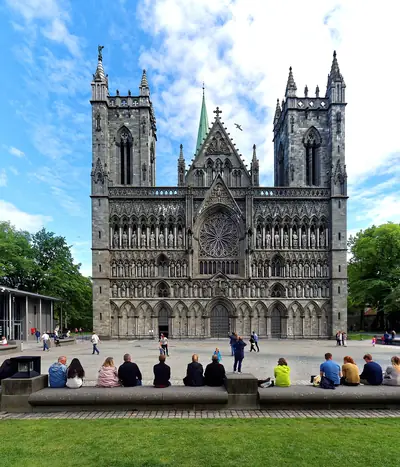
Nidaros Cathedral is Norway’s national shrine and stands above the burial site of Saint Olav, the king associated with bringing Christianity to Norway. The cathedral’s history began around 1070, when it was built over the grave of Olav II, who died at the Battle of Stiklestad in 1030.
The building grew over more than two centuries and was substantially completed around 1300. Its Gothic nave and west front were built in basilica form between about 1250 and 1300. Several major fires damaged the cathedral, and its restoration has continued in stages. The nave, for example, remained a roofless ruin for almost four hundred years after the fire of 1531.
Until the Reformation in 1537, the cathedral was known as Cor Norvegiae, or the Heart of Norway. In the Middle Ages, pilgrims travelled from across Europe to visit Saint Olav’s burial place and seek healing at a spring believed to have appeared where he was first buried.
The Archbishop’s Palace and the Crown Regalia
The Archbishop’s Palace is part of Trondheim’s religious and royal heritage. The nearby Riksregalieutstillingen presents the Norwegian Crown Regalia, while Rustkammeret adds another historic collection to this part of the city.
Together with Nidaros Cathedral, the palace area makes a natural starting point for discovering Trondheim’s medieval past. It is also the focus of Neywo’s Saint Olav’s Trondheim walk, which includes eight narrated stops over 1.06 kilometres.
Vår Frue Church
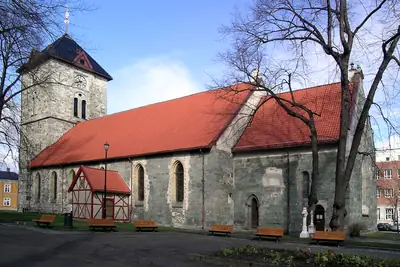
A few blocks from Nidaros Cathedral, Vår Frue Church, or Our Lady’s Church, preserves some of Trondheim’s oldest surviving medieval stonework. The oldest parts date from the late twelfth century and belong to the medieval Mary’s Church.
Apart from Nidaros Cathedral and Lade Church, it is the only surviving medieval church from Trondheim. The building was extended after the Reformation: the nave was lengthened in 1690 and the tower was added around 1740. Fires in 1651, 1681 and 1708 led to further rebuilding, leaving a church that combines medieval masonry with later additions.
Hospitalskirken
Hospitalskirken stands beside Trondhjems Hospital and is recognizable by its unusual eight-sided shape. Built in 1705 and 1706 by Johan Christopher Hempel, it replaced a medieval church on the same site.
Its octagonal design was innovative in Norway and became a model for later churches, including Bakke Church. The timber building has a central octagonal body, a tower, and projecting choir and entrance porch. It also survived Trondheim’s great fires of 1708 and 1842.
Bakke Church
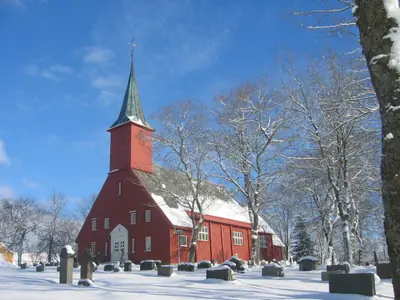
East of the city centre, Bakke Church stands out with its red wooden walls, octagonal plan and tall spire. Completed in 1715, it is one of the few well-preserved buildings from Trondheim’s early eighteenth century.
The church was originally called Anne Dorothea Church, after the wife of Bishop Peder Krog. It is also the oldest building in the Bakklandet area: it survived the Swedish siege of 1718 when the rest of the area was changed by destruction and rebuilding.
Trondheim Maritime Museum
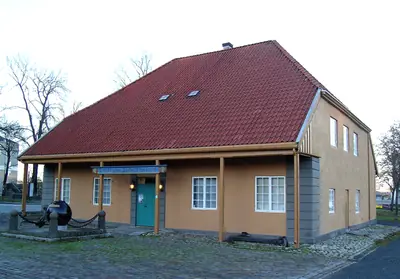
Trondheim Maritime Museum occupies a two-storey wooden building devoted to the city’s long relationship with the sea. Its exhibitions cover maritime trade from the 1600s to the present day, including the age of sailing ships and the transition from sail to steam.
The collection includes sailing-ship models, figureheads, navigational instruments, photographs and paintings of ships from the Trøndelag region. Younger visitors can also explore a more hands-on experience aboard a sailing ship, where they can help the ship’s rat Sivert tie knots and steer the vessel.
Haltdalen Stave Church and Lo Church
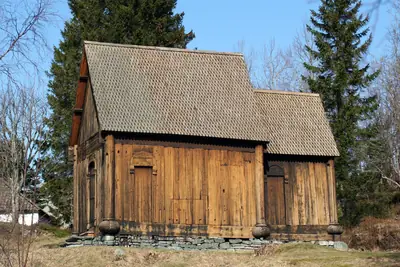
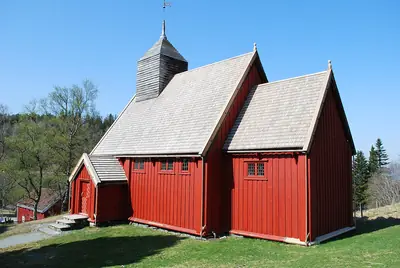
Both Haltdalen Stave Church and Lo Church are located at Sverresborg Trøndelag Folk Museum. Haltdalen Stave Church is a rare example of the east Scandinavian single-nave stave-church tradition. Originally a parish church in Haltdalen, it was dismantled and moved several times before being reconstructed at Sverresborg.
Its simple form includes a rectangular nave and chancel, both covered by steep shingle roofs. The corner posts have large, flattened bulbs, an unusual feature not known from other stave churches.
Lo Church has an equally eventful history. Originally built in the seventeenth century at the innermost part of Lofjorden in Åsen, it was later dismantled, rebuilt on Saltøya and used as a boathouse. It was reconstructed at Sverresborg in 1921, with its original appearance and interior restored.
Byneset Church
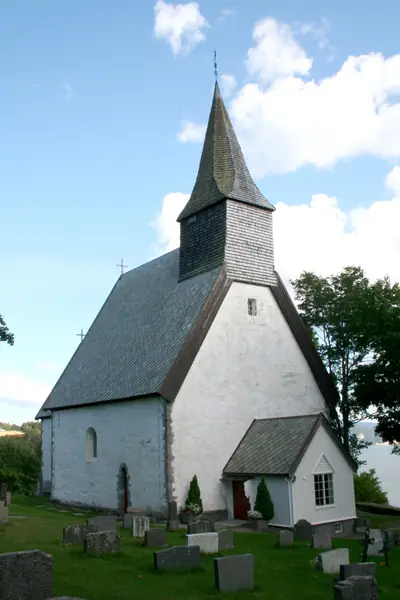
Byneset Church is a twelfth-century Romanesque stone church dedicated to Saint Michael. Its natural-stone walls are covered with white plaster, and the building has a traditional long-church design.
Marks left by stonecutters suggest a connection with the craftsmen who worked on Nidaros Cathedral. The tower was added around 1650, while the porch at the western entrance was built in 1656. Inside, the late-sixteenth-century wall paintings are among the details to look for.
Lade Church
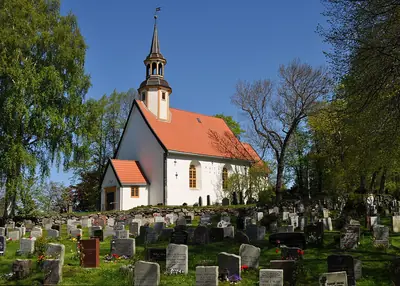
Lade Church is one of Norway’s oldest existing stone churches. The present building was constructed before 1200 and is dedicated to the Holy Cross. Its white-plastered walls and surrounding churchyard give the building a quiet, historic setting in the Lade area.
Much of the masonry was taken down and rebuilt toward the end of the seventeenth century. The year 1694 remains visible on the south wall.
Ilen Church
Ilen Church, also known as Ila Church, stands on the narrow isthmus between the River Nid and the Trondheimsfjord. Built in 1889 in the Neo-Gothic style, it has grey stone walls and carved façades.
The church was designed by Eugene Sissenére and built by the local company of Jacob Digre. Financial difficulties meant that the planned vaulted brick ceilings were replaced with wood. Inside, the organ dates from the same year as the church, while the Renaissance-style altarpiece was added in 1932.
Other historic churches around Trondheim
Trondheim’s wider area contains several more distinctive churches. Leinstrand Church is a red wooden parish church dating from 1673, while Klæbu Church is a white wooden church with an octagonal plan, built in 1790. Its altarpiece, The Adoration of the Shepherds, was created in the same year.
Bratsberg Church is a white timber church in the shape of a cross, built in 1850 to plans by Hans Linstow. Havstein Church, built in 1857, is a stone long church surrounded by fields and Havstein Cemetery. Strinda Church, also known as Moholt Church, dates from 1900 and combines a white wooden exterior with Neo-Gothic design.
Trondheim Self-Guided Walking Tour with Neywo
Neywo’s free audio guide lets you explore Trondheim without joining a group or following a fixed schedule. The app tells the story of each place as you reach it, at your own pace. Narration is available in 11 languages.
The Trondheim collection includes five walking tours and one bike route:
- Five walking tours, ranging from 1.06 to 1.82 kilometres and lasting from 49 to 84 minutes.
- One bike route, 2.7 kilometres long and lasting 14 minutes.
- 46 narrated stops across the six tours.
The walks cover Nidaros Cathedral and the Archbishop’s Palace, Munkegata, the harbour and Old Town, Kalvskinnet and Ila, and Sverresborg. The bike route follows the waterfront from Ila to Brattøra, with stops including Ilen Church, Hospitalskirken, Trondheim Maritime Museum and Rockheim. Altogether, the free city audio guide includes 123 narrated places.
Download Neywo and Explore Trondheim at Your Own Pace
Download Neywo to turn a visit to Trondheim into a self-guided audio walk. Stories begin as you arrive at each place, so you can pause, look around and continue whenever you are ready—with no group and no schedule.
Trondheim is part of Trøndelag, a region that also includes Røros and Levanger. For more ideas across the country, continue exploring Norway.
Places with an audio guide in Trondheim
8 places in Trondheim with a Neywo audio guide. Each one starts telling its story as you reach it.
Self-guided tours in Trondheim
6 tours in Trondheim, free in the Neywo app. Each stop tells its story as you reach it.
- Bike ride
Waterfront Ride: Ila to Brattøra
A flat ride on dedicated cycle lanes along the Nidelva and Trondheim's harbour. Pass the octagonal wooden Hospitalskirken, the fishermen's sculpture at Ravnkloa, the Maritime Museum and Rockheim, Norway's pop and rock museum.
Ilen Church · Hospitalskirken · Den siste viking · Idungården · Trondheim Maritime Museum · Rockheim
Open this tour: Waterfront Ride: Ila to Brattøra - Walk
Saint Olav's Trondheim: Cathedral, Palace and Crown Jewels
Follow the pilgrims' footsteps to Norway's national shrine, built over the grave of Saint Olav. Explore the medieval archbishop's palace, the crown regalia kept here since 1826, the armoury, the Norwegian art museum and the former railway station that became a synagogue and Jewish museum. The walk ends at the Catholic cathedral and the museum of deaf culture.
Trondheim art museum · Nidaros Cathedral · Archbishop's Palace, Trondheim · Riksregalieutstillingen · Rustkammeret · Jødisk museum Trondheim …
Open this tour: Saint Olav's Trondheim: Cathedral, Palace and Crown Jewels - Walk
Munkegata: The Avenue Built After the Fire
Stroll Trondheim's grand central avenue, laid out after the great fire of 1681 to run straight from the cathedral to the sea. Pass the Neo-Renaissance town hall, the courthouse with its Norse lawmaker, the Viking-king monument on the square, a medieval church, the huge wooden palace of Stiftsgården, the Walk of Peace and the art-nouveau post office that is now a modern art museum. It ends at the fishermen's quay at Ravnkloa.
Thomas Angells hus · Trondheim rådhus · National Museum of Decorative Arts · Trondheim Courthouse · Olav Tryggvason monument · Vår Frue Church …
Open this tour: Munkegata: The Avenue Built After the Fire - Walk
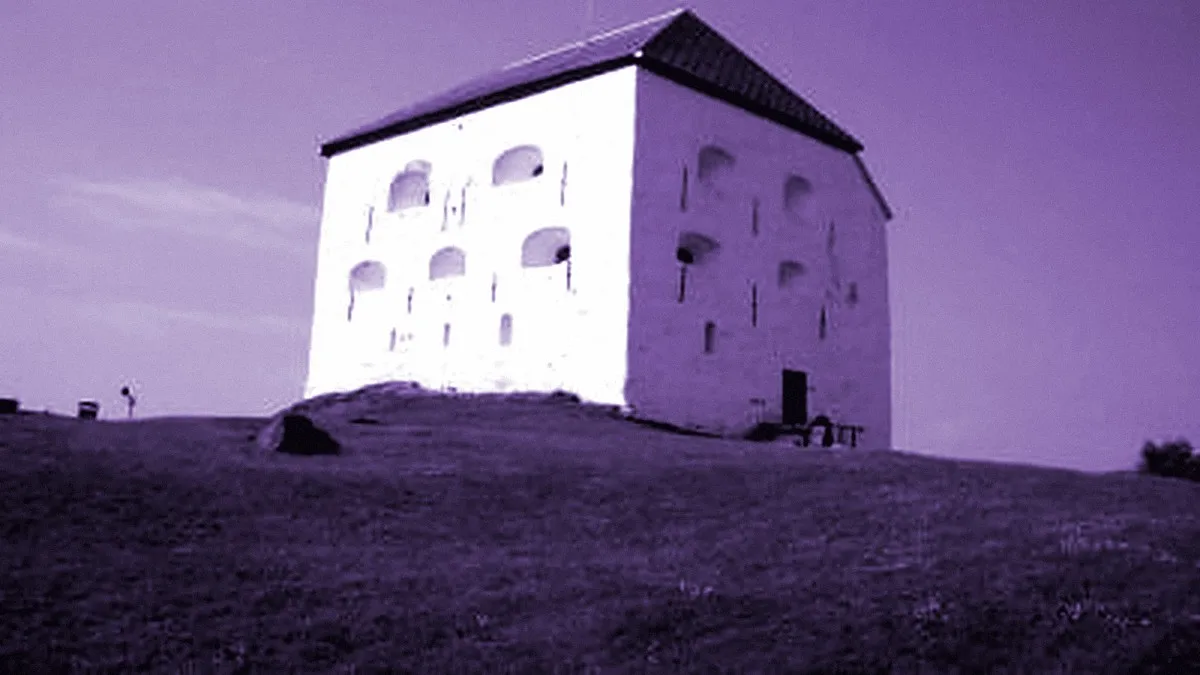
The Harbour, Old Town and Kristiansten Fortress
Start at the harbour museum and the concert hall, pass the Methodist church and the site of Trondheim's first church, then walk through the old library and science museum to the carved gateways of the Old Town Bridge. Cross into the wooden-house quarter of Bakklandet, try the world's first bicycle lift and finish by climbing to Kristiansten Fortress for the view along the axis of the cathedral.
Trondheim Maritime Museum · Olavshallen Concert Hall · Metodistkirken · Klemenskirken i Trondheim · Trondheim Science Museum · Kunsthall Trondheim …
Open this tour: The Harbour, Old Town and Kristiansten Fortress - Walk
Kalvskinnet and Ila: Theatres, a Museum and an Octagonal Church
Walk west from the cathedral through the old wooden Kalvskinnet quarter. See Norway's oldest theatre building, the former National Stage and the NTNU University Museum, then follow the river to the oldest octagonal church in Norway, the Museum of Justice in a former prison and the Neo-Gothic Ila church.
Trondhjems nationale Scene · Trøndelag Teater · NTNU University Museum · Hospitalskirken · The Norwegian National Museum of Justice · Ilen Church
Open this tour: Kalvskinnet and Ila: Theatres, a Museum and an Octagonal Church - Walk
Sverresborg: King Sverre's Fortress and the Folk Museum
Ride up to the hill west of the city to the ruins of King Sverre's medieval fortress. Wander through the open-air Trøndelag Folk Museum with its sixty old buildings, the twelfth-century Haltdalen stave church and the ship-turned-boathouse Lo church, and finish at the modern Sverresborg church.
Sverresborg · Sverresborg Trøndelag Folk Museum · Haltdalen Stave Church · Lo Church · Sverresborg church
Open this tour: Sverresborg: King Sverre's Fortress and the Folk Museum
Walk Trondheim with Neywo
Neywo turns Trondheim into a self-guided audio tour. Stories arrive as you reach the place they belong to, and the route reshapes when you wander off it.

