Oslo, Norway: Self-Guided Walking Tour
Things to Do in Oslo: Museums, History and Waterfront Walks
Wondering what to do in Oslo? Norway’s capital brings together royal and religious history, important museums, modern architecture and memorable city walks. From the marble roof of the Oslo Opera House to the medieval traces of Gamlebyen, there is plenty to discover on foot. Neywo offers a free audio guide for Oslo with 330 narrated places.
What to See in Oslo
Oslo Opera House
The Oslo Opera House stands in Bjørvika, at the head of the Oslofjord, and is home to the Norwegian National Opera and Ballet. Designed by Snøhetta, it opened on 12 April 2008 and quickly became one of the city’s defining landmarks.
Its angled exterior is covered with Carrara marble from Italy and white granite, giving the building the appearance of rising directly from the water. The roof is an attraction in its own right, while the interior contains 1,100 rooms, including a main auditorium with 1,364 seats and two additional performance spaces.
MUNCH
The MUNCH building is another major landmark in Bjørvika. Completed in 2020, it was designed by Juan Herreros of Abalos & Herreros and is known as “Lambda”, the name used by its architect.
The museum is dedicated to Edvard Munch and holds the works he left to the City of Oslo in his will in 1940. Its exhibitions present the breadth of Munch’s art alongside contemporary art and international exhibitions. MUNCH also hosts concerts, performances, talks and activities for children and young people.
Akershus Fortress and Forsvarsmuseet
Akershus Fortress brings Oslo’s military and royal history together on the waterfront. Within the fortress, Forsvarsmuseet occupies an old arsenal building used for storing military supplies. The museum has been located there since 1860 and focuses on Norway’s military history, with a collection made up largely of army equipment.
The fortress also contains the historic Akershus Castle Church, or Garrison Church. There has probably been a church or chapel at Akershus since the early fourteenth century. The present appearance of the church largely reflects a major restoration carried out between 1738 and 1740.
Oslo Cathedral
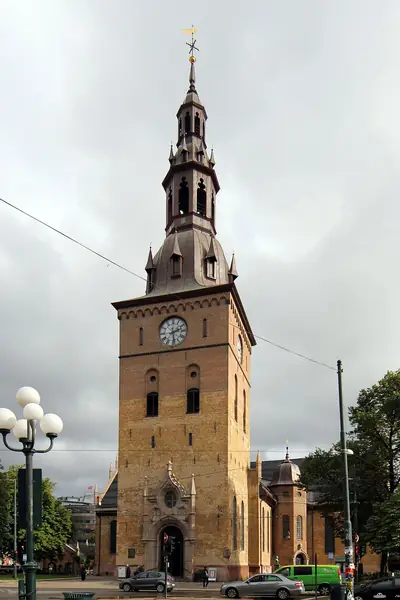
Oslo Cathedral stands at Stortorvet in the centre of the city. Known in Norwegian as Oslo domkirke, it is the main church of the Diocese of Oslo and the parish church for the city centre.
The present building is the third cathedral in Oslo’s history. Parts of earlier churches were reused in it, connecting the structure with the city’s religious past. Major changes took place during a rebuilding in the 1850s and another restoration led by Arnstein Arneberg before Oslo’s 900th anniversary in 1950. The church was then renamed Oslo Cathedral; it had previously been called Our Savior’s Church.
Karl Johans gate and the Royal Palace
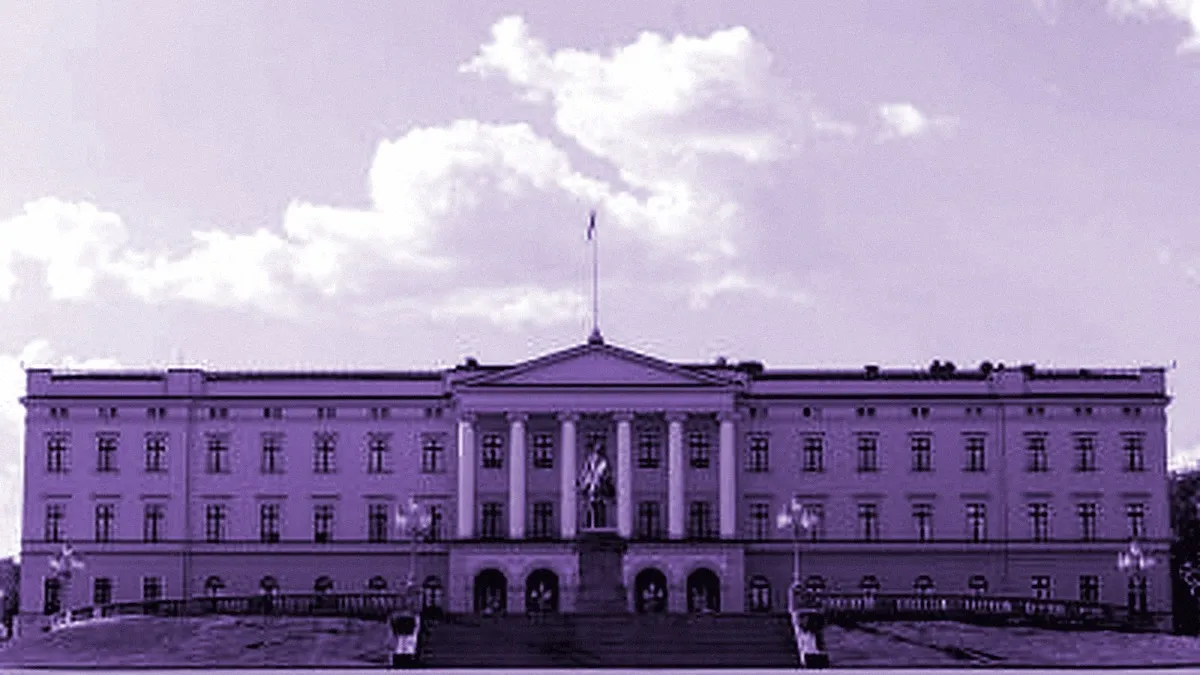
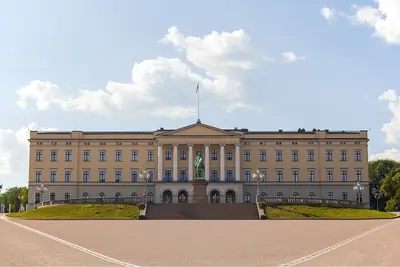
Karl Johans gate leads through Oslo’s historic civic centre towards the Royal Palace. At the top of the avenue, the palace stands beside Palace Park and Palace Square. It is the official residence of Norway’s monarch, as well as the home and workplace of the royal family and the Royal Court.
Completed in 1849, the palace was built in the first half of the nineteenth century as the Norwegian residence of Charles XIV John, who was king of both Norway and Sweden. Between 1849 and 1905, it served as the official residence of the Swedish-Norwegian court during visits to Norway. From 1905, it became the home of Norway’s new royal family.
The Neoclassical building has three floors and three wings. Along the way to the palace, the historic centre also includes the Parliament and the National Theatre.
Gamlebyen and Oslo Ladegård
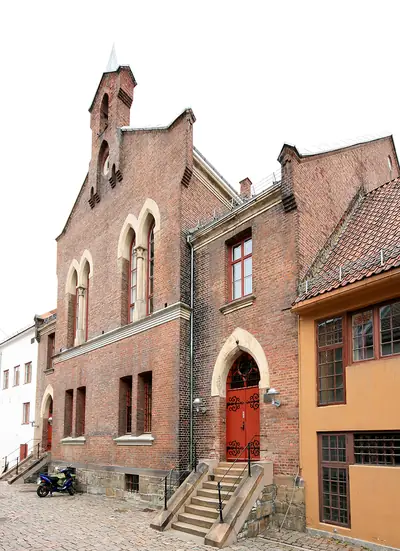
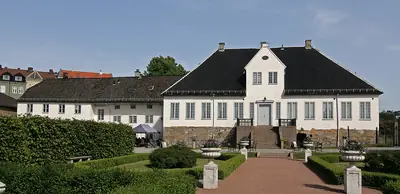
Gamlebyen preserves traces of medieval Oslo, including historic churches and archaeological remains. Oslo Ladegård is one of its most distinctive historic buildings: a baroque manor house built in 1725 by Karen Toller after a fire in 1722.
The estate garden follows the central axis of the house and was reconstructed from a pattern dating to 1779. Beneath the building, the cellar preserves traces of an older bishop’s palace. After Christiania was founded in 1624, the former medieval city grounds became a supply estate for Akershus Fortress, providing food and animal fodder.
The Viking Ship Museum and Museum of Cultural History
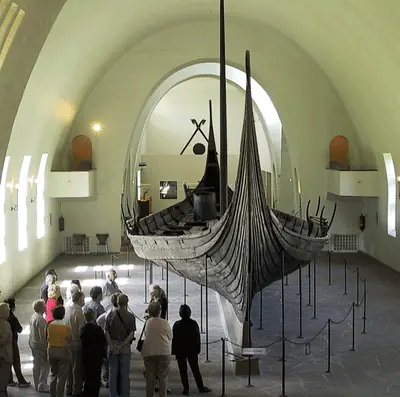
The Viking Ship Museum building at Bygdøy is currently closed for rebuilding and is planned to reopen in 2027. Its collections preserve three Viking Age burial ships—the Tune, Gokstad and Oseberg ships—as well as objects discovered in burial mounds associated with these finds and the Borre mound cemetery.
The museum belongs to the Museum of Cultural History at the University of Oslo. That organisation brings together collections covering archaeology, history and cultures from around the world. Its holdings include medieval church objects, a rune archive, Norway’s largest collection of historical coins and an extensive ethnographic collection with objects from every continent.
Other museums in Oslo
Oslo’s museum landscape extends well beyond the city centre and Bygdøy.
The Oslo Geological Museum, in the Botanical Garden at Tøyen, belongs to the Natural History Museum at the University of Oslo. Its scientific collections include rocks, minerals and paleontological material. Nearby, the Oslo Zoological Museum presents Norway’s wildlife in dioramas stretching from the coast to the high mountains, including bear, lynx, wolf and wolverine. Its collections also include the extinct great auk and thylacine.
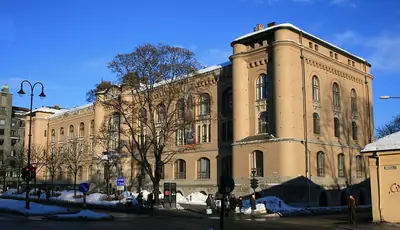
The Historical Museum in Oslo has welcomed the public since 1904. Its building originally served three university museums: the University’s Collection of Antiquities, the Coin Cabinet and the Ethnographic Museum.
At Frogner Park, the Henriette Wegner Pavilion is a small classical tea pavilion and art gallery. Built around 1824 at Blaafarveværket, it was moved to Frogner in 1837 after Henriette and Benjamin Wegner took over Frogner Manor. Its octagonal design is inspired by Greco-Roman architecture, while a painted ceiling miniature recalls Rome’s Pantheon.
Villa Stenersen is one of the major works of Norwegian functionalist architecture. Designed by Arne Korsmo and built between 1937 and 1939, it was created for Rolf Stenersen and his family as both a home and a gallery for his art collection.
Linderud gård, a former large farm in Oslo’s Linderud district, is now a protected cultural heritage site and part of MiA—the Museums in Akershus.
Explore Oslo with a Free Audio Guide
Neywo helps you turn sightseeing into an Oslo self-guided walking tour. The app has seven walking tours, one bus route and one bike route in the city, with stories that play as you reach each place, at your own pace, with no group and no schedule. Narration is available in 11 languages.
The routes include:
- From the Opera Roof to the Fortress Walls: 2.47 km, 117 minutes and 10 narrated stops.
- Karl Johans gate: Cathedral to Royal Palace: 2.51 km, 116 minutes and 12 stops.
- Nobel Waterfront: Art, Peace and City Hall: 3 km, 100 minutes and 9 stops.
- Vigeland Park: Gustav Vigeland’s World in Bronze and Granite: 2.43 km, 86 minutes and 9 stops.
- Gamlebyen: Medieval Oslo and its Churches: 2.2 km, 89 minutes and 9 stops.
- Bygdøy: Vikings, Polar Ships and a Stave Church: 2.15 km, 85 minutes and 7 stops.
- Holmenkollen: The Ski Jump and the Forest Chapel: 2.21 km, 52 minutes and 4 stops.
- Bus 30: Bygdøy to the Customs House via the Cultural Spine: 6.3 km, 27 minutes and 8 stops.
- Oslo Harbour Promenade by Bike: 2.6 km, 13 minutes and 7 stops.
Download Neywo and explore Oslo as you walk, ride or take the bus. The app tells the story of each place when you reach it, so you can discover the city independently and at your own pace. It is also a useful way to continue exploring Norway, from Bergen and Stavanger to Tromsø.
Places with an audio guide in Oslo
8 places in Oslo with a Neywo audio guide. Each one starts telling its story as you reach it.


Self-guided tours in Oslo
9 tours in Oslo, free in the Neywo app. Each stop tells its story as you reach it.
- Bike ride
Oslo Harbour Promenade by Bike
Ride the flat harbour-side cycle lanes from the Customs Museum past the Defence Museum and Akershus Castle, through Christiania Torv to City Hall and the new National Museum.
Norsk tollmuseum · Forsvarsmuseet · Akershus slott · Norwegian Museum of Contemporary Art · Christiania Torv · Oslo City Hall …
Open this tour: Oslo Harbour Promenade by Bike - Bus ride
Bus 30: Bygdoy to the Customs House via the Cultural Spine
A regular city bus along Oslo's cultural spine. Ride from the Pharmacy History Museum past Frogner church, the National Library, the Ibsen Museum and the National Theatre to Parliament and the harbour front.
Norsk Farmasihistorisk Museum · Frogner Church · National Library of Norway · Ibsen Museum · Statue of Haakon VII of Norway in Oslo · Nationaltheatret Metro Station …
Open this tour: Bus 30: Bygdoy to the Customs House via the Cultural Spine - Walk
From the Opera Roof to the Fortress Walls
Start where Oslo's new waterfront rises from the fjord: the Munch Museum, the marble opera house and a turning glass iceberg. Then cross to medieval Akershus, with its castle, military museum and memorials to the Second World War.
Munch Museum · Oslo Opera House · She Lies · Festningsplassen · Nasjonalmonumentet for krigens ofre 1940-45 · Forsvarsmuseet …
Open this tour: From the Opera Roof to the Fortress Walls - Walk
Karl Johans gate: Cathedral to Royal Palace
Walk Oslo's ceremonial axis from the cathedral that hosts state occasions, past parliament, the National Theatre and the old National Gallery, to the palace at the top of the hill. Ends at the Ibsen Museum, the playwright's last home.
Oslo Domkirke · Stortorvet · Stortinget · Studenterlunden · Nationaltheatret Metro Station · Bjørnstjerne Bjørnson …
Open this tour: Karl Johans gate: Cathedral to Royal Palace - Walk
Nobel Waterfront: Art, Peace and City Hall
Oslo's west harbour: the Astrup Fearnley modern art museum, the Aker Brygge waterfront, a magic museum, the National Museum, a museum of Norwegian modernism and the Nobel Peace Center, finishing at the City Hall where the prize is awarded every December.
Astrup Fearnley Museum of Modern Art · Bryggetorget · Tryllemuseet · Stenersen Museum · Nasjonalmuseet · Nobel Peace Center …
Open this tour: Nobel Waterfront: Art, Peace and City Hall - Walk
Vigeland Park: Gustav Vigeland's World in Bronze and Granite
Norway's most visited sculpture park, with more than two hundred figures by one artist: the angry boy, the great fountain, the Monolith of entwined bodies and the Wheel of Life. Start with Frogner church and the park's pavilion and city museum, end at the Vigeland Museum.
Frogner Church · Frogner plass · Henriette Wegner pavilion · Oslo City Museum · Vigeland Museum · Angry Boy …
Open this tour: Vigeland Park: Gustav Vigeland's World in Bronze and Granite - Walk
Gamlebyen: Medieval Oslo and its Churches
Oslo began here, east of the harbour, in the Middle Ages. Walk past St Mary's, St Clement's and the Gamlebyen church, the ruins of St Hallvard's cathedral and Oslo Ladegard, the old manor, to St Hallvard's church and monastery.
St Mary's Church · St. Clement's Church · Erik Schia's plaza · Gamlebyen Church · St. Hallvard's Cathedral · St. Halvard's plaza …
Open this tour: Gamlebyen: Medieval Oslo and its Churches - Walk
Bygdoy: Vikings, Polar Ships and a Stave Church
The museum peninsula: the polar ship Fram, the Kon-Tiki raft, the Maritime Museum, the Viking ships, the Museum of Cultural History and its medieval Gol stave church.
Fram Museum · Kon-Tiki Museum · Norwegian Maritime Museum · Viking Ship Museum · Norwegian Museum of Cultural History · Gol Stave Church …
Open this tour: Bygdoy: Vikings, Polar Ships and a Stave Church - Walk
Holmenkollen: The Ski Jump and the Forest Chapel
A short hill-top outing above Oslo: Voksen church, the Holmenkollen ski museum beneath the famous ski jump and the little wooden Holmenkollen chapel.
Voksen Church · Holmenkollen Ski Museum · Holmenkollbakken · Holmenkollen Chapel
Open this tour: Holmenkollen: The Ski Jump and the Forest Chapel
Walk Oslo with Neywo
Neywo turns Oslo into a self-guided audio tour. Stories arrive as you reach the place they belong to, and the route reshapes when you wander off it.

