Things to Do in Angra do Heroísmo, Portugal: Walking Guide
Things to do in Angra do Heroísmo: a self-guided walk through the historic city
Angra do Heroísmo is a historic city on Terceira Island in the Azores, shaped by centuries of maritime trade, religious life and Atlantic defence. Its UNESCO World Heritage centre brings together cathedrals, convents, palaces, museums and fortifications, making it one of the most rewarding places to explore in the Azores. Neywo has a free audio guide for Angra do Heroísmo with 19 narrated places, available in 11 languages.
What to see in Angra do Heroísmo
The historic centre is compact enough to explore on foot, but its monuments reveal remarkably different sides of the city: sacred architecture, military strategy, public power and private wealth.
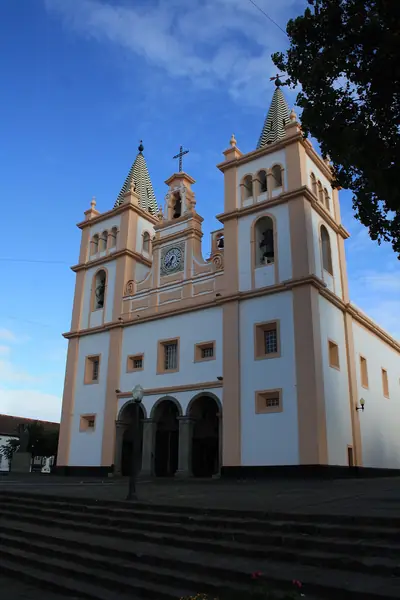
Sé Cathedral of Angra do Heroísmo
The Sé Cathedral is the seat of the Bishopric of Angra, whose jurisdiction covers the entire Azores archipelago. It is the city’s largest religious building and stands at the centre of its UNESCO-listed historic area.
The present structure began in 1570 on the site of the earlier Church of São Salvador, probably founded in 1496. Its sober façade and two bell towers contrast with the interior, where a cedar-wood ceiling and 17th-century azulejos create a warmer, more elaborate atmosphere. The cathedral has been restored several times, including after the 1980 earthquake and a major fire in 1984.
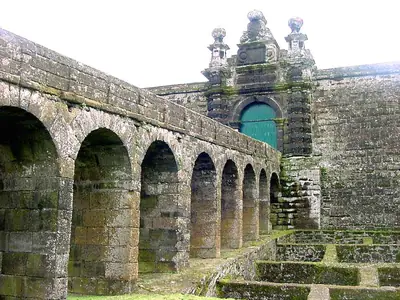
Fort of São João Baptista
At the base of the Monte Brasil peninsula, the Fort of São João Baptista is the most imposing military monument in the Azores. Construction began in 1593, during the period of Spanish rule over Portugal, and continued for more than four decades.
Its position controlled the narrow connection between Monte Brasil and the rest of Terceira. The fortress guarded both the Bay of Angra and the Bay of Fanal, while forming part of a wider Atlantic defensive strategy connected with Havana and Cartagena de Indias. Its bastions show how military planners concentrated their forces at a strategic point instead of fortifying the entire coastline.
Forte de São Sebastião
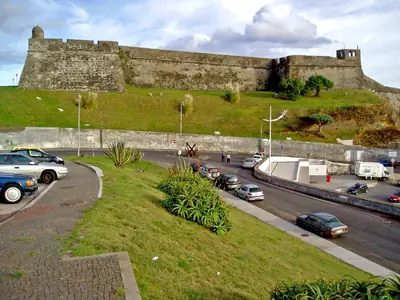
Known locally as the Castelinho, Forte de São Sebastião occupies a small rise above Angra’s old harbour. It was the first major sea fort built to protect the city, and its guns could cross fire with the larger fortress on Monte Brasil to close the entrance to the bay.
The compact fort follows the contours of the hill, with low, thick walls designed to withstand cannon fire. The original stonework can still be traced along the ramparts. Today, its former garrison buildings house the Pousada de São Sebastião. The fort was classified as a Property of Public Interest in 1967, while Angra’s historic centre became a UNESCO World Heritage Site in 1983.
Palácio dos Capitães-Generais
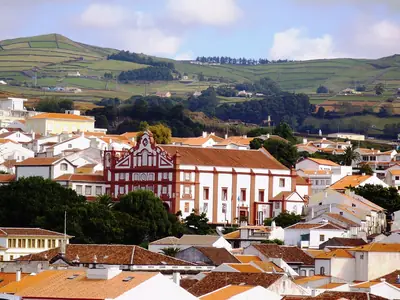
For more than four centuries, the Palácio dos Capitães-Generais was a centre of civil power in the Azores. The building began in 1595 as the Jesuit Colégio da Ascensão, a large complex that included a college, study courtyard and church.
It later became the seat of the Captaincy General and a royal residence for Pedro IV and Carlos I of Portugal. After the Carnation Revolution of 1974, it housed the regional presidency and the island’s government council. It remains one of the official seats of the Presidency of the Regional Government of the Azores.
Palácio Bettencourt
Palácio Bettencourt is one of the historic mansions in the centre of Angra. It was the private residence of the Bettencourt family, a lineage of French aristocrats who settled in the Azores.
The building now has a public role as the home of the municipal library and regional archive. Its change from family residence to centre of research reflects the way Angra’s historic buildings continue to serve the city.
Solar de Nossa Senhora dos Remédios
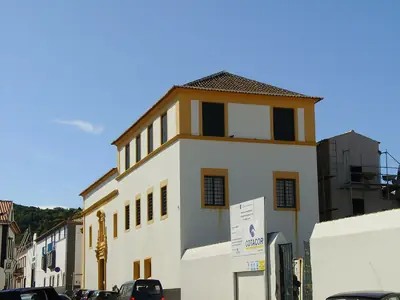
In the Corpo Santo neighbourhood, the Solar de Nossa Senhora dos Remédios forms an architectural ensemble with the Chapel of Nossa Senhora dos Remédios. It is also known as the Solar dos Remédios or Solar do Provedor das Armadas, a name connected with the naval administration that supplied the Azorean fleets.
The manor and chapel have been classified as a Property of Public Interest since 1980. Their stonework and proportions offer a glimpse of the wealth accumulated during Angra’s time as an important Atlantic port.
Palacete Silveira e Paulo
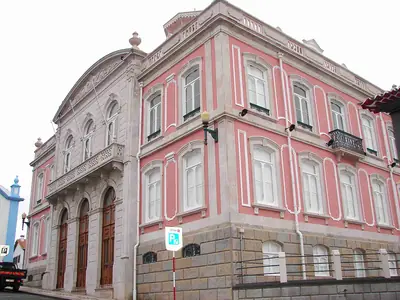
On Rua da Conceição, the Palacete Silveira e Paulo represents a later chapter in Angra’s architectural history. Completed in the late nineteenth century, it is considered one of the finest examples of Azorean civil architecture from the transition between the 1800s and 1900s.
Its façade combines traditional island building techniques with European influences that reached the Azores during this period.
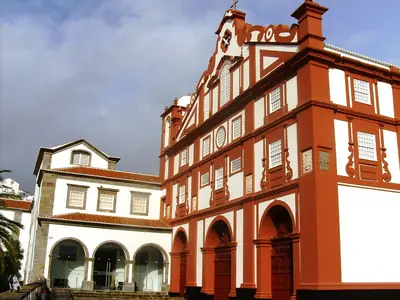
Convent of São Francisco
The Convent of São Francisco is one of the largest religious complexes in the Azores. During the Age of Discovery, it served as the headquarters of the Franciscan Province of São João Evangelista, bringing together friars from across the islands.
Its church, Igreja de Nossa Senhora da Guia, is particularly notable for its scale and is among the largest Christian temples in the archipelago. The convent is also home to the Museu de Angra do Heroísmo, making it an important place to combine architecture with local history.
Museu de Angra do Heroísmo
The Museu de Angra do Heroísmo occupies the former Convent of São Francisco in the heart of the UNESCO World Heritage Site. Its collections tell the story of Portugal’s relationship with the Azores, as well as the history and culture of Terceira and Angra.
The convent’s cloisters and halls are part of the experience. The museum’s wider story extends beyond the main building to sites across the island, covering subjects that include religious traditions, coastal defence, contemporary creativity and wartime history.
Convent of São Gonçalo
The Convent of São Gonçalo is the oldest and largest convent in the Azores. At its height, more than a hundred Clarisse sisters lived there, but the convent also played an important educational role.
For generations, it was the islands’ leading school for young women. As many as two hundred students studied music, choral singing, drawing, painting and literature there. Its Baroque architecture reflects the scale and influence of the institution.
Hospital da Boa Nova
Founded in the 1580s as the Royal Hospital, the Hospital da Boa Nova served as Angra’s military hospital for more than three hundred years. It closed to patients in 1943, after a new military hospital opened at Terra Chã.
The former wards now house the military collection of the Museu de Angra do Heroísmo. The attached Ermida da Boa Nova, also called the Chapel of Our Lady of Boa Nova, received its own heritage classification in 1962.
Church of Nossa Senhora da Conceição
The Church of Nossa Senhora da Conceição, also known as the Sanctuary of Our Lady of the Conception, is one of the oldest religious buildings in Angra. Located in the historic centre’s Conceição parish, it shares that distinction with the Sé Cathedral.
Both churches have watched over the city since its earliest days. The Church of Nossa Senhora da Conceição has been classified as a Property of Public Interest since 1980.
Igreja da Misericórdia
The Igreja da Misericórdia stands in the Pátio da Alfândega, where Rua Direita meets Rua do Santo Espírito. Its location places it directly within the historic centre, close to the spaces where Angra’s religious and commercial life developed.
Church of São Pedro
The Church of São Pedro is the parish church of Angra’s São Pedro district. It is included among the historic places that can be discovered on foot through the city centre.
Miradouro do Pico das Cruzinhas
At 168 metres above sea level, the Miradouro do Pico das Cruzinhas occupies one of the four summits of Monte Brasil. It offers wide views over Angra’s historic centre, the Bay of Angra do Heroísmo, the Bay of Fanal and the Bay of Villa Maria.
From the viewpoint, the south coast stretches towards the Ilhéus das Cabras islets, Porto Judeu, Ribeirinha and São Mateus da Calheta. The ports and marina are also visible, and on a clear day São Jorge and Pico appear on the horizon.
Explore Angra do Heroísmo with Neywo
Neywo offers an Angra do Heroísmo self-guided walking tour experience through two walking routes:
- The Heroic City: Where Angra Governed the Atlantic — 2.52 km, 89 minutes and 10 narrated stops.
- Forts, Convents and Manor Houses of Angra — 3.02 km, 91 minutes and 9 narrated stops.
The free audio guide tells the story of each place as you reach it, at your own pace, with no group and no schedule. Download Neywo and explore Angra do Heroísmo while the city’s monuments, fortifications and historic buildings unfold around you. If you are continuing through the archipelago, you can also discover Ponta Delgada, Horta or Pico Island.
Places with an audio guide in Angra do Heroísmo
8 places in Angra do Heroísmo with a Neywo audio guide. Each one starts telling its story as you reach it.
Self-guided tours in Angra do Heroísmo
2 tours in Angra do Heroísmo, free in the Neywo app. Each stop tells its story as you reach it.
- Walk
The Heroic City: Where Angra Governed the Atlantic
A UNESCO-listed old town where Jesuit palaces, a cedar-ceilinged cathedral and a 19th-century theatre sit within a few streets. You cross the squares where the Azores were ruled, then climb the garden to the Hill of Memory for a view over the rooftops. The walk ends in the great Franciscan convent that now holds the island museum.
Church of São Pedro · Teatro Angrense · Sé Cathedral of Angra do Heroísmo · Palácio Bettencourt · Igreja da Misericórdia · Palácio dos Capitães-Generais …
Open this tour: The Heroic City: Where Angra Governed the Atlantic - Walk
Forts, Convents and Manor Houses of Angra
From the sea fort at the eastern edge of town you pass the 16th-century manors of the Remedios quarter, then head west through the oldest convent in the Azores and the old royal hospital. The walk finishes at the huge bastioned fortress on Monte Brasil and the viewpoint above it, the best vantage over the bay and the city.
Forte de São Sebastião · Solar de Nossa Senhora dos Remédios · Palacete Silveira e Paulo · Church of Nossa Senhora da Conceição · Convent of São Gonçalo · Hospital da Boa Nova …
Open this tour: Forts, Convents and Manor Houses of Angra
Walk Angra do Heroísmo with Neywo
Neywo turns Angra do Heroísmo into a self-guided audio tour. Stories arrive as you reach the place they belong to, and the route reshapes when you wander off it.

