Pico Island, Portugal: Self-Guided Walking Tour
Things to Do in Pico Island: Volcanoes, Whaling Heritage and Atlantic Landscapes
Wondering what to do in Pico Island? This Azorean island brings together Portugal’s highest mountain, volcanic caves, historic churches, whaling heritage and viewpoints over the Atlantic. Its distinctive landscapes reveal both the force of volcanic activity and the communities that made life here possible.
Pico Island belongs to the Azores, an autonomous region of Portugal. Neywo has a free audio guide for Pico Island with 39 narrated places, available in 11 languages.
What to See in Pico Island
The island’s sights range from Mount Pico and underground lava formations to small chapels, churches, museums and reminders of its maritime past. These are some of the most important places to include when exploring Pico.
Mount Pico
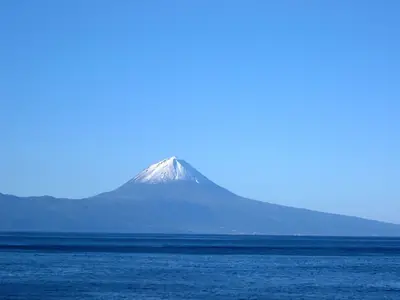
Mount Pico, known in Portuguese as Montanha do Pico, is a striking stratovolcano rising to 2,351 metres. It is the highest mountain in Portugal and has been a nature reserve since 1972.
At the summit, the volcano has a crater approximately 500 metres across and 30 metres deep. Within it stands Piquinho, or Pico Pequeno, a smaller volcanic cone rising 70 metres above the crater and forming the actual peak.
Climbing Mount Pico requires a fee and a permit, available online or on site. Every hiker must carry a tracker capable of sending an emergency signal. The western route is a demanding mountain hike with about 1,100 metres of elevation gain.
Gruta das Torres
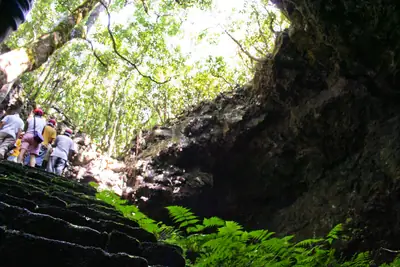
The Gruta das Torres, or Grotto of Towers, is the largest known lava tube in Portugal. Its passages extend for more than five kilometres beneath Pico Island. The cave formed when lava from an eruption flowed out from the area known as Cabeço Bravo, probably between 500 and 1,500 years ago.
The main entrance, Algar da Ponte, leads from the island’s vegetation into an underground environment of ferns, mosses and lichens before daylight disappears completely. Inside, the cave contains moulds, bacteria and specialised cave life, along with interconnected passages and different forms of lava, including aa and pahoehoe. Lava stalactites are among the formations to look for underground.
Gruta das Torres has been protected as a Regional Natural Monument since 2004.
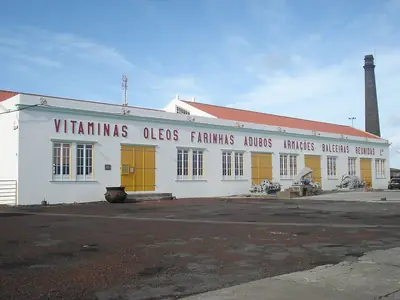
Museu da Indústria Baleeira
In São Roque do Pico, the Museu da Indústria Baleeira offers an introduction to the island’s industrial heritage. It forms part of the Regional Museum Network as an extension of the Museu do Pico.
The museum is particularly notable for being the first museum of industrial archaeology opened to the public in the Azores. It provides an important perspective on the industries that shaped Pico’s communities.
Museu dos Baleeiros
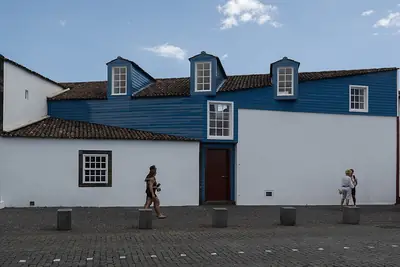
The Museu dos Baleeiros in Lajes do Pico focuses on the island’s whaling heritage. It occupies the Conjunto dos Três Barracões Baleeiros e Oficinas de Ferreiro Anexas, a group of three whalers’ sheds with adjoining blacksmith workshops.
The complex has been classified as a Property of Public Interest since 1980. Its buildings preserve a direct connection with the maritime work that once played a significant role in life on Pico.
Forte de Santa Catarina
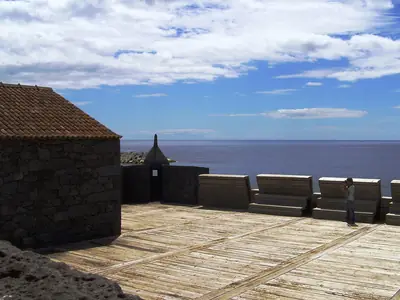
Forte de Santa Catarina, also called Santa Catarina Castle or Santo António Castle, stands above the coast at Lajes do Pico. This small fortification was built to defend the anchorage against pirates and privateers, whose attacks were once frequent in this part of the Atlantic.
It is the only surviving example of military architecture on Pico Island, giving it a particularly distinctive place in the island’s cultural heritage.
Vigia da Queimada
Vigia da Queimada, on Ponta da Queimada, is another reminder of Pico’s whaling past. Built in 1939, this lookout supported the pursuit of sperm whales during the Azores’ whaling era.
Although its purpose has changed, the building remains one of the most distinctive surviving traces of that period.
Igreja de São Mateus
The Igreja de São Mateus stands in the parish of São Mateus, in the municipality of Madalena. It is regarded as one of the richest and most majestic churches on Pico Island.
Its scale and architectural presence make it one of the island’s notable religious landmarks.
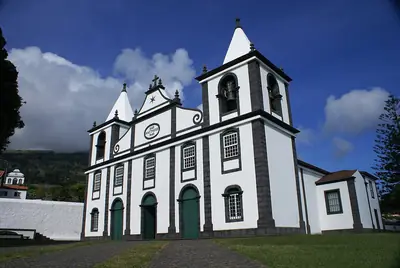
Church of Santo António
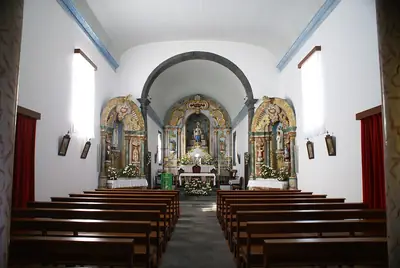
The Church of Santo António is in the parish of Santo António, a few kilometres from Cais do Pico. The first parish church was built shortly after 1696, after Bishop António Vieira Leitão promoted its construction.
The present church has a spacious interior, an elegant entrance portal and a tower topped by a weather vane. Its main chapel contains a richly carved, entirely gilded altarpiece dedicated to Santo António. The church also houses an image of Nossa Senhora da Saúde and an organ that arrived after the Franciscan convent at Cais do Pico was dismantled.
Ermida de Santa Margarida
In Terra do Pão, in the parish of São Caetano, the Ermida de Santa Margarida is a small chapel dedicated to Saint Margaret. Its construction dates from the nineteenth century, with the year 1879 displayed on the façade.
The date offers a simple but visible connection with the chapel’s origins.
Igreja de Nossa Senhora de Fátima
The Church of Our Lady of Fátima stands in Pontas Negras, in the parish of Ribeiras. This modern Catholic church reflects the generosity of the local community and of Portuguese Americans.
Its foundation stone was laid on 13 July 1948, and the church was blessed on 6 August 1950. On the main altar, Our Lady of Fátima stands between Saint John and Saint Anthony. The side altars display images of the Sacred Heart of Jesus, Saint Philomena and Saint Joseph.
Miradouro de São Miguel Arcanjo
The Miradouro de São Miguel Arcanjo lies within the Prainha Forest Reserve, in the parish of Prainha. From this viewpoint, the northern coast of Pico Island opens out alongside the surrounding Azorean landscape.
It is a peaceful place to take in the relationship between the island’s forest and its coastline.
Ponto do Moinho
At Ponto do Moinho, in São Roque do Pico, a windmill forms part of the island’s cultural heritage. It is identified as Moinho de vento, property of Manuel José Peixoto Baptista Simas, and may also be known as Moinho da Avenida do Mar.
Churches and Chapels Around Lajes do Pico
Lajes do Pico contains several religious landmarks worth adding to a route. The Church of Santíssima Trindade, or Igreja da Santíssima Trindade, is a historic church in the parish and municipality of Lajes do Pico.
In nearby São João, the Church of São João Baptista dates from the nineteenth century and remains part of the parish’s architectural history.
The Mid-Atlantic Ridge
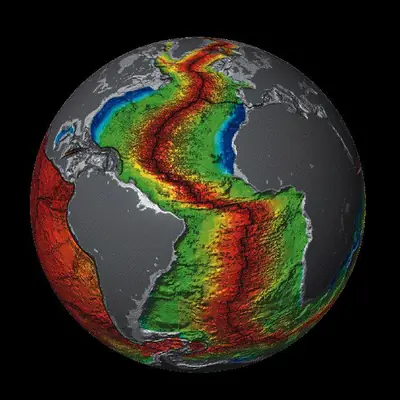
Pico’s volcanic character is part of a much larger geological setting. Far beneath the Atlantic lies the Mid-Atlantic Ridge, part of the longest mountain range in the world. Most of it is underwater, but some of its highest points rise above sea level as oceanic islands, while other peaks remain submerged as seamounts.
The ridge extends beneath the Atlantic and Arctic Oceans, from around 87 degrees north to Bouvet Island in the subantarctic at 54 degrees south.
Explore Pico Island with Neywo
If you are looking for a Pico Island self-guided walking tour, Neywo offers two walks with 39 narrated places available across the city audio guide. The walks are:
- São Roque do Pico: Baroque Convent, Windmill and Whaling Museum — 5.7 km, 111 minutes and 6 stops.
- Lajes do Pico: The Whalers’ Coast — 3.01 km, 68 minutes and 5 stops.
The routes include places such as the Museu da Indústria Baleeira, Moinho de vento, Vigia da Queimada, Museu dos Baleeiros and Forte de Santa Catarina. Each story plays as you reach the place, at your own pace, with no group and no schedule.
Download Neywo and explore Pico Island with a free audio guide that narrates the island’s volcanoes, museums, churches, viewpoints and coastal heritage as you walk. If your Azores trip continues elsewhere, you can also discover Horta, Ponta Delgada, Vila Franca do Campo or Angra do Heroísmo.
Places with an audio guide in Pico Island
8 places in Pico Island with a Neywo audio guide. Each one starts telling its story as you reach it.
Self-guided tours in Pico Island
2 tours in Pico Island, free in the Neywo app. Each stop tells its story as you reach it.
- Walk
São Roque do Pico: Baroque Convent, Windmill and Whaling Museum
A coastal walk on the north shore of Pico: a church with a gilded altarpiece, a chapel by the sea, the first industrial-archaeology museum in the Azores, a Baroque convent, a windmill on Avenida do Mar and the church of São Roque with its ivory-inlaid ambo.
Church of Santo António · Ermida da Mãe de Deus · Museu da Indústria Baleeira · Igreja de São Pedro de Alcântara · Moinho de vento (propriedade de Manuel José Peixoto Baptista Simas), Ponto do Moinho · Igreja de São Roque
Open this tour: São Roque do Pico: Baroque Convent, Windmill and Whaling Museum - Walk
Lajes do Pico: The Whalers' Coast
Whaling shaped Lajes do Pico. Walk from the 1939 whale lookout to the Whalers Museum in its old boat sheds, the Franciscan convent and the island's only surviving fort, built against pirates.
Vigia da Queimada · Church of Santíssima Trindade · Museu dos Baleeiros (Lajes, Azores) · Convent of São Francisco · Forte de Santa Catarina
Open this tour: Lajes do Pico: The Whalers' Coast
Walk Pico Island with Neywo
Neywo turns Pico Island into a self-guided audio tour. Stories arrive as you reach the place they belong to, and the route reshapes when you wander off it.

