Loulé, Portugal: Self-Guided Walking Tour
Things to Do in Loulé: What to See in the Algarve Town
Looking for things to do in Loulé? This historic town in Portugal’s Algarve brings together castle walls, churches, Roman remains, traditional villages and distinctive landscapes. It is a rewarding place to explore beyond the coast, with sights spread through the municipality and a strong connection to the region’s Islamic, Christian and Roman past.
Neywo offers a free audio guide for Loulé with 18 narrated places, available in 11 languages.
What to See in Loulé
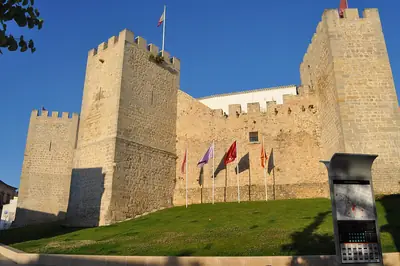
Castle of Loulé
The Castle of Loulé is one of the clearest reminders of the town’s long history. Originally built during the Islamic occupation, which began in 715, it probably replaced an earlier Roman fortification. Christian forces took the castle in the late thirteenth century during the Reconquest, after which it was rebuilt and enlarged.
The town later expanded around it, and much of the original fortress disappeared. Three towers and sections of the surrounding walls remain today. The ruins were classified as a National Monument on 20 June 1924.
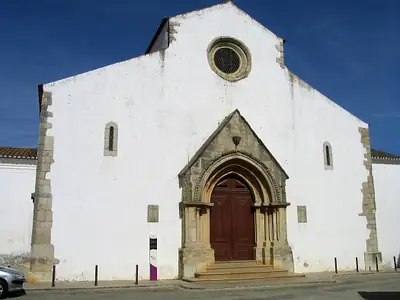
Igreja Matriz de Loulé
The Igreja Matriz de Loulé, also known as the Igreja de São Clemente or Igreja Paroquial de São Clemente de Loulé, is a cultural heritage monument in the city. It is one of the historic religious buildings to include on a walk through Loulé’s centre.
Porta e Cruzeiro da Misericórdia de Loulé
The Porta e Cruzeiro da Misericórdia de Loulé, also known as the Igreja da Misericórdia, contributes to the historic character of the town. Its doorway and cross are part of a cultural heritage monument in Loulé.
Convento de Santo António
The Convento de Santo António is another cultural heritage monument in Loulé. Together with the town’s churches, castle remains and historic streets, it helps reveal the religious and architectural history of the old town.
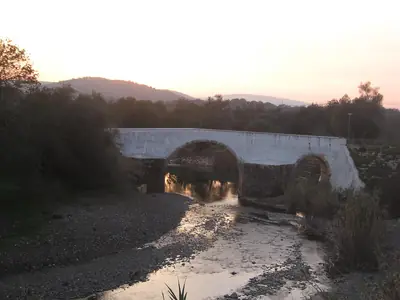
Ponte de Tôr
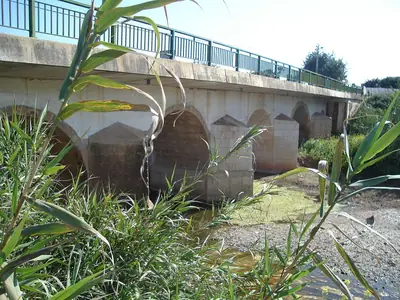
South of Tôr, the Ponte de Tôr crosses the Quarteira stream. Also called the Roman Bridge of Tôr, it was built along a secondary Roman road linking Milreu, near Faro, with Salir near Loulé. The bridge has two semicircular arches whose form is typical of Roman construction.
Its history has sometimes been associated with Muslim building or the sixteenth century and the reign of Dom Sebastião. The Portuguese coat of arms on the bridge is now understood as evidence of restoration, possibly carried out in the fifteenth century or even earlier. Since 2019, the Ponte de Tôr has been classified as a Municipal Monument of Interest.
Castle of Salir
The Castle of Salir stands in a village in the municipality of Loulé and preserves the remains of an Almohad fortress. Built in the twelfth century during the Muslim period, it was taken by Christian forces in the middle of the following century during the Christian reconquest of the Algarve.
After the battle, the fortress was burned and later rebuilt. It was eventually abandoned, and many of its walls were reused in buildings in the village. As a result, the castle’s history can still be found in Salir’s later architecture, even though little of the original structure survives.
The village’s main church, the Igreja Matriz de Salir, also known as the Church of São Sebastião, is another historic monument to see nearby.
Museu Casa Rosa in Alte
In Alte, Museu Casa Rosa is an ethnographic museum offering a glimpse into the cultural life of this part of Portugal. The village is also home to the Igreja de Nossa Senhora da Assunção, or Igreja Matriz de Alte, the parish church of Alte and a notable religious building in the municipality.
Rocha da Pena
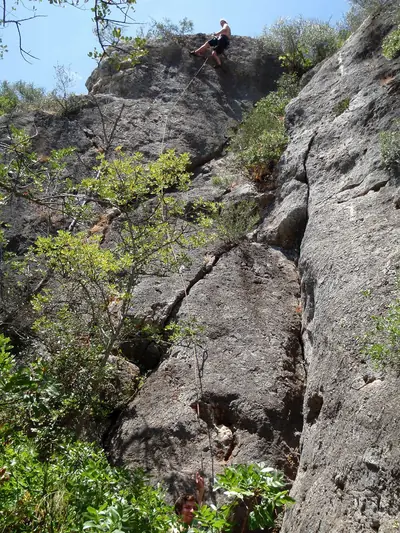
Rocha da Pena is a prominent limestone elevation in the Barrocal, the natural subregion between the Algarve hills and coast. Its broad plateau and high rocky cornice create one of the most distinctive landscapes around Loulé.
The summit reaches 479 metres, while the limestone cornice rises about 50 metres. The plateau extends for approximately two kilometres. Water erosion has shaped the rock into karst formations, including the cave known as Algar dos Mouros. According to legend, the cave sheltered Moors after the conquest of Salir by D. Paio Peres Correia.
Roman Ruins of Cerro da Vila
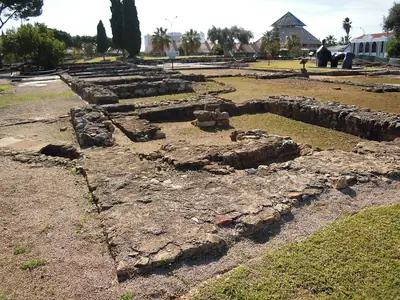
Near Vilamoura and its marina, the Roman Ruins of Cerro da Vila preserve the remains of an ancient settlement connected to agriculture, fishing and the water. At its centre was a wealthy rural residence, surrounded by a productive community. The site also included a necropolis and port structures.
Cerro da Vila was therefore more than an isolated country house: it was a working settlement linked to both the land and the coast. It continued to be occupied after the Roman period, during the Visigothic and Islamic periods, before being abandoned in the eleventh century. The ruins were classified as a Property of Public Interest in 1977.
Igreja de São João da Venda
The Igreja de São João da Venda is a cultural heritage monument in the municipality of Loulé. It adds another historic religious site to the wider selection of places to visit around the town.
Estádio Algarve
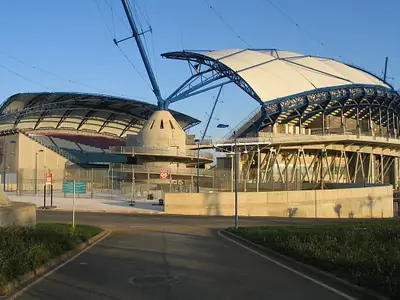
Between the municipalities of Faro and Loulé, Estádio Algarve is a major football venue built especially for the UEFA Euro 2004 championship. It was inaugurated on 23 November 2003 and has a total capacity of 30,305 spectators. Since 2023, 22,000 seats have been made available for football matches because of security concerns.
The stadium’s first official match took place on 1 January 2004, when Sporting Clube Farense and Louletano Desportos Clube played a friendly game. The design was created by the Australian firm HOK Sport. Estádio Algarve hosted two matches during Euro 2004 and is classified by UEFA as an elite stadium.
Ponte Barão
Also known as Ponte do Barão, Ponte Barão crosses the Quarteira River near the Roman villa of Retorta. The bridge has Roman and medieval roots and once formed part of a route linking Ossónoba, the city known today as Faro in the source tradition, with the western Algarve, including Silves.
It has been rebuilt several times, so its current appearance does not clearly show its original form. Even so, the bridge preserves the memory of an old route across the river and the connections between important places in the Algarve’s past.
Church of São Lourenço in Almancil
The Church of São Lourenço, also known as São Lourenço dos Matos, has a relatively restrained exterior and an exceptionally elaborate interior. The building has been protected as a monument of public interest since 1946.
Inside, painted tiles cover the single nave, side altars, main chapel and spherical dome. The panels date from 1730 and are signed by Policarpo de Oliveira Bernardes, a leading figure among Portuguese tile masters. Their scenes tell episodes from the life and miracles of Saint Lawrence, culminating in his martyrdom. The twelve side pillars represent virtues leading towards sainthood, while the choir displays the three theological virtues.
Explore Loulé with a Self-Guided Walking Tour
Neywo’s Loulé self-guided walking tour, “Moors, Franciscans and Mercy: Loulé’s Old Town”, covers 1.85 km in about 61 minutes and includes five narrated stops:
- Porta e Cruzeiro da Misericórdia de Loulé
- Igreja Matriz de Loulé
- Castle of Loulé
- Restos da Igreja da Graça
- Shrine of Our Lady of Mercy
The app tells the story of each place as you reach it, at your own pace, with no group and no schedule. It is a simple way to follow a route through Loulé’s historic centre while learning about the buildings around you.
Download Neywo and Explore Loulé
Download Neywo to explore Loulé with one walking tour, 1.85 km long, lasting 61 minutes and featuring five narrated stops. The free audio guide covers 18 narrated places in total, with narration available in 11 languages.
You can also continue exploring the region of Faro, discover more of Portugal, or compare Loulé with nearby destinations such as Faro, Albufeira, Olhão, Tavira and Lagos.
Places with an audio guide in Loulé
8 places in Loulé with a Neywo audio guide. Each one starts telling its story as you reach it.
Self-guided tours in Loulé
1 tour in Loulé, free in the Neywo app. Each stop tells its story as you reach it.
- Walk
Moors, Franciscans and Mercy: Loulé's Old Town
Loulé's compact old town holds the layers of Algarve history: Islamic walls with three surviving towers, a convent ruined after a public auction, and churches where local devotion has survived. End at the shrine of Mãe Soberana, centre of the biggest religious festival south of Fátima.
Porta e cruzeiro da Misericórdia de Loulé · Igreja matriz de Loulé · Castle of Loulé · Restos da Igreja da Graça · Shrine of Our Lady of Mercy
Open this tour: Moors, Franciscans and Mercy: Loulé's Old Town
Walk Loulé with Neywo
Neywo turns Loulé into a self-guided audio tour. Stories arrive as you reach the place they belong to, and the route reshapes when you wander off it.

