Things to Do in Lagos, Portugal: Walking Guide
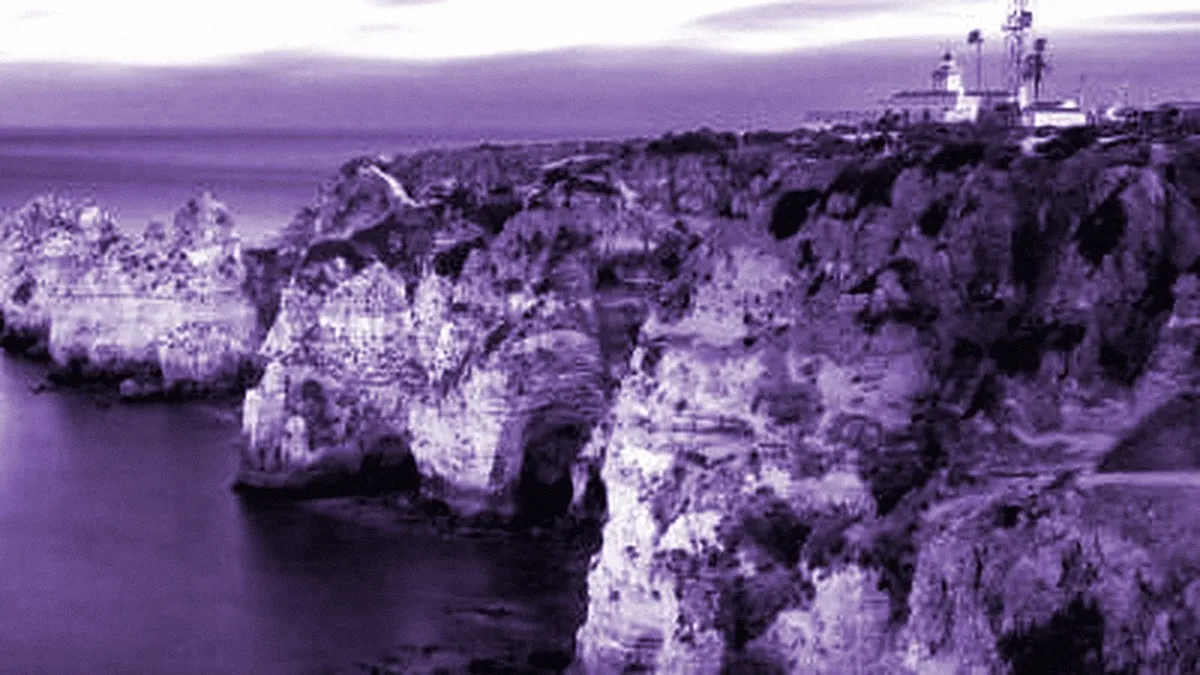
Things to do in Lagos, Portugal: a self-guided journey through history and the coast
The best things to do in Lagos combine maritime history, military architecture, churches, markets and dramatic beaches. The Portuguese city’s past is closely tied to the sea, from the fortified harbour and the voyages associated with Henry the Navigator to the sobering history of the Old Slave Market. Neywo offers a free audio guide for Lagos with 20 narrated places, available in 11 languages.
Lagos is in the Algarve, in the Faro region of Portugal. Its historic centre and coastline make it a rewarding city to explore on foot, with important sights spread between the old harbour, the city walls and the beaches to the south.
What to see in Lagos
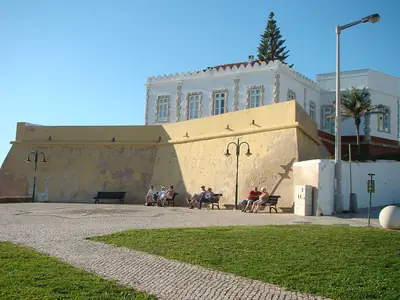
Forte da Ponta da Bandeira and the harbour
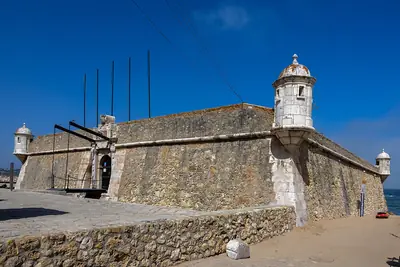
Forte da Ponta da Bandeira stands at the mouth of the Bensafrim River, where it guarded the entrance to Lagos harbour. Built to control access from both the river and the sea, the 17th-century fort has thick stone walls, corner turrets and firing platforms.
The building was badly damaged by the 1755 earthquake and repaired soon afterwards. It later underwent restoration in the 19th century and major modifications in the 1950s and 1960s, when it became a nautical centre. Since the 1970s, it has had cultural functions. Its entrance is reached by a permanent stone bridge followed by a wooden drawbridge, whose mechanism is no longer operational.
Palácio dos Governadores and the old defences
Palácio dos Governadores occupies a strategic position along Lagos’s ancient walls, overlooking the harbour. The site was first fortified by the Romans, while later Arab and Christian authorities strengthened the defensive circuit.
The structure seen today largely dates from the late 15th and 16th centuries, when Lagos became important during Portugal’s maritime expansion. It also served as the residence of the governors of the Algarve. At the entrance, two barbican-style towers project slightly forward from the wall, giving the gateway a particularly distinctive appearance.
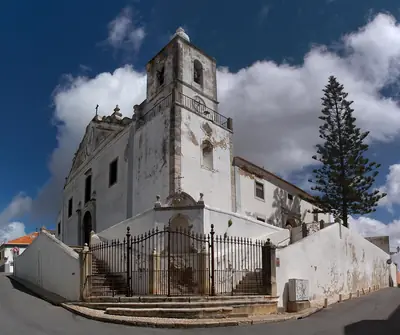
Igreja de Santa Maria
The Church of Santa Maria has been used continuously as a place of worship since 1448. The site developed after the Christian Reconquest and became closely connected with Lagos’s growth as a maritime and administrative centre.
The present building reflects several periods of reconstruction. It was destroyed in the 1755 earthquake and later damaged by fires in the 18th and 19th centuries. Its whitewashed façade is relatively restrained, with two bell towers and decorative stone and metalwork. The main architectural highlight is a 16th-century Renaissance doorway framed by two Doric columns—the element of the façade that survived the 1755 earthquake.
The Statue of Henry the Navigator
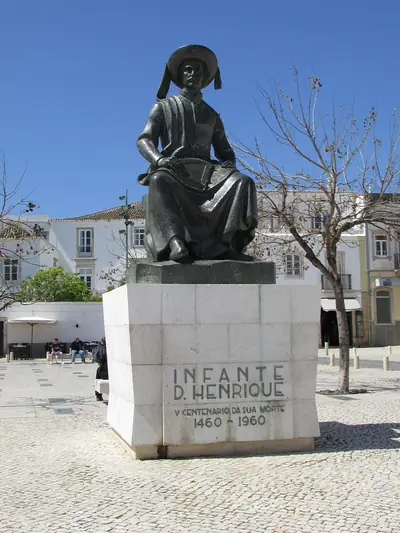
The Statue of Henry the Navigator recalls the role Lagos played in the first phase of Portugal’s maritime expansion. Prince Henry, or Infante Dom Henrique, was a royal patron whose vision and resources supported expeditions along the African coast. In the 15th century, Lagos was one of the main operational bases for these voyages.
Created in 1960 by Leopoldo de Almeida, the statue presents Henry seated and appearing contemplative rather than triumphant. The pedestal bears the inscription “Infante Dom Henrique”, without the later epithet “Navigator”. From here, several important 15th-century sites, including the Old Slave Market and sections of the harbour defences, are within walking distance.
Antigo Mercado dos Escravos
The Antigo Mercado dos Escravos, or Old Slave Market, is one of the most significant and sobering places in Lagos. It is associated with the earliest phase of the Atlantic slave trade and the first documented slave market in Europe.
In 1441, Captain Antão Gonçalves brought fourteen enslaved people to Lagos after encountering an existing trade along the African coast. The trade expanded rapidly, and in 1444 Captain Lançarote de Freitas arrived with 235 captives. Prince Henry the Navigator was entitled to one fifth of the value of enslaved people brought to Portugal.
Public slave auctions took place in this area from the 1440s. Lagos’s official role changed in 1512, when King Manuel I decreed that enslaved people imported into Portugal could be landed only in Lisbon. The site is essential to understanding the city’s maritime history in full, including its darkest chapters.
Igreja de Santo António
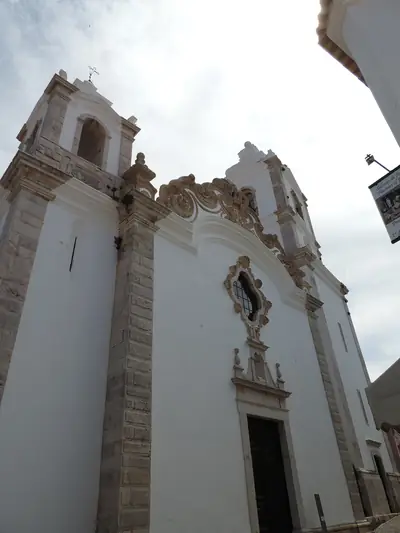
The Igreja de Santo António dos Militares was commissioned by the military and completed in 1707. It is known for its richly gilded interior and is one of the city’s major artistic monuments.
The church was destroyed by the 1755 earthquake and rebuilt in 1769 on the orders of Hugo Beaty, commander of the Lagos Infantry Regiment and administrator of the Confraternity of Saint Anthony. Eight paintings showing the miracles of Saint Anthony were produced in the same year.
Outside, the Baroque façade features a niche above the main door, a shell-decorated oculus and a shield framed by branches. Two bell towers of different shapes add variety to the building’s outline.
Oficina do Espingardeiro
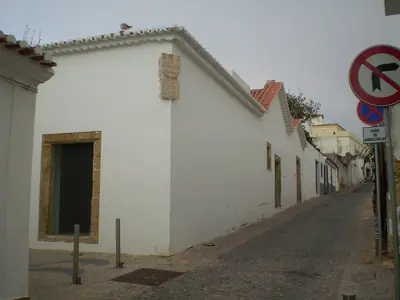
The Oficina do Espingardeiro is a former military building in the centre of Lagos. It was built in 1665 as a saddlery workshop by order of Dom António de Almeida, the second Count of Avintes and governor of the Kingdom of the Algarve.
Part of the “Barracks of the Crown”, the building later became a rifle workshop, arms warehouse and general storeroom. Its architecture is functional, with a rectangular plan, thick masonry walls and few openings. The Portuguese Coat of Arms marks one corner.
The building remained under Portuguese army ownership until 1980, when it was transferred to the Red Cross. It now houses the Lagos Urban Evolution Interpretation Centre.
Igreja de São Sebastião
Igreja de São Sebastião began in the 14th century as a hermitage dedicated to Nossa Senhora da Conceição. In the 15th century, it was expanded into a church and dedicated to São Sebastião.
Its architecture reveals the different phases of its construction and rebuilding, particularly after the earthquakes of 1755 and 1969. The church has three naves separated by arches supported by Doric columns. Its main entrance has a late Gothic portico, while a Renaissance side portal adds another architectural layer.
Inside, 16th-century side altarpieces, blue azulejo tiles installed in the nave in the 17th century and a gilded-wood main altar show how the church evolved over time. A small Bones Chapel stands nearby.
Mercado Municipal
The Mercado Municipal is closely connected with Lagos’s fishing traditions and everyday life. Before the market was built, the site was occupied by a Door Factory that burned down in 1915. The Municipal Market was constructed there in 1924.
The three-storey building brings together different aspects of local commerce. Fish and seafood stalls, along with butchers, occupy the ground floor. The first floor has fruit and vegetable vendors, other goods and a café. On the third floor, a restaurant has a terrace overlooking the Bay of Lagos.
Monte Molião archaeological site
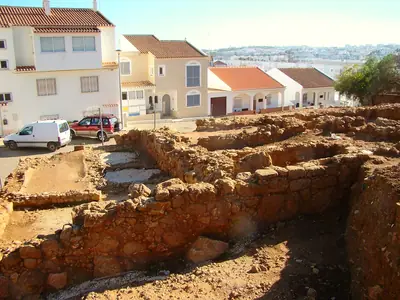
The Estação Arqueológica de Monte Molião is linked to the earliest roots of Lagos. Its ruins belong to a fortified settlement, or castro, built during the Second Iron Age towards the end of the 4th century BC.
The site later experienced an intense period of Roman occupation. Its importance declined when the urban centre moved to the other side of the Ribeira de Bensafrim, where modern Lagos developed, although occupation continued into the medieval Islamic period.
Archaeological work began in the 19th century with Estácio da Veiga and continued in the early 20th century with José Joaquim Nunes. Regular excavation campaigns have taken place since the 2000s. Monte Molião is identified as the primitive location of Lacóbriga, making it an important place for understanding the city’s origins.
Forte da Meia Praia
Forte da Meia Praia, originally known as Forte de São Roque or Forte de São Roque de Lagos, was built in the 17th century to defend Lagos Bay. The fort was heavily damaged in the 1755 earthquake and rebuilt towards the end of that century.
After its military use ended, the building served as a post of the Guarda Fiscal. Its survival adds another chapter to the defensive history of Lagos and its coastline.
Castle of Senhora da Luz
The Castle of Senhora da Luz, also called Castelo da Senhora da Luz or Fortaleza de Nossa Senhora da Luz, was built in the 17th century around an older tower. It was later classified as an Imóvel de Interesse Público, or Property of Public Interest, in 1977.
Praia Dona Ana
Praia Dona Ana is a sheltered beach set below tall, eroded limestone cliffs. Golden rock stacks and arches rise from the sand and water, creating one of the most distinctive coastal settings around Lagos.
A viewing platform by the road looks over the beach and its clear waters. A 93-step staircase leads down to the shore. The beach’s sheltered position and calm waters made it popular with local bathers from the late 19th and early 20th centuries, before tourism expanded during the second half of the 20th century.
Praia do Pinhão
Praia do Pinhão is a small cove between limestone cliffs near Lagos. It has two sections separated by a rocky outcrop. The smaller strip of sand below the staircase can disappear completely at high tide, while the larger section includes stones placed in the water during the reconstruction of Praia da Dona Ana in 2015.
A narrow tunnel through the rock connects the two sections, but it can be used only at low tide. Access involves a long staircase with terraced platforms built into the cliffs. The water is suitable for swimming, although it can be cool, and the beach has firmer, coarser sand than some other beaches in the area.
The Statues of Saint Gonçalo
The Statue of Saint Gonçalo connects Lagos’s religious identity with its maritime traditions. Created by Tolentino Abegoaria and erected in 2001 through public subscription, it depicts the saint holding a book and blessing the waters with a crucifix.
According to legend, Saint Gonçalo appeared after his death to save his nephew from a shipwreck. The statue is therefore both a religious tribute and a reminder of the city’s longstanding relationship with the sea.
Explore Lagos with a free audio guide
Neywo has two walking tours in Lagos. The shorter walk covers 0.87 km in 52 minutes and includes 8 narrated stops. The longer route covers 4.11 km in 135 minutes and includes 15 narrated stops, taking in places such as Praia Dona Ana, Praia do Pinhão, the historic centre and the city’s fortifications.
This is a Lagos self-guided walking tour: the app tells the story of each place as you reach it, at your own pace, with no group and no schedule. Download Neywo and explore Lagos through its history, architecture and Atlantic landscapes.
After Lagos, continue discovering the Algarve with Loulé, Faro, Olhão, Albufeira or Tavira.
Places with an audio guide in Lagos
8 places in Lagos with a Neywo audio guide. Each one starts telling its story as you reach it.
Self-guided tours in Lagos
1 tour in Lagos, free in the Neywo app. Each stop tells its story as you reach it.
- Walk
Lagos old town: the fort and the slave market
Under a kilometre inside the walls. The waterfront fort, the church of Santo António with its gilt-wood interior, and the arcade on Praça Infante that was Europe's first slave market — the plaque and the small museum do not soften it.
Praia Dona Ana · Praia do Pinhão · Statue of Saint Gonçalo in Lagos · Forte da Ponta da Bandeira · Oficina do Espingardeiro · Igreja de Santo António …
Open this tour: Lagos old town: the fort and the slave market
Walk Lagos with Neywo
Neywo turns Lagos into a self-guided audio tour. Stories arrive as you reach the place they belong to, and the route reshapes when you wander off it.

