Visiting Horta, Portugal: Top Sights on Foot
Things to Do in Horta, Azores
Horta is a historic city on Faial Island, in the Azores, known for its harbour, defensive forts, volcanic hills, churches and convents. Its compact centre brings together maritime history and island landscapes, while viewpoints around the bay look towards the surrounding Atlantic. Neywo has a free audio guide for Horta with 17 narrated places.
What to See in Horta
Clock Tower and Florêncio Terra Garden
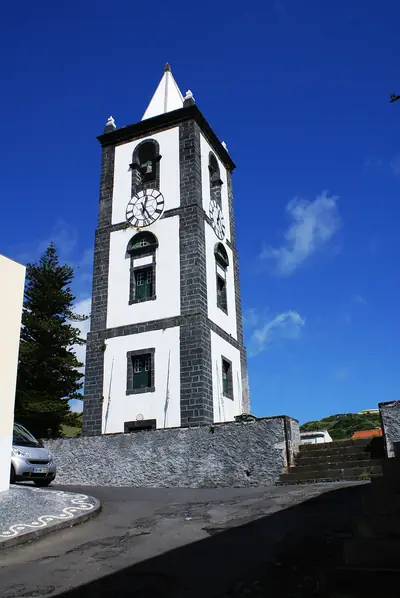
In Largo D. Luís I, also known as Largo do Relógio, the Clock Tower stands beside Florêncio Terra Garden. Known in Portuguese as Torre do Relógio, it is the only surviving part of Horta’s former parish church. The church was demolished in the first half of the nineteenth century, leaving the tower as a reminder of the earlier building.
Museu da Horta
The Museu da Horta is one of the city’s named places of interest. It makes a natural stop while exploring Horta’s historic centre and adds a museum visit to the city’s collection of churches, fortifications and civic buildings.
Fort of Santa Cruz
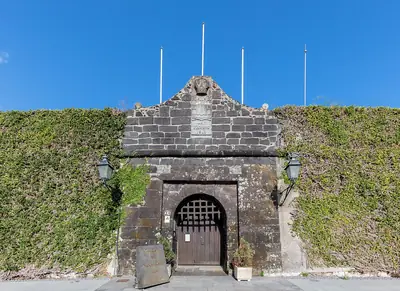
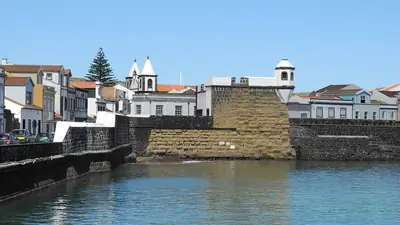
At the edge of Horta Bay, the Fort of Santa Cruz—also called Forte de Santa Cruz da Horta or Castelo de Santa Cruz—was built in the sixteenth century to defend the harbour entrance. It was once Faial’s main fortification and stood beside the former landing quay.
The fort was part of a wider defensive network. Together with the Fort of Bom Jesus near the mouth of the Ribeira da Conceição and the Fort of Greta on Monte da Guia, it protected the harbour entrance and the southern approach to the bay.
Church of Nossa Senhora da Conceição
The Church of Nossa Senhora da Conceição stands in the parish of Conceição, within Horta. It is one of the city’s religious landmarks and a stop on the historic-centre route through Horta.
Church of Nossa Senhora das Angústias
In the parish of Angústias, the Church of Nossa Senhora das Angústias forms part of the landscape around Porto Pim and the southern side of the city. It is also the starting point for exploring the defensive sites around the bay.
Church and Convent of Nossa Senhora do Carmo
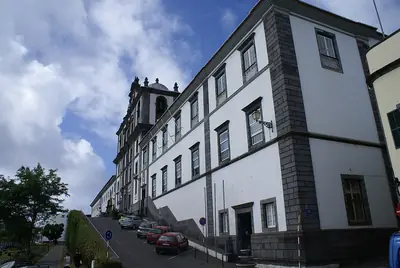
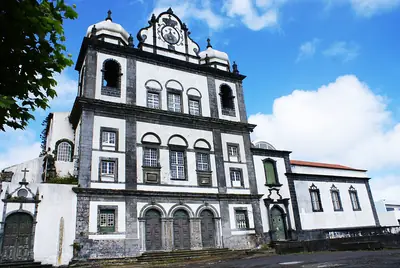
The Church of Nossa Senhora do Carmo has a grand Baroque façade and stands beside the Carmo Convent, also known as Carmo Barracks. Its elevated position gives broad views over Horta and the sea. The church itself can be seen from far out at sea before vessels enter Horta Bay.
The church was the first Carmelite temple built nationally outside mainland Portugal. It was commissioned with the convent by Helena de Boim, wife of Francisco Gil da Silveira, the captain-major at the time.
The Convent of Carmo occupies a broad terrace above the city, with views over Horta’s surroundings, the bay and Pico Island with its mountain. Earthquakes damaged the building over time. After religious orders were expelled, it entered a long period of decline before being expropriated by the Portuguese Armed Forces and used as Carmo Barracks.
Convent of São Francisco
The Convent of São Francisco has a history marked by destruction, rebuilding and changing use. Founded at the beginning of the sixteenth century, it was burned by English corsairs in 1597. After major storm damage in 1668, the community chose to rebuild farther inland.
This rebuilding also led to the Church of Nossa Senhora do Rosário. Construction began in 1696, and the church was completed in 1700; work on the convent began in the same year. In 1835, after religious orders were dissolved in Portugal, the convent was given to the Santa Casa da Misericórdia da Horta and became a hospital and asylum. A violent fire on 4 May 1899 destroyed both institutions. Only the church survived, and it was saved with great difficulty.
Sociedade Amor da Pátria
The headquarters of Sociedade Amor da Pátria is a cultural heritage monument in Horta. Its building adds a civic and architectural landmark to the city’s historic streets.
Legislative Assembly of the Azores
The Assembleia Legislativa da Região Autónoma dos Açores, or Legislative Assembly of the Azores, has its seat in Horta. It is the regional parliament of the Azores, responsible for duties including approving the regional budget and the economic and social development plan. It also oversees and assesses the work of the Regional Government and the autonomous regional administration.
Forts and Volcanic Landscapes Around Porto Pim
Reduto da Patrulha
The Reduto da Patrulha, also known as the Portão do Mar de Porto-Pim, is a small defensive site forming part of the fortifications of Porto Pim Bay. It works well as a short stop between the bay and the larger forts nearby.
Forte de São Sebastião da Horta
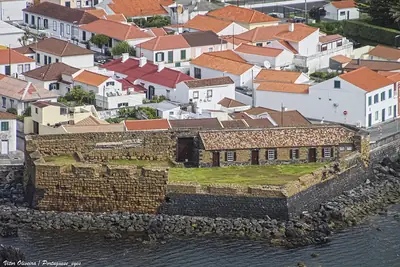
On a rocky promontory above Porto Pim Bay, the Forte de São Sebastião da Horta was the principal defensive structure of the bay. Water surrounds three sides of the fort, giving it a commanding position over the anchorage.
Its guns protected the bay with fire directed towards the west and southwest, while its eastern side exchanged fire with the Forte de Porto Pim. The fort watched over the entrance to the bay and maritime movement along Faial’s southern coast. Until the nineteenth century, it was also known as Forte da Cruz dos Mortos.
Forte de Nossa Senhora da Guia
The remnants of Forte de Nossa Senhora da Guia, also known as Forte da Greta or Castelo da Greta, stand on the steep southern slope of Monte da Guia. Overlooking Horta and the bay, this fort formed part of Faial’s defensive system against pirates and privateers, whose attacks were once frequent in this part of the Atlantic.
Monte da Guia
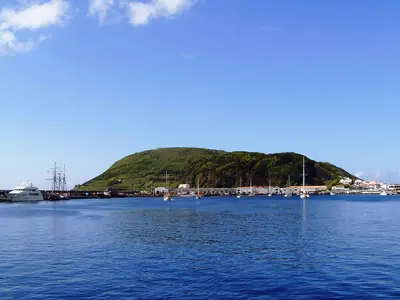
Monte da Guia is a volcanic cone beside Horta, rising 145 metres above sea level. Its shape comes from an eruption beneath the sea, and a sandy isthmus connects it with Monte Queimado. Together, the hills and surrounding areas define the landscape of Porto Pim Bay.
Since 1980, Monte da Guia, Monte Queimado and the surrounding areas have been protected as a landscape area. At the summit are a chapel dedicated to Nossa Senhora da Guia and the remains of a coastal battery built during the Second World War.
Monte Carneiro and its viewpoint
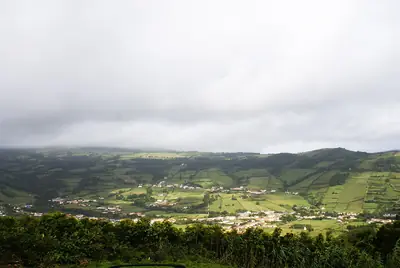
Monte Carneiro is a rounded hill rising from the interior of Faial. Its form marks the summit of an ancient volcanic cone. At the top, Miradouro do Monte Carneiro offers a broad panorama across the interior of the island from the parish of Flamengos.
Explore Horta with a Self-Guided Audio Tour
Neywo’s Horta self-guided walking tour lets you discover the city without joining a group or following a fixed timetable. The app has two walking tours and one bus route:
- Horta Old Town: Baroque Convents, a Lonely Clock Tower and the Bay: a 2.56 km walk lasting 85 minutes, with 9 narrated stops.
- Porto Pim: Pirate Forts and a Volcanic Cone: a 2.23 km walk lasting 57 minutes, with 5 narrated stops.
- Horta’s Red Minibus: From Carmo Hill to the Bay: a 7.6 km bus route lasting 33 minutes, with 8 narrated stops.
The stories are available in 11 languages. Each one plays as you reach the place, at your own pace, with no group and no schedule.
Download Neywo and Explore Horta at Your Own Pace
Download Neywo to explore Horta with a free Horta audio guide and 17 narrated places. Choose one of the two walks or take the bus route, then let the app tell the story of each church, fort, museum, viewpoint and volcanic landscape as you arrive. When you continue your Azores journey, you can also discover Pico Island, Angra do Heroísmo or Ponta Delgada.
Places with an audio guide in Horta
8 places in Horta with a Neywo audio guide. Each one starts telling its story as you reach it.
Self-guided tours in Horta
3 tours in Horta, free in the Neywo app. Each stop tells its story as you reach it.
- Bus ride
Horta's Red Minibus: From Carmo Hill to the Bay
The municipal Linha Vermelha minibus runs through the old centre of Horta. Ride it from the Carmo convent on the hill, past the clock tower, the museum and the São Francisco convent, down to Santa Cruz fort and the Angústias church by the sea.
Convent of Carmo · Clock tower (Horta) · Church of Nossa Senhora da Conceição · Museu da Horta · Convent of São Francisco · Assembleia Legislativa da Região Autónoma dos Açores …
Open this tour: Horta's Red Minibus: From Carmo Hill to the Bay - Walk
Horta Old Town: Baroque Convents, a Lonely Clock Tower and the Bay
Walk Horta's historic spine from the northern church of Conceição down to the harbour. Climb to the Baroque Carmo convent for the view across the channel, pass the old Jesuit college and the clock tower left from a demolished parish church, and finish at the sixteenth-century fort that now shelters a pousada.
Church of Nossa Senhora da Conceição · Clock tower (Horta) · Edifício sede da ''Sociedade Amor da Pátria'' · Convent of Carmo · Colégio dos Jesuítas da Horta e sua igreja (Santíssimo Salvador, hoje igreja matriz da Horta) · Museu da Horta …
Open this tour: Horta Old Town: Baroque Convents, a Lonely Clock Tower and the Bay - Walk
Porto Pim: Pirate Forts and a Volcanic Cone
Follow the southern shore of Horta Bay, where forts once held off pirates and privateers. Start at the Angústias church, pass the little sea gate of Porto Pim and the fort on its rocky promontory, then climb Monte da Guia, a volcanic cone with a chapel and a ruined fort on top.
Church of Nossa Senhora das Angústias · Reduto da Patrulha · Forte de São Sebastião da Horta · Forte de Nossa Senhora da Guia · Monte da Guia
Open this tour: Porto Pim: Pirate Forts and a Volcanic Cone
Walk Horta with Neywo
Neywo turns Horta into a self-guided audio tour. Stories arrive as you reach the place they belong to, and the route reshapes when you wander off it.

