Visiting Busan, South Korea: Top Sights on Foot
Things to Do in Busan: History, Culture and Coastal Landscapes
Busan is South Korea’s second-largest city, set on the country’s southeastern coast. Its port, hills, museums, memorials, universities and natural landscapes reveal a city shaped by maritime connections, modern history and cultural change. For visitors deciding what to see in Busan, the city offers plenty of places to explore at your own pace. Neywo’s free audio guide for Busan includes 36 narrated places.
What to See in Busan
Busan Modern History Museum
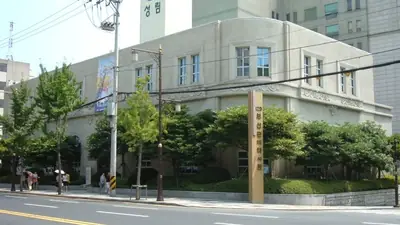
The Busan Modern History Museum explores how the city’s port, urban landscape and everyday life changed over time. Its exhibitions cover Japanese rule, resistance movements and modern relations between Korea and the United States, using around 200 historical objects, videos and models.
The three-story building is part of the story. It was constructed during the Japanese occupation for the Oriental Development Company, later became a United States consulate and cultural service facility, and was connected with student protests in 1982. Today, it supports exhibitions, research, education and guided programmes about Busan’s modern cultural heritage.
Provisional Capital Memorial Hall
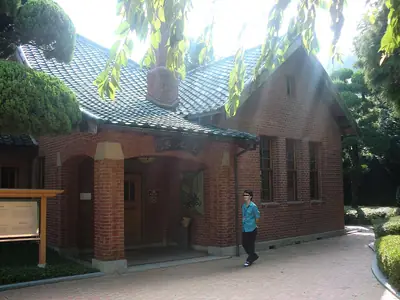
The Provisional Capital Memorial Hall preserves a building with an important role in Busan during the Korean War. Originally the residence of the governor of Gyeongsangnam-do, it became the presidential residence of South Korean president Syngman Rhee when the government evacuated to Busan. After the government returned to Seoul, the building once again served as the governor’s residence.
Yongdusan Park and Busan Tower
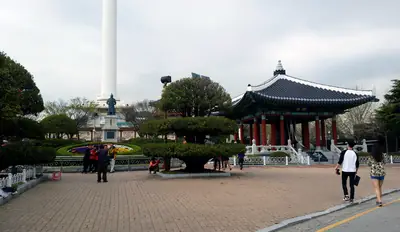
Yongdusan Park is a green hillside landmark in Jung District, with views towards Busan Harbor and Yeongdo. The hill has carried several identities over time: it was once known as Songhyeonsan, briefly became Unam Park, hosted a Japanese enclave during the Joseon period and later contained Ryūtōsan Shrine and refugee shanty towns during the Korean War.
Busan Tower, also known as Diamond Tower, rises 120 meters above the park. Nearby, a statue of Admiral Yi Sun-sin overlooks the surroundings. The park covers about 69,000 square meters and contains around 70 species of trees.
Busan Museum
In Nam-gu’s Daeyeon-dong, the Busan Museum presents the region’s archaeology, art, folk traditions, history and anthropology. Its collections are collected, preserved, displayed and researched for the public. It has been open since 1978.
Bokcheon Museum
Bokcheon Museum focuses on the Bokcheon-dong burial ground, where archaeologists uncovered weapons, armor, clothing and household tools. The museum traces an important period of Busan’s history, from the Samhan era through the Samguk era. It opened on October 5, 1996.
United Nations Memorial Cemetery
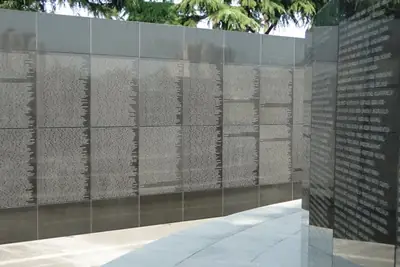
The United Nations Memorial Cemetery in Korea is the world’s only United Nations cemetery. It is dedicated to those who died while serving with United Nations Command during the Korean War and was established in 1951.
The peaceful grounds cover about 14 hectares. Around 2,300 graves are arranged in 22 sections according to the nationalities of the servicemembers buried there, creating a place of international remembrance.
National Memorial Museum of Forced Mobilization under Japanese Occupation
This memorial museum examines the experiences of Koreans who were forced to work and moved to other places during the Japanese colonial period, from 1910 to 1945. It was established by South Korea’s Ministry of the Interior and Safety under a special law concerning victims of forced mobilization and support for those who died overseas.
Democracy Park
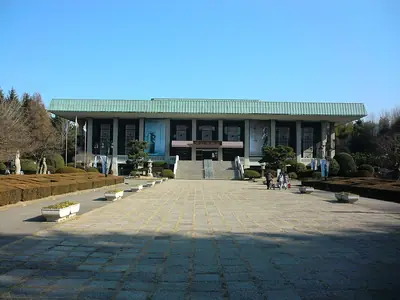
Democracy Park, in Busan’s Jung District, commemorates the people involved in movements that helped lead South Korea towards democratization. Established in 1999, it honours the sacrifices associated with the April Revolution, the Busan-Masan Uprising and the June Democracy Movement.
The park includes a memorial hall dedicated to the democracy movement, an amphitheatre and natural spaces. It stands as a symbolic place within Central Park and offers a different perspective on the city’s modern history.
Beomeosa
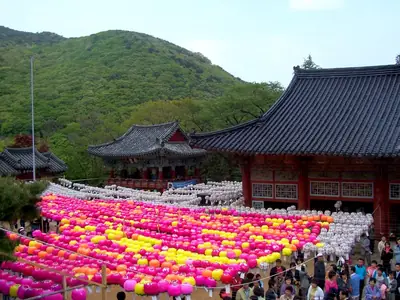
On the slopes of Geumjeongsan, Beomeosa is one of Busan’s best-known Buddhist temples. Its name is often translated as “Temple of the Nirvana Fish.” The temple provides a cultural and religious landmark among the city’s mountain landscapes.
Busan Museum of Art
The Busan Museum of Art, also known as the Busan City Art Museum, is a municipal museum focused mainly on modern and contemporary art. It offers a contrast to Busan’s history museums and memorial sites.
Nakdong River
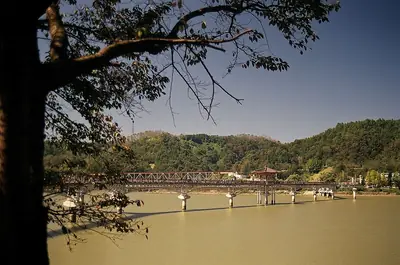
The Nakdong River is South Korea’s longest river. Its course reaches Daegu and Busan before flowing south towards the sea. For centuries, it served as an important transport route through inland areas, with ports and landing places developing along its banks.
The river’s name is connected with its position east of Gaya, also known as Garak, a confederacy associated with Korea’s Three Kingdoms period. That connection links the waterway with the wider history of the region. The river also provides a natural perspective on Busan beyond its urban coastline.
Busan National Science Museum
Located in the East Busan Tourism Complex in Gijang-eup, Gijang-gun, the Busan National Science Museum is a national science museum. It opened on December 11, 2015. Admission is paid, so visitors planning to go inside should take that into account.
Busan Asiad Main Stadium
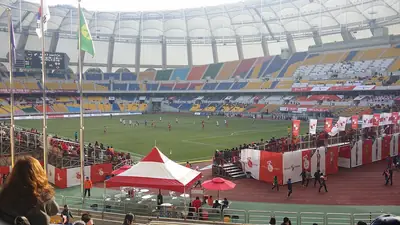
Busan Asiad Main Stadium is a major venue for international sport and large public events. Built for the 2002 Asian Games, it hosted the opening and closing ceremonies and athletics events, and later hosted matches during the 2002 FIFA World Cup.
The stadium opened on September 16, 2001. Its semi-open half-dome roof creates the image of a circle, while the interior combines a natural-grass field with a polyurethane running track. It has around 55,000 seats and can accommodate up to 85,000 spectators.
Pusan National University
Founded on May 15, 1946, Pusan National University was the first comprehensive national university established in Korea after liberation. It began with two faculties, Humanities and Fisheries.
Often shortened to PNU, the university now operates four campuses: Busan and Ami in Busan, and Miryang and Yangsan in South Gyeongsang Province. As of 2024, it includes 15 colleges, one general graduate school, five professional graduate schools and nine special graduate schools.
Namcheon Cathedral of St. Paul Chong Hasang
Namcheon Cathedral of St. Paul Chong Hasang is a Roman Catholic cathedral in Busan. It is a meaningful stop for visitors interested in the city’s religious landmarks and architectural heritage.
Explore Busan with a Self-Guided Walking Tour
A Busan self-guided walking tour is a simple way to connect several historic places without joining a group. Neywo currently offers one walking tour in the city: Busan’s Wartime Capital and the Harbour Hill.
The walk covers 2.92 km, takes about 65 minutes and includes four narrated stops:
- Provisional Capital Memorial Hall
- Orthodox Church of the Annunciation of Our Lady in Busan
- Busan Modern History Museum
- Yongdusan Park
With the Neywo app, each story plays as you reach the place, at your own pace. There is no group and no schedule, so you can explore independently while the narration explains the history and significance of the sites around you. The audio guide is available in 11 languages.
Download Neywo to explore Busan with a free audio guide and discover the city’s wartime history, harbour hills and cultural landmarks as you walk. You can also continue your journey through South Korea, or visit nearby Gyeongju and Daegu.
Places with an audio guide in Busan
8 places in Busan with a Neywo audio guide. Each one starts telling its story as you reach it.
Self-guided tours in Busan
1 tour in Busan, free in the Neywo app. Each stop tells its story as you reach it.
- Walk
Busan's Wartime Capital and the Harbour Hill
Walk through central Busan's Jung-gu, starting at the house where South Korea's president lived while Busan was the provisional capital during the Korean War. Pass a Korean Orthodox cathedral and a museum in a colonial-era building, and finish on Yongdusan hill beneath the tower and the statue of Admiral Yi Sun-sin.
Provisional Capital Memorial Hall · Orthodox church of the Annunciation of Our Lady in Busan · Busan Modern History Museum · Yongdusan Park
Open this tour: Busan's Wartime Capital and the Harbour Hill
Walk Busan with Neywo
Neywo turns Busan into a self-guided audio tour. Stories arrive as you reach the place they belong to, and the route reshapes when you wander off it.