What to See in Incheon, South Korea: Free Audio Guide
Things to Do in Incheon: History, Culture and Island Landscapes
The best things to do in Incheon range from historic Chinatown and Korea’s first Western-style park to major bridges, sports venues, museums and islands in the Yellow Sea. The city’s port history, links with international trade and role in modern Korean history make it one of the most varied places to visit in South Korea. Neywo offers a free audio guide for Incheon with 29 narrated places, available in 11 languages.
What to See in Incheon
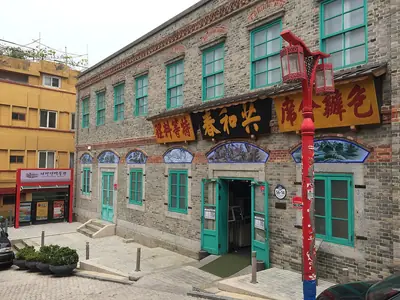
Gonghwachun and Incheon Chinatown
Gonghwachun is a historic restaurant building in Incheon Chinatown and the place associated with the first development and serving of jajangmyeon, the Korean black bean noodle dish. Opened in 1912, it operated as a restaurant until 1983. The original building is Registered Cultural Heritage of South Korea number 246, and it reopened as the Jajangmyeon Museum in April 2012.
The building brings together two important parts of Incheon’s history: Korean-Chinese cuisine and the city’s role as a meeting point between cultures. Chinatown’s food traditions also include gonggalppang, a crisp, airy sweet pastry.
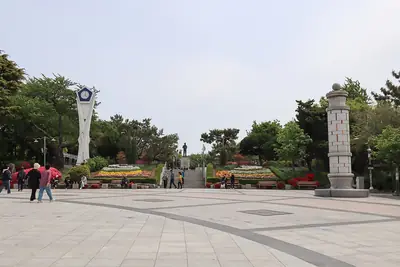
Incheon Jayu Park
Incheon Jayu Park, also known as Freedom Park, was established in 1888 and is recognized as Korea’s first Western-style park. It extends across Eungbongsan, combining open space with views across Incheon.
At the summit, the park contains a monument commemorating one hundred years of relations between the United States and Korea and a statue of General Douglas MacArthur. The statue was erected in 1957 to commemorate the Incheon Landing Operation. The park itself began as a place for foreigners in Incheon’s foreign settlement and has been known by several names, including Gakguk Park and West Park.
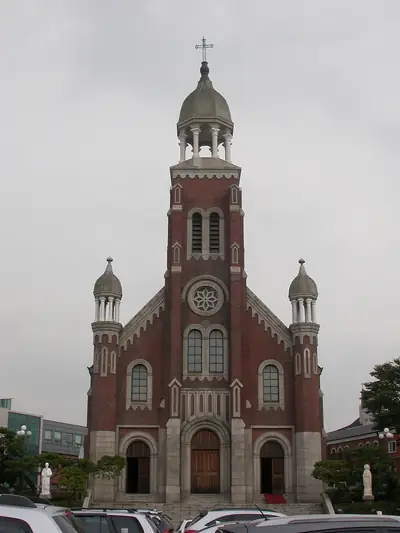
Dapdong Cathedral
Dapdong Cathedral, also called Incheon Cathedral and St. Paul’s Cathedral, is the seat of the Catholic Diocese of Incheon. The diocese was created in 1962 by Pope John XXIII.
Its architecture combines Neo-Gothic and Neo-Romanesque styles. The design is attributed to Father Eugene Cost of the Paris Foreign Missions Society, giving the cathedral a distinctive place among Incheon’s historic buildings.
Ae Kwan Theater
Ae Kwan Theater is believed to be Korea’s oldest movie theater and is still operating. It was founded in 1895, before Dansungsa, which is widely considered the country’s first movie theater when it opened in 1907.
The theater has previously been known as Hyŏmnyulsa and Ch’ukhangsa. Its continued operation makes it a particularly notable survivor of Korea’s early cinema history.
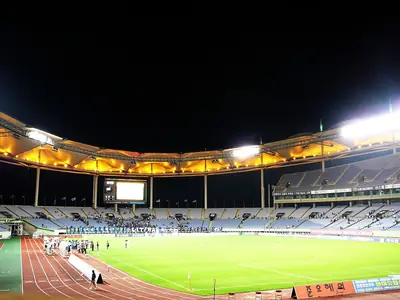
Incheon Munhak Sports Complex
Incheon Munhak Sports Complex brings together a multi-purpose stadium, a baseball park and other sports facilities. The main stadium has a natural grass field and a urethane running track, while the complex also includes an auxiliary stadium with seating for 5,000 people, an athletics track and a sports center.
The main venue first opened as Incheon World Cup Stadium and was later renamed Incheon Munhak Stadium. It hosted three matches during the 2002 Korea and Japan World Cup, including Korea’s match against Portugal. The complex later hosted the Incheon Hallyu Tourism Concert from 2009 to 2018 and the final of the League of Legends World Championship in 2018. Munhak Stadium Station on Incheon Metro Line 1 is nearby.
Inha University
Inha University is a major private university known especially for research and education in engineering and the physical sciences. Its history connects Incheon with Hawaii.
The institution began in 1954 as Inha Institute of Technology, or Inha Technical College, and later developed into Inha University. It was established by Syngman Rhee, South Korea’s first president. The name combines “In”, from Incheon, and “Ha”, from Hawaii, reflecting the university’s Korean-American origins.
National Museum of World Writing Systems
The National Museum of World Writing Systems in Songdo-dong explores the development of writing across cultures. Its permanent collection follows 55 writing systems, including cuneiform, Egyptian hieroglyphs and Korean Hangul.
The museum opened in 2023 after construction began in 2019. Its objects include ancient Akkadian cuneiform tablets from Southwest Asia dating from between 2000 and 1600 BC, as well as a Johannes Gutenberg 42-line Bible.
Incheon Bridge
Incheon Bridge, or Incheon Daegyo, links Songdo with Yeongjong Island and provides direct access between Songdo and Incheon International Airport. It is South Korea’s longest spanning cable-stayed bridge.
The cable-stayed section has an 800-metre main span, while its towers rise 238.5 metres and form an inverted Y in reinforced concrete. Construction began in 2005, the bridge was completed on October 16, 2009, and vehicles began using it at midnight on October 19.
Yeongjong Bridge
Yeongjong Bridge connects Yeongjong Island with the Korean mainland and forms part of the Incheon International Airport Expressway. Completed in 2000, it carries both road and rail traffic and stretches for 4,420 metres.
Its two decks include a six-lane road on the upper level and roads with a double-track railway on the lower level. The bridge’s main suspension section measures 550 metres, and ships weighing up to 10,000 tonnes can pass beneath it.
Ganghwa Island
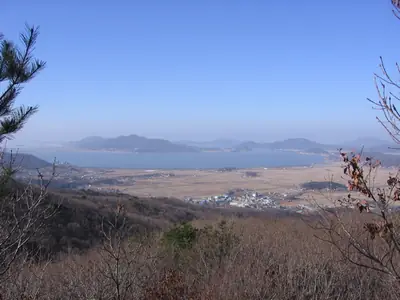
Ganghwa Island lies in the Yellow Sea and the estuary of the Han River. Its position between the Korean mainland and the waterways leading towards Seoul has given it an important strategic and historical role.
During the Mongol invasions, Ganghwa is believed to have served as a temporary capital of Goryeo for thirty-nine years. The island is also home to dolmen sites designated as a World Heritage Site, Samrangseong and Chamseongdan, which is designated Historic Site Number 136. Its defensive history continued into the nineteenth century, when its fortifications were repeatedly attacked.
Yeonpyeong and the Bombardment of Yeonpyeongdo
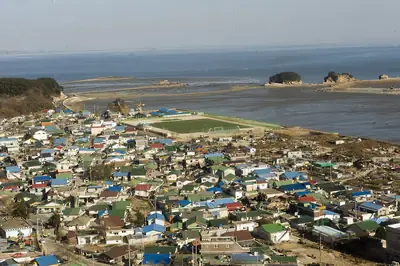
Yeonpyeong is a small group of South Korean islands in the Yellow Sea. The archipelago includes Daeyeonpyeongdo, Soyeonpyeongdo and several smaller islets. Daeyeonpyeongdo is the main island, with Yeonpyeong-ri and its ferry port as the principal population centre.
The islands also carry the memory of the Bombardment of Yeonpyeongdo. On November 23, 2010, North Korean forces fired roughly 170 artillery shells and rockets at the island, striking military and civilian targets. South Korean forces responded by shelling North Korean gun positions. The event remains part of the history of the Korean Peninsula’s unresolved tensions.
Incheon and the Battle of Inchon
Incheon was the site of one of the Korean War’s decisive turning points. On September 15, 1950, United Nations forces launched a surprise amphibious assault known as Operation Chromite, led by General Douglas MacArthur.
The battle lasted from September 15 to September 19, 1950. Its success changed the direction of the war, helped sever North Korean supply lines in the south and enabled United Nations and South Korean forces to advance towards Seoul. Seoul was retaken two weeks later.
The 2014 Asian Games
Incheon 2014, the 17th Asian Games, took place from September 19 to October 4, 2014. The event featured 36 sports and brought together athletes and officials from all 45 member countries of the Olympic Council of Asia.
Approximately 9,501 athletes attended, while 13,855 athletes and officials took part overall. The opening and closing ceremonies were held at Incheon Asiad Main Stadium in Seo District, with competitions spread across existing and newly built venues. The Games produced 14 world records and 27 Asian records.
Sindo Peace Bridge
Sindo Peace Bridge links Yeongjongdo in Incheon with Sindo in Bukdo-myeon, Ongjin County. The bridge and its connecting roads cover a route of about three and a half kilometres and create a direct connection between the two islands.
Built as a two-lane crossing, the project began in January 2021 and was completed with an investment of 125.1 billion won. The bridge opened on July 14, 2026.
Explore Incheon with a Free Audio Guide
Download Neywo to explore Incheon independently with a free audio guide. The app currently includes one walking tour: Chinatown, Freedom Park and Korea’s Firsts: Old Incheon.
This 3.49-kilometre walk takes about 80 minutes and includes six narrated stops: the Battle of Inchon, Gonghwachun, Incheon Jayu Park, Naedong Anglican Church, Dapdong Cathedral and Ae Kwan Theater. Each story plays as you reach the place, at your own pace, with no group and no schedule.
Places with an audio guide in Incheon
8 places in Incheon with a Neywo audio guide. Each one starts telling its story as you reach it.
Self-guided tours in Incheon
1 tour in Incheon, free in the Neywo app. Each stop tells its story as you reach it.
- Walk
Chinatown, Freedom Park and Korea's Firsts: Old Incheon
Incheon's old treaty port is where Korea met the West. Begin at the landing ground of 1950, then walk to Chinatown and the restaurant that invented jajangmyeon, climb Korea's first Western-style park to the MacArthur statue, and drop down to the first Anglican church, a Neo-Gothic cathedral and what is believed to be the country's oldest cinema.
Battle of Inchon · Gonghwachun · Incheon Jayu Park · Naedong Anglican Church · Dapdong Cathedral · Ae Kwan Theater
Open this tour: Chinatown, Freedom Park and Korea's Firsts: Old Incheon
Walk Incheon with Neywo
Neywo turns Incheon into a self-guided audio tour. Stories arrive as you reach the place they belong to, and the route reshapes when you wander off it.

