Visiting Changwon, South Korea: Top Sights on Foot
Things to do in Changwon: art, history and Masan’s port-city heritage
Changwon is a city in South Gyeongsang, or Gyeongnam, where modern urban development meets art, Catholic heritage and the layered history of Masan. The most interesting things to do in Changwon include visiting the Gyeongnam Art Museum, seeing two distinctive cathedrals and exploring the story of the former port city of Masan. Neywo offers a free audio guide for Changwon with five narrated places, available in 11 languages.
Changwon is the capital of South Gyeongsang, a province in the southeast of South Korea. The city’s present-day identity also reflects the incorporation of Changwon, Masan and Jinhae on July 1, 2010. That history is especially visible in Masanhappo-gu and Masanhoewon-gu, the two administrative districts that now make up Masan within Changwon.
What to see in Changwon
Gyeongnam Art Museum
The Gyeongnam Art Museum, also known as Gyeongnamdorip Art Museum, is one of Changwon’s main cultural institutions. Its planning began in 1998, construction started in April 2001, and the museum opened to the public on June 23, 2004.
The building has four floors above ground and one basement level. Inside are exhibition galleries, a multipurpose hall, a video exhibition room, a special exhibition room, and a library and resource room. Together, these spaces support exhibitions, academic research and education, making the museum a place not only to view art but also to engage with the cultural development of Gyeongsangnam-do.
Sacred Heart Cathedral, Changwon
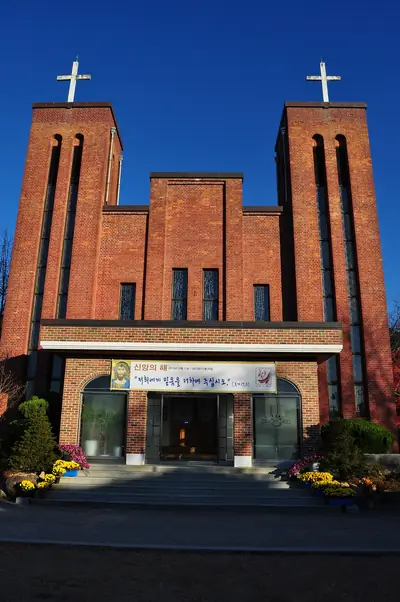
Sacred Heart Cathedral, also called Yangdok-dong Cathedral of the Sacred Heart, is the principal church of the Diocese of Masan. The parish was established on December 8, 1975, and the cathedral building was completed on November 25, 1978.
Its exterior is clad in colored brick and defined by two identical towers, each topped with a cross. The paired towers give the building a clear and distinctive silhouette. The cathedral follows the Roman, or Latin, rite, while the Diocese of Masan itself was created by Pope Paul the Sixth in 1966 through the papal bull Siquidem Catholicae.
St. Joseph’s Cathedral, Masan
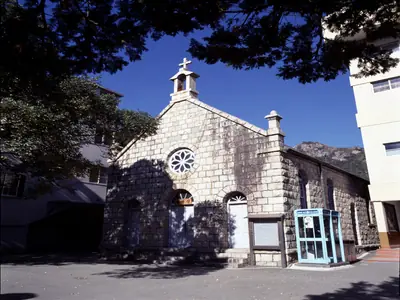
In Masanhappo-gu, St. Joseph’s Cathedral offers another perspective on the area’s religious and architectural heritage. Known in Korean as Masan Seong Yosep Cathedral, it is one of the area’s designated cultural heritage sites.
Gyeongsangnam-do officially designated the cathedral Cultural Heritage Material No. 283 on January 31, 2000. Its protected status makes it a notable stop for anyone exploring the historic side of Masan within present-day Changwon.
Masan and its historic port
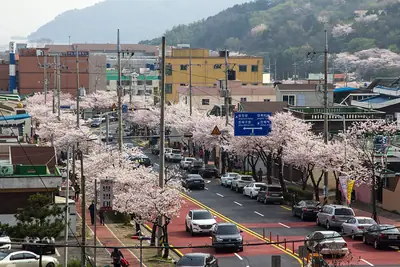
To understand Changwon, it is worth spending time with the story of Masan. Once an independent city, Masan is now represented by Masanhappo-gu and Masanhoewon-gu within Changwon. Its history combines the development of a port, rapid economic growth and important moments in South Korea’s democratization movement.
Masan was historically known as Happo. It began developing into a modern harbor in the late nineteenth century, and its position as a free trade port later helped drive major growth. The creation of the Masan Free Trade Zone brought a rapid influx of people, and the city became one of South Korea’s eight largest cities. Its population passed half a million in 1990.
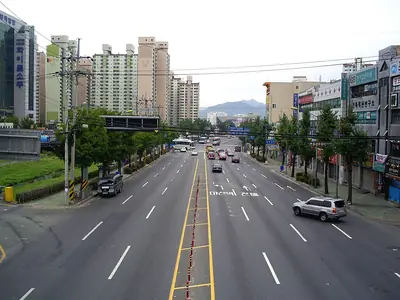
Masan’s fortunes changed as nearby Changwon developed as a planned city in the early 1990s. Many residents moved away, and Masan’s population declined. After years of discussion about joining neighboring Changwon and Jinhae, the three cities were incorporated on July 1, 2010. Masan was then divided into its two current districts, and the former Masan City Hall became the office of Masanhappo-gu.
South Gyeongsang and Changwon’s regional setting
Changwon is more than a city administrative center: it is the capital of South Gyeongsang Province. The province was created in 1895, when Gyeongsang was divided into northern and southern parts, and today it has around 3.4 million inhabitants.
This regional setting helps explain Changwon’s mixture of urban, cultural and historical identities. A visit can begin with the city’s museums and churches, then broaden into the story of Gyeongnam and the former cities brought together within Changwon.
Explore Changwon at your own pace with Neywo
A Changwon self-guided walking tour is a simple way to connect the city’s places without joining a group or following a fixed schedule. Download Neywo’s free Changwon audio guide and discover five narrated places as you walk.
The app tells the story of each place when you reach it, at your own pace, with no group and no schedule. Narration is available in 11 languages, so you can explore independently while learning more about Changwon’s art, churches and regional history.
Places with an audio guide in Changwon
4 places in Changwon with a Neywo audio guide. Each one starts telling its story as you reach it.
Walk Changwon with Neywo
Neywo turns Changwon into a self-guided audio tour. Stories arrive as you reach the place they belong to, and the route reshapes when you wander off it.

