Gongju, South Korea: Self-Guided Walking Tour
Things to Do in Gongju: Explore the Baekje Capital
Gongju is a historic city in South Korea and a former capital of the Baekje kingdom, known as Ungjin from 475 to 538. The best things to do in Gongju include exploring royal tombs, archaeological remains, a riverside fortress, and museums filled with Baekje artifacts. Neywo offers a free audio guide for Gongju with 9 narrated places, available in 11 languages.
What to See in Gongju
Gongsanseong
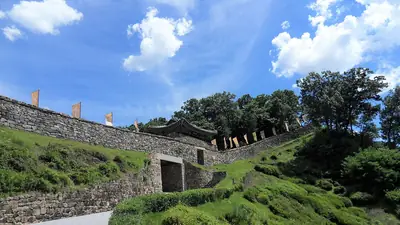
Gongsanseong is a fortress built on a ridge above Gongju, with the Geum River along its northern side. It became Baekje’s capital fortress when the kingdom moved its capital from Hanseong to Ungjin in 475, and remained so until the court moved to Sabi in 538.
The stronghold continued to serve as an administrative and military centre during the Silla, Goryeo, and Joseon periods. Its layout follows the ridges and valleys of a natural defensive position about 110 metres above sea level. The roughly rectangular site extends about 800 metres from east to west and 400 metres from north to south, while the full circuit measures about 2,660 metres.
The original Baekje fortifications were made of earth. Most of the walls visible today were rebuilt in stone during the Joseon period. Walking around the fortress combines views over the river with a direct encounter with Gongju’s Baekje history.
Ancient Tombs in Gongju
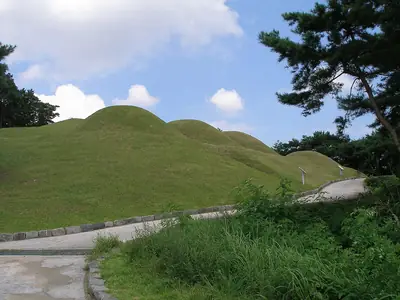
The Ancient Tombs in Gongju, also called the Songsan-ri Ancient Tombs, form a royal burial ground associated with Baekje. The site contains seven restored tombs, numbered from one to seven. Tomb Seven is better known as the Tomb of King Muryeong, or Muryeongwangneung.
The tombs are believed to date from the Baekje period, and the group was designated Historic Site Number 13 of South Korea on January 21, 1963. Their arrangement has been interpreted as possibly reflecting divisions between royal lineages. The western burial area, where King Muryeong’s tomb is located, may relate to the line after King Muryeong, while Tombs One through Four may be associated with the line of Kings Munju and Samgeun.
The site offers an opportunity to see how Baekje royal burial customs shaped the hills of Songsan-ri.
Baekje Historic Areas
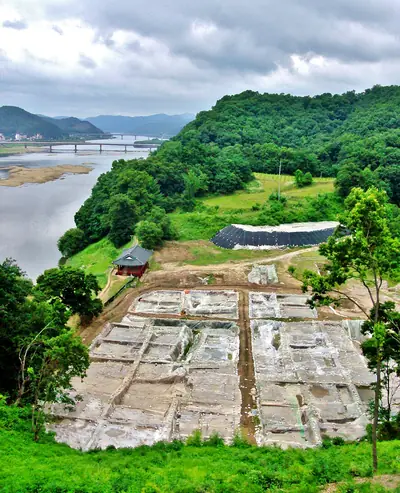
The Baekje Historic Areas preserve burial mounds and archaeological evidence from the Baekje period. Several forms of tomb appear among the hills of Songsan-ri, including stone mound tombs, earthen tombs, and corridor-style tombs.
The corridor-style tombs are particularly distinctive. They contain a burial chamber and an entrance passage, with Tomb Number Six among the most remarkable examples. Its chamber was built from patterned bricks, covered by a vaulted ceiling, and equipped with a brick funerary platform and a drainage channel. Murals depicting the Four Guardian Deities, the sun, and the moon were found inside, along with other artifacts.
The surviving remains reveal the care given to construction beneath the burial mounds, from stonework and vaulted chambers to painted walls and drainage systems.
Gongju National Museum
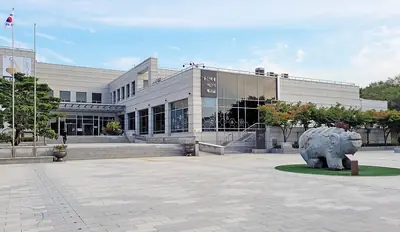
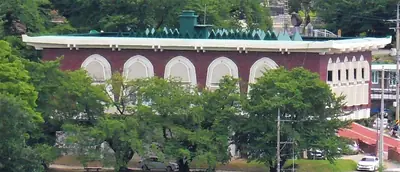
Gongju National Museum is one of the most important places to visit for understanding Baekje’s cultural heritage. Its collection includes around ten thousand artifacts, especially objects excavated from the Tomb of King Muryeong.
The museum’s history began in 1934, when the Gongju Historic Sites Preservation Society was created to preserve Baekje culture. It became a branch of the Government-General Museum in 1940, a branch of the National Museum in 1946, and Gongju National Museum in 1975. The present building opened in 2004.
The collection includes nineteen national treasures and three treasures excavated in the Daejeon and Chungcheongnam-do areas. Together, these objects provide context for the royal tombs, fortress, and other archaeological sites around Gongju.
Chungcheongnam-do History Museum
The Chungcheongnam-do History Museum is another museum to include when exploring Gongju. Located in the city, it adds a broader regional perspective to the archaeological and cultural heritage found in Chungcheongnam-do.
Magoksa
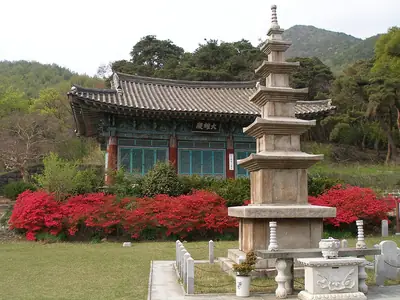
Magoksa is a mountain temple on the eastern slope of Taehwasan. Its name can be translated as Hemp Valley Temple, and the temple stands beside a taegeuk-shaped bend in Taegeukcheon Stream.
Magoksa is a head temple of the Jogye Order of Korean Buddhism and one of Korea’s important mountain temples. In 2018, it became part of the UNESCO World Heritage site “Sansa, Buddhist Mountain Monasteries in Korea.”
The temple also offers temple stay programs, providing a way to experience Buddhist culture beyond a short visit to the grounds.
Sinwonsa
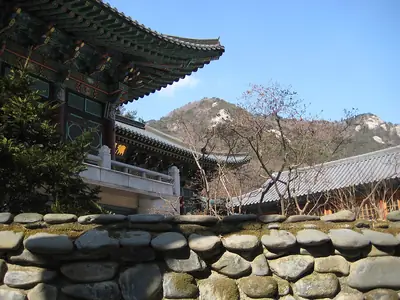
Sinwonsa is a Buddhist temple on the western side of Gyeryongsan and one of the mountain’s three principal temples, together with Donghaksa and Gapsa. Its history reaches back to the Baekje period: it was founded in 651, during the eleventh year of King Uija’s reign, by the monk Bodeokhwasang.
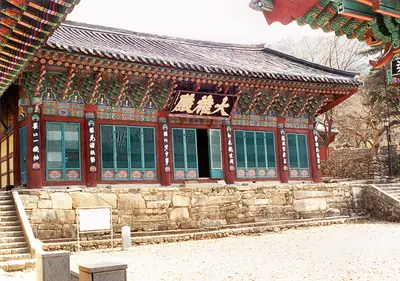
The main hall, Daeungjeon, is the temple’s most important surviving building. The present structure was rebuilt in 1876 and is designated Tangible Cultural Property Number 80 in South Chungcheong Province. It has three bays across the front and three along the side, a parjak roof, and an Amitabha Buddha inside.
Sinwonsa is a branch temple of Magoksa. Other surviving buildings include Hyanggak, Yeongwonjeon, Daebang, and Yosaechae.
Donghaksa Temple
Donghaksa Temple stands on the eastern foothills of Gyeryongsan, near Daejeon. It is one of the places associated with the mountain and has an important role in Korean Buddhist history.
In 1860, Donghaksa opened what is described as Korea’s oldest bhikkhuni Sangha college, a Buddhist educational institution for nuns.
Gapsa
Gapsa, also known as Gyeryong Gapsa, is a Buddhist temple on the western foothills of Gyeryongsan in Gongju. Forest, valleys, and scenic surroundings give the temple a quiet mountain setting.
Gapsa was rebuilt in 556, during the reign of King Wideok, the twenty-seventh king of Baekje. Later, the monk Uisang established a religious practice site there and enlarged the main hall. The grounds include Daejeokjeon Hall, a stupa, and the stone supports of an iron flagpole.
The temple is also associated with the Thousand-Kilogram Bell and wooden printing blocks for the Wolin Cheongang Jigok.
Explore Gongju with a Self-Guided Walking Tour
A Gongju self-guided walking tour is a simple way to connect the city’s main Baekje sites without following a group. Neywo’s free walking tour, Gongju, Capital of Baekje, covers 4 km in about 82 minutes and includes 5 narrated stops: Gongju National Museum, Ancient Tombs in Gongju, Chungcheongnam-do History Museum, Baekje Historic Areas, and Gongsanseong.
Download Neywo and explore Gongju at your own pace. The app tells the story of each place as you reach it, with no group and no schedule. When planning a wider trip through South Korea, you can also discover other destinations such as Gyeongju, Jeonju, and Busan.
Places with an audio guide in Gongju
8 places in Gongju with a Neywo audio guide. Each one starts telling its story as you reach it.
Self-guided tours in Gongju
1 tour in Gongju, free in the Neywo app. Each stop tells its story as you reach it.
- Walk
Gongju, Capital of Baekje
In 475 the Baekje kingdom moved its capital to Ungjin, today's Gongju, and ruled from here for 63 years. This short walk links the museum that holds King Muryeong's treasures, the royal burial mounds of Songsan-ri and the hilltop fortress that guarded the court, all part of a UNESCO World Heritage site.
Gongju National Museum · Ancient Tombs in Gongju · Chungcheongnam-do History Museum · Baekje Historic Areas · Gongsanseong
Open this tour: Gongju, Capital of Baekje
Walk Gongju with Neywo
Neywo turns Gongju into a self-guided audio tour. Stories arrive as you reach the place they belong to, and the route reshapes when you wander off it.