Seogwipo, South Korea: Self-Guided Walking Tour
Things to Do in Seogwipo: 12 Places to See on Jeju Island
The best things to do in Seogwipo include exploring volcanic landscapes, historic villages, museums, temples and landmarks connected with Jeju’s culture. The city and its surrounding area offer a varied way to experience the island, from the cliffs of the southern coast to Hallasan and Seongsan Ilchulbong. Neywo has a free audio guide for Seogwipo with 12 narrated places, available in 11 languages.
What to See in Seogwipo
Jeju World Cup Stadium
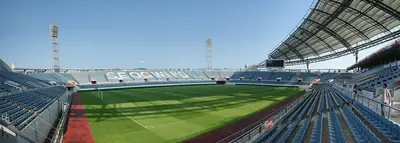
Jeju World Cup Stadium was built for the 2002 FIFA World Cup and is designed to reflect Jeju’s volcanic landscape and surrounding sea. It is a football-only stadium, with a playing field constructed 14 metres below ground to help protect it from the island’s strong winds and reduce construction costs.
The roof has a net-like form inspired by Jeju’s traditional fishing boats, while the stadium’s overall shape has been compared with the mouth of a volcano. It was built to hold more than 42,000 spectators and hosted three matches during the World Cup. Since 2006, it has been the home ground of the K League club Jeju SK.
Daepo Jusangjeolli Cliff
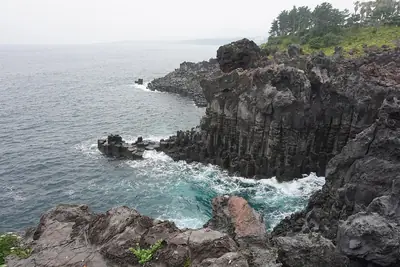
Daepo Jusangjeolli Cliff, also known as Jusangjeollidae, is one of the most distinctive geological sites on Jeju’s southern coast. Its geometric columns were formed when lava from Hallasan flowed into the sea at Jungmun and cooled into columnar joints.
The most scenic section rises about 20 metres above the water. The regular shapes of the volcanic rock make this a memorable place for coastal views and for seeing how Jeju’s volcanic history has shaped its shoreline.
Hallasan
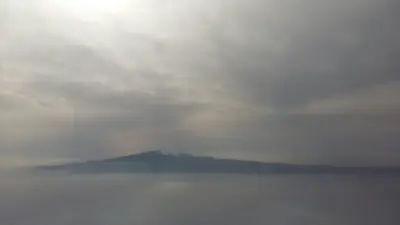
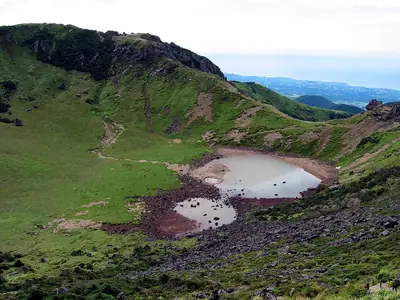
Hallasan is the volcanic heart of Jeju Island and, at 1,947.06 metres, the highest point in South Korea. The broad shield volcano occupies much of the island, with smaller volcanic cones known as oreum, or ak, scattered across its slopes.
Baengnokdam, a volcanic crater lake, lies at the summit. Hallasan is protected as a natural reserve and was designated Natural Monument Number 182. It became a national park in 1970 and, in 2007, was included in the UNESCO World Natural Heritage site Jeju Volcanic Island and Lava Tubes.
Seongsan Ilchulbong
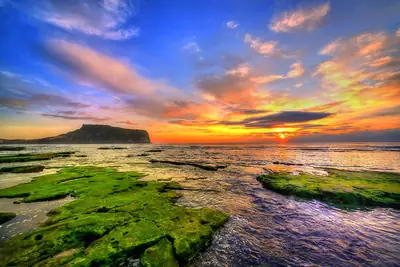
Seongsan Ilchulbong, also called Sunrise Peak, is a celebrated volcanic landmark on eastern Jeju Island. Rising 182 metres above the island, it is particularly known for its sunrises.
A large bowl-shaped crater opens across the summit, covering about 129,774 square metres. Seongsan Ilchulbong and the surrounding one-kilometre stretch of sea form a protected natural area. The site became a Korean Natural Monument in 2000, and part of it was included in the UNESCO World Natural Heritage site Jeju Volcanic Island and Lava Tubes in 2007.
Jeju Volcanic Island and Lava Tubes
Jeju Volcanic Island and Lava Tubes brings together several landscapes that illustrate the island’s volcanic origins. The World Heritage site was inscribed in 2007 and is divided into three areas: the Hallasan Natural Reserve, the Geomunoreum Lava Tube System and the Seongsan Ilchulbong Tuff Cone.
Its different areas connect the mountain, underground lava formations and volcanic coastline, making it an important part of understanding Jeju’s natural history.
Jeju Aerospace Museum
The Jeju Aerospace Museum combines aviation and space through educational exhibitions, hands-on areas and exhibition programmes. It also has an observatory and a lookout.
The museum includes two indoor exhibition areas and one outdoor display area. It opened in April 2014, following construction that cost 115 billion won at the time.
Yakcheonsa
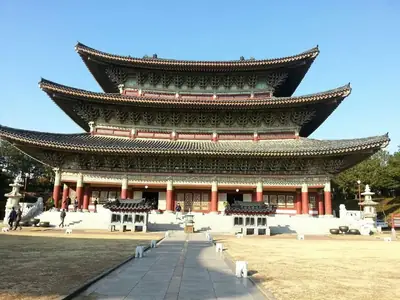
Yakcheonsa is a Buddhist temple in Seogwipo. Its name means “medicine spring temple”, offering a simple introduction to the identity and character associated with the site.
The temple adds a spiritual and cultural dimension to a visit focused on Jeju’s landscapes and museums.
Citrus Museum
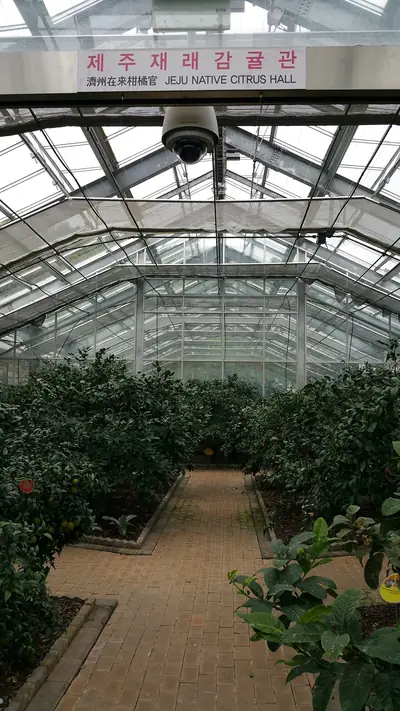
The Citrus Museum, also known as the Seogwipo Citrus Museum, explores the fruits for which Jeju is known and the story of citrus production in the region.
It is a useful stop for discovering an important part of the island’s agricultural identity and for looking beyond Jeju’s better-known volcanic scenery.
Seongeup Folk Village
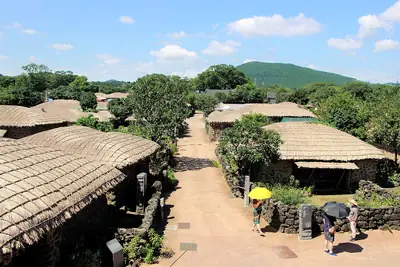
Seongeup Folk Village is a traditional Korean village in Pyoseon-myeon, Seogwipo. Known in Korean as Seongeup-minsok-maeul, it has been continuously inhabited for around 600 years, since the fifteenth century.
The settlement retains its traditional pre-modern form, giving visitors a sense of how the village developed over a long period. Two trees within the village are designated Natural Monuments of South Korea, and the historic buildings and village as a whole form part of Seongeup’s protected heritage.
Obokcheon, the Five Blessings Fountain
Near Cheonjeyeon Falls and Seonim Bridge, Obokcheon is also known as the Five Blessings Fountain. It is a small stop associated with the spring and the first waterfall.
The fountain forms part of the wider scenic area around the falls and bridge, making it a brief but distinctive place to include while exploring this part of Seogwipo.
Chocolate Museum
The Chocolate Museum, known in Korean as 초콜릿박물관, is dedicated to chocolate. It dates back to May 5, 2002, and is located at 551 in the Nongong Complex, Ilgwa-ri, Daejeong-eup, Seogwipo, on Jeju Special Self-Governing Island.
It offers a focused museum visit for travellers interested in learning more about chocolate.
Lee Jung Seop Art Gallery
The Lee Jung Seop Art Gallery is a municipal art museum in Seogwipo, on Jeju Island. It is connected with the city’s artistic character and provides a cultural stop alongside the area’s natural and historic attractions.
Explore Seogwipo with Neywo
Neywo’s free Seogwipo audio guide includes 12 narrated places. Narration is available in 11 languages, and each story plays as you reach the place, at your own pace: no group and no schedule.
Download Neywo to explore Seogwipo independently and hear the story of each place when you arrive. For more ideas elsewhere in the country, continue with South Korea, or discover another destination such as Jeju, Seoul or Gyeongju.
Places with an audio guide in Seogwipo
8 places in Seogwipo with a Neywo audio guide. Each one starts telling its story as you reach it.
Walk Seogwipo with Neywo
Neywo turns Seogwipo into a self-guided audio tour. Stories arrive as you reach the place they belong to, and the route reshapes when you wander off it.

