Things to Do in Ulsan, South Korea: Walking Guide
Things to Do in Ulsan, South Korea
Ulsan is a coastal city in South Korea where prehistoric rock art, maritime history, sports architecture, and urban heritage come together. From the ancient Bangudae Petroglyphs to the whale-inspired roof of Ulsan Munsu Football Stadium, the city offers distinctive places to explore beyond its industrial reputation. Neywo has a free audio guide for Ulsan with 7 narrated places, available in 11 languages.
What to See in Ulsan
Bangudae Petroglyphs
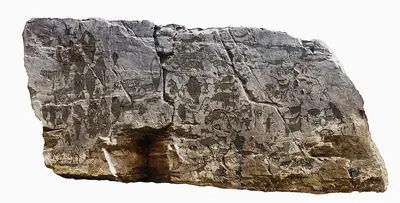
The Bangudae Petroglyphs are one of South Korea’s most remarkable prehistoric rock-art sites. The carvings appear on flat rock faces beside the Daegokcheon stream, a branch of the Taehwa River. The main rock face is about eight metres wide and five metres high, with ten additional surfaces nearby carrying smaller groups of engravings.
The name Bangudae refers to the shape of the rock formation: ban means shell, gu means turtle, and dae means a structure or site. The carvings include animals, human figures, hunting scenes, concentric circles, diamond patterns, and inscriptions. Their most extraordinary feature is the detailed portrayal of whaling scenes, including animals whose species can be identified from the images.
The site connects Ulsan’s ancient past with its long relationship to the sea. For a wider introduction to the region’s rock art, the Ulsan Petroglyph Museum offers a dedicated place to examine carvings from the surrounding area.
Ulsan Petroglyph Museum
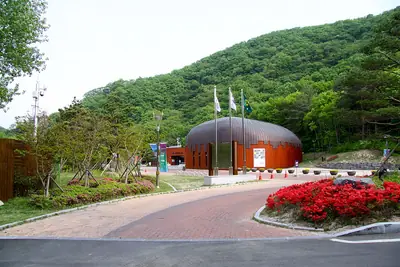
Located in Ulju County, the Ulsan Petroglyph Museum focuses entirely on the ancient rock art found in the region. It provides an opportunity to look closely at representations of animals, people, and geometric patterns associated with the communities that lived here in ancient times.
The museum is a useful companion to the archaeological sites themselves, especially if you want to spend time examining the details of the carvings rather than viewing them only in their original landscape.
Petroglyphs of Cheonjeon-ri, Ulju
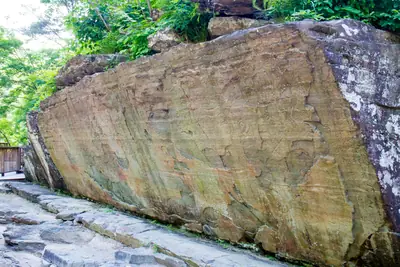
The Petroglyphs of Cheonjeon-ri are carved into vertical rock faces beside the Daegokcheon stream, a tributary of the Taehwa River. Unlike a site from a single period, these engravings were created across many eras, from the Neolithic period through the time of Silla, one of Korea’s Three Kingdoms.
The carvings were discovered in December 1970 by a survey team from Dongguk University and became South Korea’s 147th National Treasure in 1973. In July 2025, they were inscribed on the UNESCO World Heritage List together with the nearby Bangudae Petroglyphs under the shared name Petroglyphs of Bangudae Stream. The rock surfaces preserve deliberate images made thousands of years ago, long before written history.
Ulsan Museum
Next to Ulsan Grand Park in Nam-gu, Ulsan Museum traces life in Ulsan and across Korea from prehistoric times to the present day. Its permanent exhibition provides historical context for the city’s archaeological sites, cultural traditions, and modern development.
The museum’s construction began on January 2, 2009, and was completed on January 31, 2011. It officially opened on June 22, 2011. Visiting it gives the city’s prehistoric and contemporary stories a single setting.
Ulsan Munsu Football Stadium
Ulsan Munsu Football Stadium is a football-specific venue within Ulsan Sports Park. Built for the 2002 FIFA World Cup, it was the first of the ten World Cup venues to be completed, finishing in 2001. Since opening, it has served as the home ground of Ulsan HD in South Korea’s K League 1.
The stadium’s most distinctive feature is its roof. Its steel truss framework forms an abstract interpretation of a whale skeleton, inspired by the whale scenes on the nearby Bangudae Petroglyphs. The supporting columns recall the golden crowns of the Silla Dynasty. Together, these details explain the stadium’s nickname, Big Crown, and make it a notable Ulsan landmark even for visitors who are not attending a match.
Ulsan Castle
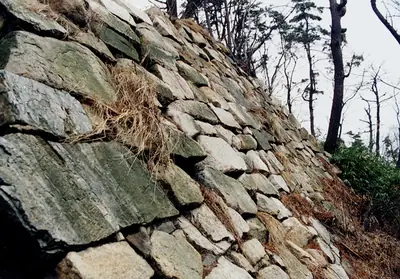
Ulsan Castle, also known as Ulsan Japanese Castle, is the ruined remains of a Japanese-style fortress in Jung-gu. It was built during the Japanese invasions of Korea, known as the Imjin War, by the army of Katō Kiyomasa.
The site is a rare example of a Japanese-style fortress, or waeseong, on Korean soil. Much of the original structure has disappeared as the city developed, so the visit is largely an encounter with the surviving ruins and the historical layers they represent.
Jangsaengpo Whale Museum
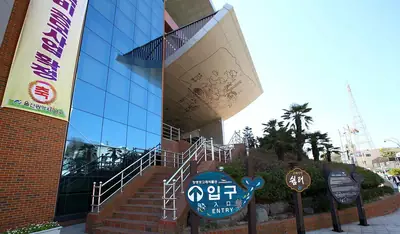
The Jangsaengpo Whale Museum, in Ulsan’s Nam District, explores the city’s whaling heritage. Opened in 2005, it is dedicated to the history of whaling in Ulsan, which once played a central role in Korea’s whaling industry.
Its subject also echoes the city’s prehistoric heritage: whales appear prominently in the Bangudae Petroglyphs, while the same imagery inspired the design of Ulsan Munsu Football Stadium. Together, these places show how deeply maritime history is woven into Ulsan’s identity.
Explore Ulsan with Neywo
Download Neywo and explore Ulsan with a free audio guide covering 7 narrated places. The app tells the story of each site as you reach it, at your own pace, with no group and no schedule. Narration is available in 11 languages, making it an easy way to discover the city while you walk.
Ulsan is one destination in South Korea, a country with many other cities to explore, including Yeosu, Jeonju, and Seoul.
Places with an audio guide in Ulsan
6 places in Ulsan with a Neywo audio guide. Each one starts telling its story as you reach it.

Walk Ulsan with Neywo
Neywo turns Ulsan into a self-guided audio tour. Stories arrive as you reach the place they belong to, and the route reshapes when you wander off it.

