Visiting Cambrils, Spain: Top Sights on Foot
Things to Do in Cambrils: Historic Buildings, Churches and Coastal Heritage
Looking for things to do in Cambrils? This Catalan town combines a Mediterranean setting with a rich local heritage of mills, farmhouses, churches, watchtowers and historic civic buildings. The best way to discover it is to explore the old town and surrounding area at a relaxed pace, moving between landmarks that reveal different parts of Cambrils’ history.
Neywo offers a free audio guide for Cambrils with 9 narrated places, so you can learn more about the town as you walk. Cambrils is part of Catalonia, in Spain.
What to see in Cambrils
Portal del Carrer Major
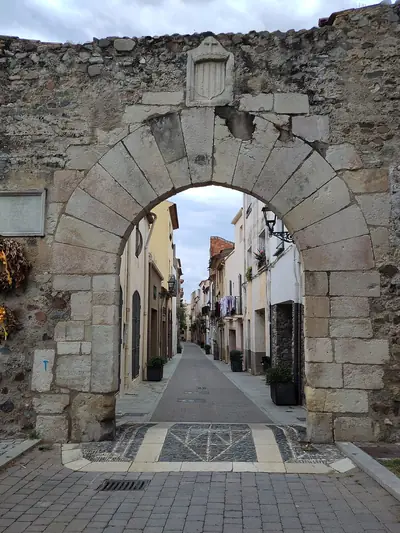
The Portal del Carrer Major is a historic building that offers a glimpse of Cambrils’ earlier character. As part of the town’s historic centre, it provides a natural starting point for discovering the streets and buildings that preserve Cambrils’ past.
Santa Maria de Cambrils
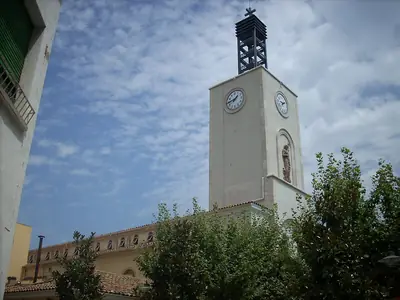
Santa Maria de Cambrils is a listed church and a locally significant cultural asset. Its protected status reflects the importance of the building within the town’s architectural heritage.
Santuari de la Verge del Camí
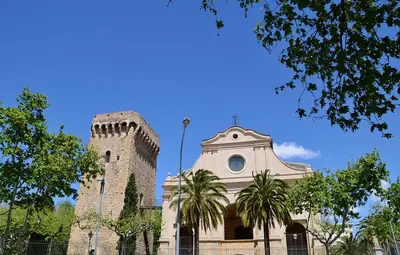
The Santuari de la Verge del Camí, also known as the Mare de Déu del Camí, is one of Cambrils’ historic religious landmarks. The Marian sanctuary stands beside the route of the old Camí Reial and belongs to the parish of Santa Maria.
The site has a long history: it is documented as a former parish church in 1214, while the present building dates from 1778. Built in the late Renaissance, it has a rectangular plan with Renaissance, Baroque and Neo-Gothic influences. Inside, three naves and a partly underground crypt are among its defining features.
The building was constructed with stone from the Montjuïc quarry. The crypt is thought to have been the original church. After its restoration in 2007, this semi-subterranean space became a concert hall.
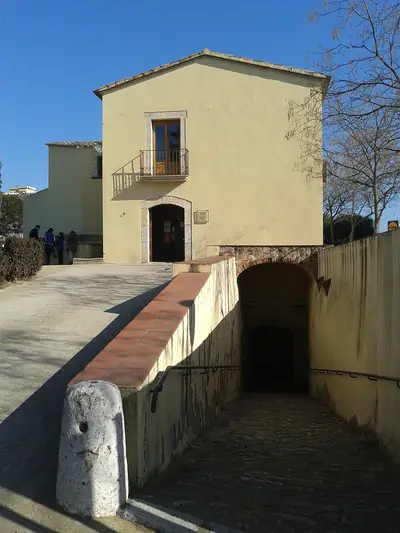
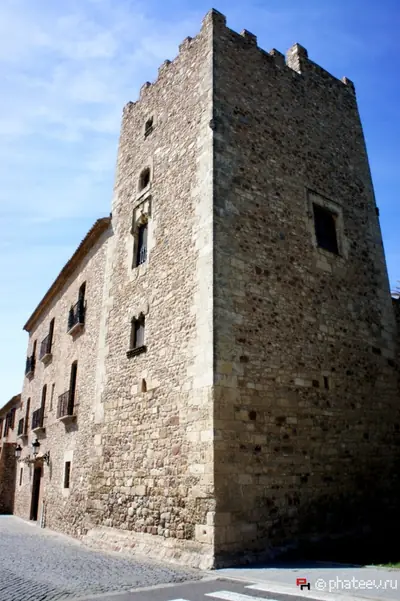
The sanctuary is also connected with the adjoining Torre de l’Ermita, an old watchtower, and the Museu de la Torre. Together, the church and tower bring religious and defensive history together in one site. The sanctuary’s patronal festival is celebrated on 8 September.
Sant Pere de Cambrils
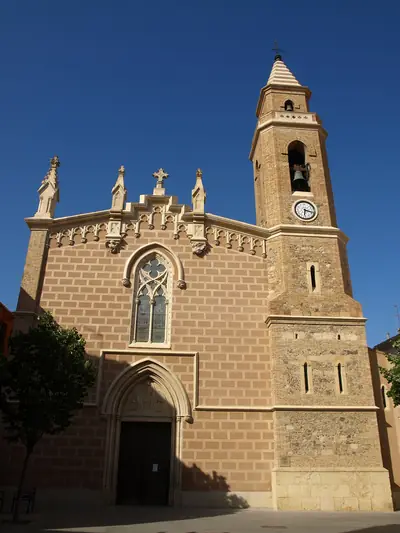
Sant Pere de Cambrils, also known as the Església de Sant Pere, is one of the town’s protected cultural landmarks. It is another important stop for anyone interested in Cambrils’ historic churches and local architecture.
Museu Agrícola de Cambrils
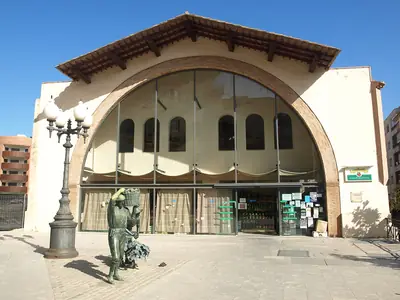
The Museu Agrícola de Cambrils occupies the former winery of the Agricultural Syndicate. Known in Catalan as the Celler del Sindicat Agrícola, the building offers an insight into the town’s agricultural history and historic built environment.
The former winery is listed in the Inventory of the Architectural Heritage of Catalonia. Its original purpose gives the museum a direct connection with the rural and productive traditions of Cambrils.
Molí de les Tres Eres
The Molí de les Tres Eres is an old mill that now forms part of the Cambrils History Museum. The building houses two permanent exhibitions: one dedicated to mills and another focused on archaeology.
Together, the exhibitions connect the mill’s original function with the wider history of Cambrils. The Molí de les Tres Eres is included in Catalonia’s Inventory of Architectural Heritage, recognizing its importance as part of the region’s built heritage.
Castell de Vilafortuny
In the Vilafortuny area of Cambrils, Castell de Vilafortuny—also known as Castillo de Vilafortuny—stands as a historic building and a locally important cultural heritage site. Its presence adds a castle to Cambrils’ varied architectural landscape, alongside its churches, mills and traditional farmhouses.
Mas d’en Bosch
Mas d’en Bosch, also known as Mas d’Oliver, is a traditional farmhouse in Cambrils. It forms part of a small heritage ensemble with the chapel of Santa Maria del Mas d’en Bosch, also called the Mare de Déu de Vilafortuny.
The farmhouse dates from around the seventeenth century and reflects a popular Renaissance style. Both the farmhouse and chapel are protected as locally important cultural heritage, making the ensemble a valuable example of Cambrils’ rural architecture.
Parc Samà
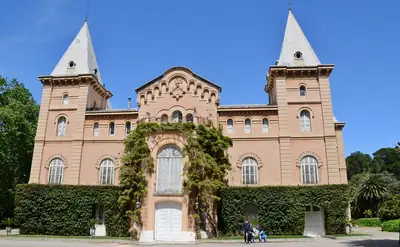
Parc Samà is a private botanical garden and historic garden in the Cambrils area. Declared a Cultural Property of National Interest, it offers a distinctive setting combining botanical collections with historic surroundings.
Its character differs from the town’s churches and civic buildings, but it forms part of the wider heritage of Cambrils and its surroundings.
Explore Cambrils with a self-guided walking tour
Neywo’s Cambrils Old Town: Watchtowers, Mills and Wine is a self-guided walking tour covering 2.38 km in approximately 64 minutes. It includes 6 narrated stops:
- Portal del Carrer Major
- Santa Maria de Cambrils
- Museu de la Torre
- Museu Agrícola de Cambrils
- Molí de les Tres Eres
- Sant Pere de Cambrils
The app tells the story of each place as you reach it, at your own pace, with no group and no schedule. The narration is available in 11 languages, making it an easy way to turn a walk through Cambrils into a guided visit while keeping the freedom to stop, look around and continue whenever you choose.
Download Neywo and discover Cambrils
Download Neywo to explore Cambrils with one walking tour, 2.38 km long, lasting about 64 minutes and featuring 6 narrated stops. The free audio guide covers 9 narrated places in total, with each story playing automatically as you arrive.
Explore the town independently, without a group or a fixed schedule, and discover Cambrils’ historic streets, churches, museums and heritage buildings at your own pace.
Places with an audio guide in Cambrils
8 places in Cambrils with a Neywo audio guide. Each one starts telling its story as you reach it.
Self-guided tours in Cambrils
1 tour in Cambrils, free in the Neywo app. Each stop tells its story as you reach it.
- Walk
Cambrils Old Town: Watchtowers, Mills and Wine
Wander through the historic centre of Cambrils from the old town gate to the church of Santa Maria, the sanctuary beside the Torre de l'Ermita, the former winery of the Agricultural Syndicate and the mill that now holds the town's history museum. A short walk ends at the church of Sant Pere.
Portal del Carrer Major · Santa Maria de Cambrils · Museu de la Torre · Museu Agrícola de Cambrils · Molí de les Tres Eres · Sant Pere de Cambrils
Open this tour: Cambrils Old Town: Watchtowers, Mills and Wine
Walk Cambrils with Neywo
Neywo turns Cambrils into a self-guided audio tour. Stories arrive as you reach the place they belong to, and the route reshapes when you wander off it.

