Things to Do in Segovia, Spain: Walking Guide
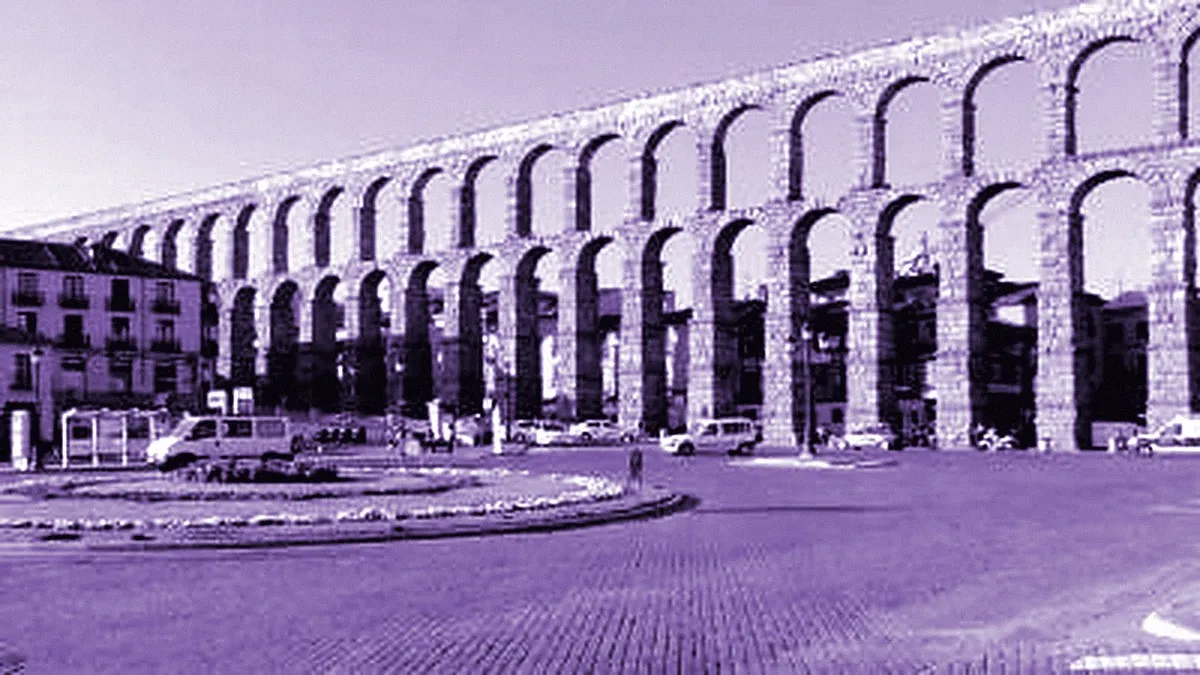
Things to do in Segovia: an audio-guided walk through history
The best things to do in Segovia are concentrated in a remarkable historic city shaped by Roman engineering, medieval power and Castilian culture. From the monumental Aqueduct of Segovia to the Royal Alcázar and the Gothic cathedral, the city is worth exploring on foot, one historic layer at a time. Neywo offers a free audio guide for Segovia with 93 narrated places.
Segovia is in Castile and León, in central Spain. Its old town and aqueduct bring together some of the region’s most important Roman, medieval and religious landmarks, while its palaces, churches and museums reveal a more detailed story of the city.
What to see in Segovia
The Aqueduct of Segovia
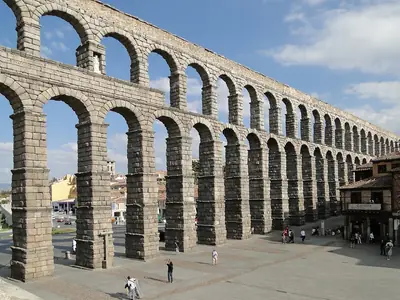
The Aqueduct of Segovia is the city’s foremost symbol and one of the best-preserved Roman aqueduct bridges in the world. Its elevated arcade has 167 granite arches, built from precisely cut stone blocks placed one on top of another without mortar.
The aqueduct dates from the early second century AD, around the end of Emperor Trajan’s reign or the beginning of Hadrian’s. Its historic importance has been recognised since it became a national monument in 1884. In 1985, it received UNESCO World Heritage status together with Segovia’s old town.
The aqueduct’s silhouette appears on the city’s coat of arms and on a commemorative two-euro coin issued in 2016. A plaque from the city of Rome was installed on the monument in 1974 to mark its 2000th anniversary.
The Royal Alcázar of Segovia
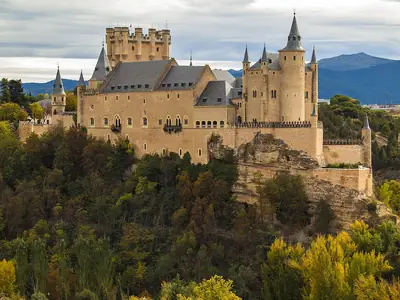
Perched on a rocky spur above the confluence of the Eresma and Clamores rivers, the Royal Alcázar of Segovia is both a medieval castle and a museum. It has served as a royal palace, fortress, treasury, state prison, artillery college and military archive.
The building’s history reaches back to Roman foundations. From at least 1135, it was the first residence of the kings of Castile, and over almost a millennium, 31 kings from different dynasties passed through its rooms. Its slender, ship-like profile comes from the slate roof ordered by Philip II, while mudéjar details and Roman-era funerary stelae show the many layers of its past.
The Tower of Homage once held the Crown’s treasure, helping provide funds for Christopher Columbus’s first voyage. The Alcázar also housed royal archives and an armory; the armory’s pieces are now displayed in Madrid.
Segovia Cathedral
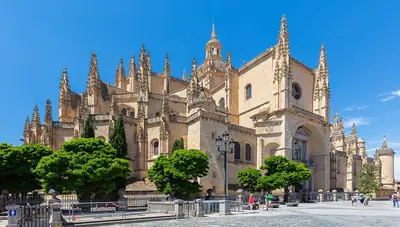
Segovia Cathedral dominates the city skyline with its elegant Flamboyant Gothic design. Known affectionately as the “Lady of the Cathedrals”, it is dedicated to the Assumption of the Virgin Mary and to Saint Fructus and serves as the seat of the Diocese of Segovia.
Construction began in 1525 under the architect Juan Gil de Hontañón, and the cathedral was consecrated in 1768. It is considered one of the last great Gothic cathedrals built in Europe, although it also includes Renaissance touches. The building has been protected as a Bien de Interés Cultural since 1931.
The Church of San Esteban
The Church of San Esteban is one of Segovia’s most striking Romanesque landmarks. Its slender bell tower once reached 56 metres with a Baroque spire, making it the tallest Romanesque tower on the Iberian Peninsula. The spire is gone, but the tower remains about 50 metres high and is topped by a metal rooster and weather vane.
Its southern façade has a portico of ten arches with medieval carvings on the capitals. A covered gallery runs along the western and southern sides, while the building combines local pink limestone with granite column shafts. After a fire, the interior was rebuilt in the eighteenth century in the Baroque style.
Romanesque churches
Segovia’s religious heritage extends well beyond the cathedral. The Church of San Justo stands near Plaza del Azoguejo, opposite the aqueduct. Built in the twelfth century on the site of an earlier hermitage, it is notable for its Romanesque paintings.
The Church of San Martín is another Romanesque landmark within the historic walls, with sturdy forms that reflect the region’s medieval building traditions. The Church of San Juan de los Caballeros, built between the eleventh and thirteenth centuries, is also a Romanesque church whose name recalls its historic connection with local horsemen.
In the San Lorenzo neighborhood, the Church of San Lorenzo adds another example of Romanesque architecture to the city’s collection of medieval buildings.
La Vera Cruz Church
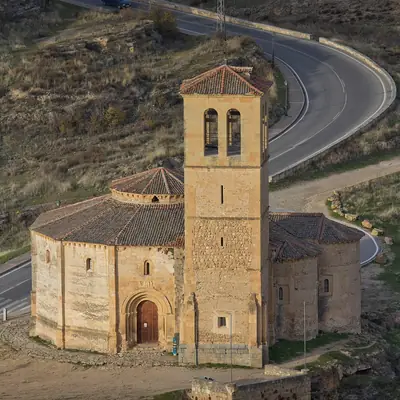
On the hillside north of Segovia, beside the convent of San Juan de la Cruz, La Vera Cruz Church offers a quieter architectural experience. Built in the early thirteenth century, it was originally known as the Church of the Holy Sepulchre, reflecting its connection with sacred sites in Jerusalem.
Its most distinctive feature is a dodecagonal nave surrounding a central two-storey aedicule. Later additions include apses and a tower. The result is one of Europe’s best-preserved examples of Romanesque central-plan architecture.
The Coining House
The Coining House is a former royal mint commissioned by Philip II in the sixteenth century. It was built to house Spain’s first mechanised mint and is recognised as one of the oldest examples of industrial architecture in Europe.
Today, the building operates as a museum dedicated to coins, industrial heritage and the Aqueduct of Segovia. Its exhibitions connect the development of coin production with the city’s most famous Roman monument.
Casa de la Tierra and the city’s palaces
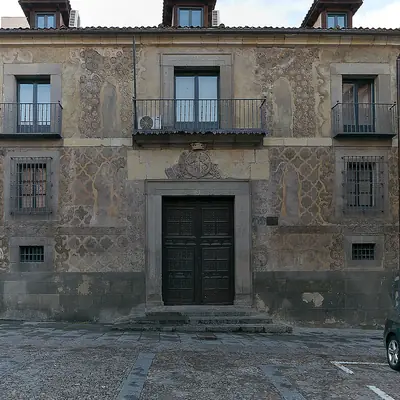
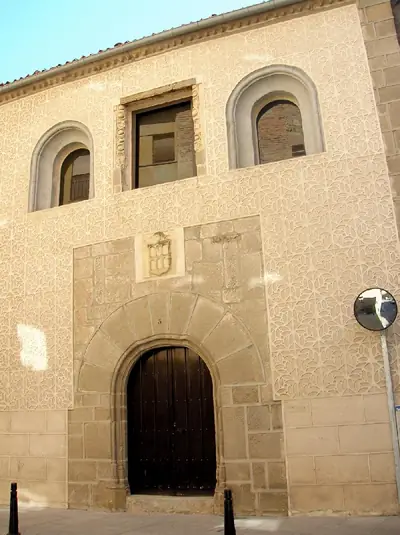
Casa de la Tierra stands just outside Segovia’s ancient walls and has served as the historic seat of the Comunidad de Ciudad y Tierra de Segovia since the fifteenth century. Formerly known as the Casa de los Pueblos, it dates from the 1400s and remains distinctive for its mural painting and intricate sgraffito work.
The Casa de los Marqueses de Moya, also called the Casa de las Cadenas or Palacio del Marqués de Moya, is another important historic building. It is recognised as a Bien de Interés Cultural.
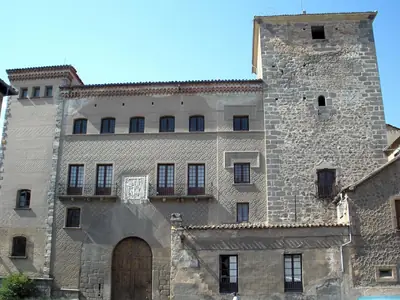
The Palacio de Enrique IV, also known as the Palacio de San Martín, the Casa de los Mercado-Peñalosa or the Palacio de la Reina Doña Juana, forms part of a palace ordered by King Enrique IV of Castile in the San Martín neighborhood.
Monasteries and convents
The Monastery of San Antonio el Real is a Gothic complex in the heart of Segovia that now serves as a museum. Its collection includes religious art, a silver reliquary of Saint Anthony of Padua and several Flemish triptychs from the Utrecht school.
The Monastery of Santa María de los Huertos preserves the remains of a twelfth-century Premonstratensian cenobio. The monastery eventually fell into ruin, and today only its remains can be seen.
Exploring Segovia at your own pace
A Segovia self-guided walking tour is a practical way to connect the city’s major monuments with its less obvious churches, palaces and museums. Neywo’s routes include the main road from the Aqueduct to the Cathedral, the Alcázar and the Eresma Valley, Romanesque churches and noble houses, the Jewish Quarter and the southern slope, and palaces and plazas in the old centre.
The city also makes a useful starting point for discovering other historic destinations in the region, including Ávila, Salamanca and Burgos.
Download Neywo and explore Segovia
Neywo has 6 walking tours and 1 bus route in Segovia. The walks range from 0.97 to 2.71 km and take between 73 and 109 minutes, with between 8 and 12 narrated stops. The bus route covers 3.9 km in 17 minutes and has 11 stops.
The free audio guide includes 93 narrated places, with narration available in 11 languages. Each story plays as you reach the place, at your own pace: there is no group and no schedule. Download Neywo and explore Segovia through its aqueduct, cathedral, castle, churches, palaces and museums.
Places with an audio guide in Segovia
8 places in Segovia with a Neywo audio guide. Each one starts telling its story as you reach it.
Self-guided tours in Segovia
7 tours in Segovia, free in the Neywo app. Each stop tells its story as you reach it.
- Bus ride
Line 10: Historic Centre to the Aqueduct
Segovia's small urban bus 10 loops from the cathedral through the old town and out past San Lorenzo, then returns down to the Roman aqueduct. A cheap way to cover the old town's churches, palaces and the theatre without the hills.
Segovia Cathedral · Convent of Saint Joseph · Puerta de la Claustra · Church of San Pedro de los Picos · Monastery of Santa Cruz la Real, Segovia · Church of San Lorenzo …
Open this tour: Line 10: Historic Centre to the Aqueduct - Walk
From the Aqueduct to the Cathedral: Calle Real
Start where the Roman aqueduct towers over Plaza del Azoguejo and climb Calle Real into the old town. Pass the House of the Peaks, the Torreón de Lozoya, the old synagogue and the Lady of Cathedrals, finishing at the city gate that locals call the Arco del Socorro.
Plaza del Azoguejo · Casa de los Picos · Torreón de Lozoya · Museo de Arte Contemporáneo Esteban Vicente · Teatro Juan Bravo · Church of San Miguel …
Open this tour: From the Aqueduct to the Cathedral: Calle Real - Walk
Romanesque Churches and Noble Houses of the East
Segovia has more Romanesque churches than almost any city in Europe. Walk from the 11th-century Mudéjar tower of San Millán through quiet squares and noble houses to the church-turned-studio of the ceramicist Daniel Zuloaga.
Church of San Millán · Convent of San Francisco, Segovia · Church of San Clemente · Church of San Justo · Church of El Salvador · Casa del Mayorazgo de los Cáceres …
Open this tour: Romanesque Churches and Noble Houses of the East - Walk
Convents, Academies and the Jesuit Church
The upper town is a maze of convents, Romanesque churches and learned institutions. Visit the Casa de la Tierra with its sgraffito, the Jesuit church, Santísima Trinidad and Santo Domingo el Real, and the academy in the church of San Quirce.
Casa de la Tierra · Church of the Compañía, Segovia · Monastery of Santa Cruz la Real, Segovia · House of the Ramírez de Arellano family · Church of San Nicolás · Church of the Santísima Trinidad …
Open this tour: Convents, Academies and the Jesuit Church - Walk
The Alcázar and the Eresma Valley
Walk from the Alcázar, the fairy-tale castle of the kings of Castile, down into the Eresma valley: the twelve-sided Vera Cruz church, the Carmelite convent of San Juan de la Cruz, the shrine of La Fuencisla and the royal mint.
Daoiz and Velarde · Royal Alcázar of Segovia · La Vera Cruz Church · Convent of the Carmelitas Descalzos, Segovia · Sanctuary of Nuestra Señora de la Fuencisla · Arco de la Fuencisla …
Open this tour: The Alcázar and the Eresma Valley - Walk
The Jewish Quarter and the Southern Slope
Wander the lanes of Segovia's medieval Jewish quarter, past the Ibáñez synagogue, a Renaissance palace and the old grain exchange, then drop down the southern slope to the quiet churches of Santo Tomás and Santa Eulalia.
Plaza del Socorro, Segovia · Sinagoga de los Ibáñez, Segovia · Palace of the Marqués del Arco · Jewish quarter of Segovia · Alhóndiga de Segovia · Ermita de la Piedad …
Open this tour: The Jewish Quarter and the Southern Slope - Walk
Palaces and Plazas of the Old Centre
A compact loop through the noble heart of Segovia: the palace where Enrique IV lived, Baroque mansions, a Plaza named for Adolfo Suárez and a string of small Romanesque churches, all within a few streets of the Plaza Mayor.
Church of San Martín · Casa del Mayorazgo de los Galiachos · Palacio de Enrique IV, Segovia · Plaza de Adolfo Suárez · Palace of the Condes de Encinas · Church of Saint Roman …
Open this tour: Palaces and Plazas of the Old Centre
Walk Segovia with Neywo
Neywo turns Segovia into a self-guided audio tour. Stories arrive as you reach the place they belong to, and the route reshapes when you wander off it.

