Things to Do in Fort William, United Kingdom: Walking Guide
Things to do in Fort William: historic sights and Highland landscapes
Fort William is a Highland town beneath Ben Nevis and beside Loch Linnhe, known for its dramatic surroundings and strong connections with Scotland’s history. From the town centre to nearby castles, bridges and Jacobite landmarks, there is plenty to explore. Neywo offers a free Fort William audio guide with 445 narrated places.
What to see in Fort William and beyond
Carrbridge Packhorse Bridge
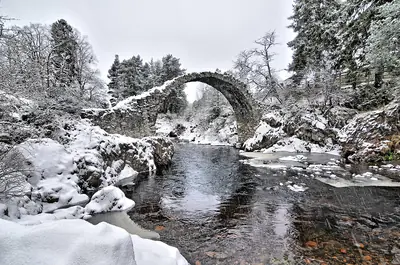
Carrbridge Packhorse Bridge is one of the distinctive historic features of Carrbridge. Built in 1717 across the River Dulnain, it carried funeral processions towards Duthil Church and also served as a crossing for people and pack animals travelling through the Highlands.
The bridge is also known as the Coffin Bridge. Its parapets were washed away during the nineteenth century, giving the stone structure its unusual appearance. It became a Category B listed building in 1971.
Glenfinnan Viaduct
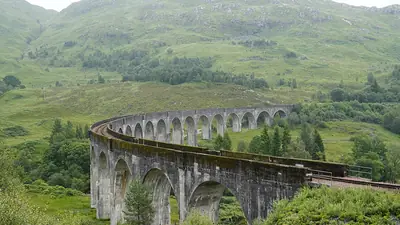
The Glenfinnan Viaduct is one of the most recognisable railway bridges in the western Highlands. It crosses the landscape at the head of Loch Shiel, overlooking both the loch and the Glenfinnan Monument.
The viaduct stretches for 380 metres and is supported by 21 piers, some reaching 30 metres high. Built in the late 1890s as part of the railway line that opened in 1901, it was an early major example of a bridge made from mass concrete. Its fame grew further after appearing in several films and television productions, including three Harry Potter films.
The viaduct underwent restoration between 2024 and 2025, after more than a century of railway use.
Glenfinnan Monument
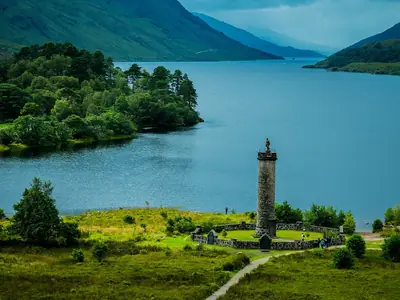
The Glenfinnan Monument commemorates the Scottish Highlanders who fought in the Jacobite Army during the Jacobite rising of 1745. Erected in 1814, it stands in Glenfinnan, in Lochaber, close to the viaduct and Loch Shiel.
Its Category A listing reflects its recognised importance as a historic monument and makes it an essential stop for anyone interested in the Jacobite past.
Roman Catholic Church of Our Lady and St Finnan
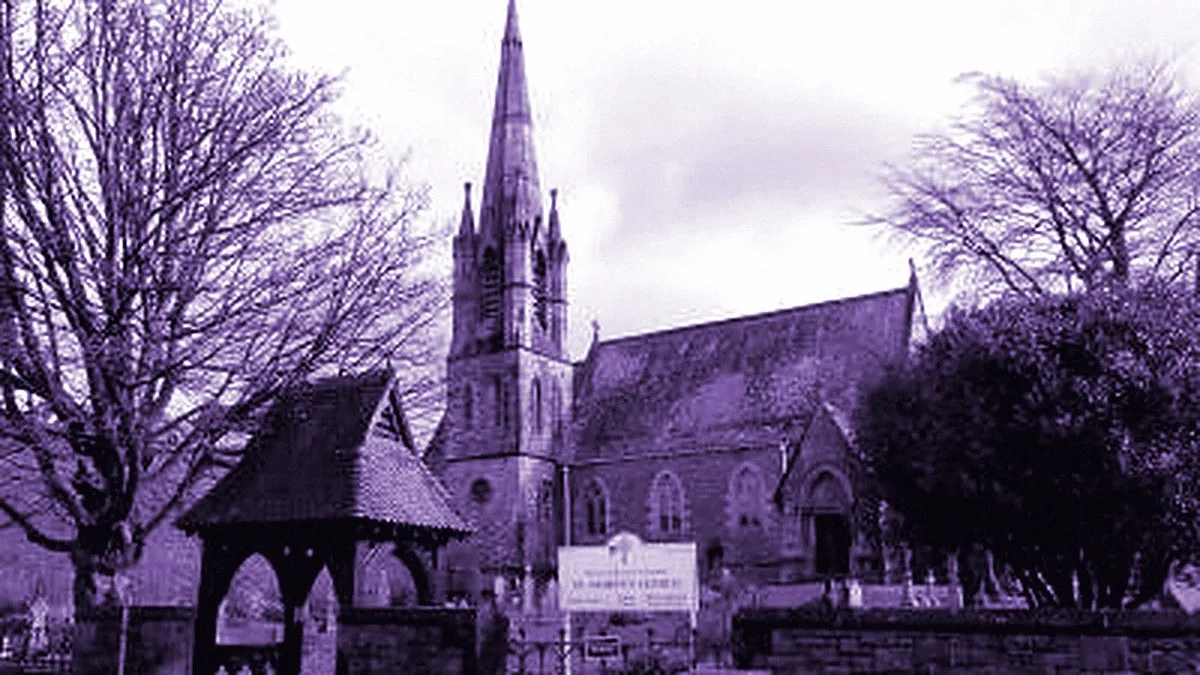
Also known as St. Mary and St. Finnan, the Roman Catholic Church of Our Lady and St Finnan is another landmark in Glenfinnan. The church forms part of the historic landscape around the monument and viaduct.
Castle Tioram
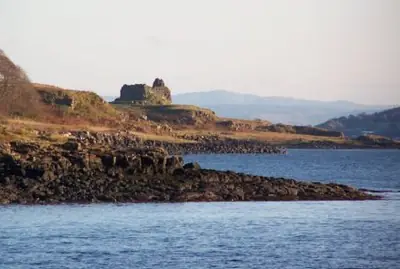
Castle Tioram, also called Dorlin Castle, is a striking ruin on Eilean Tioram in Loch Moidart. The island becomes separated from the mainland at high tide, making the castle’s relationship with the surrounding water especially distinctive.
The ruin lies north of Acharacle, about 80 kilometres west of Fort William. It is recognised both as a scheduled monument and as a nationally important historic building.
Ardtornish Castle
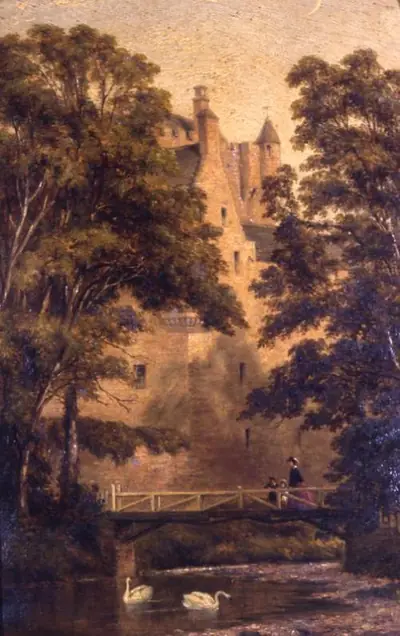
Ardtornish Castle stands in ruin on the Ardtornish estate in Morvern, extending into the Sound of Mull. It lies about two kilometres south-east of Lochaline and is protected as a scheduled monument.
From the early fourteenth century until the end of the fifteenth century, Ardtornish was one of the principal seats of the chiefs of Clan Donald. It was also associated with the Lords of the Isles, with charters issued there and important negotiations taking place on the site. In 1461, John of Islay, the fourth and last Lord of the Isles, met commissioners of King Edward the Fourth of England at Ardtornish. Their discussions produced the Treaty of Ardtornish-Westminster.
Eilean Donan Castle
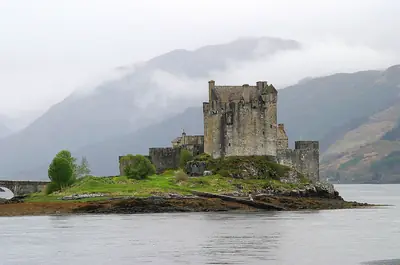
Eilean Donan Castle occupies a small tidal island where Loch Duich, Loch Long and Loch Alsh meet. A footbridge connects the island with the mainland, creating one of the western Highlands’ most memorable castle settings.
The present building is a twentieth-century reconstruction of a thirteenth-century stronghold. Eilean Donan later became associated with Clan Mackenzie and Clan MacRae, but it was destroyed in 1719 after the Mackenzies became involved in the Jacobite rebellions. Reconstruction began after Lieutenant-Colonel John Macrae-Gilstrap purchased the island in 1911 and continued from 1913 to 1932.
Castle Roy
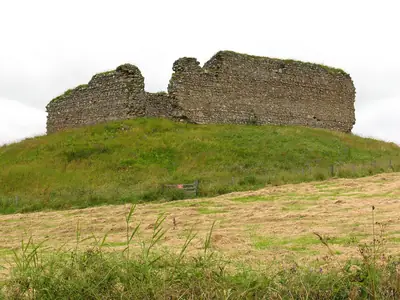
Castle Roy, also known as Red Castle, is an atmospheric medieval ruin just north of Nethy Bridge near Grantown-on-Spey. The surviving courtyard castle dates from the thirteenth century and is associated with the Comyn family.
Cawdor Castle
Cawdor Castle is famous as the supposed home of Shakespeare’s Macbeth, although the connection is highly fictionalised. The castle itself is never directly mentioned in the play, and it was built many years after the life of the eleventh-century King Macbeth.
At its centre is a fifteenth-century tower house, surrounded by later additions. Originally owned by the Calder family, the castle passed to the Campbells in the sixteenth century and remains in Campbell ownership today. It is protected as a Category A listed building.
Beauly Priory
Beauly Priory preserves the remains of a medieval monastic community beside the River Beauly. The priory was probably founded around 1230 as a Valliscaulian monastery, although its founder is uncertain. The surviving former priory church is relatively well preserved, while most of the other monastic buildings have disappeared.
French monks and the nearby landowner John Byset created a strong French-speaking presence at the site. The name Beauly comes from the French words “beau lieu”, meaning “beautiful place”, and the same name passed to the river. The priory became Cistercian on 16 April 1510.
Inverness Castle
Inverness Castle is a prominent red sandstone building overlooking the River Ness. The site has been occupied by castles for centuries, with its history reaching back to 1057, while the present structure was completed in 1836.
Designed by William Burn and later extended by Thomas Brown the Second, the building originally served as the sheriff court and administrative centre for Inverness-shire. It is a Category A listed building. The north tower opened as a viewpoint in 2017, and the castle grounds have also been opened to visitors through the Inverness Castle Experience.
Fortrose Cathedral
Fortrose Cathedral was once at the centre of religious life in Ross. It served as the episcopal seat of the medieval Scottish diocese of Ross, near Inverness. The diocese may originally have been based at Rosemarkie, before its canons moved to Fortrose or Chanonry by the thirteenth century.
Dunrobin Castle
Dunrobin Castle overlooks the Dornoch Firth, just north of Golspie. It remains the family seat of the Earl of Sutherland and the chief of Clan Sutherland.
Although its origins reach back to the Middle Ages, much of the present building was added between 1835 and 1850. Sir Charles Barry was responsible for most of the castle and its gardens. With 189 rooms, Dunrobin is described as the largest residential building in the northern Highlands. It served as a boarding school from 1965 until 1972 and has been open to the public since 1973.
Sligachan Old Bridge
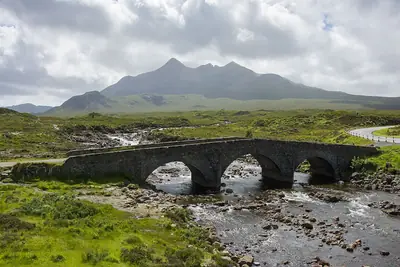
Sligachan Old Bridge is a historic road bridge on the Isle of Skye. Today, it carries a footpath across the River Sligachan, allowing visitors to experience the old crossing on foot.
Dounreay Castle
Dounreay Castle, also known as Dounreay House, is a ruined sixteenth-century stronghold near the coast west of Thurso. It has an L-plan design and stands within the grounds of the Dounreay Nuclear Power Development Establishment.
The castle and associated structures are protected as a scheduled monument. The ruin lies about eight miles, or 13 kilometres, west of Thurso in the Highland council area.
Explore Fort William with a free audio guide
Download Neywo and discover Fort William at your own pace. The app offers one walking tour and one bike route:
- Fort William: The Fort, the Chief and the Highland Town — a 1.87-kilometre walk lasting 82 minutes, with 11 narrated stops.
- Great Glen Cycle Route: Ben Nevis Distillery to Banavie — a 2.8-kilometre bike route lasting 14 minutes, with three narrated stops.
Neywo tells the story of each place as you reach it, at your own pace, with no group and no schedule. The narration is available in 11 languages. For more of Scotland, continue exploring Scotland, or plan visits to Inverness, Glasgow and Edinburgh.
Places with an audio guide in Fort William
8 places in Fort William with a Neywo audio guide. Each one starts telling its story as you reach it.
Self-guided tours in Fort William
2 tours in Fort William, free in the Neywo app. Each stop tells its story as you reach it.
- Bike ride
Great Glen Cycle Route: Ben Nevis Distillery to Banavie
The start of the Great Glen cycle route west of Fort William. Ride from the foot of Ben Nevis and its 1825 whisky distillery past the 13th-century ruins of Inverlochy Castle, then on traffic-free paths to the swing bridge at Banavie, beside the Caledonian Canal.
Ben Nevis distillery · Inverlochy Castle · Banavie Swing Bridge
Open this tour: Great Glen Cycle Route: Ben Nevis Distillery to Banavie - Walk
Fort William: The Fort, the Chief and the Highland Town
Walk the High Street of the Highlands' outdoor capital, with Ben Nevis behind it. Meet the Man with Sore Feet, see Jacobite relics in the West Highland Museum, the Cameron obelisk and the bronze statue of Lochiel, three very different kirks, and finish at the ruins of the Cromwellian fort on the shore of Loch Linnhe.
Fort William Sheriff Court · Man with Sore Feet statue · Former Mackintosh Memorial Church, Fassifern Road, Fort William · West Highland Museum · Fort William · Cameron Obelisk …
Open this tour: Fort William: The Fort, the Chief and the Highland Town
Walk Fort William with Neywo
Neywo turns Fort William into a self-guided audio tour. Stories arrive as you reach the place they belong to, and the route reshapes when you wander off it.

