What to See in Stirling, United Kingdom: Free Audio Guide
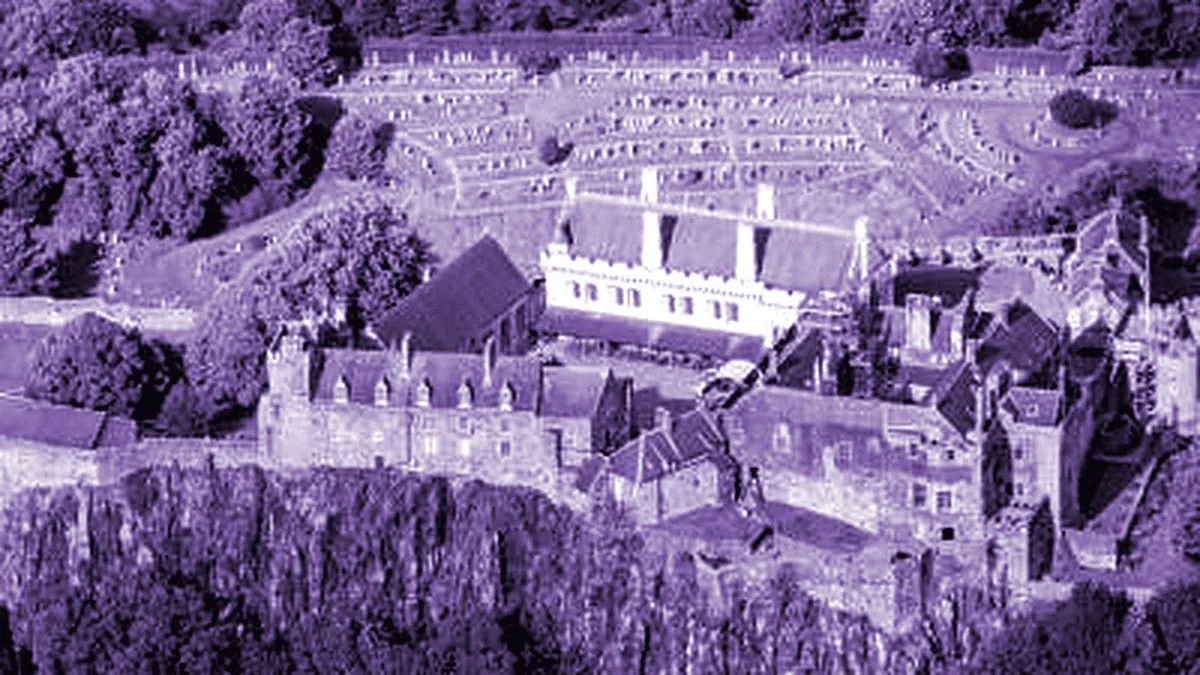
Things to Do in Stirling: What to See in Scotland’s Historic City
Looking for things to do in Stirling? This compact Scottish city combines royal history, medieval streets, military heritage and memorable views across the Forth Valley. From Stirling Castle and the Wallace Monument to nearby abbeys, castles and the cathedral town of Dunblane, it is one of the most rewarding places to explore in Scotland. Neywo has a free audio guide for Stirling with 102 narrated places.
What to See in Stirling
Stirling Castle
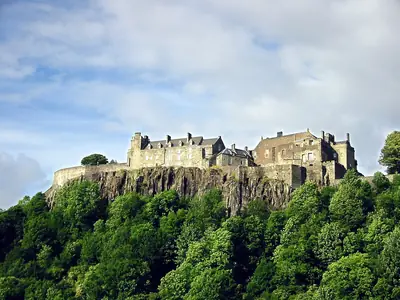
Start with Stirling Castle, one of Scotland’s largest and most important castles. Built on a steep crag above the city, it served both as a fortress and as one of the principal residences of Scotland’s kings and queens. Much of the castle dates from the fifteenth and sixteenth centuries, with major development under James IV, James V, James VI and Mary of Guise.
The castle has royal connections reaching back centuries. Several Scottish monarchs were crowned here, including Mary, Queen of Scots, in 1542. It also endured at least eight sieges, including attacks during the Wars of Scottish Independence and Bonnie Prince Charlie’s unsuccessful attempt to take it in 1746.
The Forework, created for James IV around 1506, forms the grand approach to the castle. Its French-influenced design and chivalric imagery show that Stirling Castle was intended to impress as well as defend. Inside, the Palace, Chapel Royal and other buildings reveal the scale of royal life at the site.
Stirling’s Old Town
Below the castle, Stirling’s Old Town unfolds along steep, historic streets. The area brings together several of the city’s most important landmarks, including Mercat Cross, the Church of the Holy Rude, Cowane’s Hospital and the Old Town Jail.
Mercat Cross marks the historic civic centre. Nearby, the Church of the Holy Rude and its cemetery provide a strong connection with Stirling’s medieval and religious past. Cowane’s Hospital adds another historic building to the route, while the Old Town Jail offers a different perspective on life in the city during the Victorian period.
The Old Town is also home to Argyll’s Lodging and Mar’s Wark, two reminders of the city’s aristocratic and architectural heritage. For a closer look at this part of the city, a Stirling self-guided walking tour can connect the castle, Castle Hill and the Old Town at your own pace.
Albert Halls
On Dumbarton Road, the Albert Halls have been part of Stirling’s artistic and civic life since opening in October 1883. Designed by local architect William Simpson, the building was funded through public subscription and was originally known as the New Public Halls.
Its opening programme included Handel’s The Messiah, performed by the Stirling Choral Society. A lecture by Oscar Wilde followed only a few weeks later. Since then, the venue has hosted concerts, ballet, comedy, conferences and public events. The Main Hall has a large stage and balcony, while the smaller Lesser Hall provides a more intimate space.
Holy Trinity Episcopal Church
Holy Trinity Episcopal Church stands on Dumbarton Road and is one of Stirling’s listed historic buildings. It was first added to Scotland’s list of historic buildings in 1965 and upgraded to Category A, the highest level of listing, in 1997.
Its position makes it a natural stop when walking between Stirling’s Old Town and the Albert Halls. The building also features in the city’s Victorian streets and Albert Halls route.
Cambuskenneth Abbey
Cambuskenneth Abbey lies on a bend of the River Forth near Stirling. Founded around 1140 by King David the First of Scotland, it was originally known as the Abbey of Saint Mary of Stirling. The religious house belonged to the Arrouaise Order from France and was later associated with the Augustinians.
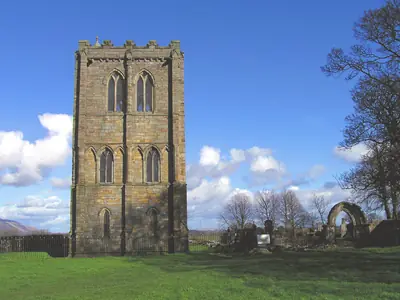
The abbey is now largely in ruins, but its freestanding bell tower remains prominent. Foundations, traces of a portal and remains of a residential or working building can still be seen. Much of the abbey’s stone was reused for Stirling Castle after the monastery fell into disrepair during the Scottish Reformation.
The grounds also preserve the graves of James the Third of Scotland, his wife Margaret of Denmark and several abbots. Cambuskenneth is included in a walking route that continues to the Wallace Monument.
Wallace Monument
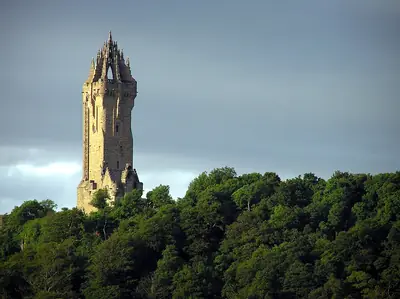
The National Wallace Monument rises 67 metres above Stirling on the summit of Abbey Craig. Built to commemorate Sir William Wallace, it became a symbol of Scottish pride during the nineteenth-century revival of Scottish national identity.
The foundation stone was laid in 1861 and the tower was completed in 1869. Architect John Thomas Rochead designed it in the Victorian Gothic style. From the hilltop, the monument overlooks Stirling, the Ochil Hills and the Forth Valley.
Inside, three exhibition rooms explore the monument and its subject. The Hall of Heroes contains busts of notable Scottish figures, including Robert the Bruce, Adam Smith and Sir Walter Scott. Mary Slessor and Maggie Keswick Jencks were added in 2017. Wallace’s 1.63-metre-long sword is among the most memorable objects on display.
Dunblane
A short journey from Stirling, Dunblane is a cathedral town on the Allan Water. Its historic sights include Dunblane Bridge, Dunblane Cathedral, Dunblane Museum, St Blane’s Church and St Mary’s Episcopal Church.
The town’s bridges and churches give it a distinct character, while the Allan Water provides the setting for several of its landmarks. A dedicated walking route makes it possible to explore Dunblane’s historic centre through six narrated stops.
Castles and Historic Places Near Stirling
Doune Castle
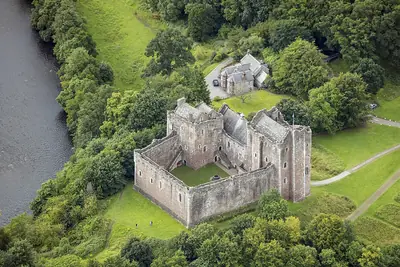
About thirteen kilometres northwest of Stirling, Doune Castle stands on a wooded bend where the Ardoch Burn meets the River Teith, near the village of Doune. Its remarkably complete medieval appearance offers a clear sense of how a late medieval Scottish castle was organised.
Much of the surviving castle reflects rebuilding in the late fourteenth century by Robert Stewart, Duke of Albany, the son of Robert the Second of Scotland and Regent of Scotland. The plan was intended as a courtyard surrounded by buildings, although only the northern and northwestern ranges were completed. A large entrance tower contained the lord’s rooms and family quarters, while another tower held the kitchen and guest rooms. The two were joined by the great hall.
Inchmahome Priory and Talla Castle
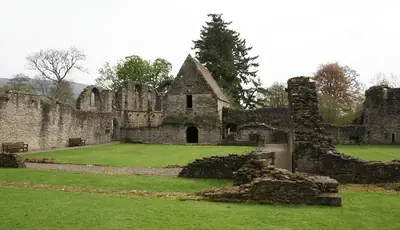
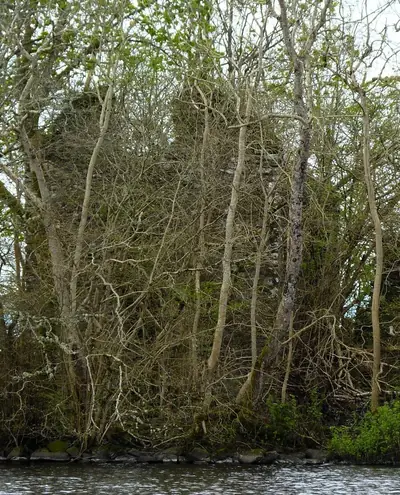
Inchmahome Priory occupies Inchmahome, the largest of three islands in the centre of the Lake of Menteith. Founded in 1238 by Walter Comyn, Earl of Menteith, it housed a community of Augustinian canons. Much of the thirteenth-century structure survives in ruin.
The priory has strong royal connections. Robert the Bruce visited three times, and the future King Robert the Second stayed there in 1358. In 1547, four-year-old Queen Mary was brought to the island for safety after the Scottish army’s defeat at the Battle of Pinkie.
On nearby Inchtalla, Talla Castle dates from the fifteenth century. Construction began in 1427 under Malise Graham, Earl of Mentieth. The island setting gives both sites an unusual place in the history of the Lake of Menteith.
Plean Castle
Plean Castle, also known as Plean Tower, Cock-a-bendy Castle, Mengie Castle, Menzies Castle and Plane Castle, is a compact historic tower house near Plean. The small oblong tower probably dates from the fifteenth century. Beside it stands a sixteenth-century manor house, creating a distinctive combination of two periods of development.
Buchanan Castle
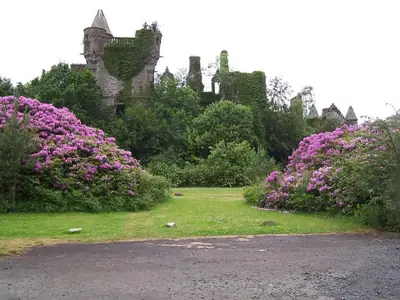
Buchanan Castle is the roofless remains of a grand country house in Stirlingshire. James Graham, the 4th Duke of Montrose, commissioned the house, which was built between 1852 and 1858. It became the Montrose family home and remained in use until 1925.
The surrounding lands had previously belonged to the Clan Buchanan before passing to the Clan Graham in the late seventeenth century. Buchanan Castle replaced Buchanan Auld House, destroyed by fire in 1852.
Sir John de Graham’s Castle
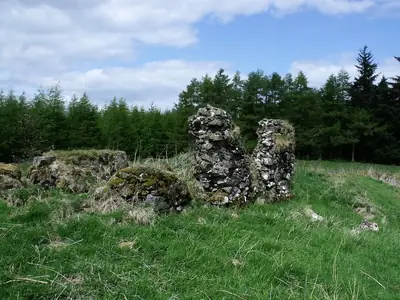
Near Carron Valley Reservoir, the remains of Sir John de Graham’s Castle form a secluded medieval motte and bailey. Also known as Dundaff Castle or Graham’s Castle, the site is built around a raised mound surrounded by a substantial ditch.
The ditch is about three metres deep and eleven metres wide, while the central mound measures roughly twenty-three metres by twenty-three metres. The ruin is associated with the peel tower of Sir John de Graham, who died at the Battle of Falkirk in 1298. Its exact date remains uncertain because the motte has not yet been excavated.
Explore Stirling with Neywo
Download Neywo for a free audio guide and explore Stirling without joining a group or following a schedule. The app offers four walking tours:
- Stirling Castle and Castle Hill: 1.22 km, 74 minutes and 11 narrated stops.
- Stirling’s Old Town and Victorian streets: 1.72 km, 69 minutes and 8 narrated stops.
- Wallace Country, Cambuskenneth Abbey and the Wallace Monument: 5.74 km, 107 minutes and 4 narrated stops.
- Dunblane: 1.07 km, 51 minutes and 6 narrated stops.
Neywo tells the story of each place as you reach it, at your own pace, with no group and no schedule. Its Stirling guide contains 102 narrated places, and narration is available in 11 languages. Discover Stirling Castle, the Old Town, Cambuskenneth Abbey, the Wallace Monument and Dunblane as you walk.
Places with an audio guide in Stirling
8 places in Stirling with a Neywo audio guide. Each one starts telling its story as you reach it.
Self-guided tours in Stirling
3 tours in Stirling, free in the Neywo app. Each stop tells its story as you reach it.
- Walk
Crag, crown and cannon: Stirling Castle and Castle Hill
Stand under the statue of Robert the Bruce on the esplanade, then climb through the gatehouse into the castle where Mary, Queen of Scots was crowned. See the first Renaissance palace in Britain, the chapel built for a royal christening and the regiment's museum, then come down Castle Wynd past a Renaissance townhouse, a ruined earl's mansion, the church where James VI was crowned as a baby and a Victorian jail with turrets.
Statue of Robert the Bruce · South African War Memorial, Esplanade, Stirling Castle · Stirling Castle · Stirling Castle, Palace · Chapel Royal, Stirling Castle · Argyll and Sutherland Highlanders Regimental Museum …
Open this tour: Crag, crown and cannon: Stirling Castle and Castle Hill - Walk
Stirling's Old Town and Victorian streets: from the Puggy to the Albert Halls
Start with the story of the city and its wolf, then cross the Victorian shopping arcade and King Street's old banks to the Mercat Cross and its unicorn, the Puggy. The route ends along Dumbarton Road, past a monument to a Covenanter, a museum with a Doric portico and the hall where Oscar Wilde lectured.
Stirling · Stirling Arcade · Stirlingshire · Mercat Cross · Wilson Monument · Stirling Smith Museum and Art Gallery …
Open this tour: Stirling's Old Town and Victorian streets: from the Puggy to the Albert Halls - Walk
Dunblane: cathedral town on the Allan Water
A short stroll round a small cathedral town: the bridge over the Allan Water, the thirteenth-century cathedral with its eleventh-century tower, the museum in a seventeenth-century house beside it and two Victorian churches.
Dunblane Bridge · Dunblane Cathedral · Dunblane Museum · Dunblane · St Blane's Church, Dunblane · St Mary's Episcopal Church, Dunblane
Open this tour: Dunblane: cathedral town on the Allan Water
Walk Stirling with Neywo
Neywo turns Stirling into a self-guided audio tour. Stories arrive as you reach the place they belong to, and the route reshapes when you wander off it.

