What to See in Birmingham, United States: Free Audio Guide
Things to do in Birmingham, Alabama
The best things to do in Birmingham include exploring its civil rights landmarks, industrial heritage, museums, historic churches and baseball history. From Sloss Furnaces and Rickwood Field to the Birmingham Civil Rights District, the city offers a vivid way to understand Alabama’s past and culture. Neywo has a free audio guide for Birmingham with 63 narrated places.
What to see in Birmingham
Birmingham’s Civil Rights District
The Birmingham Civil Rights District is a six-block area in downtown Birmingham where pivotal events of the American Civil Rights Movement unfolded during the 1950s and 1960s. The city designated it a historic district in 1992.
The Birmingham Civil Rights Institute, which opened in 1992, explores the 1963 Birmingham campaign, the Children’s Crusade and the broader movement through exhibits and archives. Its collection includes a replica of the bus used by the Freedom Riders, the actual door from the jail cell where Dr. Martin Luther King Jr. wrote Letter from Birmingham Jail, and about 500 oral histories.
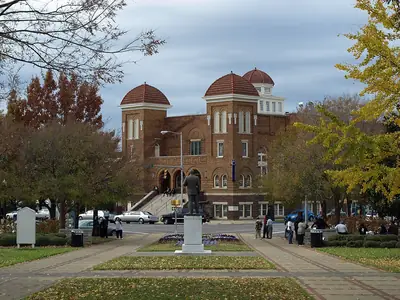
Nearby, Kelly Ingram Park commemorates the protests through sculpture and memorials. The park stands beside 16th Street Baptist Church, a significant civil rights site that honors the four girls killed in the 1963 bombing.
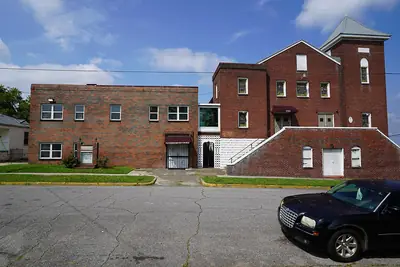
Sardis Baptist Church
Sardis Baptist Church, also known as Old Sardis Baptist Church, played a central role in Birmingham’s civil rights history. The Alabama Christian Movement for Human Rights was born here during a mass meeting on June 5, 1956, attended by more than a thousand people.
The organization coordinated protests, boycotts and legal challenges against segregation. Although the congregation relocated in 1975, a remnant reorganized as Old Sardis Baptist Church the following year to preserve the historic sanctuary and its legacy.
Shady Grove Baptist Church
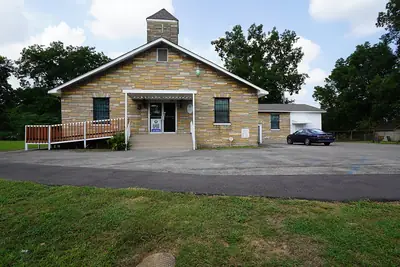
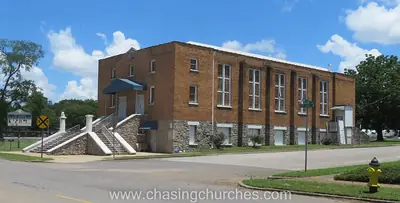
Founded in 1902, Shady Grove Baptist Church occupies a building completed in 1942 under Reverend Lewis J. Rogers. The congregation became active in the Alabama Christian Movement for Human Rights during the 1950s and 1960s, taking part in rallies and protests against segregation.
Its modest appearance contrasts with the importance of the meetings and organizing that took place within the church and its surrounding community.
St. Luke AME Church
St. Luke AME Church was founded in 1886 and is one of Birmingham’s oldest African Methodist Episcopal congregations. The present building was completed in 1926 and designed by Wallace Rayfield, one of America’s pioneering African American architects.
During the civil rights movement, the church served as a gathering place for Birmingham’s African American community. It hosted meetings and offered sanctuary to organizers and activists.
Sloss Furnaces
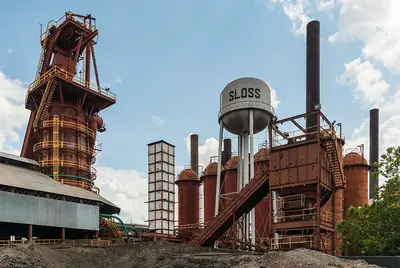
Sloss Furnaces preserves Birmingham’s industrial history at one of the only blast furnace sites of its kind in the country. The furnaces began operating in the early 1880s, producing pig iron for nearly ninety years before going cold in the early 1970s.
The site became a National Historic Landmark in 1981. Two blast furnaces, each weighing 400 tons, remain surrounded by around 40 original buildings, including boilers and engines. Walking through the complex reveals the scale of the heavy industry that shaped Birmingham.
Arlington Antebellum Home and Gardens
A short distance from downtown, Arlington Antebellum Home and Gardens occupies six acres of landscaped grounds. It is Birmingham’s only surviving antebellum mansion.
The two-story Greek Revival house was built between 1845 and 1850, with eight rooms across two floors. Enslaved laborers constructed it under the direction of Judge William S. Mudd. Despite descriptions that may suggest otherwise, Arlington was never a plantation: no crops were grown there, and it was always a private residence.
Union troops used the property as a base in 1865 during the Civil War. Its grounds and rooms therefore connect Birmingham’s architectural history with the events of the conflict.
First United Methodist Church
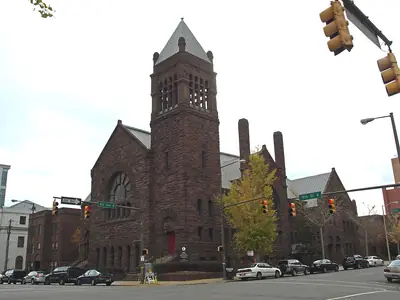
First United Methodist Church traces its roots to January 1872, when a small group met in a storefront near what is now 1st Avenue and 21st Street North. The current Romanesque Revival sanctuary was completed in 1891.
Designed by George Kramer of the Ohio firm Weary and Kramer, the church is clad in Ohio brownstone and defined by rounded arches, heavy stonework and a rugged texture. Inside, a Tiffany & Company marble baptismal font remains a centerpiece of the worship space.
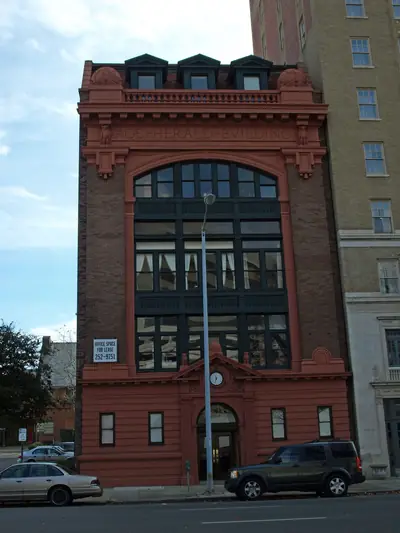
First Presbyterian Church and the Age-Herald Building
The First Presbyterian congregation was founded in Elyton in 1858, before Birmingham was established. When Birmingham was founded in 1871, the congregation moved its wooden building into the new city. The current sanctuary replaced that structure in 1888.
The Victorian Gothic building has a red-brick façade and pointed arches. Its tower contains the Rushton Memorial Carillon, installed in 1924 with 37 bells cast in England.
Birmingham Museum of Art
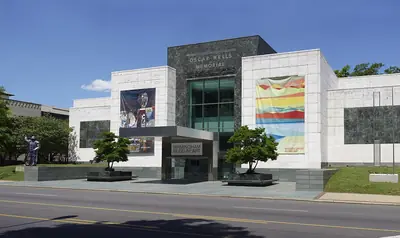
The Birmingham Museum of Art has been part of the city’s cultural district since 1951. Its collection contains more than 24,000 works from Asian, European, American, African, Pre-Columbian and Native American traditions.
Highlights include Vietnamese ceramics, a Renaissance and Baroque collection covering works from the thirteenth century to the mid-1800s, and an outdoor sculpture garden with a water wall, decorative pavers and tile pools. The museum’s original 1959 building was expanded and renovated in 1993 under the direction of architect Edward Larrabee Barnes.
McWane Science Center
The McWane Science Center transformed the former Loveman’s department store into a science museum, research archive, aquarium and IMAX Dome Theater. Its World of Water exhibit includes more than 50 species of marine and freshwater life, along with a touch tank where visitors can feel small sharks and rays.
The Alabama Collections Center contains more than half a million artifacts. Its fossil collection includes Appalachiosaurus and Basilosaurus cetoides, Alabama’s state fossil, an 80-foot fossil whale.
Rickwood Field
Rickwood Field is the oldest professional baseball stadium still standing in America. Industrialist Rick Woodward built it in 1910 for the Birmingham Barons, creating a surviving example of early baseball architecture.
The field also has an important Negro League history. From 1920 to 1960, it was home to the Birmingham Black Barons, and players including Satchel Paige and Willie Mays played here. The Barons left after their final regular season at Rickwood in 1988, but the stadium survived as a working museum.
Alabama Sports Hall of Fame
The Alabama Sports Hall of Fame was created by an act of the state legislature in 1967. Its mission is to preserve the history of athletes born in Alabama or connected with sport in the state.
More than 5,000 objects are displayed, each linked to an athlete whose achievements reflect Alabama’s sporting heritage.
Barber Vintage Motorsports Museum
The Barber Vintage Motorsports Museum began as George Barber’s private collection of vintage motorcycles and became a public nonprofit museum in 1994. Today, it holds more than 1,600 motorcycles and race cars, with over 900 on display at any given time.
The collection represents 16 countries and more than 140 marques. It also contains the world’s largest collection of Lotus race cars. The museum gained international attention after the Guggenheim Museum requested 21 motorcycles for its Art of the Motorcycle exhibition in 1997.
Southern Museum of Flight
The Southern Museum of Flight displays nearly 100 aircraft, along with engines, models, artifacts, photographs and paintings. It also houses the Alabama Aviation Hall of Fame.
Among its notable exhibits is the Lake Murray B-25C Mitchell bomber. The aircraft crashed during a training exercise in 1943, remained underwater for more than 60 years and was recovered in 2005. The museum also presents a diorama dedicated to the Tuskegee Airmen and exhibits on Korean War jets and Vietnam War helicopters.
Explore Birmingham with Neywo
For a Birmingham self-guided walking tour, Neywo lets you explore at your own pace. The app has three walking tours and one bus route, covering 63 narrated places in total. Each story plays as you reach the place, with no group and no schedule.
The available routes include:
- From the Heaviest Corner to the Freedom Walk: 2.75 km, 106 minutes and 12 stops.
- Linn Park, the Art Museum and the Civic Core: 2.2 km, 79 minutes and 10 stops.
- Southside Domes, Spires and the Iron Giant: 5.15 km, 118 minutes and 9 stops.
- Magic City Connector: Art Museum to Five Points South: a 4.9 km bus route lasting 21 minutes, with 5 stops.
The free Birmingham audio guide is available in 11 languages. Download Neywo and discover Birmingham’s churches, museums, civil rights landmarks and industrial sites while the app tells the story of each place as you arrive.
Places with an audio guide in Birmingham
8 places in Birmingham with a Neywo audio guide. Each one starts telling its story as you reach it.
Self-guided tours in Birmingham
4 tours in Birmingham, free in the Neywo app. Each stop tells its story as you reach it.
- Bus ride
Magic City Connector: Art Museum to Five Points South
BJCTA's Route 90 runs south from the Birmingham Museum of Art through downtown to Five Points South. Ride it past the Jefferson County courthouse, the Cathedral Church of the Advent and the Heaviest Corner on Earth, and get off where the restaurants and fountain of Five Points begin.
Birmingham Museum of Art · Jefferson County · Cathedral Church of the Advent · Heaviest Corner on Earth · Five Points South Historic District
Open this tour: Magic City Connector: Art Museum to Five Points South - Walk
From the Heaviest Corner to the Freedom Walk
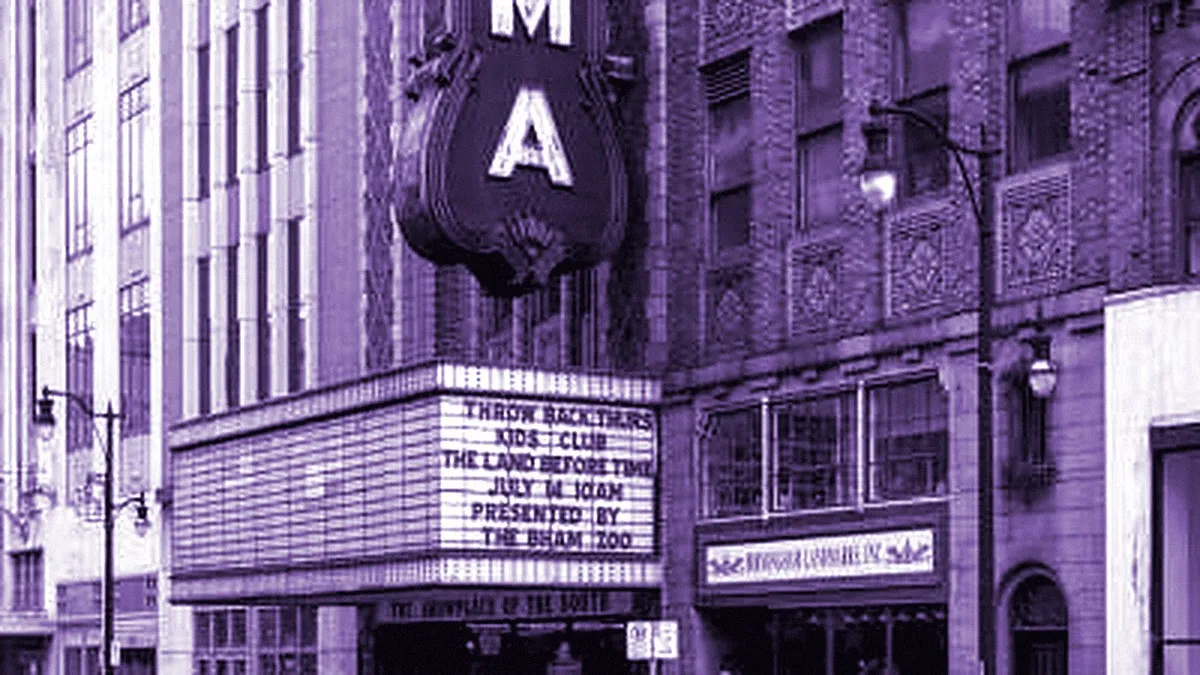
Start at the corner whose four skyscrapers earned a world-famous nickname, pass Catholic, Presbyterian, Episcopal and Methodist landmarks and the last great movie palace, then follow the 1963 route through Alabama's first Black-owned bank, the Carver Theatre, Kelly Ingram Park, the 16th Street Baptist Church and the motel where Dr. King's team planned the marches.
Heaviest Corner on Earth · Cathedral of Saint Paul · Age-Herald Building · Cathedral Church of the Advent · First United Methodist Church · Alabama Theatre …
Open this tour: From the Heaviest Corner to the Freedom Walk - Walk
Linn Park, the Art Museum and the Civic Core
Birmingham went from cornfield to iron capital in a generation, and its civic centre shows it. Walk from a department store turned science museum past the federal courthouse and the old telephone tower to Linn Park, the library, a museum with one of the South's best collections and the state's sports hall of fame.
McWane Science Center · Robert S. Vance Federal Building and United States Courthouse · AT&T City Center · Jefferson County · Linn Park · Birmingham Public Library …
Open this tour: Linn Park, the Art Museum and the Civic Core - Walk
Southside Domes, Spires and the Iron Giant
Cross the old railroad yards into Five Points South, Birmingham's most walkable neighbourhood. Pass a Greek Orthodox cathedral, a Spanish Renaissance church and two synagogues on the way to Vulcan, the largest cast iron statue in the world, looking down over the city that forged him.
Railroad Park · Holy Trinity-Holy Cross Greek Orthodox Cathedral (Birmingham, Alabama) · Third Presbyterian Church · Highlands United Methodist Church · South Highland Presbyterian Church · Five Points South Historic District …
Open this tour: Southside Domes, Spires and the Iron Giant
Walk Birmingham with Neywo
Neywo turns Birmingham into a self-guided audio tour. Stories arrive as you reach the place they belong to, and the route reshapes when you wander off it.

