Visiting Greensboro, United States: Top Sights on Foot
Things to Do in Greensboro, North Carolina
The best things to do in Greensboro include exploring historic houses and churches, learning about the civil rights movement, visiting museums, and discovering public art in the city’s walkable downtown. Greensboro’s stories stretch from eighteenth-century settlement and Revolutionary-era history to modern art, science, and social change. Neywo offers a free audio guide for Greensboro with 53 narrated places.
What to See in Greensboro
Blandwood Mansion and Gardens
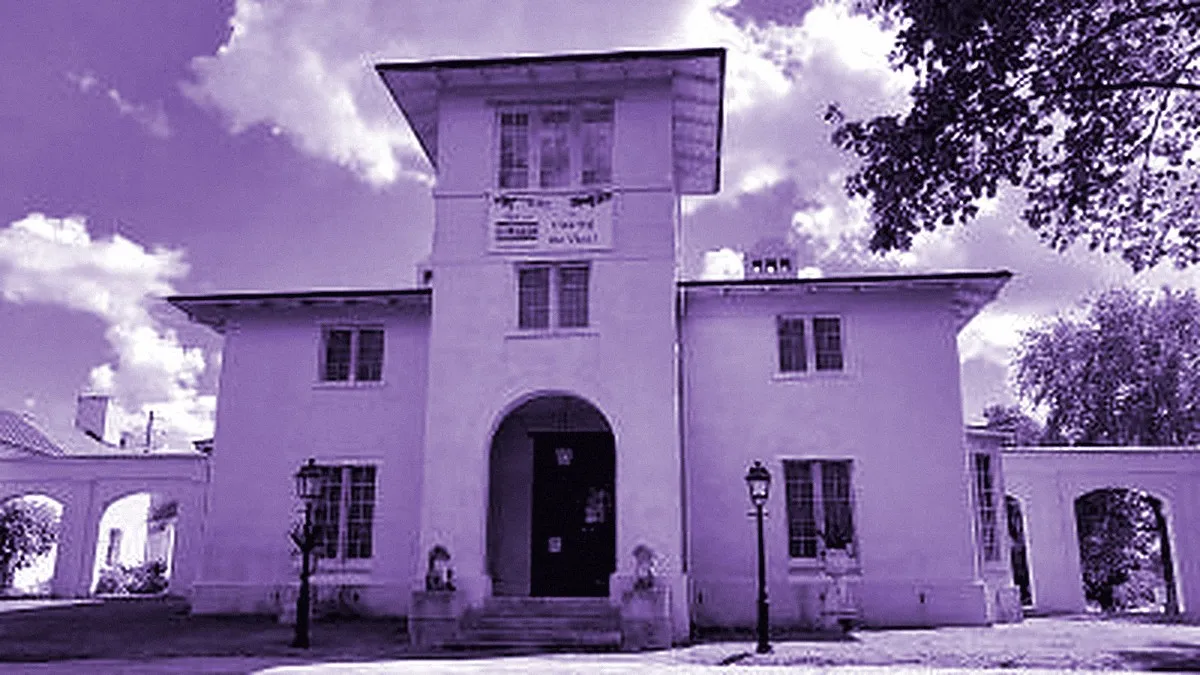
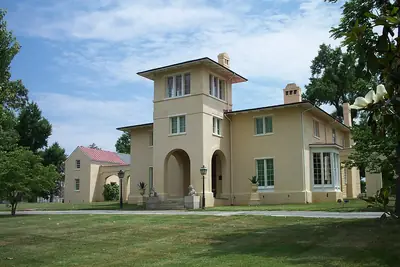
Blandwood Mansion and Gardens is a house museum built on the foundations of what is regarded as Greensboro’s oldest surviving building. It began in 1795 as a four-room Federal-style farmhouse before John Motley Morehead, a two-term governor of North Carolina, commissioned its transformation.
Architect Alexander Jackson Davis designed the 1844 expansion. Wide eaves, low rooflines, casement windows, stucco-on-brick walls, and a tall prospect tower give the mansion its distinctive Italian Villa character. It is believed to be the oldest surviving example of Italian Villa architecture in the United States. The building was threatened with demolition in the 1960s, but local preservationists helped save it.
Greensboro Historical Museum
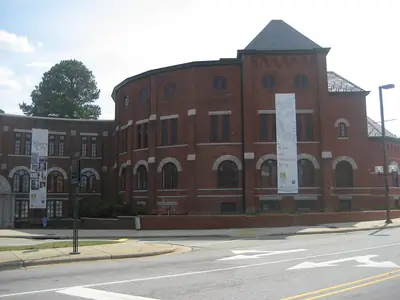
The Greensboro Historical Museum presents more than 300 years of Greensboro and Guilford County history across 15 galleries. Its collections explore cultural and social life, economic development, and the people and events that shaped the region, including stories connected with Dolley Madison and Greensboro’s identity as the “Gate City.”
The museum occupies the former First Presbyterian Church of Greensboro, built in 1892 in the Romanesque Revival style. The complex also includes the Smith Memorial Building, constructed in 1903 and designed by Charles Christian Hook.
International Civil Rights Center and Museum
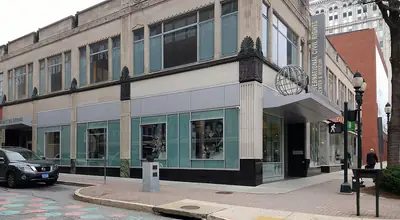
Housed in the former Woolworth’s building, the International Civil Rights Center and Museum preserves the site of the Greensboro sit-ins. On February 1, 1960, four students from North Carolina Agricultural and Technical State University—Franklin McCain, Joseph McNeil, Ezell Blair Jr., now known as Jibreel Khazan, and David Richmond—sat at the restaurant’s whites-only lunch counter.
The following day, 20 students joined the protest. The nonviolent action became an important moment in the civil rights movement. Interactive exhibits, multimedia presentations, and curated collections examine the sit-ins, their impact, and their continuing legacy. The building, completed in 1929 as the Whelan Building, is now a National Historic Landmark.
Carolina Theatre of Greensboro
The Carolina Theatre of Greensboro is the city’s only remaining historic theatre. It opened on Halloween night in 1927 as “The Showplace of the Carolinas,” presenting vaudeville, live performances, silent films, newsreels, and audience sing-alongs.
The original auditorium held 2,200 people, and the building was among the first commercial buildings in North Carolina to have air conditioning. Sound films arrived in 1928 with the installation of a Vitaphone system. After the theatre fell into decline and faced demolition in the early 1970s, the United Arts Council of Greensboro purchased and refurbished it. It reopened in 1978 as a community performing arts center.
West Market Street United Methodist Church
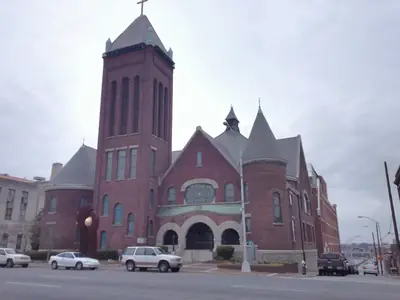
West Market Street United Methodist Church is a local landmark known for its imposing Richardson Romanesque design. Constructed between 1893 and 1898, it was the third church built by the congregation.
The interior includes stained glass windows installed in 1893 and brought from Chicago. Later renovations added buildings and the Dobson-Rosales organ. The church’s Via Dolorosa paintings, dating from the 1890s, depict Jesus Christ’s journey to the cross and are among its most valued features.
Weatherspoon Art Museum
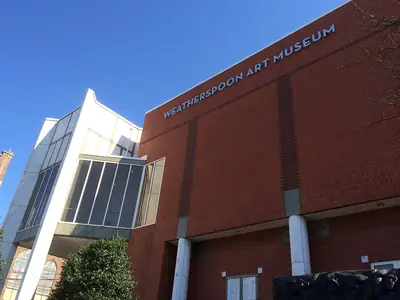
At the University of North Carolina at Greensboro, the Weatherspoon Art Museum focuses on modern and contemporary art, particularly American art. Founded in 1941 by Gregory Ivy in a former physics laboratory, it was the first art gallery in the University of North Carolina system.
The museum moved to the Anne and Benjamin Cone Building in 1985. Its current home includes six galleries, an auditorium, an atrium, and a sculpture garden. The collection contains more than 7,000 works, including pieces by Willem de Kooning, Cindy Sherman, Andy Warhol, Eva Hesse, Alexander Calder, and Ai Weiwei.
Greensboro Science Center
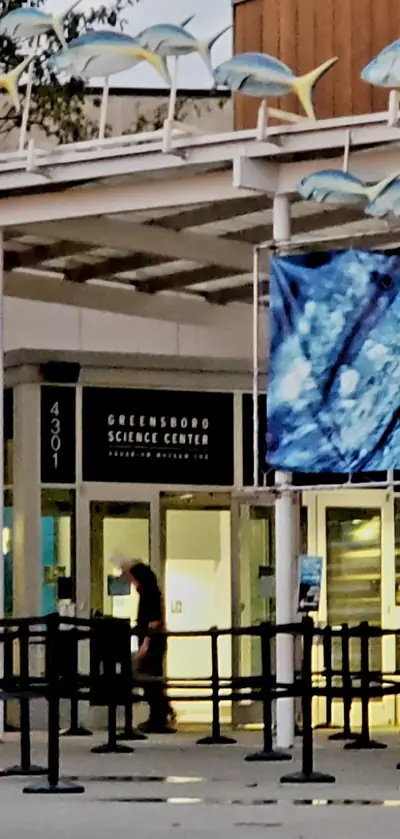
The Greensboro Science Center combines science museum exhibits with the Animal Discovery Zoological Park. Established in 1957 as the Greensboro Junior Museum, it has grown into a place where scientific learning and encounters with wildlife share the same experience.
The zoological park includes tigers, meerkats, Nile crocodiles, the Friendly Farm, Kavanagh Discovery House, and the Davis Kelly Fountain of Youth and Discovery. Indoor exhibits include SciPlay Bay, an Extreme Weather Gallery, HealthQuest, and touch labs with live reptiles and invertebrates. The Carolina SciQuarium adds stingrays, African penguins, otters, sharks, and other aquatic animals.
African American Atelier
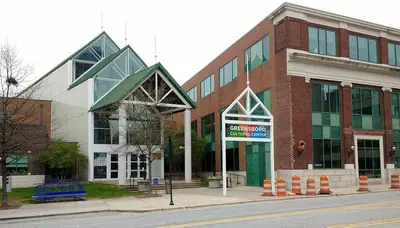
The African American Atelier is one of the four visual art galleries inside the Greensboro Cultural Center. Its changing exhibitions are part of a larger arts complex that also includes the Guilford Native American Art Gallery, galleries, studios, and rehearsal spaces.
Outside the cultural center, Derrick Monk’s bronze sculpture In the Face of Strange Fruit reflects on resistance, resilience, injustice, and the continuing search for equality and human rights. The work was inspired by the lyrics of Billie Holiday’s song “Strange Fruit.”
Churches and historic neighborhoods
Greensboro’s historic churches add architectural and social depth to a walk through the city. St. Benedict Catholic Church is the city’s oldest Catholic church. Its present building was dedicated in 1899 and later gained a Gothic Revival appearance through its brick veneer, pointed arches, stone foundations, and crenelated roofline.
In the Fisher Park Historic District, Holy Trinity Episcopal Church traces its history to Episcopal congregations founded in the nineteenth century. Its present property includes a parish house designed by Hobart Upjohn, All Saints Chapel, and a sanctuary first used on Easter Sunday in 1950.
First Presbyterian Church of Greensboro has been part of the city’s spiritual life since 1824. The present church, completed in 1929, is a Gothic Revival landmark designed by Hobart Upjohn and inspired by the Cathedral of Albi in France. Its pointed arches and rose window stand out along the edge of Fisher Park.
For an older layer of local history, Buffalo Presbyterian Church and Cemetery includes burials dating to 1775 and a sanctuary dating from 1827. The complex was listed on the National Register of Historic Places in 2002.
Downtown Greensboro
Downtown Greensboro brings together historic architecture, civic buildings, galleries, shops, and cultural venues. The Downtown Greensboro Historic District was first listed on the National Register of Historic Places in 1982, updated in 2003, and expanded in 2023. It now includes more than 96 contributing buildings, most built between 1885 and the 1930s.
Italianate and Art Deco architecture are especially prominent. The district includes the Jefferson Standard Building, Vanstory Building, Kress Building, Montgomery Ward, Efrid’s Department Store, and Carolina Theatre. It also connects the city’s architectural history with the civil rights story preserved at the former Woolworth’s.
Explore Greensboro with Neywo
Neywo turns a visit into a Greensboro self-guided walking tour: the app tells the story of each place as you reach it, at your own pace, with no group and no schedule. Greensboro has two walking tours and one bus route, covering 53 narrated places in total.
- Two walking tours: Sit-In City: Greensboro’s Downtown covers 2.63 km in 88 minutes and has 10 stops. Italian Villa to Fisher Park covers 2.52 km in 72 minutes and has 6 stops.
- One bus route: Route 3: Down North Elm Street covers 8.7 km in 37 minutes and has 8 stops.
The narration is available in 11 languages. Download Neywo and explore Greensboro’s history, architecture, art, and civil rights landmarks at your own pace. Greensboro is part of North Carolina in the United States.
Places with an audio guide in Greensboro
8 places in Greensboro with a Neywo audio guide. Each one starts telling its story as you reach it.
Self-guided tours in Greensboro
3 tours in Greensboro, free in the Neywo app. Each stop tells its story as you reach it.
- Bus ride
Route 3: Down North Elm Street
GTA Route 3 runs from the Galyon Depot north along North Elm and Church Streets. Ride it past the Carolina Theatre and the Federal Building to the churches of Fisher Park.
West Market Street United Methodist Church · Carolina Theatre of Greensboro · Vernon Building · J. Douglas Galyon Depot · L. Richardson Preyer Federal Building · First Presbyterian Church of Greensboro …
Open this tour: Route 3: Down North Elm Street - Walk
Sit-In City: Greensboro's Downtown
Start at the old depot and follow the trail of the 1960 Woolworth's sit-ins, then look up at the Jefferson Standard tower, step into a historic theatre and finish in a downtown park under a giant aerial sculpture.
J. Douglas Galyon Depot · International Civil Rights Center and Museum · Vernon Building · Carolina Theatre of Greensboro · Jefferson Standard Building · L. Richardson Preyer Federal Building …
Open this tour: Sit-In City: Greensboro's Downtown - Walk
Italian Villa to Fisher Park
From Blandwood, the oldest surviving Italian Villa in the United States, walk north past the city's history museum and three landmark churches into Fisher Park, Greensboro's first true suburb.
Blandwood Mansion and Gardens · Greensboro Historical Museum · St. Benedict Catholic Church · Holy Trinity Episcopal Church · First Presbyterian Church of Greensboro · Fisher Park Historic District
Open this tour: Italian Villa to Fisher Park
Walk Greensboro with Neywo
Neywo turns Greensboro into a self-guided audio tour. Stories arrive as you reach the place they belong to, and the route reshapes when you wander off it.

