What to See in Gwalior, India: Free Audio Guide
Things to Do in Gwalior: Forts, Palaces and Royal Heritage
The best things to do in Gwalior include exploring its hilltop fort, historic palaces and royal residences connected with the Scindia family. Set among the rocky hills of central India, Gwalior combines a long political history with a strong cultural identity. Neywo has a free audio guide for Gwalior covering 8 narrated places, so you can discover the city while walking.
What to See in Gwalior
Gwalior Fort
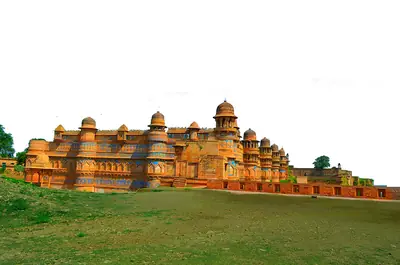
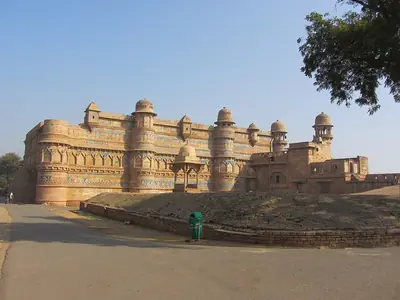
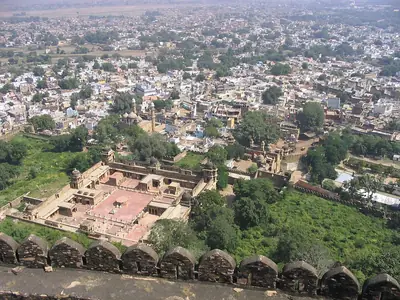
Gwalior Fort is the essential place to begin. The fortress rises from a sandstone plateau on the steep slopes of Gopachal mountain, overlooking the city. Its current stone walls have stood since at least the eighth century, while monuments within the complex suggest that a fort existed here as early as the sixth century.
The site has passed through the hands of many ruling powers, including the Kushanas, Nagas, Guptas, Hunas, Pratiharas, Kachchhapaghatas, Tomaras, Pathans, Mughals, Jats, the British and the Scindias. This succession of dynasties has left the fort with a densely layered history.
Gwalior Fort has also inspired imposing comparisons. Mughal Emperor Babur called it the “pearl amongst the fortresses of Hind”, while the later name “Gibraltar of India” refers to its formidable defences. Inside the massive enclosure are six palaces, along with monuments that reflect different religious and political traditions.
Man Singh Palace
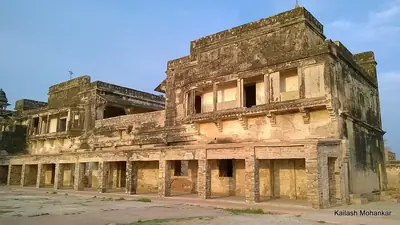
Man Singh Palace is one of the fort’s most important historic buildings. It was built by Man Singh Tomar during the period when Tomar rule brought Gwalior what is described as a golden age. The palace forms part of the fort’s remarkable collection of royal architecture.
The Tomar period also saw the creation of Jain sculptures within the fort. Together, these works illustrate how Gwalior’s hilltop complex combines monumental architecture with traces of several religious traditions.
Karnamahal
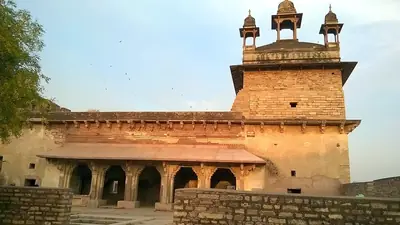
Karnamahal is one of the historic palaces within Gwalior Fort. It belongs to the collection of royal buildings that make up the fort’s architectural heritage and adds another layer to the complex’s story of changing dynasties.
Vikram Mahal
Vikram Mahal is another palace within Gwalior’s historic fort complex. Its presence helps reveal the scale of the royal architecture gathered within the fortress, where palaces and defensive structures stand together on the hill.
Moti Mahal
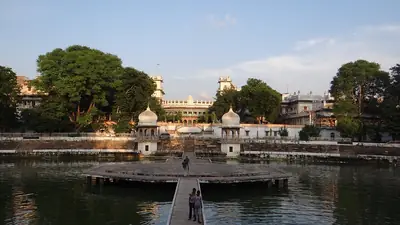
Moti Mahal is a historic palace in the heart of Gwalior, Madhya Pradesh. It is one of the city’s important royal buildings and forms part of the story of the palaces associated with Gwalior’s rulers.
Jai Vilas Mahal
Jai Vilas Mahal offers a different perspective on Gwalior’s royal history. The palace has been home to the Scindia royal family for generations and combines European architectural influences with Indian royalty.
Maharaja Jayajirao Scindia built the palace in 1874, following an Italian architectural concept conceived in 1809 by Lieutenant Colonel Sir Michael Filose. Its design brings together Tuscan, Italian-Doric and Corinthian influences.
The palace now has a double role. Thirty-five rooms have become the Jiwajirao Scindia Museum, which opened to the public in 1964, while another wing remains the private residence of Scindia descendants. The Darbar Hall is a highlight, with two chandeliers that each weigh two tons.
Gwalior’s royal and musical heritage
Gwalior’s identity extends beyond its buildings. The city developed around its fortress and was shaped by dynasties including the Gurjara Pratiharas, Kachchhapaghatas and Tomars, followed by the Delhi Sultanate, Mughal Empire, Jat rulers, Scindias and the British East India Company.
It is also associated with enduring musical traditions and the celebrated musician Tansen. This combination of royal patronage, political change and music gives the city a cultural character that complements its historic architecture.
Gwalior serves as the administrative headquarters of Gwalior district, one of the districts of Madhya Pradesh. For a broader journey through the country, you can also explore the Neywo guide to India.
Explore Gwalior with a self-guided walking tour
Neywo’s Gwalior self-guided walking tour, “Palaces of the Scindias and the Gibraltar of India”, covers 5.01 km in 113 minutes and includes 7 narrated stops: Jai Vilas Mahal, Moti Mahal, Gwalior, Gwalior Fort, Man Singh Palace, Karnamahal and Vikram mahal.
The app tells the story of each place as you reach it, at your own pace, with no group and no schedule. It is a free walking tour in Gwalior that lets you follow the route independently, while narration is available in 11 languages.
Download Neywo and explore Gwalior with its free audio guide.
Places with an audio guide in Gwalior
8 places in Gwalior with a Neywo audio guide. Each one starts telling its story as you reach it.


Self-guided tours in Gwalior
1 tour in Gwalior, free in the Neywo app. Each stop tells its story as you reach it.
- Walk
Palaces of the Scindias and the Gibraltar of India
Begin at Jai Vilas Mahal, the Italian-style Scindia palace with two-ton chandeliers and a silver train on the dining table, pass Moti Mahal and the city's music heritage, then climb to Gwalior Fort, the hill citadel Babur called a pearl among fortresses, and its Tomar-era palaces.
Jai Vilas Mahal · Moti Mahal · Gwalior · Gwalior Fort · Man Singh Palace · Karnamahal …
Open this tour: Palaces of the Scindias and the Gibraltar of India
Walk Gwalior with Neywo
Neywo turns Gwalior into a self-guided audio tour. Stories arrive as you reach the place they belong to, and the route reshapes when you wander off it.

