Things to Do in Amritsar, India: Walking Guide
Things to Do in Amritsar: A Guide to Sikh Heritage and History
The best things to do in Amritsar include visiting Harmandir Sahib, exploring museums and historic sites, and discovering the city’s Hindu and Sikh heritage. Known as the spiritual heart of Sikhism, Amritsar brings together places of profound devotion, difficult historical memory, and living cultural traditions. Neywo’s free audio guide for Amritsar covers 12 narrated places in 11 languages, helping you understand the stories as you explore.
What to See in Amritsar
Harmandir Sahib, the Golden Temple
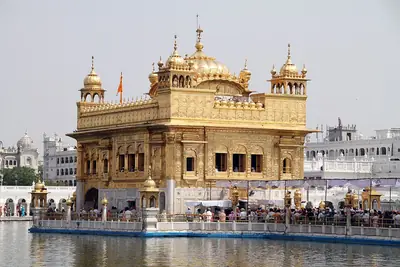
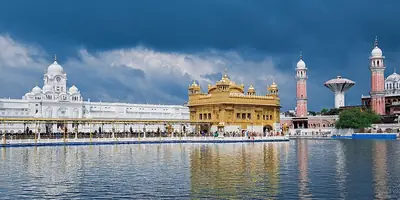
Harmandir Sahib, widely known as the Golden Temple, is the holiest shrine in Sikhism. It stands at the centre of the Amrit Sarovar, or Pool of Nectar, around which pilgrims walk on a marble path. Many also pause to bathe in its waters, which are traditionally believed to have healing properties.
The upper floors of the sanctum are covered in gold leaf, added in the 1830s by Maharaja Ranjit Singh, founder of the Sikh Empire. The shrine has four entrances, one on each side, expressing the Sikh belief that the house is open to everyone, regardless of faith, caste, gender, or background.
The history of the complex goes back to 1577, when the fourth Sikh Guru, Guru Ram Das, completed the excavation of the pool. The atmosphere is shaped not only by the shrine itself, but also by prayer, music, community service, and the shared meals of the langar.
Akal Takht
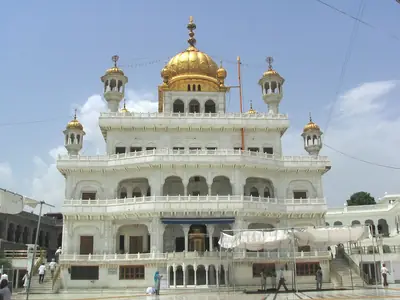
Directly facing Harmandir Sahib within the Golden Temple complex, the Akal Takht is one of the most important seats of Sikh authority. Its name means “Throne of the Timeless”. The sixth Sikh Guru, Guru Hargobind, established it in 1606 as a place for justice and temporal matters.
The Akal Takht represents Miri, or temporal power, while the Golden Temple represents Piri, or spiritual power. Together, they express the Sikh concept that spiritual and worldly responsibility cannot be separated.
Central Sikh Museum
The Central Sikh Museum is located inside the Golden Temple complex. Established in 1958 by the Shiromani Gurdwara Parbandhak Committee, it preserves and displays objects connected with Sikh history, religion, and culture.
Its collection includes artwork depicting Sikh gurus, saints, warriors, and leaders. Visitors can also see rare handwritten manuscripts of the gurus, historic Sikh weapons such as swords and daggers, and old coins that reflect the community’s political and economic history.
Jallianwala Bagh
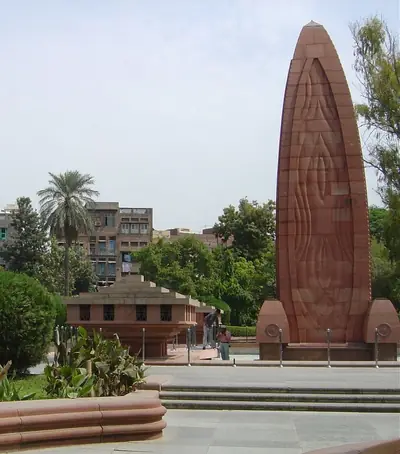
Jallianwala Bagh is a quiet garden beside the Golden Temple complex and a national memorial to one of the most painful episodes in India’s struggle for independence. On April 13, 1919, thousands gathered for the Baisakhi festival and to protest peacefully. British troops surrounded the garden and opened fire without warning.
Bullet marks remain visible on the walls, while a well recalls the people who jumped into it to escape the shooting. The site also contains a museum, a gallery, and memorial structures dedicated to those who died.
The garden’s history is especially powerful because of its physical layout: it had one narrow entrance, while its other sides were enclosed by buildings. The shooting lasted about ten minutes, and official British figures recorded 379 deaths, although Indian estimates were higher. More than twelve hundred people were wounded.
Partition Museum
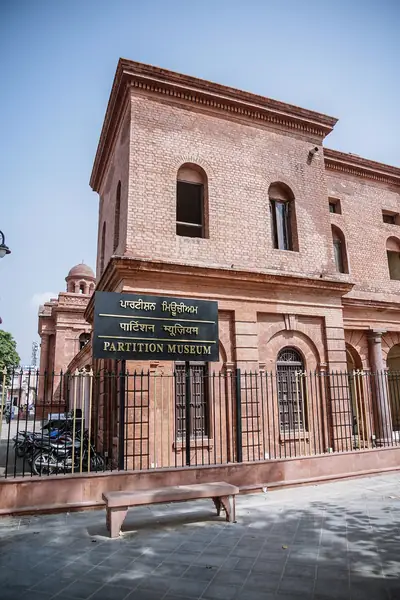
The Partition Museum occupies Amritsar’s historic Town Hall building in the Katra Ahluwalia area. The museum preserves personal stories, documents, and objects connected with the Partition of 1947, when British India was divided into India and Pakistan.
The building itself once served as British headquarters and a jail. Inside, fourteen galleries display objects carried by refugees, identity documents, clothing, trunk boxes, and artworks responding to the events. The museum also covers the anti-colonial movement, the Jallianwala Bagh massacre, and the Komagata Maru incident.
It offers an intimate way to understand how Partition affected individual families and communities, complementing Amritsar’s larger monuments and religious sites.
Durgiana Temple
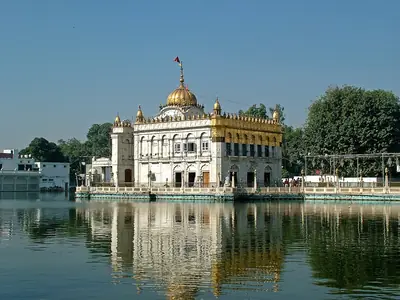
Durgiana Temple is a Hindu temple dedicated primarily to Goddess Durga, with shrines to Lakshmi and Vishnu. It is sometimes called the Hindu Golden Temple because its design resembles Harmandir Sahib.
The temple stands in the middle of a sacred water tank, with a causeway leading to the sanctum. The present building was rebuilt in 1921, although the site was already associated with Hindu pilgrimage in the 19th century. Its architecture follows ancient Indian vastu traditions, while the Golden Temple combines Indian, Arabic, and European influences.
The contrast between the two complexes makes Durgiana Temple an important place to visit when exploring Amritsar’s varied religious heritage.
Gobindgarh Fort
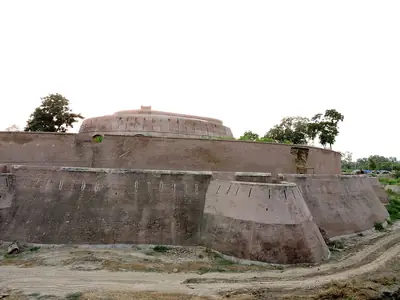
Gobindgarh Fort traces several centuries of Punjab’s military history. It began as Bhangian da Killa, founded in the 18th century by the Bhangi Misl of Dhillon Jat rulers. Maharaja Ranjit Singh captured it in the early 1800s and renamed it after Guru Gobind Singh, the tenth Sikh guru.
The square fort has a perimeter of 1,000 metres and was built from bricks and lime rather than stone or modern concrete. Twenty-five cannons once stood on its ramparts. The British army occupied the fort from the mid-19th century until 1947, reinforcing its defences as weaponry developed.
After independence, the Indian Army kept Gobindgarh closed to the public for decades. Its gates opened again on February 10, 2017.
Summer Palace of Maharaja Ranjit Singh
The Summer Palace of Maharaja Ranjit Singh, also known as Ram Bagh Palace, was the private summer retreat of the founder of the Sikh Empire. It stands in the centre of Ram Bagh garden, which the Maharaja laid out and named after Guru Ram Das.
Construction was completed in 1831. The palace was used not only as a summer residence but also during festivals including Vaisakhi, Diwali, and Dussehra. Its design combines Sikh, Mughal, and European elements. Thick walls, high ceilings, and ventilation helped keep the building cool during Punjab’s hot summers.
Bhai Vir Singh Memorial House
The Bhai Vir Singh Memorial House stands just off Lawrence Road, within five acres of gardens and mature trees. The house preserves the home of one of Punjab’s best-known literary figures.
Inside, original furniture and everyday objects offer a glimpse into his life and the period in which he lived. The property also preserves a long-standing connection with the Golden Temple: during Bhai Vir Singh’s lifetime, fresh flower bouquets were brought daily from Sri Harmandir Sahib, and that tradition continues.
Explore Amritsar with Neywo
Neywo offers two self-guided walking tours in Amritsar. The first covers 4.1 km in 109 minutes and includes eight narrated stops: Partition Museum, Jallianwala Bagh, the Jallianwala Bagh massacre, Akal Takht, Harmandir Sahib, Operation Blue Star, Durgiana Temple, and Gobindgarh Fort.
The second covers 4.91 km in 98 minutes, with five stops: Gobindgarh Fort, Durgiana Temple, Partition Museum, the Summer Palace of Maharaja Ranjit Singh, and the Bhai Vir Singh Memorial House.
Download Neywo and explore Amritsar at your own pace. The app tells the story of each place as you reach it, with no group and no schedule. You can also continue discovering India, or plan another stop in Dharamshala, Delhi, or Leh.
Places with an audio guide in Amritsar
8 places in Amritsar with a Neywo audio guide. Each one starts telling its story as you reach it.
Self-guided tours in Amritsar
2 tours in Amritsar, free in the Neywo app. Each stop tells its story as you reach it.
- Walk
Amritsar: The Golden Temple and the Fight for Freedom
Begin at the Partition Museum, walk to the garden of Jallianwala Bagh where bullet marks still scar the walls, then enter the Golden Temple complex with its Akal Takht throne and gold-leaf sanctum. End with the Durgiana Temple, Amritsar's Hindu twin of the Golden Temple, and the brick ramparts of Gobindgarh Fort.
Partition Museum · Jallianwala Bagh · Jallianwala Bagh massacre · Akal Takht · Harmandir Sahib · Operation Blue Star …
Open this tour: Amritsar: The Golden Temple and the Fight for Freedom - Walk
The Lion of Punjab: Forts, Gardens and a Writer's Home
Follow the legacy of Maharaja Ranjit Singh from Gobindgarh Fort, which he captured in 1805, to the Hindu Durgiana Temple and past the Partition Museum in the old Town Hall. Finish at his cool summer retreat in Ram Bagh and the leafy house of the poet Bhai Vir Singh, where flowers from the Golden Temple still arrive every day.
Gobindgarh Fort · Durgiana Temple · Partition Museum · Summer Palace of Maharaja Ranjit Singh · Bhai Vir Singh Memorial House
Open this tour: The Lion of Punjab: Forts, Gardens and a Writer's Home
Walk Amritsar with Neywo
Neywo turns Amritsar into a self-guided audio tour. Stories arrive as you reach the place they belong to, and the route reshapes when you wander off it.

