Things to Do in Mumbai, India: Walking Guide
Things to Do in Mumbai: Ancient Caves, Coastal Forts and Living Heritage
Looking for things to do in Mumbai? India’s financial and entertainment capital is a city of remarkable contrasts: a natural harbour shaped its rise as a major port, while ancient cave sanctuaries, Portuguese ruins, Hindu temples and Christian churches reveal a much longer history. Its seven original islands were home to Marathi-speaking Koli communities before Portuguese rule, the East India Company and successive reclamation projects transformed the coastline.
Neywo has a free audio guide for Mumbai with 26 narrated places, available in 11 languages.
What to See in Mumbai
Mumbai’s landmarks extend well beyond its best-known central sights. Across the city and its suburbs, rock-cut monasteries, coastal fortifications, historic churches and unusual geological formations tell the story of a place shaped by faith, trade, migration and volcanic landscapes.
Madh Fort, also known as Versova Fort
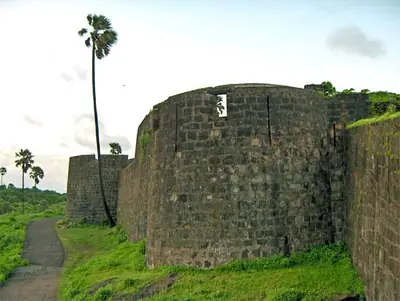
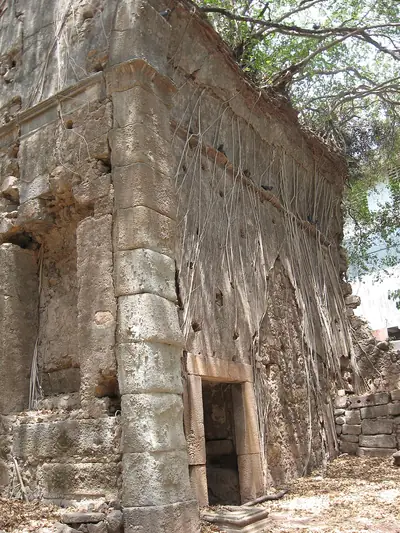
On Madh Island, Madh Fort preserves a small but evocative fragment of Mumbai’s coastal past. The Portuguese built it as a watchtower in the 17th century, using its position above Marve Creek to watch the surrounding waters.
Maratha forces captured the fort in February 1739. The British later took control in 1774, along with Salsette Island, Thana fort and the Karanja island forts. The interior is now in ruins, but the outer walls remain and help convey the defensive role the fort once played. Its alternative name, Versova Fort, reflects its local identity.
Kanheri Caves
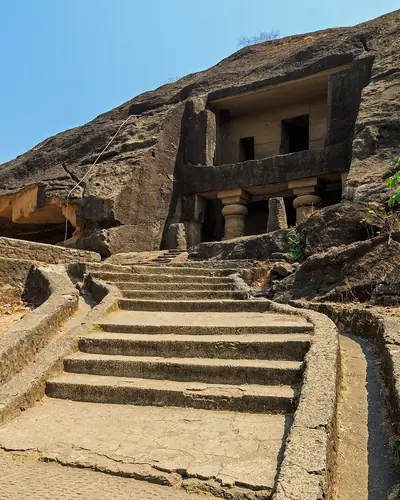
The Kanheri Caves lie within the lush setting of Sanjay Gandhi National Park, carved into a basalt hillside. The complex contains 109 chambers that formed a Buddhist monastic settlement for study, meditation and communal worship.
The caves preserve practical details of monastic life as well as religious art. Stone plinths served as beds, while the principal assembly hall is arranged around a central stupa and massive pillars. Channels cut into the rock directed rainwater into cisterns, supplying the residents.
Later reliefs depict the Buddha and bodhisattvas, with Avalokiteshwara as a particularly distinctive figure. Kanheri maintained connections with important trade ports including Sopara, Kalyan, Nasik, Paithan and Ujjain. During the Maurayan and Kushan periods, it grew into a renowned centre of learning; in the late tenth century, the teacher Atisha came here to study meditation under Rahulagupta.
Jogeshwari Caves
Hidden below the bustle of the Western Express Highway, the Jogeshwari Caves are among India’s earliest Hindu and Buddhist cave temples. They date from the sixth century, during the Chalukya dynasty, and are notable for both their scale and their layered religious heritage.
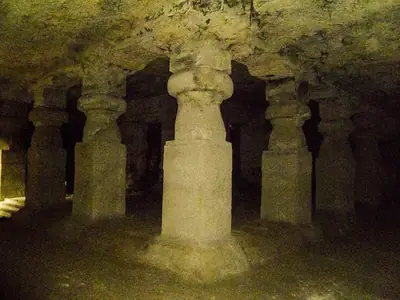
A cavernous main hall is lined with ancient pillars and leads to a sacred lingam. Sculptures include Dattatreya, Hanuman and Ganesh, as well as two doorkeepers. Six major panels illustrate episodes from Shaivism, including Shiva and Parvati’s marriage, the cosmic dance of Nataraja and Shiva accepting Ravana as a disciple.
The site also contains elements of Mahayana Buddhist architecture. Historian Walter Spink has described Jogeshwari as the earliest major cave temple in India and the largest in total length.
Mandapeshwar Caves
In a quieter part of Borivali, the Mandapeshwar Caves form a rock-cut sanctuary dedicated to Shiva. The shrine dates to the eighth century and was carved directly into the basalt near Mount Poinsur.
The site has an even earlier Buddhist connection: the caves began as Buddhist viharas in the sixth century before later being adapted for Brahmin use. Local names such as mangalsthan and magathan reflect the place’s reputation as an auspicious or refuge-like site.
Gilbert Hill
Gilbert Hill is one of Mumbai’s most unusual natural landmarks: a 200-foot column of black basalt rising vertically through Andheri. It formed when molten lava was forced through the Earth’s clefts around 66 million years ago during the Mesozoic Era.
A steep staircase cut into the rock leads to a small garden at the summit, where the Gaodevi and Durgamata temples stand. The top also offers a panoramic view across suburban Mumbai.
The formation belongs to the enormous volcanic landscape created by lava flows across present-day Maharashtra, Gujarat and Madhya Pradesh. The Government of India declared Gilbert Hill a National Park in 1952, and it received Grade II heritage status in 2007 after lobbying by geologists. That designation ended quarrying and other activities around the site, which had suffered severe erosion over time.
St. John the Baptist Church
The silent remains of St. John the Baptist Church stand in the SEEPZ Industrial Area in Andheri. Portuguese Jesuits built the church in 1579, with an adjoining graveyard for the local community.
After an epidemic, the church was abandoned in 1840. Vines gradually covered the walls, while the original baptismal font, stone pillars and altars were moved to the newer church in nearby Marol village. The local Christian community still returns once a year to honour the site. In 2003, Maharashtra Chief Minister Sushil Kumar Shinde formally handed the church back to the Bombay Archdiocese.
Holy Trinity Church, Powai
Holy Trinity Church offers another glimpse of Mumbai’s Portuguese-era religious history. Jesuit missionaries built it in 1557, making it one of the city’s older religious sites. Today, the modest Roman Catholic church provides a quiet point of interest in Powai.
Holy Cross Church, Kurla
Holy Cross Church in Kurla is another Roman Catholic landmark dating from the Portuguese period. Jesuits originally built it in 1588, and the church was rebuilt in 1848.
Mount Mary Church
Mount Mary Church, formally the Basilica of Our Lady of the Mount, is a Roman Catholic basilica and shrine in Bandra. Its Marian icon received a decree of canonical coronation from Pope Pius XII on 21 October 1954.
The shrine’s main annual celebration is the feast of the Nativity of Mary. It begins on the Sunday following 8 September and lasts eight days, preceded by nine days of fasting. Together, the seventeen-day celebration is known as the Bandra fair and attracts pilgrims, tourists and devotees who come to offer their mannat, or wishes.
Church of Our Lady of Mount Carmel, Bandra
The Church of Our Lady of Mount Carmel has served Bandra’s Catholic community since the late 19th century. Jesuit missionaries built the original church in 1894. As the local Catholic population grew, a new church was constructed and blessed on 11 February 1981 by Archbishop Simon Pimenta of Bombay.
Global Vipassana Pagoda
On a peninsula between Gorai Creek and the Arabian Sea, the Global Vipassana Pagoda rises as a large Burmese-style meditation dome. Its design is based on the Shwedagon Pagoda in Yangon and expresses gratitude to Myanmar for preserving Vipassana.
The pagoda was inaugurated on 8 February 2009 by India’s then-President, Pratibha Patil. Its pillar-less meditation hall can seat around 8,000 Vipassana practitioners. The centre presents Vipassana and the Buddha’s teachings as a practical, non-sectarian form of Buddhism.
Mumbai’s Place in India
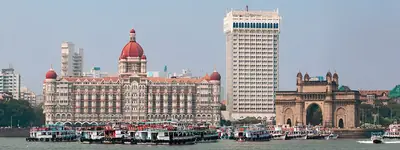
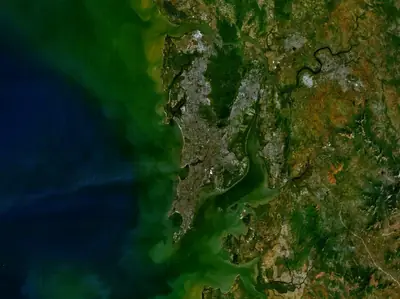
Mumbai’s history is inseparable from its geography. Its deep natural harbour helped establish it as a major seaport, while the Hornby Vellard project, begun in 1782, reclaimed the sea between the original islands. By 1845, the city had become a key port on the Arabian Sea.
The city grew into an educational and economic centre in the 19th century and became an important stronghold of the independence movement in the early 20th century. After independence in 1947 and the formation of Maharashtra in 1960, with Mumbai as its capital, it developed further as a financial, commercial and entertainment centre.
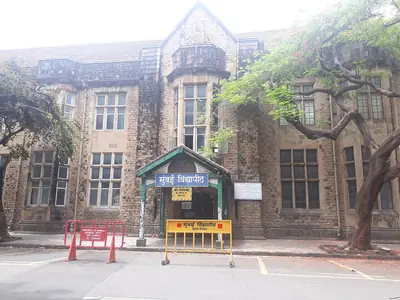
The University of Mumbai, founded as the University of Bombay in 1857, reflects the city’s educational heritage. Its buildings near Oval Maidan resemble a 15th-century Italian palace and include a large library, a grand convocation hall and the 80-metre Rajabai Tower.
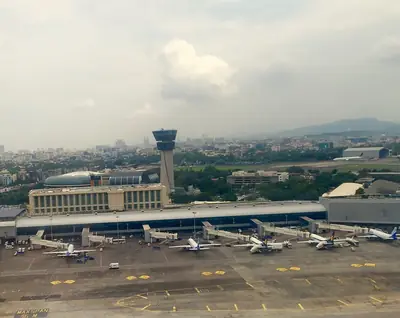
Mumbai is part of India, but it also has a distinct identity shaped by its coastal setting and its many communities. Its airport, Chhatrapati Shivaji Maharaj International Airport, serves as the city’s primary gateway and is one of two airports serving the Mumbai Metropolitan Region.
Explore Mumbai with Neywo
Neywo’s free Mumbai audio guide includes 26 narrated places. The app tells the story of each location as you reach it, at your own pace, with no group and no schedule. Choose the places you want to explore, walk between them independently and listen when you arrive.
Download Neywo and discover Mumbai through its caves, churches, forts, temples, geological landmarks and coastal history.
Places with an audio guide in Mumbai
8 places in Mumbai with a Neywo audio guide. Each one starts telling its story as you reach it.
Walk Mumbai with Neywo
Neywo turns Mumbai into a self-guided audio tour. Stories arrive as you reach the place they belong to, and the route reshapes when you wander off it.

