Visiting Ahmedabad, India: Top Sights on Foot
Things to Do in Ahmedabad: What to See in Gujarat’s Historic City
Looking for things to do in Ahmedabad? Gujarat’s principal urban centre brings together the walled city’s historic gates, mosques and pols with museums, riverside landmarks and major modern attractions. From the legacy of Mahatma Gandhi to the ancient remains of Lothal, Ahmedabad offers plenty to explore at different scales. Neywo has a free audio guide for Ahmedabad with 55 narrated places.
What to See in Ahmedabad
Bhadra Fort
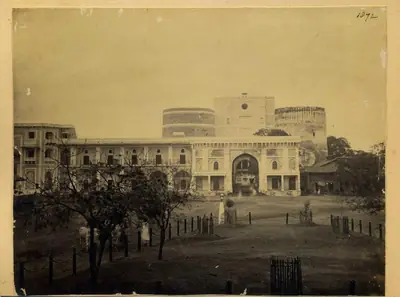
Bhadra Fort is one of the defining landmarks of Ahmedabad’s walled city. Ahmad Shah I built it in 1411, the same year he founded Ahmedabad. Its complex includes royal palaces, mosques, gates and open spaces that convey the scale of the original royal enclosure. The fort later passed under Mughal, Maratha and British control; during the British Raj, the complex was used as a prison.
Jama Masjid, Ahmedabad
Built in 1424 during the reign of Sultan Ahmad Shah I, Jama Masjid was the fifth mosque constructed during his rule and was originally the largest mosque in India. The Monument of National Importance stands just beyond the Teen Darwaza, or Tripolia Gate, in the old walled city.
Its large paved courtyard has three entrances and an ablution tank at the centre. The mosque is also a fine example of Gujarat-style architecture, with a history closely connected to the traditional quarters, or pols, surrounding it.
Raipur Gate
Raipur Gate, also known locally as Jamalpur Darwaja, is one of the historic entrances to Ahmedabad’s fortified city. The city gates were built at different times beginning in 1411, and each has its own name and character. At Raipur Gate, look for the carvings and calligraphy on its surface.
Sabarmati Ashram
Sabarmati Ashram, also known as Gandhi Ashram, Harijan Ashram or Satyagraha Ashram, occupies a peaceful site on the banks of the Sabarmati River. Mahatma Gandhi lived here from 1917 to 1930, with his wife Kasturba and a community of followers, and used it as his base when he was not travelling across India or in prison.
The ashram was founded in Ahmedabad in 1915, first in the Kochrab area, before moving to its riverside location. Daily life followed a strict spiritual routine that included reciting the Bhagavad Gita. The site is one of the most important places in Ahmedabad for understanding Gandhi’s role in India’s independence movement.
Kochrab Ashram
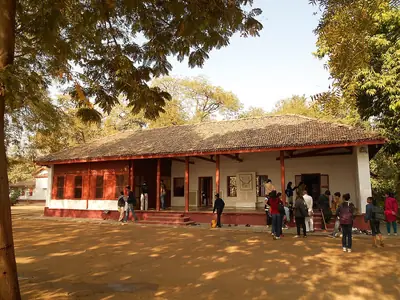
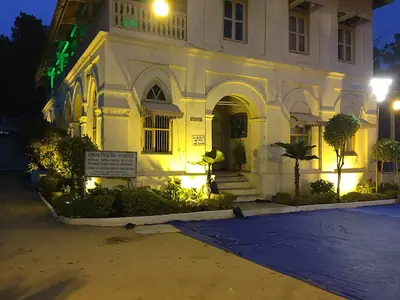
Kochrab Ashram, also called Satyagraha Ashram, was Gandhi’s first ashram in India. He founded it in May 1915 in a European-style, two-storey bungalow gifted by the barrister Jivanlal Desai. Gandhi lived there with other members of the movement for two years, a period during which several of his core ideas took shape.
A plague outbreak led to the move to the Sabarmati riverbank. The original site later became a memorial and is managed by Gujarat Vidyapith. Its redevelopment as a museum was completed in 2024.
Calico Museum of Textiles
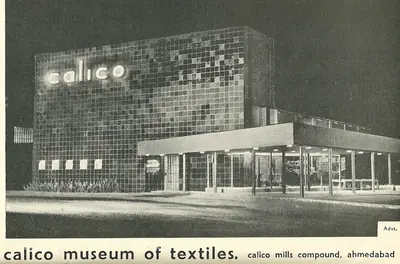
The Calico Museum of Textiles, managed by the Sarabhai Foundation, explores India’s textile heritage through a collection focused on the artistry and craftsmanship of Indian textiles. It is a particularly relevant stop for visitors interested in the material traditions of Gujarat and the wider history of Indian textiles.
Sardar Patel National Memorial
The Sardar Patel National Memorial occupies the Moti Shahi Mahal, a Mughal palace built by Shahjahan between 1616 and 1623, when he was still a prince. The palace stands in the Shahibaug area, surrounded by gardens, and houses a museum and exhibition centre dedicated to Sardar Vallabhbhai Patel.
The building’s Mughal history adds another layer to the memorial, while the statue of Patel in front of the palace provides a fitting introduction to the political leader honoured here.
Sanskar Kendra and the Patang Kite Museum
Sanskar Kendra is Ahmedabad’s city museum, dedicated to the history, art, culture and architecture of the city. The building itself was designed by the French architect Le Corbusier, making it a notable example of his work in India.
Inside, the Patang Kite Museum presents kites, photographs and other objects connected with the history of kite flying in the region.
Lalbhai Dalpatbhai Museum
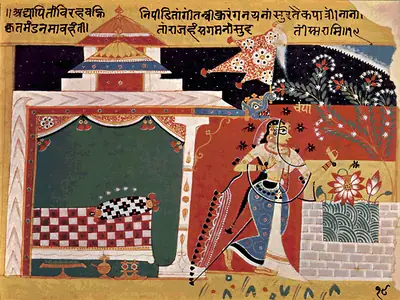
The Lalbhai Dalpatbhai Museum, often called the L. D. Museum, brings together a broad collection of Indian art. Its holdings include sculptures, bronzes, manuscripts, paintings, drawings and miniature paintings, as well as woodwork, beadwork and ancient and contemporary coins.
Narendra Modi Stadium
In Motera, the Narendra Modi Stadium forms part of the Sardar Patel Sports Complex near the Sabarmati River. With a capacity of 132,000, it is the world’s largest cricket stadium by seating capacity and hosts domestic and international cricket, including Test matches, One Day Internationals and T20s.
The present stadium replaced the Sardar Patel Gujarat Stadium on the same plot. The earlier ground hosted international matches, including Cricket World Cup matches in 1987, 1996 and 2011, before being demolished in 2015.
Gujarat Science City
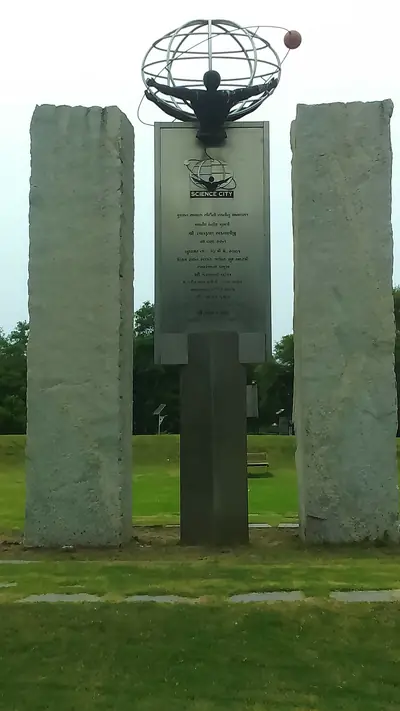
Gujarat Science City is a large science education and entertainment centre in Hebatpur. It opened in 2002 and underwent a major expansion in 2021. Its exhibitions cover science, space, energy, life sciences, planet Earth and robotics, with hands-on activities and demonstrations designed to make complex subjects accessible.
The centre includes an IMAX 3D theatre, a robotics gallery, a nature park and an aquarium. Its scale makes it a destination where visitors can spend an entire day exploring.
Swaminarayan Museum
The Shree Swaminarayan Museum brings together around 3,000 personal objects associated with Swaminarayan, known as Prasadi. These sacred items were gathered from temples around the world so visitors could view them in one place for darshan.
The complex covers 175,000 square feet on 30,000 square yards of land, making the museum a substantial site within Ahmedabad’s Swaminarayan tradition.
Lothal
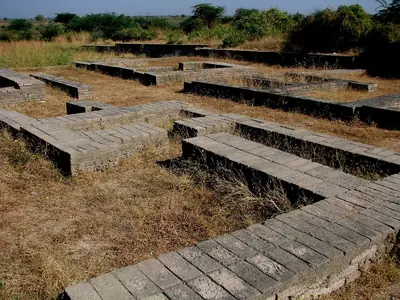
Around 80 kilometres southwest of Ahmedabad, Lothal offers a glimpse into the ancient Indus Valley Civilisation. Construction of the city is believed to have begun around 2300 BCE, although some estimates place its origins as far back as 3700 BCE. The site was discovered in November 1954, and excavations by the Archaeological Survey of India continued until 1963.
The remains show a sophisticated urban settlement, with wide streets, organised markets, kiln-baked brick houses and an advanced drainage system. Lothal is considered one of the southernmost cities of the Indus Valley Civilisation.
National Maritime Heritage Complex
Near Lothal, the National Maritime Heritage Complex is being developed to present India’s maritime history. The planned complex is designed to include museums, an amusement park, an educational institute, hotels and a resort. It will also feature full-scale recreations of the ancient cities of Dholavira and Lothal.
Explore Ahmedabad with a Free Audio Guide
For an Ahmedabad self-guided walking tour, Neywo lets you explore without joining a group or following a fixed schedule. The app tells the story of each place as you reach it, at your own pace, with no group and no schedule. Narration is available in 11 languages.
Ahmedabad includes four walking tours:
- Old Ahmedabad on Foot: 4.59 km, 119 minutes and 10 narrated stops.
- Gandhi’s Riverbank: 5.1 km, 106 minutes and 6 narrated stops.
- East of the Walls: 3.19 km, 66 minutes and 4 narrated stops.
- Gandhi’s First Ashram and Le Corbusier’s City Museum: 2.89 km, 61 minutes and 4 narrated stops.
There is also one bus route, Through the Walled City, covering 4.8 km in 21 minutes with 4 narrated stops, and one bike route, Sabarmati Riverside Ride, covering 6.6 km in 33 minutes with 2 narrated stops. Download Neywo and explore Ahmedabad’s forts, mosques, ashrams and museums while the city’s stories unfold around you. You can also continue discovering destinations across India.
Places with an audio guide in Ahmedabad
8 places in Ahmedabad with a Neywo audio guide. Each one starts telling its story as you reach it.

Self-guided tours in Ahmedabad
6 tours in Ahmedabad, free in the Neywo app. Each stop tells its story as you reach it.
- Bike ride
Sabarmati Riverside Ride: Shahibaug Shrine to Sardar Patel
A 6 km ride on signed cycle infrastructure through Shahibaug, from the riverside Sufi shrine of Miya Khan Chishti to the Mughal palace that now houses the Sardar Patel memorial and its gardens.
Miya Khan Chishti's Mosque · Sardar Patel National Memorial
Open this tour: Sabarmati Riverside Ride: Shahibaug Shrine to Sardar Patel - Bus ride
Janmarg BRTS: Through the Walled City
Ahmedabad's Janmarg bus rapid transit line crosses the old city, passing the Malik Alam and Haibat Khan mosques, Bhadra Fort and the Sidi Saiyyed jali mosque. It is a cheap, fast way to see the Sultanate monuments in a line.
Malik Alam's Mosque · Haibat Khan's Mosque · Bhadra Fort · Sidi Saiyyed Mosque
Open this tour: Janmarg BRTS: Through the Walled City - Walk
Sultans, Jewels and Jali: Old Ahmedabad on Foot
Walk the walled city that Sultan Ahmad Shah I founded in 1411, from the stone-lace windows of Sidi Saiyyed to the grand Jama Masjid. Along the way you pass the old fort, a Bene Israel synagogue and a queen's jewel-like mosque. Wear shoes that are easy to take off.
Sidi Saiyyed Mosque · Bhadra Fort · Ahmad Shah's Mosque · Magen Abraham Synagogue · Jama Masjid, Ahmedabad · Manek Chowk (Ahmedabad) …
Open this tour: Sultans, Jewels and Jali: Old Ahmedabad on Foot - Walk
Gandhi's Riverbank: Ashram, Palace and Textiles
Start at the ashram where Gandhi lived and set off on the Salt March, then follow the Sabarmati to its Sufi shrines. The route reaches a Mughal palace turned memorial to Sardar Patel, the famed Calico Museum of Textiles and a haveli-style Jain temple.
Sabarmati Ashram · Achut Bibi's Mosque and Tomb · Miya Khan Chishti's Mosque · Sardar Patel National Memorial · Calico Museum of Textiles · Hutheesing Jain Temple
Open this tour: Gandhi's Riverbank: Ashram, Palace and Textiles - Walk
East of the walls: the shaking minarets and the Sufi mosques of Sarangpur
Outside the old city gates lie some of Ahmedabad's most unusual Sultanate monuments. Start at the tomb of Dada Harir, then see the Sidi Bashir minarets that sway when one is shaken, and finish among the Sufi and queen's mosques of Sarangpur.
Dada Harir's Mosque and Tomb · Sidi Bashir Mosque · Queen's Mosque, Sarangpur · Mohammed Ghous Mosque
Open this tour: East of the walls: the shaking minarets and the Sufi mosques of Sarangpur - Walk
Gandhi's first ashram and Le Corbusier's city museum
A short walk through Paldi and Behrampura. Visit Kochrab Ashram, the first ashram Gandhi founded in India in 1915, then Le Corbusier's Sanskar Kendra city museum, before a Sufi shrine and a Sultanate mosque on the way back to the walled city.
Kochrab Ashram · Sanskar Kendra · Baba Lului's Mosque · Haibat Khan's Mosque
Open this tour: Gandhi's first ashram and Le Corbusier's city museum
Walk Ahmedabad with Neywo
Neywo turns Ahmedabad into a self-guided audio tour. Stories arrive as you reach the place they belong to, and the route reshapes when you wander off it.

