Visiting Leh, India: Top Sights on Foot
Things to do in Leh: what to see in Ladakh’s mountain capital
The best things to do in Leh include exploring royal palaces, Buddhist monasteries, museums and hilltop viewpoints in one of the most distinctive cities in northern India. Set at about 3,524 metres above sea level, Leh is the largest city and capital of Ladakh, with a history shaped by royal rule, Tibetan Buddhism and the trade routes of the Indus River valley. Neywo has a free audio guide for Leh with 22 narrated places, available in 11 languages.
What to see in Leh
Leh and its surroundings bring together the region’s royal heritage, religious traditions and dramatic high-altitude landscapes. These are some of the most important places to include in your visit.
Shanti Stupa
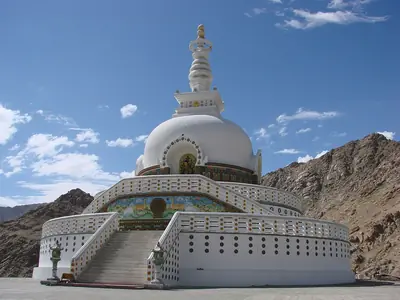
The brilliant white dome of Shanti Stupa stands on a hilltop in Chanspa, in the Leh district of Ladakh. Built in 1991 by Japanese Buddhist monk Gyomyo Nakamura, it forms part of the Peace Pagoda Mission. The stupa is a place of religious significance, but its broad views over the surrounding landscape have also made it popular with visitors who are not Buddhists.
Sankar Monastery
A short walk from Leh, Sankar Monastery—also known as Sankar Gompa—offers an introduction to Ladakh’s Tibetan Buddhist tradition. It is a daughter establishment of Spituk Monastery and the residence of the Abbot of Spituk, the Venerable Kushok Bakula, described as Ladakh’s senior incarnate lama because of his lineage and personal authority.
Namgyal Tsemo Monastery and Tsemo Castle
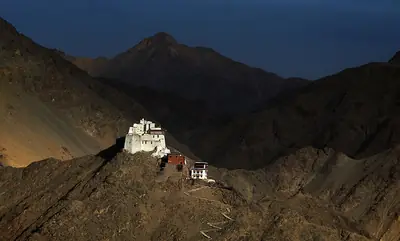
High above the city, Namgyal Tsemo Monastery rises from Tsemo Hill. Also called Namgyal Tsemo Gompa or Tsemo Castle, it was rebuilt in the sixteenth century by King Tashi Namgyal, who ruled Ladakh from 1555 to 1575. Some accounts place the site’s foundation around 1430.
Inside the monastery, the main sight is a three-storey gilded statue of Maitreya, the Buddha of the future. The complex also contains statues of Avalokiteshvara, Manjushri, Padmasambhava and Green Tara, as well as ancient books and wall paintings.
Nearby, the Old Castle—also known as Tsemo Castle or the Leh Fort complex—stands at the highest point in Leh. This defensive structure is maintained by the Archaeological Survey of India. A weathered old dzong and several small shrines add to the site’s historical and religious character.
Leh Palace
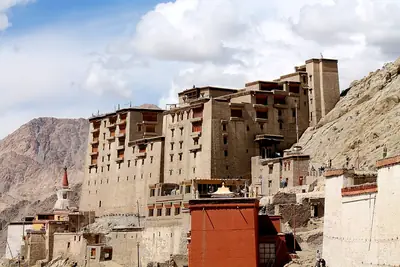
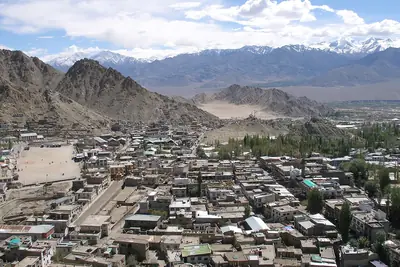
Rising above the city, Leh Palace—also known as Lachen Palkar Palace—is one of the clearest symbols of Ladakh’s royal past. Sengge Namgyal built the palace around 1600, and its design is said to resemble the Potala Palace in Lhasa, creating a strong architectural connection with the wider Himalayan tradition.
Leh Palace remained a royal residence until Dogra forces took control of Ladakh in the mid-nineteenth century. The royal family then moved to Stok Palace, and Leh Palace was abandoned. Its position above the city makes it an important part of the Leh skyline and a useful place to understand the history of the former Ladakh kingdom.
Jama Masjid of Leh
The Jama Masjid of Leh is one of the places connected with the story of mosques in Leh and Ladakh. Its presence adds another dimension to the city’s religious and cultural landscape, alongside its Buddhist monasteries and stupas.
Central Asian Museum
The Central Asian Museum offers an opportunity to discover more about Central Asia while exploring Leh. Its subject reflects the city’s wider historical role as a centre of commerce and trade in the Indus River valley.
For centuries, Ladakh stood at the crossroads of important trade routes. International trade declined after the borders between Tibet and Ladakh closed in the 1960s, but the region’s position helps explain the cultural connections found in and around Leh.
Palace of Stok
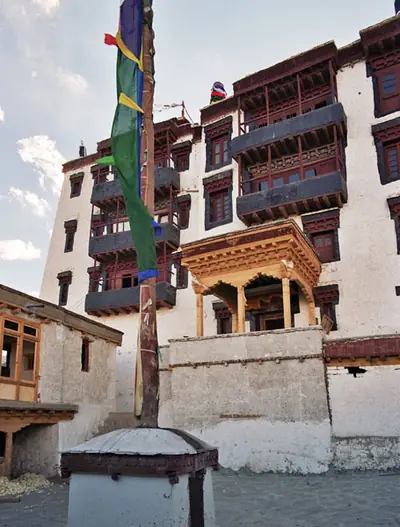
The Palace of Stok was rebuilt during the first quarter of the nineteenth century by the Ladakhi monarch M. G. Tsepal Thondup Namgyal. It served for a time as a residence of the Ladakh royal family after they left Leh Palace.
Part of the palace is now a museum. Its displays include religious utensils and objects connected with the royal family, revealing the close relationship between Ladakh’s royal household and its religious traditions.
Shey Monastery and Shey Palace
A short distance south of Leh, Shey Monastery—also known as Shey Palace—stands on a hill above Shey. The complex is known for its enormous seated statue of Shakyamuni Buddha, said to be the second largest Buddha statue in Ladakh.
Shey once served as Ladakh’s summer capital. The earliest palace near Shey village was built in the tenth century by Lhachen Palgyigon, the king of Ladakh, then known as Maryul. That original palace is now in ruins. The later palace and monastery complex was built in 1655 on the instructions of Deldan Namgyal in memory of his father, Sengge Namgyal.
Inside the monastery, the Shakyamuni Buddha is made of copper and covered with gilded gold. The remains of the older palace and the later religious complex show the different stages of Shey’s history.
Thiksey Monastery
Thiksey Monastery, or Thiksey Gompa, rises above the Indus Valley in a stepped complex often compared with the Potala Palace in Lhasa. It is the largest monastery in central Ladakh and contains stupas, statues, thangkas, wall paintings and swords kept in shrines dedicated to the dharmapalas, the protectors of Buddhist teachings.
The Maitreya Temple was established to commemorate the visit of the 14th Dalai Lama in 1970. Its fifteen-metre statue of Maitreya rises through two storeys and is the largest statue of its kind in Ladakh. The complex also includes a separate community for female renunciates, with its own buildings and a neighbouring women’s monastery.
Hemis Monastery
Southeast of Leh, on the bank of the Indus River, Hemis Monastery—also known as Hemis Gompa—is one of Ladakh’s Himalayan Buddhist monasteries. It belongs to the Drukpa Lineage, a tradition of Tibetan Buddhism. The present monastery was re-established in 1672 by the Ladakhi king Sengge Namgyal.
Magnetic Hill
Magnetic Hill is known for a curious visual illusion: cars and other objects may appear to roll uphill. The effect comes from the shape of the surrounding slopes and the layout of the road. What looks like an uphill stretch is actually downhill, so vehicles are rolling downhill all along. The unusual sensation is created by the landscape, not by magnetism.
Pangong Tso
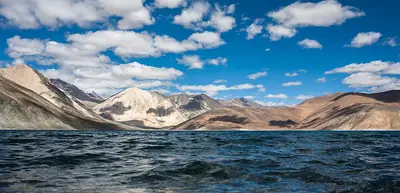
Pangong Tso, also known as Pangong Lake, is one of Ladakh’s most distinctive natural sights. Its blue waters extend through the high mountain landscape at an elevation of about 14,200 feet, or 4,300 metres. The lake stretches roughly 134 kilometres from eastern Ladakh in India into Tibet and reaches about 5 kilometres across at its widest point.
Although it lies in a landlocked basin, Pangong Tso is saline and freezes completely in winter. It is also recognized under the Ramsar Convention as a wetland of international importance.
Hemis National Park
Hemis National Park is a high-altitude protected landscape in eastern Ladakh. It is especially known as a habitat for the endangered snow leopard, making it one of the region’s notable natural areas.
Explore Leh with a free audio guide
Neywo’s Leh self-guided walking tour follows a 3.39-kilometre route from Shanti Stupa to Leh Palace. The walk takes about 89 minutes and includes seven narrated stops: Shanti Stupa, Sankar Monastery, Namgyal Tsemo Monastery, Leh Palace, Jama Masjid of Leh, the Central Asian Museum and Leh.
Download Neywo and explore Leh at your own pace. The app has one walking tour in the city, and each story plays as you reach the place, so you can discover its history without a group or a schedule.
Places with an audio guide in Leh
8 places in Leh with a Neywo audio guide. Each one starts telling its story as you reach it.
Self-guided tours in Leh
1 tour in Leh, free in the Neywo app. Each stop tells its story as you reach it.
- Walk
Above the Rooftops of Leh: From Peace Stupa to Royal Palace
Climb to the white dome of Shanti Stupa for the best view over the Indus valley, then drop through Sankar Gompa to the old Tsemo fortress and its gilded Maitreya. Finish below the Potala-like ruins of Leh Palace, among the bazaar mosque and the museum of Central Asian trade, and end in the old town centre that was once the capital of the Ladakh kingdom. Go slowly: the air is thin at 3,500 m.
Shanti Stupa · Sankar Monastery · Namgyal Tsemo Monastery · Leh Palace · Jama Masjid of Leh · Central Asian Museum …
Open this tour: Above the Rooftops of Leh: From Peace Stupa to Royal Palace
Walk Leh with Neywo
Neywo turns Leh into a self-guided audio tour. Stories arrive as you reach the place they belong to, and the route reshapes when you wander off it.

