Visiting Lucknow, India: Top Sights on Foot
Things to Do in Lucknow: Historic Landmarks and Nawabi Heritage
The best things to do in Lucknow include exploring grand imambaras, historic mosques, palaces, gardens, churches, and museums shaped by the city’s Nawabi past. The capital of Uttar Pradesh, Lucknow grew in the historic region of Awadh and remains known for its architecture, poetry, music, cuisine, gardens, Urdu heritage, and chikan embroidery. Neywo offers a free audio guide for Lucknow with 14 narrated places, so you can discover the city while walking.
What to See in Lucknow
Lucknow’s landmarks reflect the history of Awadh, a major centre of literature, art, religion, and architecture under its Nawabs. The capital of the region eventually moved to Lucknow, beginning a period of rapid growth and prosperity. The city was ruled by eleven Nawabs between 1720 and 1856, before the British annexed Awadh.
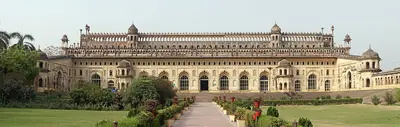
Bara Imambara
Bara Imambara, also known as the Asafi Imambara, is one of Lucknow’s defining landmarks. Built in 1784 by Asaf-ud-Daula, the Nawab of Awadh, the religious complex includes an imambara and a mosque. An imambara is associated with Shia Muslim observance of Azadari.
The site is also connected with Bhul Bhulaiya, or the maze, one of its most distinctive features. Its religious importance and unusual architectural character make it an essential stop for anyone deciding what to see in Lucknow.
Jama Mosque
In Tehseenganj, within Lucknow’s Husainabad area, the Jama Mosque—also called the Jama Masjid—is a historic Shi’ite Friday mosque. Construction began in 1839 under Muhammad Ali Shah, the third Badshah of Awadh, who intended to surpass Delhi’s Jama Masjid in size. His wife, Queen Malika Jahan Sahiba, completed the mosque in 1845 after his death.
The building uses Lakhauri bricks finished with lime, with colourful stucco decoration across its richly patterned exterior. Its prayer hall stands on a high terrace, with an eleven-arch western façade, three tall pear-shaped double domes, and octagonal towers on either side.
Chattar Manzil
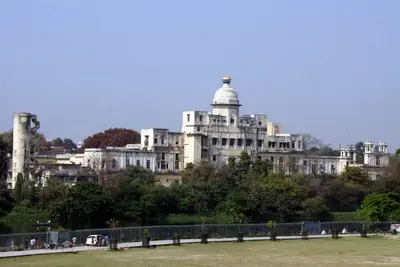
Chattar Manzil, or Umbrella Palace, is recognisable by the vast golden umbrella above the building. The palace once served the rulers of Awadh and their wives.
Nawab Saadat Ali Khan began its construction between 1798 and 1814 in honour of his mother, Chattar Kunwar. Nawab Ghaziuddin Haider later developed the palace, and his successor, Nawab Nasiruddin Haider, completed it. The building has two levels, with a main hall extending through both storeys. Today, it houses the office of the Central Drug Research Institute.
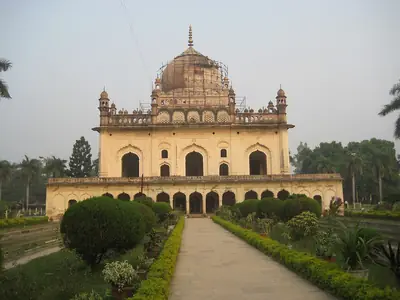
Sikandar Bagh
Sikandar Bagh is a historic garden and villa that was once the summer residence of Wajid Ali Shah, the last Nawab of Oudh. The site was named after Sikandar Mahal Begum, his favourite wife. The garden and villa covered about four and a half acres and were enclosed by a fortified wall with loopholes, a gateway, and corner bastions.
Sikandar Bagh also bears the memory of the Indian Rebellion of 1857. During the Siege of Lucknow, British forces stormed the garden after it had become a stronghold for about 2,200 sepoy mutineers. The site is now home to India’s National Botanical Research Institute.
State Museum of Lucknow
Inside the Nawab Wajid Ali Shah Zoological Gardens in Banarasi Bagh, the State Museum of Lucknow brings together collections covering art, history, and material culture from several periods.
The museum began in 1863 with the collection of Colonel Saunders Alexius Abbott. It was initially known as the Provincial Museum and received its current name, the State Museum, in 1950.
Christ Church
Christ Church stands in Lucknow’s Hazratganj area. It is remembered as the first English church in Northern India and the third in the country. Its historic building also has an educational role, making it a notable stop when exploring the area.
All Saints Garrison Church
All Saints Garrison Church is another historic church building in Lucknow. Its presence adds a further layer to the city’s architectural history and offers a different perspective from the Nawabi and religious landmarks of the old city.
Hanuman Setu Temple
Hanuman Setu Temple, also known as Sankat Mochan Hanuman Temple, is a Hindu temple dedicated to Hanuman. It is one of the city’s sacred places and forms part of Lucknow’s multicultural religious landscape.
Lucknow and the heritage of Awadh
Lucknow is often associated with the title “City of Nawabs”, but its history reaches further back. In the sixth century BCE, the area formed part of Kosala, one of the sixteen Mahajanapadas of the late Vedic period. Awadh is also associated with the ancient Kosala region mentioned in Hindu, Buddhist, and Jain scriptures; Ayodhya and Faizabad served as early capitals before the capital moved to Lucknow.
The city later became a major setting during the Indian Rebellion of 1857 and took part in India’s independence movement. In 1916, Lucknow hosted the Congress session at which Mahatma Gandhi, Jawaharlal Nehru, and Muhammad Ali Jinnah met for the first time and the Lucknow Pact was signed.
Lucknow’s Language, Culture, and Everyday Character
Lucknow’s cultural identity includes its refined manners, poetry, music, gardens, cuisine, and arts. The Gomti River flows through the city and forms part of its character, while mango orchards and chikan embroidery are also associated with Lucknow.
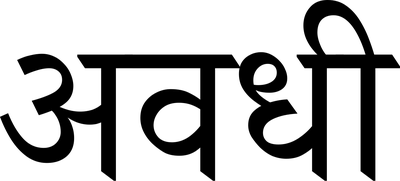
The region’s language, Awadhi—also known as Audhi—is an Indo-Aryan language still spoken in Awadh and parts of western Nepal. Before Hindi displaced it during the nineteenth century, Awadhi was widely used as a literary language alongside Braj. Major Hindu works, including the Ramcharitmanas and the Hanuman Chalisa, were written in Awadhi.
As the capital of Uttar Pradesh, Lucknow sits in a state shaped by the Maurya, Gupta, Delhi Sultanate, and Mughal empires, as well as by the history of India’s independence movement. It is also part of a wider northern Indian itinerary that can include Agra and Varanasi.
Explore Lucknow with a Self-Guided Walking Tour
A Lucknow self-guided walking tour lets you follow the city’s history without joining a group or arranging a fixed timetable. Neywo has two walking tours in Lucknow, with a total of 14 narrated places across the free audio guide.
The first walk, Nawabi Lucknow: Mosques, Imambaras and Umbrella Palace, covers 5.82 km in 113 minutes and has six stops: Jama Mosque, Bara Imambara, Awadh, Sikandar Bagh, Chattar Manzil, and Hanuman Setu Temple.
The second, Hazratganj and the British City, covers 6.23 km in 109 minutes and has four stops: Christ Church, Lucknow; the State Museum of Lucknow; and All Saints Garrison Church, Lucknow.
Download Neywo to explore Lucknow at your own pace. The app tells the story of each place as you reach it, with no group and no schedule. Narration is available in 11 languages, making it a practical Lucknow audio guide for discovering the city independently.
Places with an audio guide in Lucknow
8 places in Lucknow with a Neywo audio guide. Each one starts telling its story as you reach it.


Self-guided tours in Lucknow
1 tour in Lucknow, free in the Neywo app. Each stop tells its story as you reach it.
- Walk
Nawabi Lucknow: Mosques, Imambaras and Umbrella Palace
Follow the city of the Nawabs of Awadh from the great Friday mosque of Husainabad to the vaults of the Bara Imambara, then on to the walled garden of Sikandar Bagh, where the 1857 siege played out, and the Umbrella Palace by the Gomti.
Jama Mosque · Bara Imambara · Awadh · Sikandar Bagh · Chattar Manzil · Hanuman Setu Temple
Open this tour: Nawabi Lucknow: Mosques, Imambaras and Umbrella Palace
Walk Lucknow with Neywo
Neywo turns Lucknow into a self-guided audio tour. Stories arrive as you reach the place they belong to, and the route reshapes when you wander off it.

