What to See in Tavira, Portugal: Free Audio Guide
Things to Do in Tavira: Churches, Castle and Algarve Heritage
The best things to do in Tavira include exploring its historic churches, climbing to the Castle of Tavira and discovering the town’s maritime heritage. Set in the Algarve, Tavira brings together centuries of religious architecture, fortifications and local traditions in a compact destination that rewards walking.
Neywo has a free audio guide for Tavira with 22 narrated places, available in 11 languages. It is a useful companion if you want to understand the buildings and stories you encounter while exploring at your own pace.
What to See in Tavira
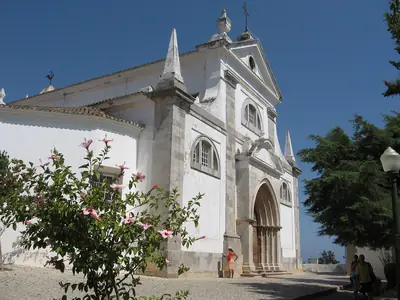
Igreja de Santa Maria do Castelo
The Igreja de Santa Maria do Castelo is Tavira’s main parish church and one of its most important landmarks. Classified as a National Monument since 1910, it is believed to have been built in the 13th century after the Reconquista of Tavira from the Moors.
Construction began in 1242 on the initiative of the Order of Santiago, led by D. Paio Peres Correia. The church replaced an Arab mosque thought to have stood on the same site when Tavira was a Moorish medina. Archaeological evidence of the mosque has not been found, although a tomb containing a body and an alfange, a type of Moorish sword, was discovered here in 1718.
A memorial stone beside the church commemorates an episode in the life of Infante D. Henrique, who received the titles of Duke of Viseu and Lord of Covilhã in Tavira after the taking of Ceuta.
Castle of Tavira
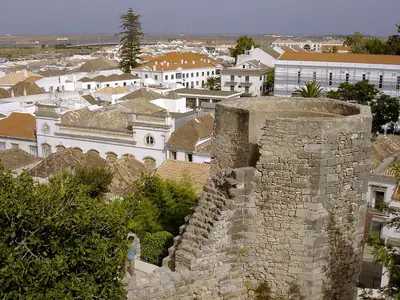
The Castle of Tavira occupies a commanding position above the mouth of the Gilão River. Its strategic setting helps explain why the area has attracted settlement since ancient times and why Tavira developed as an important seaport.
The first settlements here date back to the eighth century BC. Over the centuries, the area passed through the hands of Phoenicians, Greeks, Celts, Carthaginians, Romans, Moors and, finally, the Portuguese crown. The castle is therefore an ideal place to connect Tavira’s medieval history with the much longer story of the town.
Igreja da Misericórdia de Tavira
In the historic centre, the Igreja da Misericórdia forms part of the Santa Casa da Misericórdia complex. The church was commissioned by the Misericórdia de Tavira, a charitable brotherhood, and built between 1541 and 1551.
Its Renaissance character makes it one of Tavira’s architectural highlights. The church stands in the centre of the old civic parish of Santa Maria and Santiago, making it a natural stop during a walk through the town’s historic core.
Museu Municipal
The Museu Municipal is housed in the Palácio da Galeria, a historic palace that reflects Tavira’s architectural character. Its collections offer an introduction to the town’s history and artistic traditions.
The building itself is part of the experience: the museum combines the setting of a heritage palace with exhibitions that help place Tavira’s monuments and traditions in context.
Church of São Francisco
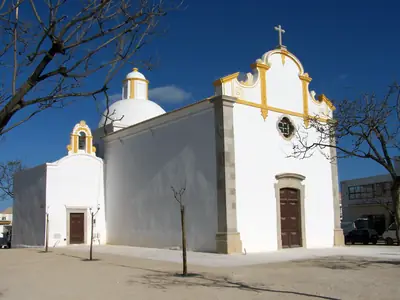
The Church of São Francisco, also known as the old Convent of São Francisco, has origins traditionally traced to 1272, when King D. Diniz is believed to have founded it. A theory suggests that the site may once have belonged to the Knights Templar before passing to the Franciscan friars, although this has not been supported by solid evidence.
The church blends Gothic and Baroque styles and is distinguished by two domes on its roof. Inside are images of Our Lady of the Conception, scenes from Holy Week and two small chapels that retain their original Gothic character. After Portugal’s religious orders were dissolved following the Liberal Wars, the building passed to the Confraternity of the Third Order of Saint Francis, which helped preserve it.
Convento e Igreja de Nossa Senhora do Carmo
The Convento e Igreja de Nossa Senhora do Carmo forms part of a Carmelite religious ensemble in the parish of Santa Maria. The Igreja da Ordem Terceira do Carmo stands beside the convent, creating a notable architectural presence in Tavira.
This is one of the historic religious sites that gives the town its distinctive character and explains why a walking route through Tavira reveals so many different churches, chapels and convent buildings.
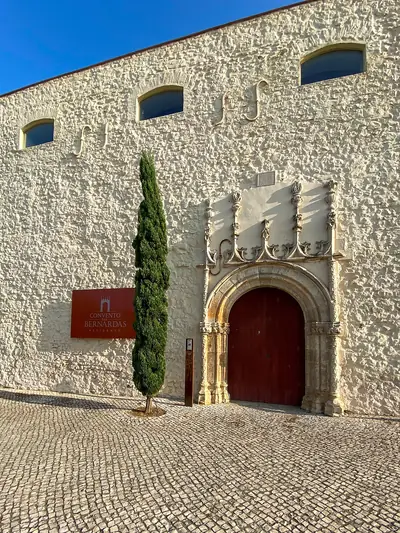
Convento das Bernardas
The Convento das Bernardas, also known as the Convento de São Bernardo or the Convent of Our Lady of Mercy of Tavira, is a cultural heritage monument tucked into Tavira’s historic streets.
Its quiet presence and simple appearance offer a contrast with the more elaborate churches in the town. It is a worthwhile stop for anyone interested in Tavira’s religious and architectural traditions.
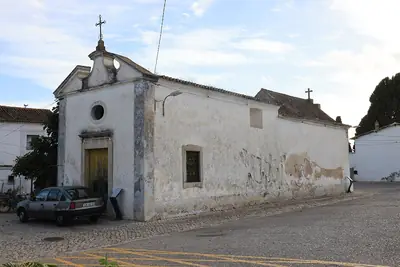
Capela de São Sebastião
The Capela de São Sebastião, also called the Ermida de São Sebastião, stands in the old parish of Santiago near the Quartel da Atalaia. Records show that the chapel already existed by 1723, although its exact construction date is uncertain.
It was rebuilt in 1745 by the masons Diogo Tavares de Ataíde and Manuel Aleixo. The chapel’s Baroque decoration includes faux-marble walls and paintings along its single nave. Its sacristy is noticeably more sober, and it may be the only remaining part of the original chapel.
Ermida de Nossa Senhora das Angústias
This small chapel is part of Tavira’s religious heritage and may also be identified by its older names, the Ermida do Senhor do Calvário or the Ermida do Calvário.
Its modest scale makes it a different kind of architectural stop from Tavira’s major churches, revealing the variety of religious buildings scattered through the town.
Convento das Bernardas and Tavira’s smaller religious monuments
Tavira’s heritage extends beyond its best-known landmarks. The Ermida de Nossa Senhora das Angústias, Capela de São Sebastião and Convento das Bernardas show how religious buildings are woven into the town’s streets rather than concentrated in a single monumental area.
For visitors searching for a Tavira self-guided walking tour, this concentration of churches, chapels and convents makes the historic centre especially rewarding to explore on foot.
Heritage Beyond the Historic Centre
Arraial Ferreira Neto
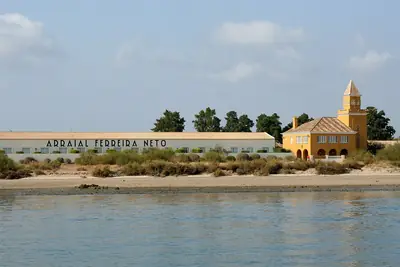
The Arraial Ferreira Neto preserves an important part of Tavira’s maritime heritage. It is one of the few surviving fishing settlements in the Algarve and tells the story of the region’s tuna-fishing tradition.
The complex originally supported the tuna fleets operating from Quatro Águas, housing and serving the fishermen and their families. It has since become the Hotel Vila Galé Albacora, while retaining a thematic museum dedicated to tuna fishing and the techniques and traditions associated with it.
Fortaleza de Santo António de Tavira
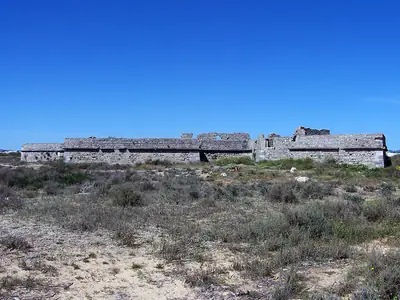
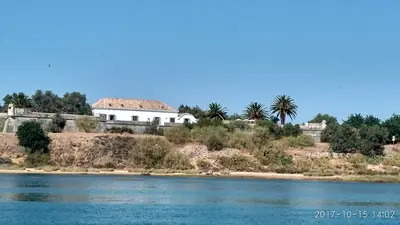
The Fortaleza de Santo António de Tavira stands at the mouth of the Gilão River, where the water meets the sea near the town’s bar. It is also known as Forte do Rato or Forte da Ilha das Lebres.
The fort has been recognized as a Property of Public Interest since 1983. Its position connects Tavira’s defensive history with the coastal landscape around the river mouth.
Forte de São João da Barra
East of Cabanas de Tavira, the Forte de São João da Barra sits on a small hill overlooking the Ria Formosa. It is also known as Forte de São João Baptista and Forte da Conceição.
The fort adds a military dimension to a visit around Tavira and offers a reminder of the strategic importance of the waterways and coastline beyond the town centre.
Churches in the municipality of Tavira
Several heritage churches lie beyond Tavira’s central streets. The Church of Santo Estêvão, also known as the Parish Church of Cachopo, serves the community of Cachopo. The Igreja de Santa Catarina da Fonte do Bispo is the main church of that parish.
In Luz de Tavira, the Igreja de Nossa Senhora da Luz is a recognized cultural heritage monument. The church and the open square in front of it, known as the rossio, form a distinctive local ensemble and an important focal point for the parish.
Explore Tavira with a Free Audio Guide
A free walking tour in Tavira is a good way to see the town’s churches and historic buildings, but Neywo adds the stories without requiring a group or a fixed departure time. Its Tavira tour, “Town of Churches, Castle and a Baroque Octagon”, is a 2.86 km walk lasting 107 minutes, with 12 narrated stops.
The route includes the Igreja da Ordem Terceira do Carmo, Igreja do antigo Convento de Nossa Senhora da Ajuda, Igreja de Nossa Senhora das Ondas, Igreja da Misericórdia de Tavira, Museu Municipal, Igreja paroquial de Santa Maria, Igreja Paroquial de Santiago de Tavira, Castle of Tavira, Church of São Francisco, Igreja de São José do Hospital ou do Espírito Santo, Capela de São Sebastião and Convento das Bernardas.
Download Neywo and explore Tavira with a Tavira audio guide that tells the story of each place as you reach it. Walk at your own pace, with no group and no schedule, and use the app to discover the town’s heritage as part of your wider trip through Faro and Portugal.
Places with an audio guide in Tavira
8 places in Tavira with a Neywo audio guide. Each one starts telling its story as you reach it.
Self-guided tours in Tavira
1 tour in Tavira, free in the Neywo app. Each stop tells its story as you reach it.
- Walk
Tavira: Town of Churches, Castle and a Baroque Octagon
Tavira is known as the town of churches, and this walk visits the best of them around the Gilao River. Start at the Carmelite church, pass the fishermen's chapel and the Misericordia by the architect of Lisbon's Jeronimos, then climb to the castle and the church built over a mosque. Finish by the Franciscan and Hermit convents.
Igreja da Ordem Terceira do Carmo (Tavira) · Igreja do antigo Convento de Nossa Senhora da Ajuda · Igreja de Nossa Senhora das Ondas, ou do Corpo Santo, e Edifício do antigo Compromisso Marítimo de Tavira · Igreja da Misericórdia de Tavira · Museu Municipal · Igreja paroquial de Santa Maria …
Open this tour: Tavira: Town of Churches, Castle and a Baroque Octagon
Walk Tavira with Neywo
Neywo turns Tavira into a self-guided audio tour. Stories arrive as you reach the place they belong to, and the route reshapes when you wander off it.

