Vigo, Spain: Self-Guided Walking Tour
Things to Do in Vigo, Spain: Museums, Monuments and Historic Streets
Vigo is a port city in Galicia, Spain, with a historic center, public art, museums, churches and landmarks connected to the city’s maritime and cultural life. If you are deciding what to see in Vigo, its museums and monuments offer a varied way to explore the city, from the old town to the Pazo de Castrelos and the coast.
Neywo has a free audio guide for Vigo with 49 narrated places, available in 11 languages, so you can discover the city while walking at your own pace.
Vigo is a good starting point for exploring Galicia, a region whose cities and landscapes are closely tied to the Atlantic. It also fits naturally into a wider trip through Spain, alongside destinations such as Santiago de Compostela and La Coruña.
What to see in Vigo
Concatedral de Santa María de Vigo
In the historic center, the Plaza de la Concatedral takes its name from the Concatedral de Santa María, also known locally as La Colegiata. The church has shared the seat of the diocese of Tui-Vigo with the cathedral of Tui since 1959, and it became a minor basilica in 2020.
The current building was constructed between 1811 and 1834 after an earlier collegiate church was badly damaged by a powder-magazine explosion in 1809. Designed by Melchor de Prado y Mariño, it combines a mainly neoclassical structure with baroque towers.
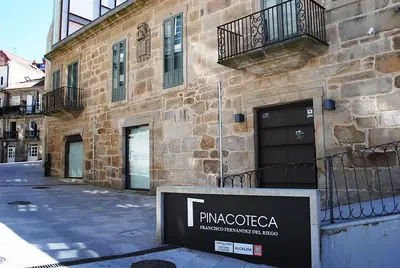
Pinacoteca Francisco Fernández del Riego
The Pinacoteca Francisco Fernández del Riego is a municipal art museum that opened in 2011. As a public cultural space operated by the city, it forms part of Vigo’s more recent art scene and is one of the stops in the historic-center route.
The museum is also connected to the Monument to Francisco Fernández del Riego, a tribute to one of Vigo’s notable figures.
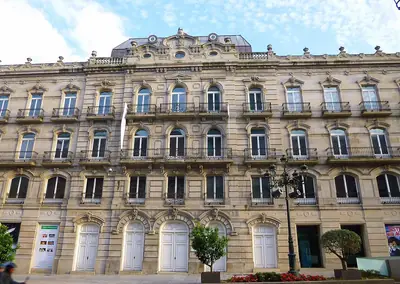
Afundación art collection
The Afundación art collection is described as the finest private collection of Galician art. Owned by Afundación, the social work foundation of Abanca, it was created in the mid-twentieth century to bring together works by Galician artists whose pieces had become dispersed, including artists who returned to Galicia after emigrating during the postwar years.
The collection contains more than 4,000 works, including painting, sculpture, photography, printmaking and drawing. Its permanent exhibition presents representative works at the Afundación headquarters in Vigo.
Museum of Contemporary Art, Vigo
Known locally as MARCO, the Museum of Contemporary Art of Vigo occupies a former courthouse and prison in the city center. The panoptic building was declared a Cultural Interest Asset in 1990, rehabilitated in 1995 and reopened as a museum on November 13, 2002.
Its exhibitions and cultural activities change throughout the year, making it a particularly interesting stop for visitors who want to combine Vigo’s architectural history with contemporary creativity.
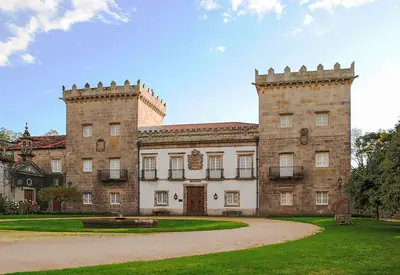
Museo Quiñones de León
The Museo Quiñones de León is Vigo’s municipal museum, housed in the Pazo de Castrelos. The manor house began as the Pazo de Lavandeira, built in 1670, a few years after Captain Juan Tavares founded the estate in 1665. Its surrounding gardens combine French and English influences.
Inside, the ground-floor rooms preserve the character of the former residence, including period furniture and decoration. The permanent collection includes European painting from the 17th and 18th centuries, with works from Italian, Dutch, Flemish, Spanish and French traditions spanning the 15th to the 19th centuries. An archaeology room explores the earliest chapters of Vigo’s history.
The museum opened in 1937 and was declared a historical and artistic monument in 1962.
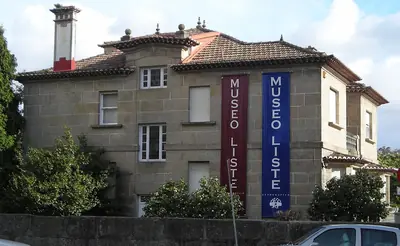
Museo Etnográfico Liste
The Museo Etnográfico Liste focuses on Galicia’s everyday heritage. Its collection of more than 2,000 objects explores traditional crafts, agricultural work, popular religion and folk medicine.
The museum’s monographic approach is especially useful for understanding material and spiritual culture in Galicia, including crafts that have disappeared. Founded in 1999, it was declared a site of cultural interest that same year and joined the Galician Council of Museums in 2001.
Museo del Mar de Galicia
The Museo del Mar de Galicia is a cultural and scientific center dedicated to the sea. It opened in June 2002 at Punta do Muíño, in the parish of Alcabre, where its coastal setting reinforces the museum’s maritime focus.
For visitors interested in Vigo’s relationship with the sea, this is one of the city’s most direct introductions to its marine environment and culture.
Monument to Jules Verne
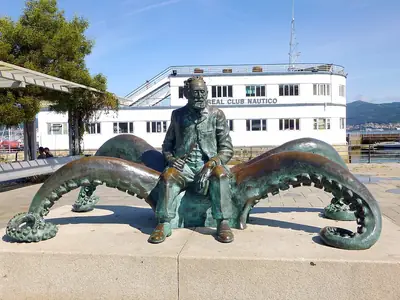
The Monument to Jules Verne honors the French author whose stories carried readers beneath the sea and around the world. It is one of several monuments included in Neywo’s routes through Vigo, alongside tributes to local and regional figures.
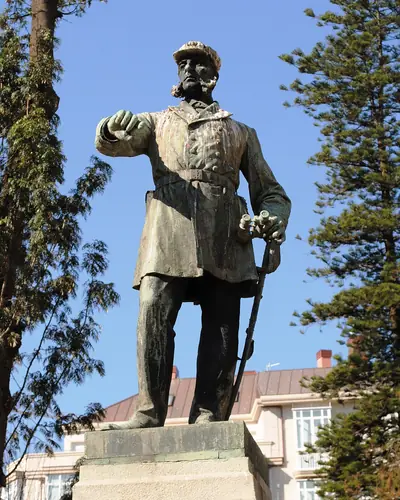
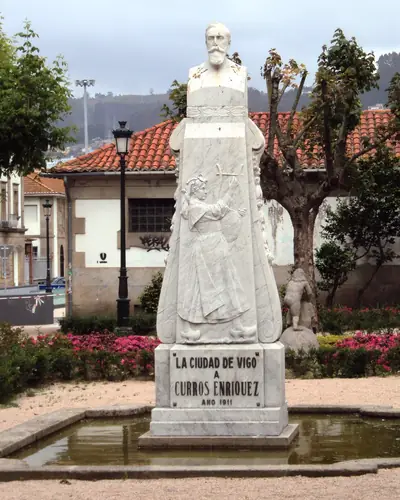
Other notable monuments include the Monument to García Barbón, the Monument to Méndez Núñez and the Monument to Curros Enríquez. Together, they add a literary and civic dimension to a walk through the city.
José Elduayen memorial
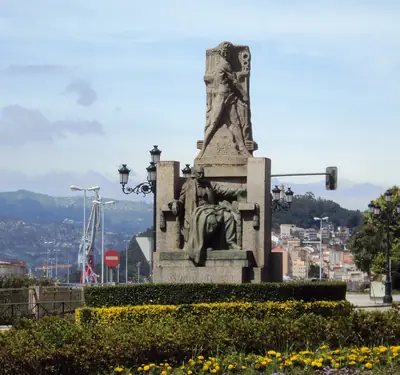
The memorial to José Elduayen stands in the Jardines de Montero Ríos and the surrounding avenues. It is a quieter place to pause while exploring Vigo’s green urban spaces.
Abanca Balaídos Stadium
Football fans can visit Abanca Balaídos Stadium, the home ground of Real Club Celta de Vigo. The municipal stadium was inaugurated on December 30, 1928, and was one of the venues for the 1982 FIFA World Cup, hosting three matches.
Balaídos has also welcomed the Spanish national team for seven international matches. The stadium is undergoing renovation: the Gol stand closed in March 2025, and the current capacity during the works is around 20,700 spectators. Completion is expected in early 2027, when the final capacity is projected to exceed 27,000.
Verbum - Casa de las Palabras
Verbum - Casa de las Palabras was an interactive museum devoted to human communication. Its exhibits explored languages, words, letters, sounds, signs, symbols, reading, writing, literature and technology through games and hands-on displays.
The museum closed in 2024 because of low visitor numbers and the growing obsolescence of its content. In 2025, plans were announced for the building to become the Museum of History of the city of Vigo.
A Vigo self-guided walking tour with Neywo
Neywo offers three walking tours in Vigo, one bus route and one bike route:
- Old Vigo: From the Gate of the Sun to the Castle Walls — 1.98 km, 83 minutes and 11 narrated stops.
- Belle Epoque Vigo: Theatres, Palaces and a Panopticon — 1.59 km, 81 minutes and 11 narrated stops.
- Sculptures, Gran Via and the Pazo de Castrelos — 4.42 km, 98 minutes and 7 narrated stops.
- Line 10: From the Samil Coast to the Heart of Vigo — a 10.8 km bus route lasting 46 minutes, with 8 narrated stops.
- From City Hall to the Fishing Harbour — a 2.7 km bike route lasting 14 minutes, with 3 narrated stops.
The app tells the story of each place as you reach it, at your own pace, with no group and no schedule. That makes it a practical alternative to a conventional free walking tour in Vigo: you choose when to begin, how long to pause and which route suits your plans.
Download Neywo and explore Vigo
Download Neywo to explore Vigo with a free audio guide covering 49 narrated places. Choose between three walks, a bus route and a bike route, then let the app guide you from one landmark to the next as you move through the city.
The stories play when you reach each place, so you can explore Vigo independently, without a group or a fixed schedule.
Places with an audio guide in Vigo
8 places in Vigo with a Neywo audio guide. Each one starts telling its story as you reach it.
Self-guided tours in Vigo
5 tours in Vigo, free in the Neywo app. Each stop tells its story as you reach it.
- Bike ride
From City Hall to the Fishing Harbour
A short ride on Vigo's waterfront cycle lane from the modern square of the city hall, past Praza America's Porta do Atlantico sculpture, to the harbour where the old trawler Bernardo Alfageme recalls the fishing and canning industry.
Praza do Rei · Porta do Atlántico · Barco Bernardo Alfageme
Open this tour: From City Hall to the Fishing Harbour - Bus ride
Line 10: From the Samil Coast to the Heart of Vigo
Vitrasa's line 10 follows Vigo's southern shore from the Samil beach area, past the trawler Bernardo Alfageme moored in the harbour and the Porta do Atlantico sculpture, into the city centre. Ride it to see the monuments of Rua do Principe and finish at the Garcia Barbon monument.
The Abduction of Europa · Verbum - Casa de las Palabras · Barco Bernardo Alfageme · Porta do Atlántico · Monument to Méndez Núñez, Vigo · Afundación art collection …
Open this tour: Line 10: From the Samil Coast to the Heart of Vigo - Walk
Old Vigo: From the Gate of the Sun to the Castle Walls
Vigo's old town sits on a slope above the port, and its squares tell the city's story in order. Start under the Fish Man sculpture on Porta do Sol, wander past arcaded Praza da Constitución and a Gothic tower house, then climb through the cathedral square to the seventeenth-century castle, the modern city hall and the hill fortress of O Castro.
Porta do Sol · The Sireno · Pinacoteca Francisco Fernández del Riego · Museo Francisco Fernández del Riego · Praza da Constitución · Casa Torre de Ceta y Arines …
Open this tour: Old Vigo: From the Gate of the Sun to the Castle Walls - Walk
Belle Epoque Vigo: Theatres, Palaces and a Panopticon
A walk along Rua do Principe and its side streets, where the money of Vigo's fishing and canning boom built theatres, post offices and mansions. You will see Antonio Palacios's theatre, a preserved circus facade, an art collection of Galician masters and a former panoptic prison that now holds contemporary art.
Monument to Jules Verne · Casa de Correos e Telégrafos de Vigo · Afundación Theatre · Casa das Artes e da Historia · Afundación art collection · Casa de Estanislao Durán …
Open this tour: Belle Epoque Vigo: Theatres, Palaces and a Panopticon - Walk
Sculptures, Gran Via and the Pazo de Castrelos
Follow Gran Via south from the strapping workers of the Monument to Work to the bronze horses of Plaza de Espana, then on to Praza America and its Porta do Atlantico. The walk ends in the green quarter of Castrelos with the ethnographic museum, a 17th-century manor house and a Romanesque church.
Monument to work · Chemineas · The Horses · Porta do Atlántico · Museo Etnográfico Liste · Museo Quiñones de León …
Open this tour: Sculptures, Gran Via and the Pazo de Castrelos
Walk Vigo with Neywo
Neywo turns Vigo into a self-guided audio tour. Stories arrive as you reach the place they belong to, and the route reshapes when you wander off it.

