What to See in Calpe, Spain: Free Audio Guide
Things to Do in Calpe: What to See on the Costa Blanca
Looking for things to do in Calpe? This coastal town in Alicante, in the Valencian Community, brings together Mediterranean scenery, Roman remains, historic buildings and distinctive modern architecture. Its landscape combines hills, flatter ground, bays, beaches and the sea, creating a varied setting to explore. Neywo has a free audio guide for Calpe with seven narrated places.
What to See in Calpe
Muralla Roja
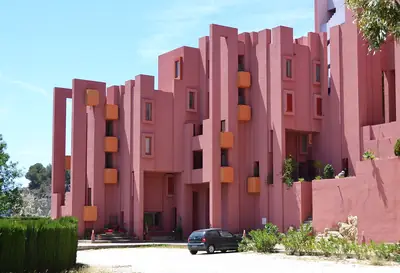
One of the most recognisable sights in Calpe is Muralla Roja, or the Red Wall, in the La Manzanera development. Designed by architect Ricardo Bofill Levi, this private residential building was completed in 1973. Its exterior is known for its intense red forms, geometric shapes and interconnected courtyards, which have made it one of the most photographed and shared works of architecture on Instagram.
The design is based on repeated Greek-cross forms, grouped around service towers and linked by stairs and walkways. Its layout creates a three-dimensional labyrinth influenced by Mediterranean and Arab architecture, including North African adobe towers and the kasbah. Muralla Roja is private and cannot be visited without permission, but its exterior can be appreciated from outside.
Museo de Historia de Calp
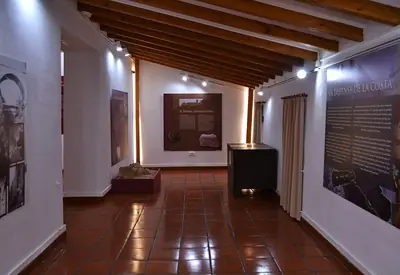
The Museo de Historia de Calp, also known as the Museu d’Història de Calp, is a place to explore the history of Calp. It is one of the stops included in Neywo’s walking tour, making it a useful point of reference for understanding the town beyond its beaches and coastal views.
Church of Our Lady of the Snow
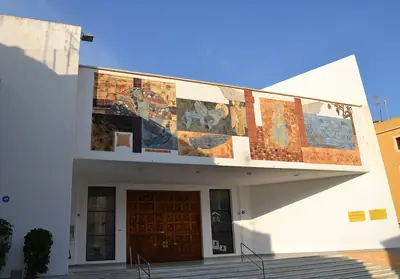
In Calpe’s historic centre, the Church of Our Lady of the Snow—Nuestra Señora de las Nieves—combines two contrasting elements. Its core is a fortified medieval structure, while a contemporary extension stands alongside it. This unusual combination gives the church its distinctive appearance.
The building is protected as an Asset of Local Relevance within the Valencian cultural heritage system. The Museo del Coleccionismo, or Museum of Collecting, is also associated with this site and provides a second point of interest in the same visit.
Banys de la Reina: Roman Pools by the Sea
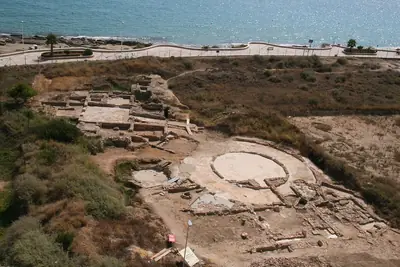
Banys de la Reina, also known as Baños de la Reina, is a Roman archaeological site beside the salt flats of Calp. Its remains show how residential comfort and economic activity existed together in a coastal complex.
The main residence was a Roman palace with a corridor, courtyard and eight rooms. Marble and mosaics indicate that it belonged to someone wealthy. By the shoreline, artificial pools were cut into the coastal rock for fish farming and fish salting. The complex also included thermal baths, a waterwheel and at least four cisterns.
The residence and thermal building were constructed at the end of the second century or the beginning of the third century and abandoned at the start of the fifth century. Excavations carried out especially between 1993 and 1999 identified a settlement of three residences connected with wine production, fishing, garum, fish salting and stone extraction. The site is one of the clearest places in Calpe to see the town’s long relationship with the sea.
Casa Nova
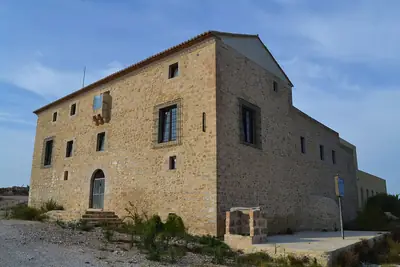
Casa Nova, also known as Casanova, is a cultural property in Calpe. It adds another historic point to a visit focused on the town’s heritage and complements the museum, church and archaeological sites.
Castellet de Calp
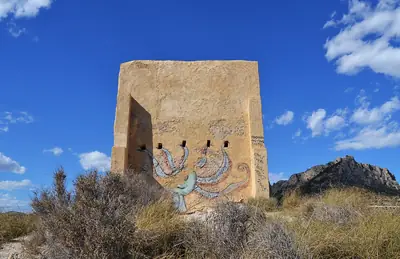
The remains of Castellet de Calp stand high on Castellet Hill, also known as the Mascarat Castle or Castellet Tower. Although only fragments survive, the site reveals part of Calpe’s defensive history.
The tower was built at the end of the sixteenth century to warn of attacks by Barbary pirates. It occupies the site of an older castle built between the twelfth and fourteenth centuries. Parts of that earlier fortress remain in the bases of its curtain walls and in cisterns carved into the rock.
At 256 metres above sea level, the tower commanded views over Calp Bay and the old royal road through the Mascarat gorges. The base is still visible, along with a wall measuring four metres at its base and four and a half metres high. Its loopholes can also still be seen.
The Coast and the Peñón de Ifach
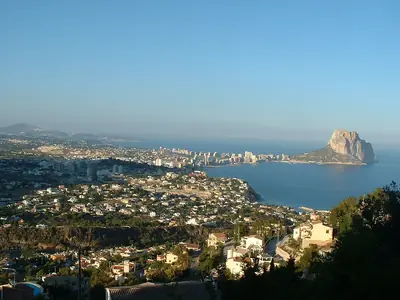
Calpe’s natural setting is central to any visit. The town lies in a landscape where hills, flatter areas and the Mediterranean meet, with bays and beaches around the coast. The Peñón de Ifach is the landmark that defines the skyline and gives Calpe its most recognisable coastal view.
The rock provides a dramatic backdrop to walks, photography and time by the sea. Together with the beaches and waterfront landscape, it gives Calpe a strong visual identity among destinations in Spain.
Explore Calpe with Neywo
Neywo offers one walking tour in Calpe: “Calpe: Red Wall, Old Town and Roman Pools.” The route covers 2.79 km, takes about 60 minutes and includes four narrated stops: Muralla Roja, Museo de Historia de Calp, Museo del Coleccionismo and Banys de la Reina.
It works as a self-guided walking tour: the app tells the story of each place as you reach it, at your own pace, with no group and no schedule. The narration is available in 11 languages. Download Neywo’s free audio guide and explore Calpe while the town’s architecture, history and Roman coastline unfold around you.
Places with an audio guide in Calpe
7 places in Calpe with a Neywo audio guide. Each one starts telling its story as you reach it.
Self-guided tours in Calpe
1 tour in Calpe, free in the Neywo app. Each stop tells its story as you reach it.
- Walk
Calpe: Red Wall, Old Town and Roman Pools
From Bofill's red labyrinth above the coves to the fortified church at the heart of the old town and the pools where Romans salted fish, this walk crosses two thousand years of Calpe by the sea.
Muralla Roja · Museo de Historia de Calp · Museo del Coleccionismo · Banys de la Reina, Calp
Open this tour: Calpe: Red Wall, Old Town and Roman Pools
Walk Calpe with Neywo
Neywo turns Calpe into a self-guided audio tour. Stories arrive as you reach the place they belong to, and the route reshapes when you wander off it.

