Things to Do in Dénia, Spain: Walking Guide
Things to do in Dénia: castles, museums and Mediterranean history
Dénia is a coastal city on Spain’s Costa Blanca, shaped by its port, castle, historic streets and long connection with Mediterranean trade. The best things to do in Dénia include exploring the castle hill, discovering the city’s archaeological and raisin-trading past, and visiting landmarks in and around the old town. Neywo offers a free audio guide for Dénia with 9 narrated places, available in 11 languages.
What to see in Dénia
Castell de Dénia
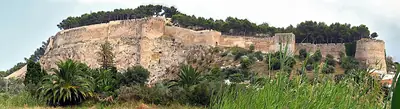
The most recognisable landmark in Dénia is Castell de Dénia, rising from the hill at the centre of the city. Built by the Arabs over earlier structures, the fortress occupied the highest ground and served as an important stronghold, including during the period when Mediterranean piracy threatened the coast.
The restored and consolidated remains make it possible to explore the castle today. From its position above the old town and port, it also explains the city’s historic relationship with the sea. The castle has been municipal property since 1952 and is protected as a cultural monument.
The Museu Arqueològic de Dénia is located inside the castle, in the former Governor’s Palace. In August, the historic setting also hosts Música al Castell, a series of concerts.
Museu Arqueològic de Dénia
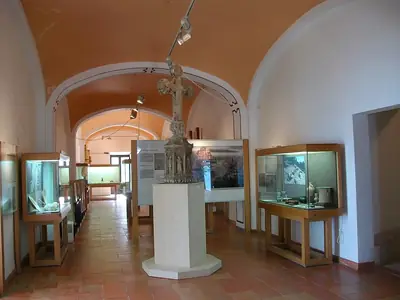
The Museu Arqueològic de Dénia traces the city’s urban history from the second century before Christ to the eighteenth century. Its collections bring together objects found in Dénia and the surrounding area, arranged across four rooms in chronological order.
The displays cover the city’s beginnings, the Classical period, the prosperous Taifa kingdom of the eleventh century, the Christian county and marquisate, and Dénia’s decline during the War of the Spanish Succession around 1708. Highlights include a second-century Roman vessel shaped like the god Mercury, Islamic bronze objects from the eleventh and twelfth centuries, and a decorated bowl known as an ataifor.
The museum also shows how closely Dénia’s history has always been tied to its port and its role as a trading city, whose ships travelled across the Mediterranean.
Museu Etnològic de Dénia
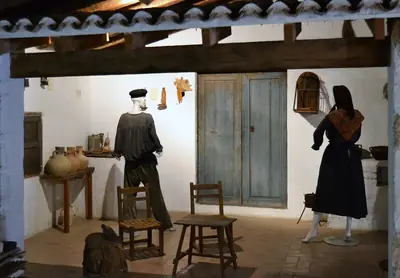
For another perspective on local history, visit the Museu Etnològic de Dénia on Cavallers Street. It explores the period when the raisin trade transformed Dénia’s economy, streets and social life during the second half of the nineteenth century.
The story begins with the vineyard and the preparation of raisins, then follows the product through the port and its warehouses. The museum describes the trade’s connections with England, Northern Europe and America, as well as the prosperity it brought to the city.
The building itself dates from the early nineteenth century and reflects the imposing homes once occupied by the bourgeoisie involved in the raisin trade. Images, artworks and other displays show how this commerce influenced Dénia’s customs and identity.
Iglesia de Nuestra Señora de la Asunción
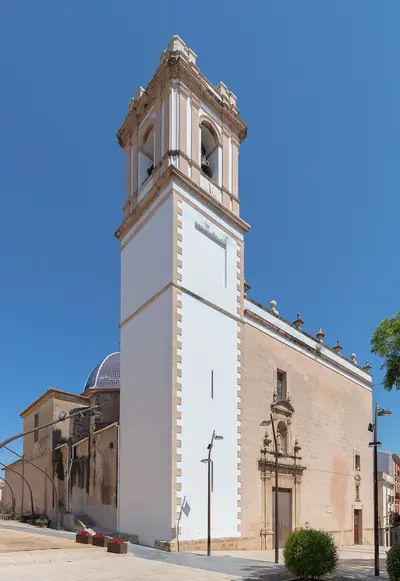
In Constitution Square, the Iglesia de Nuestra Señora de la Asunción stands close to the Town Hall. Built in the eighteenth century and later reformed in the nineteenth and twentieth centuries, it was declared a locally significant heritage site in 1998.
Its central blue-tiled dome rises from an octagonal drum, while the adjoining bell tower gives the church a distinctive profile in the centre of the city. The façade combines rubble masonry and brick, with cut stone forming the base. It has two entrances: one to the church and another to the Chapel of the Rosary, also known as the Chapel of Saint Roch.
Monestir de la Mare de Déu de Loreto i de la Preciosíssima Sang
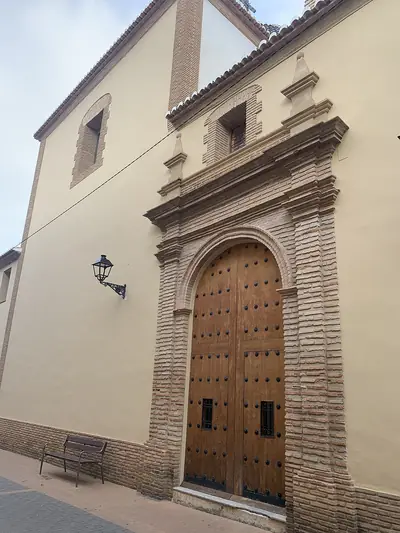
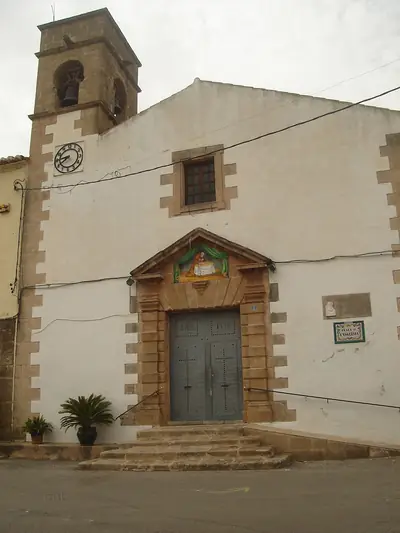
The Monestir de la Mare de Déu de Loreto i de la Preciosíssima Sang is a quiet religious landmark in Dénia. It forms part of the city’s historic places and is included in a walking route that connects several of the central sights.
Biblioteca Pública Municipal de Dénia - Central
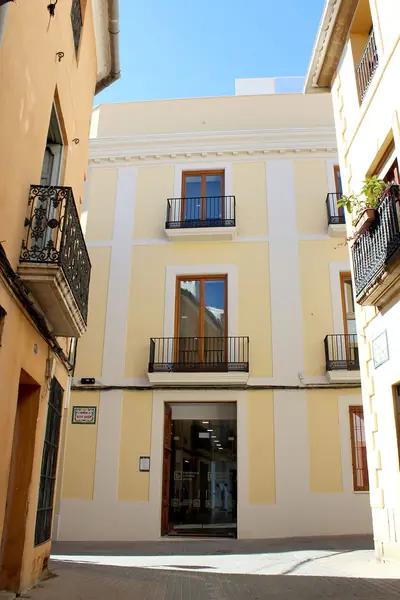
The Biblioteca Pública Municipal de Dénia - Central is the city’s central public library, offering a quieter point of interest among Dénia’s historic streets. It is a local place for reading, learning and everyday community life.
Olimbroi Castle and Sant Nicolau hill
Olimbroi Castle no longer stands, but its former site on Sant Nicolau hill tells another story about Dénia’s port. The building was constructed in the fourteenth century to support Pere Eiximen d’En Carròs in the conquest of Dénia, and its position allowed those stationed there to watch traffic in the port.
Despite its name, Olimbroi may have been a small chapel dedicated to Saint Nicholas rather than a conventional fortress. In 1812, it was used during the struggle against the French in the Peninsular War. Later, in the early twentieth century, the hill became a quarry supplying stone for the port’s southern breakwater. The use of dynamite weakened the structure, and structural problems led to its demolition around 1917.
Churches in Jesús Pobre and La Xara
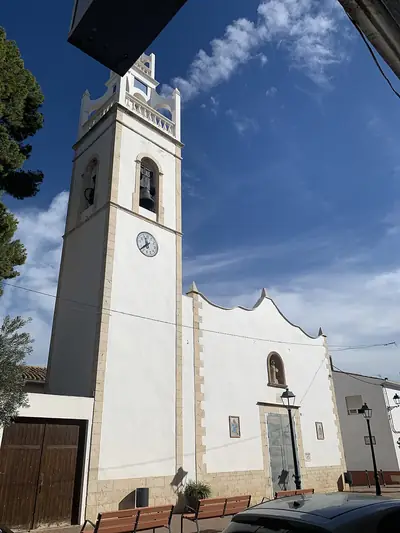
The municipality also includes smaller local landmarks beyond the central city. The church of Jesús Pobre is a place of worship in the municipality of Dénia, while the Church of Saint Mathew in La Xara offers another point of interest for those exploring the surrounding area.
A Dénia self-guided walking tour
Neywo’s Dénia self-guided walking tour, “Raisins, Merchants and the Castle on the Hill,” covers 0.81 km in around 42 minutes and includes 6 narrated stops. The route connects the Monestir de la Mare de Déu de Loreto i de la Preciosíssima Sang, Biblioteca Pública Municipal de Dénia - Central, Iglesia de Nuestra Señora de la Asunción, Museu Etnològic de Dénia, Castell de Dénia and Museu Arqueològic de Dénia.
It is a compact way to connect Dénia’s religious heritage, public spaces, raisin-trading history and castle hill in a single walk. For a wider itinerary in the region, you can also explore Valencian Community or compare Dénia with nearby Xàbia and Calpe.
Explore Dénia with Neywo
Download Neywo and explore Dénia with one walking tour: 0.81 km, 42 minutes and 6 narrated stops. The app tells the story of each place as you reach it, at your own pace, with no group and no schedule. Dénia’s audio guide includes 9 narrated places, with narration available in 11 languages.
For more ideas across the country, continue with Spain, or add Alicante or Valencia to a wider Valencian Community trip.
Places with an audio guide in Dénia
8 places in Dénia with a Neywo audio guide. Each one starts telling its story as you reach it.
Self-guided tours in Dénia
1 tour in Dénia, free in the Neywo app. Each stop tells its story as you reach it.
- Walk
Raisins, Merchants and the Castle on the Hill
Dénia grew rich on the sea and on raisins shipped to England and America. Start among the old town's quiet religious houses, stop at the blue-domed church on Constitution Square, step into the merchants' world at the Ethnological Museum, then climb to the Arab castle and the Governor's Palace that now holds the city's Roman and Islamic treasures.
Monestir de la Mare de Déu de Loreto i de la Preciosíssima Sang · Biblioteca Pública Municipal de Dénia - Central · Iglesia de Nuestra Señora de la Asunción · Museu Etnològic de Dénia · Castell de Dénia · Museu Arqueològic de Dénia
Open this tour: Raisins, Merchants and the Castle on the Hill
Walk Dénia with Neywo
Neywo turns Dénia into a self-guided audio tour. Stories arrive as you reach the place they belong to, and the route reshapes when you wander off it.

