Visiting Peñíscola, Spain: Top Sights on Foot
Things to Do in Peñíscola: What to See in the Medieval Fortress Town
The best things to do in Peñíscola combine a medieval castle, fortified streets, historic churches, and dramatic Mediterranean views. Built around a rocky outcrop on the coast of the Valencian Community, the town is worth visiting for the way its history remains part of its landscape. Neywo has a free audio guide for Peñíscola with four narrated places, available in 11 languages.
What to See in Peñíscola
Peñíscola’s most important sights are concentrated around its rocky summit and historic walls. The following places reveal the town’s military, religious, and coastal heritage.
Peñíscola Castle
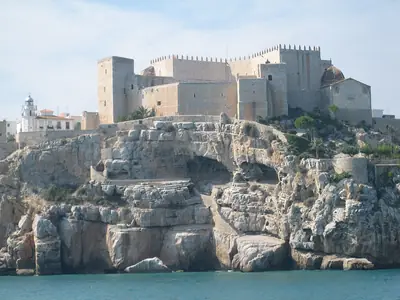
Peñíscola Castle, also known as the Castle of Papa Luna, stands at the highest point of the rocky outcrop, with the town gathered below it. Its elevated position gives the fortress a commanding presence over Peñíscola and the surrounding coast.
The castle is a Templar fortress built between 1294 and 1307 in the Romanesque style, over the remains of an earlier Arab citadel. It rises about 64 metres above sea level, has a perimeter of roughly 230 metres, and reaches an average height of 20 metres.
The fortress is especially associated with Pedro Martínez de Luna, known as Benedict XIII of Avignon or Papa Luna. During the long dispute over his legitimacy, he made Peñíscola Castle his papal seat. His refusal to abandon his position is linked to the popular Spanish expression “mantenerse en sus trece”, meaning to persist stubbornly in one’s position.
The castle also contains the Church of Peñíscola Castle, known as the Església del castell de Peníscola. Together, the fortress and church form the historic centrepiece of the town.
Church of Our Lady of the Ermitana
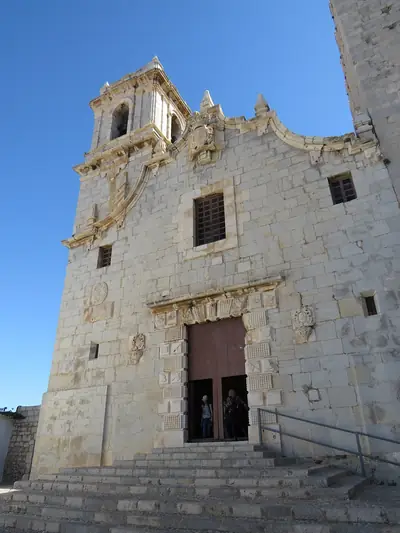
At the summit of Peñíscola’s rocky outcrop, beside the castle, stands the Church of Our Lady of the Ermitana. Also known in Valencian as the Ermita de la Mare de Déu de l’Ermitana, this chapel dates from the early seventeenth century.
Its position against the castle makes it part of one of Peñíscola’s most distinctive historic settings. Visiting the church also gives a closer view of how religious buildings and military architecture share the summit.
Porta de Sant Pere
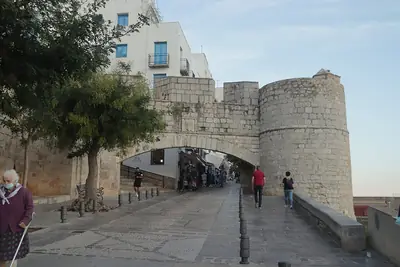
The Porta de Sant Pere is a historic entrance in Peñíscola’s city wall. Its position within the fortifications makes it a useful place to appreciate the town’s defensive character and the way access to the old settlement was controlled.
Passing through the gate brings the medieval structure of Peñíscola into focus: the walls, rocky ground, and narrow historic streets form a connected defensive landscape rather than a collection of separate monuments.
Badum Tower
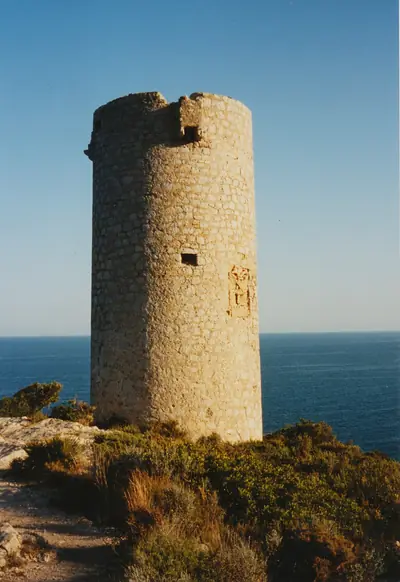
South of Peñíscola, high above the coast in the Sierra de Irta, Badum Tower offers a different perspective on the area’s fortified heritage. The watchtower is also known as Torre Abadum or Torre Al Madúm and stands above a dramatic cliff between Barranc del Volante and Pebret Beach.
The tower rises on a rock about 97 metres above the sea, giving it a commanding position over the surrounding shoreline. Its exact allegiance remains uncertain. It may have belonged to the lookout system of Xivert Castle, or it may have been connected to Peñíscola’s fortress. That uncertainty is part of the tower’s story.
Explore Peñíscola’s Historic Setting
Peñíscola’s sights are best understood as part of one fortified landscape. The castle occupies the summit, the Church of Our Lady of the Ermitana is built against it, and the Porta de Sant Pere forms part of the city wall below. Together, they show how the settlement developed around a strategic rocky outcrop.
The castle’s connection with Papa Luna gives the town a particularly distinctive historical identity. Its Templar origins, earlier Arab foundations, and later papal role represent different chapters of Peñíscola’s past in the same compact setting.
The view south towards Badum Tower extends that history beyond the town itself. Positioned above the Sierra de Irta coast, the tower shows how elevated lookout points helped define and protect the surrounding shoreline.
Peñíscola Self-Guided Walking Tour with Neywo
There are no scheduled tours to join and no group to follow. Neywo’s free audio guide for Peñíscola includes four narrated places, and each story plays as you reach the location, at your own pace. The narration is available in 11 languages.
Download Neywo to explore Peñíscola independently: the app tells the story of each place when you arrive, so you can walk without a schedule and discover the town on your own. If you are planning a wider trip through Spain, you can also continue exploring destinations such as Valencia and Sagunto.
Places with an audio guide in Peñíscola
4 places in Peñíscola with a Neywo audio guide. Each one starts telling its story as you reach it.
Walk Peñíscola with Neywo
Neywo turns Peñíscola into a self-guided audio tour. Stories arrive as you reach the place they belong to, and the route reshapes when you wander off it.

