Things to Do in Ephesus, Turkey: Walking Guide
Things to Do in Ephesus: Ancient Ruins and Selçuk Heritage
The best things to do in Ephesus include exploring one of the ancient world’s great cities, visiting the Temple of Artemis, and discovering the Byzantine and Seljuk monuments of nearby Selçuk. The area brings together Greek, Roman, Christian and Turkish history in a compact cultural destination. Neywo offers a free audio guide for Ephesus with 36 narrated places.
What to See in Ephesus
Temple of Ephesian Artemis
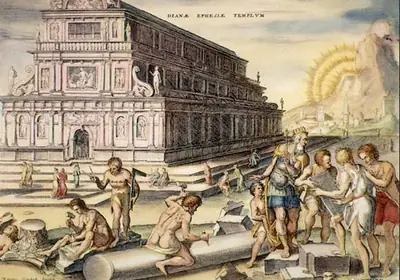
The Temple of Artemis, known in antiquity as the Artemision, was dedicated to Artemis, the goddess who protected Ephesus. It was counted among the Seven Wonders of the Ancient World.
The monumental version of the temple was commissioned around 550 BCE by Croesus, the wealthy king of Lydia. Construction was led by Chersiphron and his son Metagenes, and the project reportedly took around 120 years. The temple measured roughly 110 by 55 metres and was celebrated for its architecture and sculpture. After a devastating fire, it was rebuilt on an even grander scale, with approximately 127 Ionic columns.
Today, the remains are limited, but the site provides an important introduction to Ephesus and the religious importance of Artemis.
Library of Celsus
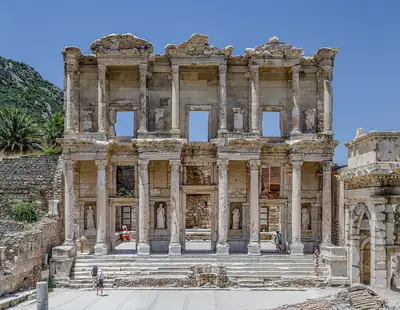
The Library of Celsus is one of the most recognisable monuments in the ancient city. Built in the early second century AD by Gaius Julius Aquila, it honoured his father, Gaius Julius Celsus Polemaeanus, a former governor of Asia Minor.
The building was both a library and a mausoleum. Celsus was buried in a white marble sarcophagus in a crypt beneath the structure. At its height, the library held around 12,000 scrolls, making it the third-largest library in the ancient world after Alexandria and Pergamum.
Its restored façade is particularly striking, with columns, detailed marble decoration and an architectural illusion: the central columns are slightly larger than those at the ends, making the building appear taller.
Curetes Street and the Terrace Houses
Curetes Street was one of Ephesus’s principal ceremonial and commercial avenues. Walking along its marble surface gives a sense of the scale and grandeur of the Roman city, with monuments, fountains and public buildings arranged along the route.
The Terrace Houses reveal a more private side of ancient Ephesus. These residences belonged to wealthy inhabitants and preserve evidence of the city’s domestic architecture and decoration. They form part of a route that continues towards the Library of Celsus, passing several important monuments along the way.
The Theatre, Harbour Road and the Church of Mary
The Great Theatre was one of Ephesus’s major public buildings and remains one of the most imposing places in the city. A route through this area also follows the ancient Harbour Road, known as Arcadiane, and passes the Theatre Gymnasium, the Tetragonos Agora and a Byzantine Palace.
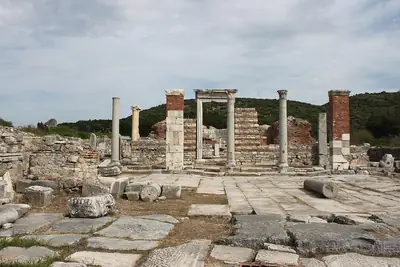
The Church of Mary, also called Meryem Kilisesi or the Church of the Councils, was dedicated to the Virgin Mary. Its importance comes from the two major councils associated with the site, including the Council of Ephesus in 431.
The First Council of Ephesus
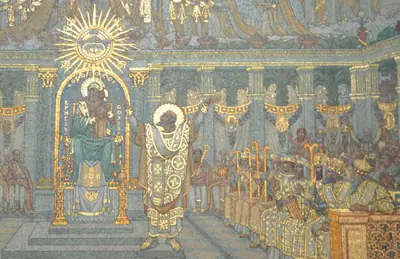
The First Council of Ephesus took place in June and July of 431 in the Church of Mary. It was the third of the first seven ecumenical councils recognised by the Catholic, Orthodox, Anglican and Lutheran churches.
Theodosius II convened the gathering, which brought together around 250 bishops, mostly from the eastern provinces, along with three representatives of Pope Celestine I of Rome. Cyril of Alexandria presided over the proceedings. The central dispute concerned the nature of Christ and the teachings of Nestorius, the Archbishop of Constantinople.
This site connects the ruins of Ephesus with a decisive period in the history of early Christianity.
The Seven Sleepers Cemetery
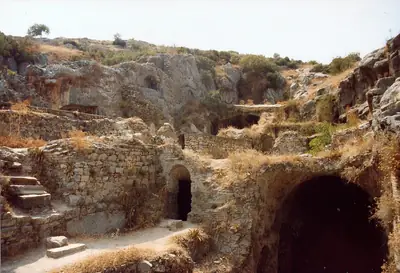
On the slopes of Panayır Mountain, just outside the ancient city walls, the Seven Sleepers cemetery contains rock-cut tombs, catacombs, mausoleums and a church. At least 700 burials have been discovered here.
The site is associated with a legend shared by Christian and Islamic traditions. According to the story, seven young Christian men hid in a cave to escape persecution under the Roman Emperor Decius around 249–251 AD. They fell into a miraculous sleep and awoke more than two centuries later, during the reign of Theodosius II.
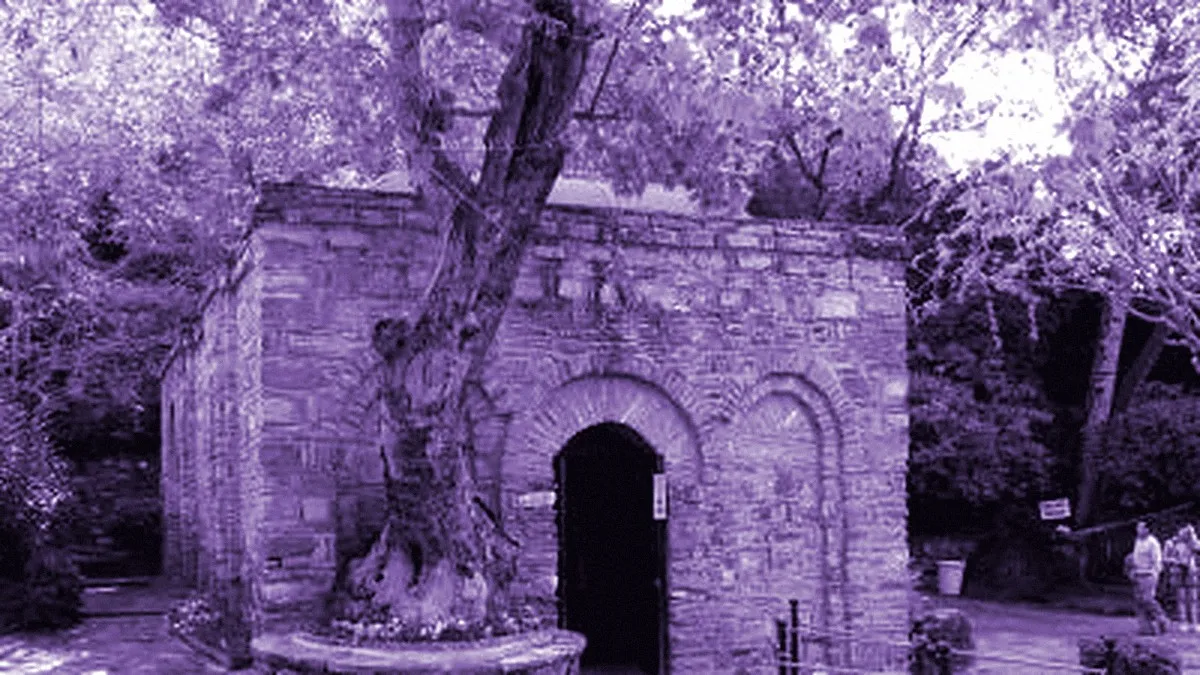
The Grave of St. Luke
In the upper city, a circular Roman-period building was later adapted into a church. It is traditionally known as the Grave of St. Luke or the Tomb of Saint Luke. Although the structure became associated with the saint over time, scholars consider that identification misleading.
Ephesus Archaeological Museum
Located in Selçuk, the Ephesus Archaeological Museum houses many objects found during excavations in Ephesus and the surrounding sites. Established in 1964, it was created during a period when Turkey prohibited the export of antiquities and sought the return of artefacts taken abroad.
The collection is organised thematically rather than chronologically. Its galleries include sculptures from ancient fountains, finds from the Terrace Houses and a coin collection tracing the early use of currency. Other sections explore Ephesus through the ages, the Imperial Cult and the Mother Goddess Cult.
What to See in Selçuk
Basilica of St. John
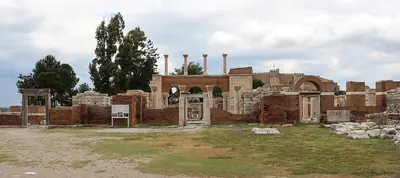
The Basilica of St. John stands on Ayasoluk Hill, near Ayasoluk Castle and the İsa Bey Mosque. Emperor Justinian and Theodora commissioned it in the sixth century on the site believed to be the burial place of John the Evangelist.
A smaller chapel had first been built over the grave in the fourth century. The later basilica was constructed in the shape of a cross and had six domes, with the central dome rising above John’s tomb. Its combination of stone and brick was unusual for its period.
İsa Bey Mosque
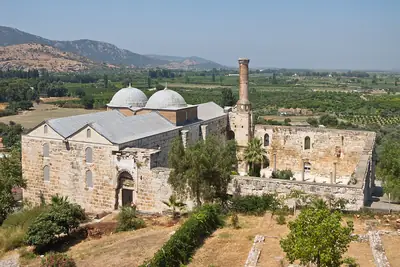
Built in 1375 by order of İsa Bey of the Aydınoğulları Emirate, the İsa Bey Mosque is one of the oldest and finest examples of Anatolian mosque architecture. It stands at the foot of Ayasoluk Hill, close to the Basilica of St. John and Ayasoluk Castle.
The mosque was designed by the Syrian architect Ali ibn al-Dimashqi. Its layout echoes the Great Mosque of Damascus, with a prayer hall divided into two aisles by a central transept and domes supported by pendentives.
The building is also notable for its deliberate asymmetry. Its windows, domes and doors are arranged in an intentionally unbalanced composition. The western façade, made from cut limestone and marble, is especially rich in decoration, with a monumental entrance and Arabic inscription.
Selçuk’s Historic Mosques
Selçuk contains several smaller religious monuments that add to the town’s Islamic and Anatolian heritage. İshak Bey Camii is a quiet historic mosque, while Alpaslan Masjid, also known as Alpaslan Mescidi, is a small mosque in the town.
Aydınoğlu Camii reflects the architectural legacy of the Aydınoğlu dynasty, a Turkmen principality that ruled parts of the region during the fourteenth and fifteenth centuries. Kılıçaslan Mosque is another modest place of worship in the centre of Selçuk.
Efes Deneyimi Müzesi
The Ephesus Experience Museum presents the ancient city through holographic projections, multisensory effects and audio-visual technology. The 2,400-square-metre museum is arranged in three chapters and recreates the myths, people and atmosphere of Ephesus.
The first chapter explores the city’s legendary origins, including the Oracle of Delphi, the Athenian prince Androclos and Artemis. It also presents the First Temple, the Marble Temple and the Artemision. Later sections transport visitors to Ephesus during its golden age and recreate the city through sound, images, scent and fog.
Explore Ephesus with Neywo
Neywo’s Ephesus audio guide includes 36 narrated places and three walking tours. Each story plays as you reach the place, at your own pace, with no group and no schedule. Narration is available in 11 languages.
The three walks are:
- Down Marble Street: From the State Agora to the Library of Celsus — 1.34 km, 71 minutes and 12 stops.
- Theatre, Harbour Road and the Church of the Councils — 1.74 km, 55 minutes and 7 stops.
- Selcuk: Artemis, St John and the Seljuk Quarter — 2.6 km, 80 minutes and 7 stops.
Download Neywo and explore Ephesus while the app tells the story of each place as you arrive. When planning the wider region, you can also continue through Selçuk, discover the surrounding Izmir, or compare Ephesus with Kuşadası and Pamukkale.
Places with an audio guide in Ephesus
8 places in Ephesus with a Neywo audio guide. Each one starts telling its story as you reach it.
Self-guided tours in Ephesus
3 tours in Ephesus, free in the Neywo app. Each stop tells its story as you reach it.
- Walk
Down Marble Street: From the State Agora to the Library of Celsus
Walk downhill through the political and residential heart of Roman Ephesus. You pass the city hall where a sacred flame never went out, a triumphal arch, Trajan's fountain, Hadrian's temple and the frescoed Terrace Houses, and end at the famous Library of Celsus facade.
Baths on the State Agora (Ephesus) · State Agora of Ephesus · Bouleuterion (Ephesus) · Prytaneion (Ephesus) · Temple of the Emperors (Ephesus) · Memmius Monument (Ephesus) …
Open this tour: Down Marble Street: From the State Agora to the Library of Celsus - Walk
Theatre, Harbour Road and the Church of the Councils
Leave the Library for the lower city: the gate of the freedmen, the great commercial agora, the 25,000-seat theatre and the processional road to the lost harbour. The walk ends at the vast Church of Mary, where a council shaped early Christian doctrine in 431.
South Gate of the Agora (Ephesus) · Tetragonos Agora (Ephesus) · Theatre Gymnasium · Theater (Ephesus) · Arcadiane · Byzantine Palace …
Open this tour: Theatre, Harbour Road and the Church of the Councils - Walk
Selcuk: Artemis, St John and the Seljuk Quarter
Visit the town of Selcuk beside the ruins: the museum that holds the treasures of Ephesus, the basilica built over the tomb of St John, the Isa Bey mosque and hamam, and the lone column of the Temple of Artemis, one of the Seven Wonders of the Ancient World.
Ephesus Archaeological Museum · Alpaslan Masjid · Basilica of St. John · İsa Bey Mosque · İsa bey Hamam · Temple of Ephesian Artemis …
Open this tour: Selcuk: Artemis, St John and the Seljuk Quarter
Walk Ephesus with Neywo
Neywo turns Ephesus into a self-guided audio tour. Stories arrive as you reach the place they belong to, and the route reshapes when you wander off it.

