Visiting Iznik, Turkey: Top Sights on Foot
Things to Do in Iznik: What to See in Turkey’s Historic Lakeside Town
The best things to do in Iznik are connected to its long history as the ancient city of Nicaea. Within and around the town, you can find Roman and Byzantine remains, early Ottoman mosques, archaeological collections, and places linked to major Christian councils. Neywo’s free audio guide for Iznik covers 14 narrated places, helping you understand the story behind the sights as you explore.
Iznik is in Turkey, beside Lake Iznik, and its compact historic setting makes it well suited to exploring on foot. Its past includes the Roman and Byzantine worlds, the Empire of Nicaea, and the Ottoman period, while its ceramics remain closely associated with the town’s identity. For a broader journey through the country, you can also explore our guide to Turkey.
What to see in Iznik
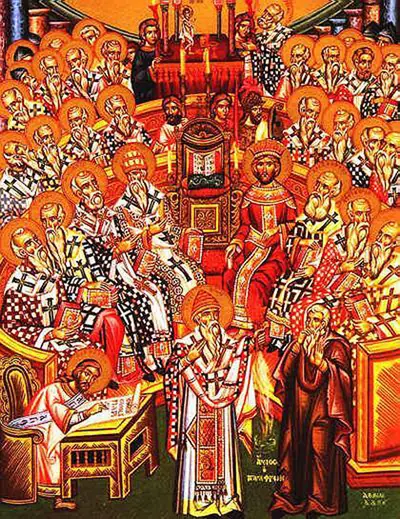
First Council of Nicaea
One of the most important things to see in Iznik is the archaeological site associated with the First Council of Nicaea. In 325, Christian bishops assembled here at the invitation of the Roman Emperor Constantine the First. The meeting sought unity within the Christian Church and is remembered as the first attempt to represent the Christian world through a common assembly.
The council also established a fixed date for Easter and issued early church laws. These decisions gave the gathering an influence that extended far beyond the meeting itself.
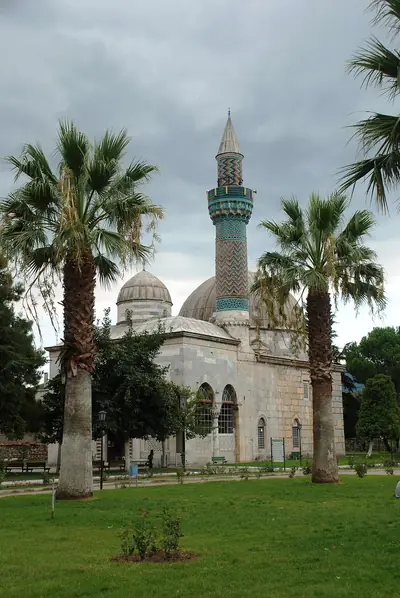
Yeşil Mosque
Yeşil Mosque, or Yeşil Cami, is one of İznik’s earliest examples of Ottoman architecture. It stands on the eastern side of the city, near Lefke Gate, and was commissioned by Çandarlı Halil Pasha, grand vizier to Sultan Murad the First. After Halil Pasha died in 1387, his son Çandarlı Ali Pasha completed the building.
The mosque’s name means “Green Mosque”, referring to its distinctive minaret. Turquoise, green, and purple tiles form a zigzag pattern across the minaret, giving it a particularly vivid appearance. The building itself has a compact square plan, a single dome, and three main sections. Its marble mihrab is an important early Ottoman example of carved stone craftsmanship.
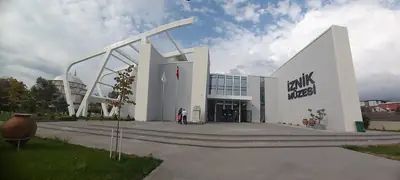
İznik Museum
İznik Museum, known locally as İznik Müzesi, brings together archaeological finds from İznik and the surrounding district. It offers a focused introduction to the material history of the area.
The museum first opened in 1935 at the Yakup Çelebi Lodge and later moved to the Nilüfer Hatun Imaret. Its current building was constructed in İznik between 2020 and 2022 by the Ministry of Culture and Tourism. The archaeological collection moved there, and İznik Museum opened to visitors on January 16, 2023. The Nilüfer Hatun Imaret now houses the Turkish Islamic Arts Museum.
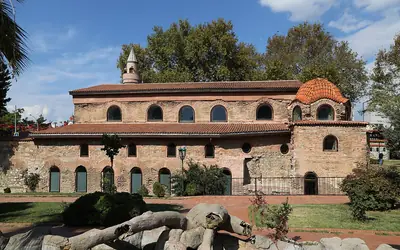
Hagia Sophia, Iznik
At the heart of the walled city stands Hagia Sophia, also known as Ayasofya. The former Byzantine church lies where roads from İznik’s four gates meet, making it a natural central point within the historic town.
The building is associated with the Seventh Council, which is thought to have met there in 787. After İznik was conquered by the Ottoman ruler Orhan Gazi in 1331, the church was converted into a mosque. Further additions were made during the reign of Suleiman the Magnificent by the architect Mimar Sinan.
The Empire of Nicaea
Iznik was known as Nicaea during one of the most significant chapters of Byzantine history. After crusader forces captured and sacked Constantinople in 1204, Byzantine nobles established the Empire of Nicaea as a successor state. The empire lasted until 1261, when its forces recaptured Constantinople and restored the Byzantine Empire.
Nicaea was the empire’s official cultural and religious capital. The imperial palace and effective administrative centre, however, were at Nymphaneum, now Kemalpaşa, under Emperor John III and his successors. The ancient city associated with this period lies within modern İznik, whose name comes from Nikaia. The city’s fertile setting and fortifications helped make it a powerful centre.
Roman Theater at Helikore/Nicaea
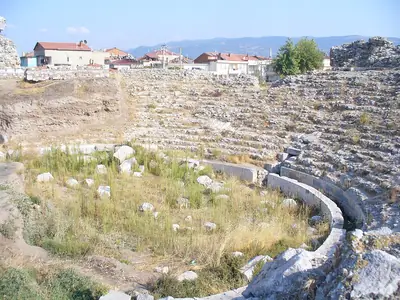
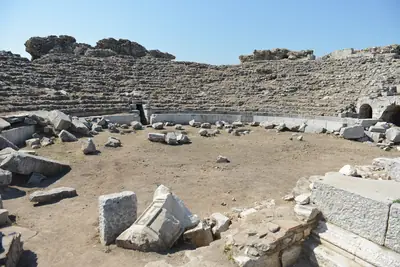
The Roman Theater of İznik, also called the Roman Theater at Helikore or Nicaea, is one of the area’s most striking ancient structures. Built in the second century AD during the reign of Emperor Trajan, it was ordered by Pliny, governor of Bithynia.
The theater hosted gladiatorial contests and other public games for two centuries. Much of the seating area remains, as does the tunnel used to bring animals into the arena. The structure measures about 84 metres by 63 metres and once held approximately 10,000 spectators. Its vaulted construction on flat ground makes it an unusual example in Turkey. The original stage building had three levels, although only the first survives.
İznik Castle
Iznik Castle preserves the scale of the city’s Roman and Byzantine fortifications. The castle dates from the Roman Empire, with construction beginning in 310 under Antignius, the son of Philip. By 330, the fortress was serving as a defensive barrier.
The walls were later repaired and extended during the Byzantine period. Their circuit originally measured about 3,000 metres and grew to roughly 4,500 metres after the repairs. The fortifications rise approximately 10 to 13 metres high and remain an important part of İznik’s historic landscape.
Nilüfer Hatun Imareti
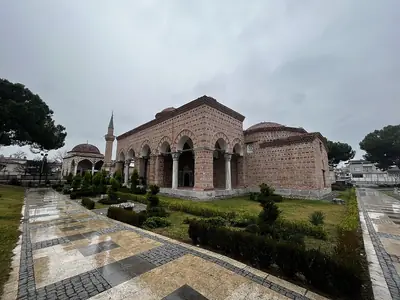
Near Lefke Gate, the Nilüfer Hatun Imareti is a fourteenth-century Ottoman building that now houses the Turkish and Islamic Arts Museum. An inscription above the entrance records that Murad the First ordered its construction in 1388 in memory of his mother, Nilüfer Hatun.
The building later provided free food for poor people. Its design combines rows of brick and stone, while the vaults and domes are covered with ceramic tiles. An open porch with five bays and five arches leads into the structure. Inside, the main hall rises beneath a large dome, with two domed rooms on either side that served as kitchens and living quarters.
Other mosques and local landmarks
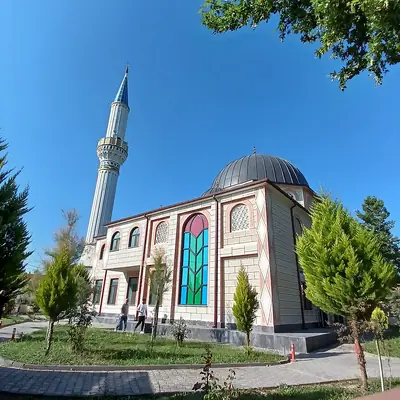
Several other mosques add to İznik’s historic character. Çeşmeci Millet Mosque, Eşrefzade Mosque, Şeyh Kutbettin Mosque, and Yakup Çelebi Cami are all part of the town’s religious landscape. Elmalı Köyü Camii offers another local point of interest in the surrounding area.
Their stories are not described in the available sources in the same detail as Yeşil Mosque or Hagia Sophia, but together they help show the range of Ottoman and later places of worship found in and around İznik.
Xerigordos
Xerigordos is one of the more elusive historical landmarks associated with the region. It was a castle connected with the People’s Crusade of 1096, but its exact location has never been firmly established.
Historical accounts describe it as a hilltop castle supplied by a well and a spring outside its walls. Eskikale is one modern candidate, although the identification remains uncertain. The name appears in different forms, including Xerigordos in the Greek account of Anna Komnene and Exorogorgum in the Latin account of Guibert of Nogent.
Explore Iznik with a self-guided walking tour
For an Iznik self-guided walking tour, Neywo offers one walking route: “Nicaea Reborn: Councils, Mosques and a Roman Theatre.” The walk covers 3.07 km, takes 92 minutes, and includes 9 narrated stops.
The route includes Yeşil Mosque, Şeyh Kutbettin Mosque, the Turkish Islamic Arts Museum, Eşrefzade Mosque, Hagia Sophia, İznik Museum, the Roman Theater at Helikore/Nicaea, the First Council of Nicaea site, and Çeşmeci Millet Mosque. The app tells the story of each place as you reach it, at your own pace, with no group and no schedule. Narration is available in 11 languages.
Download Neywo and explore İznik with a free audio guide that connects its Roman, Byzantine, and Ottoman heritage as you walk.
Places with an audio guide in Iznik
8 places in Iznik with a Neywo audio guide. Each one starts telling its story as you reach it.
Self-guided tours in Iznik
1 tour in Iznik, free in the Neywo app. Each stop tells its story as you reach it.
- Walk
Nicaea Reborn: Councils, Mosques and a Roman Theatre
Iznik was Nicaea, where bishops met in 325 and Byzantine emperors ruled in exile. Start at the zigzag-tiled minaret of the Green Mosque, pass the imaret built for a sultan's mother and the church-turned-mosque of Hagia Sophia, then end by the Roman theatre and the lake where the First Council is remembered.
Yeşil Mosque Iznik · Şeyh Kutbettin Mosque · Türk İslam Eserleri Müzesi · Eşrefzade Mosque · Hagia Sophia, Iznik · İznik Museum …
Open this tour: Nicaea Reborn: Councils, Mosques and a Roman Theatre
Walk Iznik with Neywo
Neywo turns Iznik into a self-guided audio tour. Stories arrive as you reach the place they belong to, and the route reshapes when you wander off it.

