Things to Do in Çanakkale, Turkey: Walking Guide
Things to do in Çanakkale
Çanakkale is a lively seaport on Turkey’s southern Dardanelles coast, where maritime traditions, ancient legends, and modern Turkish culture come together. If you’re wondering what to see in Çanakkale, the answer lies in its waterfront, ancient sites and museums. Neywo provides a free audio guide for Çanakkale with 20 narrated places, available in 11 languages.
Explore Çanakkale’s highlights
Troy (archaeological site)
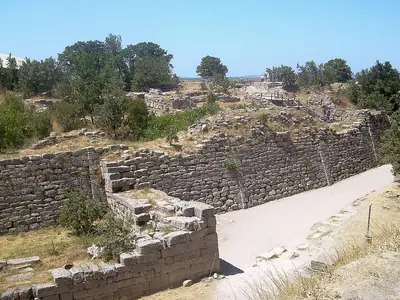
Troy was first settled around 3600 BC and grew into a small fortified city by about 3000 BC. Over roughly four millennia the settlement was destroyed and rebuilt nine times, creating the layers archaeologists label Troy I through Troy IX. The early Troy II layer stands out for its wealth and imposing architecture. Later, during the Late Bronze Age, the site was known as Wilusa and served as a vassal of the Hittite Empire. The final Greek and Roman phases (Troy VIII and IX) turned the place into a tourist destination in antiquity, drawing visitors much like today.
Troy Museum (museum)
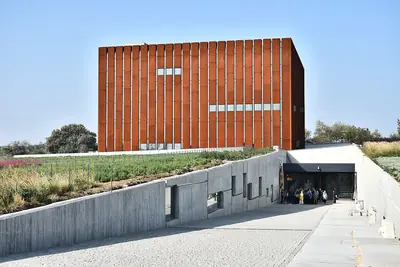
Opened in October 2018 at the entrance to the ancient city of Troy in the village of Tevfikiye, the Museum of Troy was created to return artefacts that had been smuggled abroad. Every object on display is an original piece gathered from Turkish museums, with no replicas. The contemporary building houses seven sections that present finds not only from Troy itself but also from other ancient cities in the Troas region and nearby islands. The museum is currently directed by Rıdvan Gölcük.
Abydos (archaeological site)
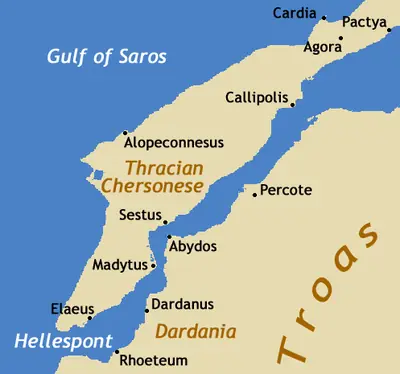
Abydos was founded around 670 BC at the narrowest point of the Dardanelles, directly across from the ancient city of Sestos. For centuries it served as a vital crossing between Europe and Asia until the route via Lampsacus and Kallipolis took over in the 13th century, after which the city was abandoned in the early 14th century. In Greek mythology Abydos is famed as the home of Leander, who swam the strait each night to be with Hero, a priestess on the opposite shore. The site also appears in a 12th‑century novel by Theodore Prodromos called Rodanthe and Dosikles.
Nusret (monument)
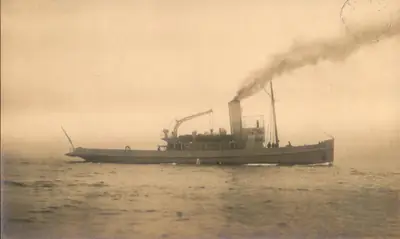
The Nusret is a small minelayer built at the Germania shipyard in Kiel, Germany, launched on 4 December 1911 and entering Ottoman service in 1913. In spring 1915 the Ottoman command ordered 26 mines to be laid in a secluded bay that the Allies considered safe. This secret minefield, laid by the Nusret, played a decisive role in the Gallipoli naval battles, turning the tide against the Allied fleet. After the war the ship continued service as a minelayer until 1937, then as a diver vessel until 1939, and finally as a tender until 1955.
Çanakkale Province (other)
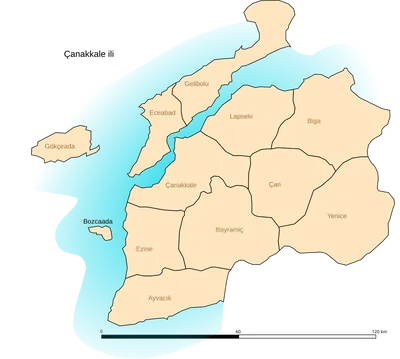
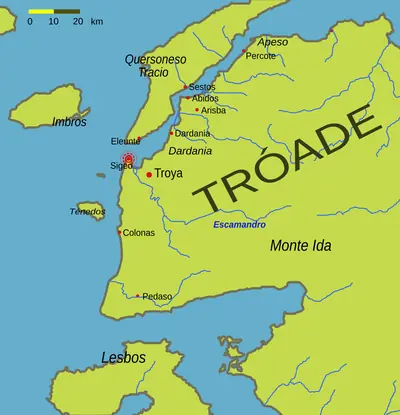
Çanakkale Province straddles two continents, with the European side formed by the Gallipoli peninsula and the Asian side corresponding to the ancient Troad region. The Dardanelles Strait connects the Sea of Marmara to the Aegean Sea, making the area one of the world’s most strategic waterways. The province covers roughly 9 817 km², is divided into 12 districts and has a population of about 574 000. It contains the archaeological site of Troy near Tevfikiye and the Aegean islands of Bozcaada and Gökçeada, which add an island character to the region.
Çimenlik Castle (castle)
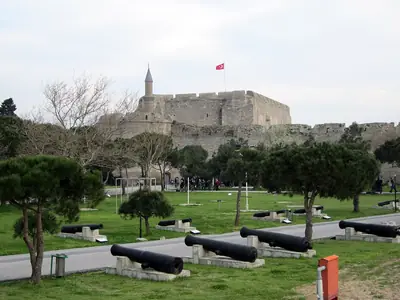
Çimenlik Castle, also known as Kale‑i Sultaniye, was erected in 1462 on the Asian shore of the Dardanelles. Though no longer a military stronghold, it now forms part of the Çanakkale Naval Museum, allowing visitors to walk its grounds and gain insight into the region’s maritime past.
Sigeion (archaeological site)
Sigeion was an ancient Greek city situated at the mouth of the Scamander River (today’s Karamenderes). Its name derives from the Greek word sigē, meaning “silence,” and was considered antiphrastic because the seas nearby are known for their fierce storms. The city commanded a ridge between the Aegean and the river, in what is now the Yenişehir neighbourhood of Çanakkale.
Rhoiteion (archaeological site)
Rhoiteion, also referred to as Rhoiteion Akron (the promontory of Rhoiteion), lay on the Baba Kale spur of Çakal Tepe, north of Halileli and west of İntepe, within Çanakkale Province. It was an ancient Greek settlement in the northern Troad region.
Atikhisar Castle (Çanakkale) (castle)
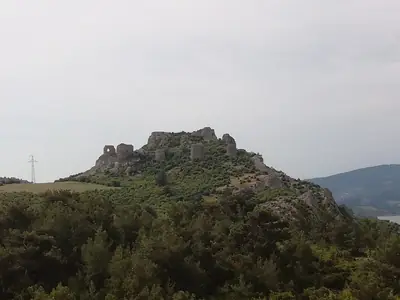
Atikhisar Castle, locally called Gavurhisar, is a historic fortress near the centre of Çanakkale. Believed to date back to antiquity, it stands just northeast of the Atikhisar Dam, close to the village of Kayadere.
Nara Castle (palace)
Located about six kilometres from Çanakkale, Nara Castle is an Ottoman fortress built to guard the Dardanelles and to perform final checks on ships bound for Istanbul. Construction began in 1805 under Sultan Selim III and was completed in 1807 under Sultan Mahmud II; the outer towers and main gate were finished between 1817 and 1818. The inner castle is a six‑sided circular structure with a radius of nine metres, covering 840 m², with walls two metres thick and nine metres high. Its ten windows served as closed embrasures and lookout points, and the thick walls and original ventilation suggest it was also used as a shelter. Stones from the ancient city of Abidos were reused in its walls.
Mecidiye Castle (palace)
Mecidiye Castle, also known locally as Köseburnu Castle, was commissioned by Sultan Abdülmecid and completed in 1832. It exemplifies early‑nineteenth‑century Ottoman military architecture.
Çıplak Köyü Camii (mosque)
The Çıplak Köyü Camii is a modest local mosque in Çanakkale, worth a brief visit while exploring the area.
Fatih Camii (mosque)
The Fatih Mosque is a notable place of worship in Çanakkale, reflecting the city’s Ottoman heritage.
Çanakkale Archaeological Museum (museum)
Although the archaeological museum has moved, its former building still tells a story. It first opened in 1960 inside a converted church, then relocated to 100th Year Street in 1984. The collection focused on finds from Troy, Assos, Apollon Smintheion, Tenedos and Alexandria Troas, including marble sculptures, stelae, lighting fixtures, terracotta and bronze kitchenware, glassware and ornaments. Highlights were a colourful Achaemenid sarcophagus and the famous Polyxena sarcophagus. In 2018 the entire collection was transferred to the new Troy Museum, and the building reopened in January 2020 as the Mehmet Akif Ersoy Provincial Public Library.
Çanakkale City Museum (museum)
The Çanakkale City Museum, opened in 2009 after restoration work begun in 2004, is dedicated to telling the story of the city and its rich past.
Explore Çanakkale with Neywo
Neywo’s free audio guide for Çanakkale includes one walking tour: “Çanakkale: Guarding the Dardanelles.” The route is 2.73 km long, takes about 69 minutes and features six narrated stops: Yalı Mosque, Çanakkale, Çanakkale City Museum, Çanakkale Naval Museum, the Nusret minelayer, Çimenlik Castle and the former Çanakkale Archaeological Museum. As you reach each point, the app plays the story of that place, allowing you to explore at your own pace with no group and no schedule. The narration is available in 11 languages, making the experience accessible to visitors from around the world.
Places with an audio guide in Çanakkale
8 places in Çanakkale with a Neywo audio guide. Each one starts telling its story as you reach it.
Self-guided tours in Çanakkale
1 tour in Çanakkale, free in the Neywo app. Each stop tells its story as you reach it.
- Walk
Çanakkale: Guarding the Dardanelles
Walk the waterfront where the Ottomans closed the strait. See the 1462 fortress, the little minelayer Nusret that sank Allied ships in 1915, the naval museum and the city museum, then finish at the building that once held the region's Trojan treasures.
Yalı Mosque, Çanakkale · Çanakkale City Museum · Çanakkale Naval Museum · Nusret · Çimenlik Castle · Çanakkale Archaeological Museum
Open this tour: Çanakkale: Guarding the Dardanelles
Walk Çanakkale with Neywo
Neywo turns Çanakkale into a self-guided audio tour. Stories arrive as you reach the place they belong to, and the route reshapes when you wander off it.

