Visiting Selçuk, Turkey: Top Sights on Foot
Things to Do in Selçuk: What to See Around Ephesus
Looking for things to do in Selçuk? This small town in Izmir is surrounded by some of Turkey’s most important ancient, Byzantine, and Ottoman landmarks, including Ephesus, the Temple of Artemis, and Ayasuluk Citadel. Selçuk is also a destination in its own right, with a museum, mosques, churches, and archaeological sites spread through and around the town.
Neywo offers a free audio guide for Selçuk with 25 narrated places. It is a useful way to understand the history behind the ruins while exploring independently.
What to See in Selçuk
The main sights are concentrated around Selçuk, Ephesus, and Ayasuluk Hill. Together, they reveal the area’s history as a Greek, Roman, early Christian, Byzantine, and Anatolian beyliks centre.
Ephesus
Ephesus is the essential stop for anyone visiting Selçuk. The ancient city’s history reaches back to the Neolithic period, around 6000 BCE. Greek colonists established a city here in the tenth century BCE, and it later became one of the twelve cities of Ionia.
Ephesus came under Roman control in 129 BCE and entered one of the most prosperous periods of its history. Its remains include marble streets, the Library of Celsus, and an ancient theatre that could hold up to 25,000 spectators. The city’s importance declined after its harbour gradually silted up with material carried by the Küçük Menderes River. An earthquake in 614 CE also partly destroyed Ephesus.
The site is best understood as a former living city rather than simply a collection of ruins. Its monuments show the scale of a major centre of the Greek, Roman, and early Christian worlds.
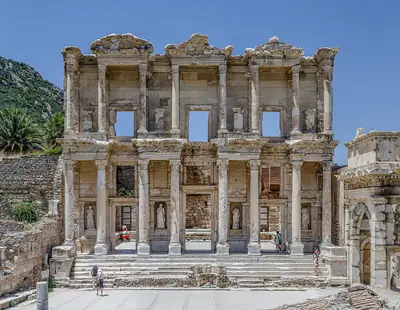
Library of Celsus
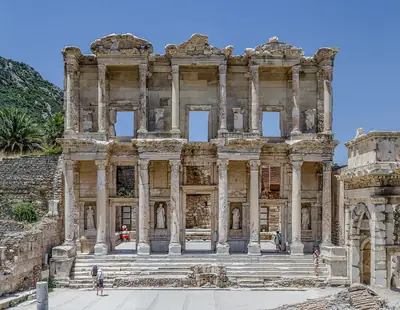
The Library of Celsus is one of the most impressive surviving monuments of Ephesus. Its elaborate façade belonged to a building that served both as a library and as a funerary monument for the Roman senator Tiberius Julius Celsus Polemaeanus.
The library was believed to hold around 12,000 scrolls. Although the façade appears to have two storeys, studies of the ruins indicate that the building itself had three. Celsus was buried in a decorated marble sarcophagus in a crypt beneath the building, an unusual honour for the period.
The structure was damaged by fires and earthquakes before its façade was destroyed in a later earthquake. Archaeological work has since restored much of the monument’s recognisable appearance.
Temple of Ephesian Artemis
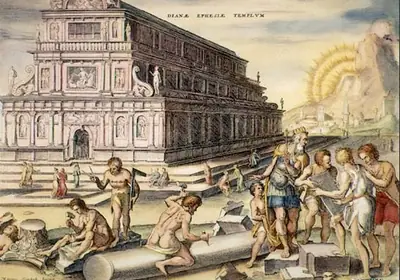
The Temple of Ephesian Artemis, or Artemision, stood near ancient Ephesus and was counted among the Seven Wonders of the Ancient World. Its current remains are modest: foundations, marble fragments, and one column survive at the site.
The temple was built and rebuilt several times. Around 550 BC, construction of a more elaborate version began under the architect Chersiphron, with financial support from Croesus, king of Lydia. That temple was burned in 356 BC by a man named Herostratus. It was later reconstructed, and Artemis continued to be worshipped there for centuries.
The contrast between the monument’s ancient reputation and the limited remains visible today makes it a particularly striking stop.
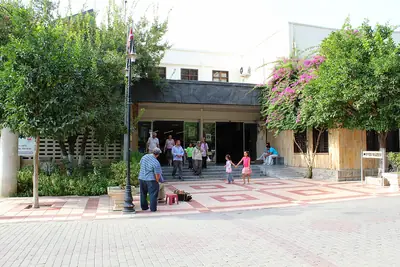
Ephesus Archaeological Museum
The Ephesus Archaeological Museum in Selçuk, also known as Efes Müzesi, brings together discoveries from the nearby excavation site. Its most famous exhibit is an ancient statue of Artemis recovered from the Temple of Artemis.
The collection is divided into archaeology and ethnography. Alongside objects from Ephesus, it includes finds associated with the Basilica of Saint John at Ephesus and the Mausoleum of Belevi. The museum closed at the end of 2012 and reopened in November 2014 after extensive renovation.
A visit here adds context to the ruins by showing the objects found in and around the ancient city.
Ayasuluk Citadel
Ayasuluk Citadel, also known as Ayasolouk or the Grand Fortress of Selçuk, stands on Ayasuluk Hill and is the defining landmark of the hill. The fortress forms part of a wider archaeological landscape that includes the Basilica of St. John and other remains connected with Selçuk’s long history.
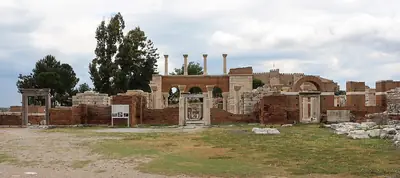
Basilica of St. John
The Basilica of Saint John the Theologian stands on the slopes of Ayasuluk Hill. Built in the sixth century by order of the emperor Justinian, it was associated with the traditional burial place of the apostle John.
The basilica was designed in the Byzantine style and modelled after the Church of the Holy Apostles in Constantinople. Although it now survives in ruins, its restored remains give an impression of the scale and importance of the former church.
İsa Bey Mosque
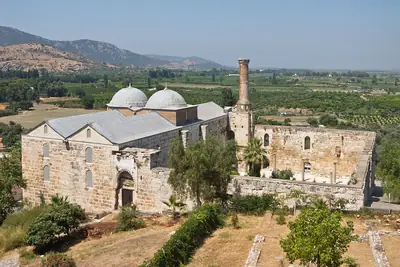
Between the Temple of Artemis and Saint John Church, İsa Bey Mosque is one of the oldest and most impressive surviving works from the Anatolian beyliks period. Aydınoğlu İsa Bey commissioned it in 1375, and the architect was Şamlı Ali.
The mosque has an unusual asymmetrical plan, with entrances on the western and eastern sides. The western doorway features inscriptions and geometric designs, while marble covers the western walls and cut stone forms the other façades. Seljuk tiles decorate parts of the façade, the window edges, and the drums beneath the two domes.
Earthquakes in the middle of the sixteenth century destroyed one minaret and damaged the roofs. Restoration in 1975 repaired the roof and walls, and the mosque reopened for worship.
House of the Virgin Mary
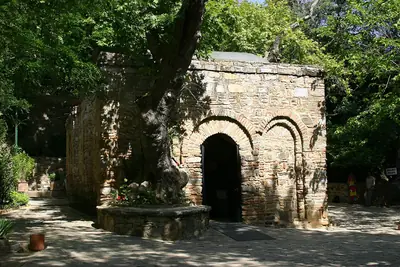
The House of the Virgin Mary, known in Turkish as Meryem Ana Evi, is a Catholic and Muslim shrine in the hills near Ephesus. The stone building stands on Mount Koressos, also called Bülbüldağı or Mount Nightingale.
The structure visible today is a small Byzantine church built around an older stone house. Its exact date is uncertain, and the connection between the building and Mary cannot be historically confirmed. The site became known in the nineteenth century through the reported visions of Anne Catherine Emmerich, a German Catholic nun who had never visited the area.
Outside the house, pilgrims leave strips of paper or cloth carrying prayers, requests, and messages of thanks. A nearby spring is traditionally said to have healing water.
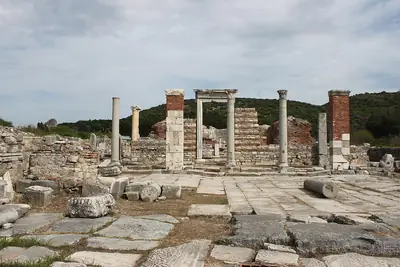
Church of Mary and the First Council of Ephesus
The Church of Mary, or Meryem Kilisesi, was an ancient Christian cathedral dedicated to the Theotokos, meaning the Mother of God or the Virgin Mary. It is also known as the Church of the Councils because of its association with major events in early Christian history.
The First Council of Ephesus met here in 431. Convened by Emperor Theodosius the Second, it addressed a dispute about the nature of Christ and Nestorius’s objection to calling Mary Theotokos. The council condemned Nestorian teaching, confirmed the Nicene Creed, and affirmed that Christ has divine and human natures united in one person.
The church stood in the southern stoa of the Olympieion, beside the harbour of Ephesus, as part of a much larger complex.
Seven Sleepers cemetery
The Seven Sleepers cemetery, also called the Cave of the Seven Sleepers, is an ancient Christian burial site outside the walls of Ephesus. According to the legend, seven young Christians hid in a cave during the persecutions under Emperor Decius and slept until the reign of Emperor Theodosius.
The site developed as a Christian cemetery in the third century. Its remains include catacombs, burial chambers, mausoleums, and a church. At least 700 separate burials were made there, and the cemetery became a place of pilgrimage.
Archaeological evidence has not confirmed that the cave was connected with the seven young men described in the legend.
Grave of St. Luke
The Grave of Saint Luke is a circular building from the Roman period that was later adapted for use as a church. Its unusual form makes it a distinctive stop among the remains of Ephesus.
Other Selçuk landmarks
Keçikalesi is a castle and fortress that forms part of the landscape of Selçuk District. İshak Bey Camii and Akıncılar Camii add further examples of the area’s religious architecture. Together with the archaeological sites, they show that Selçuk’s heritage extends well beyond Ephesus.
Explore Selçuk with a Self-Guided Walking Tour
Neywo’s Selçuk audio guide includes two walking tours covering 25 narrated places in total. Each story plays as you reach the place, at your own pace, with no group and no schedule. Narration is available in 11 languages.
The two walks are:
- Ayasuluk Hill: Artemis, Saint John and a Seljuk Mosque — 1.85 km, 70 minutes, 7 stops. It includes the Ephesus Archaeological Museum, Temple of Ephesian Artemis, İsa Bey Mosque, Alpaslan Masjid, Basilica of St. John, Ayasuluk Citadel, and Ayasuluk Kale Mosque.
- Ephesus: From the Church of Councils to the Seven Sleepers — 3.66 km, 92 minutes, 6 stops. It includes the Church of Mary, Byzantine Palace, Ephesus, Library of Celsus, Grave of St. Luke, and Seven Sleepers cemetery.
Download Neywo and explore Selçuk with an audio guide that tells the story of each place as you arrive. You can follow the walks at your own pace, without joining a group or following a schedule, while discovering one of the most concentrated historic landscapes in Turkey. Selçuk also makes a useful base for visiting nearby Ephesus, Kuşadası, and other destinations in the region.
Places with an audio guide in Selçuk
8 places in Selçuk with a Neywo audio guide. Each one starts telling its story as you reach it.
Self-guided tours in Selçuk
2 tours in Selçuk, free in the Neywo app. Each stop tells its story as you reach it.
- Walk
Ayasuluk Hill: Artemis, Saint John and a Seljuk Mosque
Selcuk's old centre sits below the fortress hill of Ayasuluk. Start at the museum that holds the finds of Ephesus, pass the lone column of the Temple of Artemis, one of the Seven Wonders, then climb past the 14th-century Isa Bey Mosque and the ruined basilica of Saint John to the citadel walls.
Ephesus Archaeological Museum · Temple of Ephesian Artemis · İsa Bey Mosque · Alpaslan Masjid · Basilica of St. John · Ayasuluk Citadel …
Open this tour: Ayasuluk Hill: Artemis, Saint John and a Seljuk Mosque - Walk
Ephesus: From the Church of Councils to the Seven Sleepers
Walk through the best-preserved classical city in the Mediterranean: the church where the Council of 431 met, the Byzantine palace, the main avenue of Ephesus, the facade of the Library of Celsus, the circular grave of Saint Luke and the early Christian cemetery of the Seven Sleepers legend.
Church of Mary · Byzantine Palace · Ephesus · Library of Celsus · Grave of St. Luke (Ephesus) · Seven Sleepers cemetery (Ephesus)
Open this tour: Ephesus: From the Church of Councils to the Seven Sleepers
Walk Selçuk with Neywo
Neywo turns Selçuk into a self-guided audio tour. Stories arrive as you reach the place they belong to, and the route reshapes when you wander off it.

