İstanbul, Turkey: Self-Guided Walking Tour
Things to do in İstanbul: what to see in the city
The best things to do in İstanbul are found among Byzantine churches, Ottoman mosques, imperial palaces, covered markets and museums on both sides of the Bosphorus. The city’s historic peninsula brings many of its most important landmarks together, while districts such as Beyoğlu, Fener and Balat add different layers to its story. Neywo has a free audio guide for İstanbul with 124 narrated places.
What to see in İstanbul’s historic centre
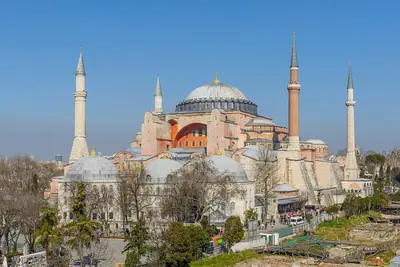
Hagia Sophia
Hagia Sophia is one of İstanbul’s most remarkable examples of changing identities. The present building was constructed between 532 and 537 under the Byzantine emperor Justinian I, as the third church to stand on the site. Dedicated to Holy Wisdom, it served for centuries as the cathedral of Constantinople and the seat of its ecumenical patriarch.
After the Ottoman conquest of Constantinople in 1453, Mehmed the Conqueror converted the church into a mosque. It later became a museum in 1935 before being redesignated as a mosque in 2020. Its history connects the Byzantine and Ottoman chapters of the city in a single building.
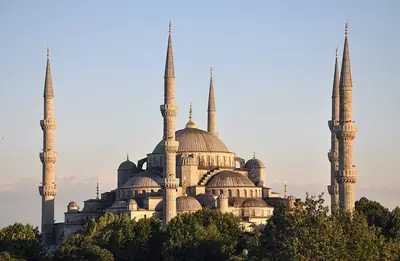
Sultan Ahmed Mosque, the Blue Mosque
Known popularly as the Blue Mosque, Sultan Ahmed Mosque is an Ottoman imperial mosque constructed between 1609 and 1617 during the reign of Ahmed I. It was designed by Mimar Sedefkâr Mehmed Ağa.
The nickname comes from its richly decorated interior, where more than 20,000 Iznik tiles use blue, green and white alongside traditional plant motifs. The central dome rises 43 metres and has a diameter of 23.5 metres, while the prayer hall measures 64 by 72 metres.
Topkapı Palace
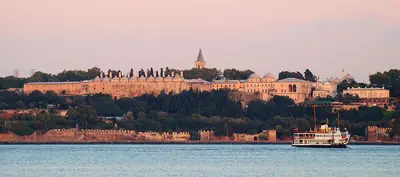
Topkapı Palace, or Topkapı Sarayı, was the administrative centre of the Ottoman Empire and the residence of its sultans for roughly 380 years. Sultan Mehmed II ordered its construction, and it was built in 1478. The palace remained the state’s administrative centre until Abdülmecid had Dolmabahçe Palace built.
The complex is arranged around four main courtyards and numerous smaller buildings. The harem was home to female members of the sultan’s family, while the Imperial Council building hosted meetings of leading officials, including the Grand Vizier. The Hırka-i Saadet Dairesi houses the Sacred Relics.
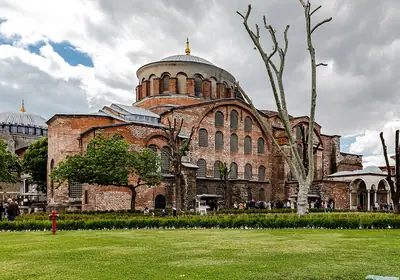
Inside the palace grounds, Hagia Irene offers a different perspective on Byzantine İstanbul. Also called Aya İrini or Saint Irene, it is one of the city’s oldest church structures and one of the few Byzantine churches in İstanbul never converted into a mosque. Today it is a museum and concert hall. Its name means “Holy Peace”, and an original Byzantine atrium remains intact.
Basilica Cistern
The Basilica Cistern, also known as Yerebatan Sarnıcı, is a 6th-century underground water cistern built during the reign of Justinian I. Records place its construction in 526–527, when it was created to meet the city’s water needs.
Marble columns rise through the dim interior, giving the space its atmospheric character and its alternative name, “Yerebatan Sarayı”, or “Subterranean Palace”. The cistern was later used as a water distribution centre near Sarayburnu and Bahçe Kapısı.
Istanbul Archaeology Museums
The Istanbul Archaeology Museums form a complex of three museums: the Archaeological Museum in the main building, the Museum of the Ancient Orient and the Museum of Islamic Art in the Tiled Kiosk.
The collection spans cultures and civilisations from world history. Among its best-known objects are the richly decorated Alexander Sarcophagus and the Kadesh Peace Treaty, dating to 1258 BC. The treaty is described as one of the earliest known international peace agreements, signed by Hattusili III of the Hittite Empire and Ramesses II of Egypt.
The Grand Bazaar
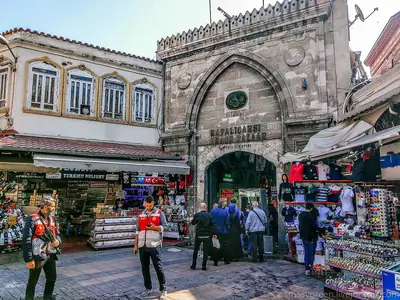
The Grand Bazaar, or Kapalıçarşı, is one of the largest and oldest covered markets in the world. Its network includes 61 covered streets and more than 4,000 shops across 30,700 square metres, creating the feeling of a city within the city.
At its centre, the Antique Market occupies the hall of Cevahir Bedesten. Its stalls include antique mirrors, water pipes, watches, candlesticks, old coins, jewellery, furniture, copperware, amber prayer beads, inlaid weapons and icons. The market remains one of İstanbul’s clearest links between commerce, craftsmanship and tradition.
Nuruosmaniye Mosque
Near the Grand Bazaar, Nuruosmaniye Mosque introduces a later Ottoman architectural language. Built in the 18th century, it is described as the first Ottoman mosque to use the baroque style monumentally.
Its curved courtyard and ornamentation show baroque and neoclassical influences. The mosque forms part of a larger külliye, including a medrese, imarethane, library, türbe, fountain, sabil and shops.
Şehzade Mosque
Şehzade Mosque was commissioned by Süleyman the Magnificent as a memorial to his son, Şehzade Mehmed, who died in 1543. Construction took place between 1543 and 1548, and the project is considered one of Mimar Sinan’s earliest important works.
The mosque has an 18.42-metre dome resting on four large half-domes. Its courtyard contains a 12-column, 16-dome ablution area, white and pink marble arches and two minarets, each with two balconies.
Zeyrek Mosque and the Church of the Holy Apostles
Zeyrek Mosque incorporates two former Byzantine churches and a chapel once connected to the Pantokrator monastery. Overlooking the Golden Horn in the Zeyrek district, it is considered one of the finest examples of Middle Byzantine architecture in Constantinople.
At Fatih Mosque, another Ottoman building stands over an important Byzantine site. The Church of the Holy Apostles was an imperial Eastern Orthodox church, second in size and importance only to Hagia Sophia. It was demolished in 1461 to make way for Fatih Mosque, although remains and reused material preserve part of its story.
More things to do in İstanbul
Galata Tower and Taksim Square
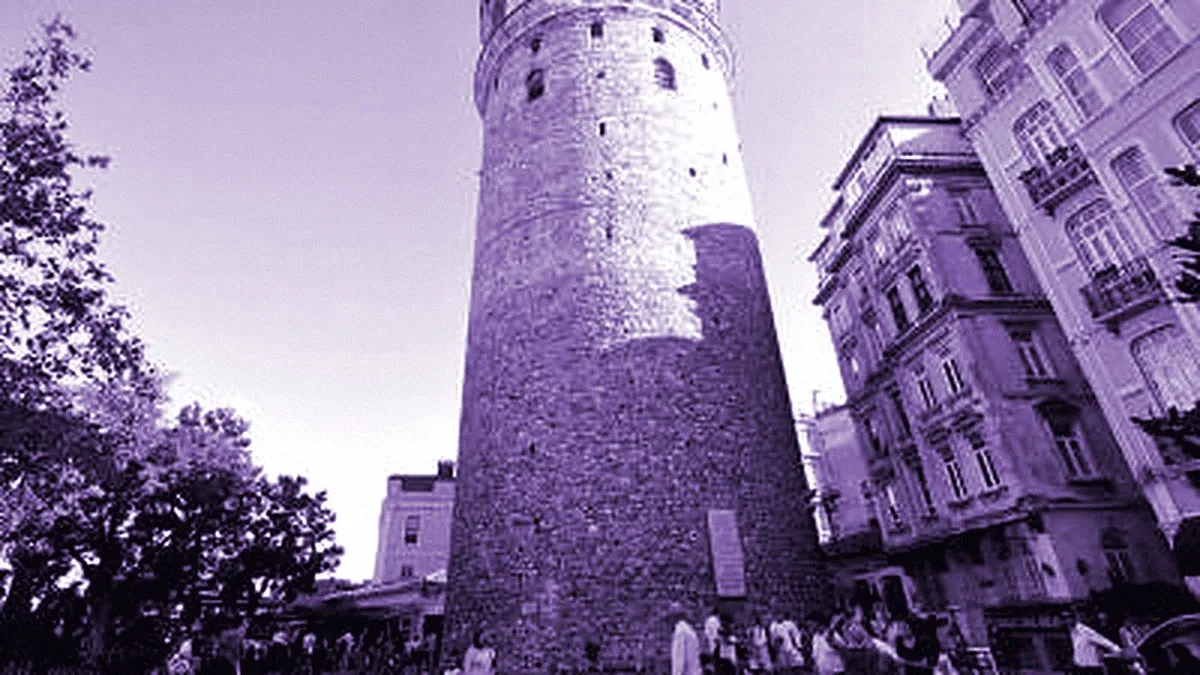
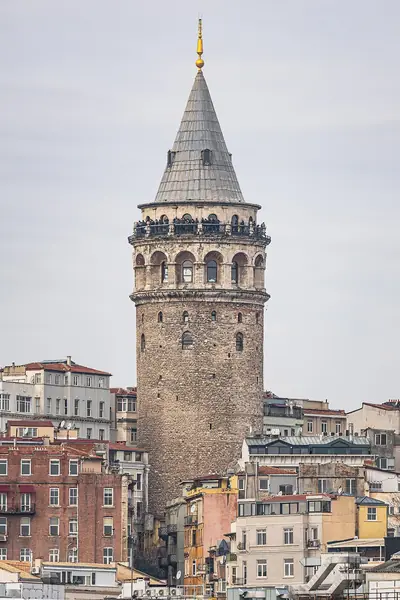
Galata Tower is one of the best-known symbols of Beyoğlu and İstanbul. The Genoese built it as part of the fortifications of their colony in Galata, north of the Golden Horn. After changing roles over the centuries, it has served as an exhibition space and museum since 2020.
Taksim Square, or Taksim Meydanı, is a major hub for tourism, leisure, restaurants, shops, hotels, entertainment and cultural venues. Its Republic Monument, created by Pietro Canonica and inaugurated in 1928, commemorates the fifth anniversary of the foundation of the Republic of Turkey in 1923.
Chora Church
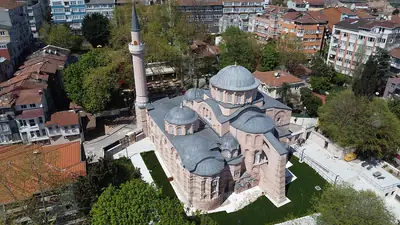
In Edirnekapı, Chora Church—also known as Kariye Camii and the Church of the Holy Saviour in Chura—is famous for its Late Byzantine mosaics and frescoes. Originally a Greek Orthodox church, it was converted into a mosque during the Ottoman era, later became a museum and was turned back into a mosque in 2020.
Christian symbols, inscriptions, mosaics and frescoes were covered with paint and lime plaster after the conversion, helping preserve them. The interior remains one of the most important places to encounter Byzantine art in İstanbul.
Rumeli Hisarı
Rumeli Hisarı, or Rumeli Fortress, is an Ottoman stronghold on the European side of the Bosphorus. Sultan Mehmed II ordered its construction between 1451 and 1452 in preparation for the siege of Constantinople.
The fortress was designed to block maritime military and logistical relief reaching the city. Together with Anadoluhisarı on the opposite bank, it limited naval traffic along the strait during the final siege. The complex covers about 32,000 square metres and is known for its three large towers.
Explore İstanbul with a free audio guide
For an İstanbul self-guided walking tour, Neywo offers five walking tours and one bus route, covering 124 narrated places. The walks include:
- Topkapı, the Grand Bazaar and the imperial mosques: 5.8 km, 211 minutes and 11 stops.
- Hagia Sophia, the Cistern and the Archaeology Museums: 1.68 km, 130 minutes and 12 stops.
- Sultanahmet: the Blue Mosque and the Hippodrome: 1.21 km, 104 minutes and 12 stops.
- Fener and Balat: the Patriarchate and the Greek churches: 1.44 km, 63 minutes and 6 stops.
- The Ultimate Istanbul: the Hippodrome to Topkapı: 2.65 km, 198 minutes and 15 stops.
The bus route, From Dolmabahçe to the Galata Bridge, covers 14.1 km in 60 minutes and has 8 narrated stops.
Download Neywo and explore İstanbul at your own pace. The app tells the story of each place as you reach it, with no group and no schedule. Narration is available in 11 languages. To discover more of the country, continue with the Turkey destination guide.
Places with an audio guide in İstanbul
8 places in İstanbul with a Neywo audio guide. Each one starts telling its story as you reach it.
Self-guided tours in İstanbul
8 tours in İstanbul, free in the Neywo app. Each stop tells its story as you reach it.
- Bike ride
Beşiktaş to Karaköy · the Bosphorus shore by bike
8 narrated places along the way: Istanbul Naval Museum, Dolmabahçe Palace, Dolmabahçe Mosque, Kılıç Ali Pasha Mosque, Galata Bridge, New Mosque, Boukoleon Palace, Little Hagia Sophia.
Istanbul Naval Museum · Dolmabahçe Palace · Dolmabahçe Mosque · Kılıç Ali Pasha Mosque · Galata Bridge · New Mosque …
Open this tour: Beşiktaş to Karaköy · the Bosphorus shore by bike - Bus ride
Bus 26: From Dolmabahçe to the Galata Bridge
A regular İETT city bus from Beşiktaş to Eminönü. On the way it passes the Ottoman Dolmabahçe and Ihlamur districts, the Museum of Innocence, Galata Tower and the Rüstem Pasha Mosque hidden above Eminönü, then crosses the Galata Bridge and runs along the waterfront mosques of Tophane. One ticket covers the European shore of the Bosphorus.
Dolmabahçe Mosque · Ihlamur Palace · The Museum of Innocence · Galata Tower · Rüstem Pasha Mosque · Galata Bridge …
Open this tour: Bus 26: From Dolmabahçe to the Galata Bridge - Bus ride
Bus 30D · across the Golden Horn to Dolmabahçe
5 narrated places along the way: Aqueduct of Valens, Galata Bridge, Kılıç Ali Pasha Mosque, Molla Çelebi Mosque, Dolmabahçe Mosque.
Aqueduct of Valens · Galata Bridge · Kılıç Ali Pasha Mosque · Molla Çelebi Mosque · Dolmabahçe Mosque
Open this tour: Bus 30D · across the Golden Horn to Dolmabahçe - Walk
Topkapı, the Grand Bazaar and the imperial mosques
Six kilometres along the ridge of the old city — the sultans' palace, the Column of Constantine, the covered bazaar, then Sinan's Şehzade mosque, the Valens aqueduct and the Fatih mosque built over the Byzantine imperial tombs.
Kafes · Topkapı Palace · Column of Constantine · Nuruosmaniye Mosque · Grand Bazaar · Bayezid II Mosque …
Open this tour: Topkapı, the Grand Bazaar and the imperial mosques - Walk
Hagia Sophia, the Cistern and the Archaeology Museums
The Byzantine centre. Justinian's dome, the sunken forest of columns in the Basilica Cistern, Hagia Irene inside the palace walls, and the archaeology museums' Alexander sarcophagus and Tiled Kiosk.
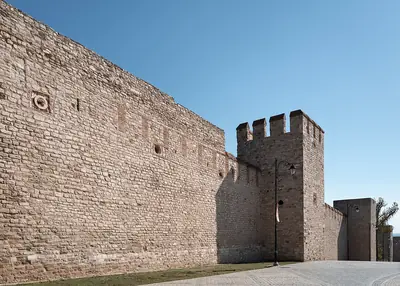
Tiled Kiosk · Istanbul Archaeology Museums · Hagia Irene · Walls of Topkapi Palace · Soğukçeşme Sokağı · Fountain of Ahmed III …
Open this tour: Hagia Sophia, the Cistern and the Archaeology Museums - Walk
Sultanahmet: the Blue Mosque and the Hippodrome
One square that was the Roman chariot track — the Egyptian obelisk, the serpent column looted from Delphi — with the Blue Mosque's six minarets on one side, the Islamic arts museum on the other, and three Byzantine cisterns underneath.
Great Palace Mosaic Museum · Arasta Bazaar · Sultan Ahmed Mosque · Walled Obelisk · Serpent Column · Obelisk of Theodosius …
Open this tour: Sultanahmet: the Blue Mosque and the Hippodrome - Walk
Fener and Balat: the Patriarchate and the Greek churches
A kilometre and a half in the old Greek and Jewish quarters — the Ecumenical Patriarchate, the cast-iron Bulgarian church shipped in pieces from Vienna, and the Pammakaristos with its surviving Byzantine mosaics.
Pammakaristos Church · Church of St. Mary of the Mongols · Bulgarian St. Stephen Church · Ecumenical Patriarchate of Constantinople · Church of St. George · Yavuz Selim Mosque
Open this tour: Fener and Balat: the Patriarchate and the Greek churches - Walk
The Ultimate Istanbul: the Hippodrome to Topkapı
Two and a half kilometres and possibly the greatest concentration of monuments in Europe — the Hippodrome, the Blue Mosque, the Basilica Cistern, Hagia Sophia, Hagia Irene, the archaeology museums and Topkapı. The Grand Bazaar and Galata are separate walks.
Hippodrome of Constantinople · Turkish and Islamic Arts Museum · Obelisk of Theodosius · Serpent Column · Sultan Ahmed Mosque · Great Palace of Constantinople …
Open this tour: The Ultimate Istanbul: the Hippodrome to Topkapı
Walk İstanbul with Neywo
Neywo turns İstanbul into a self-guided audio tour. Stories arrive as you reach the place they belong to, and the route reshapes when you wander off it.

