Kuşadası, Turkey: Self-Guided Walking Tour
Things to Do in Kuşadası: Historic Streets, Ottoman Landmarks, and Pigeon Island
The best things to do in Kuşadası combine Ottoman heritage, a lively Aegean waterfront, and the historic fortifications of Pigeon Island. The town is easy to explore on foot, with mosques, a caravanserai, a busy port, a bazaar, and sea views all close to the centre. Neywo has a free audio guide for Kuşadası with 16 narrated places.
What to See in Kuşadası
Kaleiçi Mosque
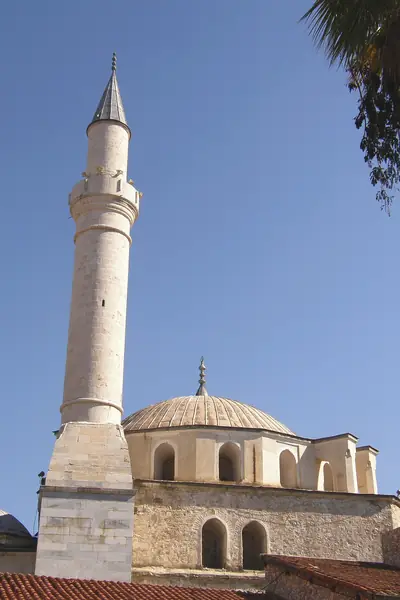
Kaleiçi Mosque stands at the heart of Kuşadası’s Ottoman-era quarter. Built in 1618, it was commissioned by Grand Vizier Öküz Mehmed Pasha as part of a larger project that also included an inn, a hammam, and improvements to the city walls.
The mosque has a square plan and a central dome resting on a sixteen-sided base and twelve arches. Inside, stained glass, painted motifs, and worked plaster bring colour to the space, while its slender minaret remains a distinctive feature of the old town.
Öküz Mehmed Pasha Caravanserai
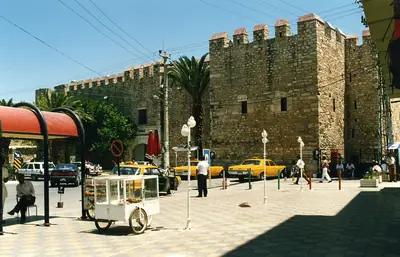
The Öküz Mehmed Pasha Caravanserai is a restored Ottoman inn built by the statesman and military commander Öküz Mehmed Pasha, who died in 1619. Its position near the harbour reflects Kuşadası’s historic role in maritime trade.
The building has since been converted into a hotel, allowing visitors to stay inside an important piece of Ottoman history. Another account of the landmark describes its fortress-like design: a two-storey rectangle surrounding a central courtyard, with arcaded porticos, guest rooms, storage areas, and defensive battlements.
Port of Kuşadası
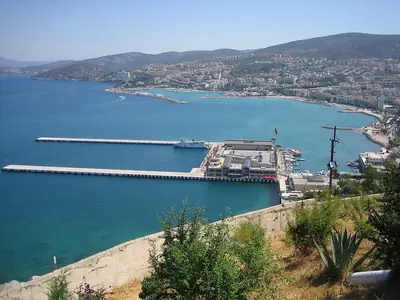
The Port of Kuşadası, formally known as Ege Port Kuşadası, is the city’s principal gateway to the Aegean coast. It is described as Turkey’s busiest cruise port and connects directly with the urban centre.
The port complex includes shops, restaurants, and a harbour promenade. From here, the old town and its bazaars are within walking distance, making the port more than a place of arrival: it is also a lively part of Kuşadası’s cityscape.
Kuşadası Clock Tower
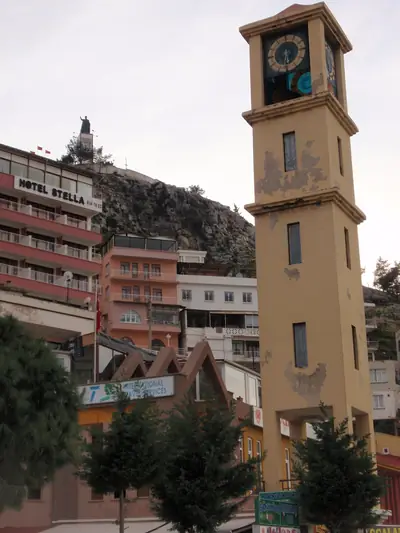
Built in 1996, Kuşadası Clock Tower rises four storeys above the promenade. Its square structure has a circular clock face and a pyramidal roof.
The tower has become a recognizable meeting point for locals and visitors. It is a simple but useful landmark while walking between the waterfront, cafés, and shops.
The Old Town Bazaar
Kuşadası’s bazaar fills the narrow streets beside the remains of the ancient city walls. Shops sell carpets, jewellery, textiles, souvenirs, Turkish delight, and other goods, while cafés and restaurants occupy the surrounding lanes.
The area is particularly lively near the port, where merchants welcome cruise passengers. Further into the old town, the atmosphere becomes quieter. The bazaar is a good place to experience the commercial side of Kuşadası, where shopping is accompanied by conversation and bargaining.
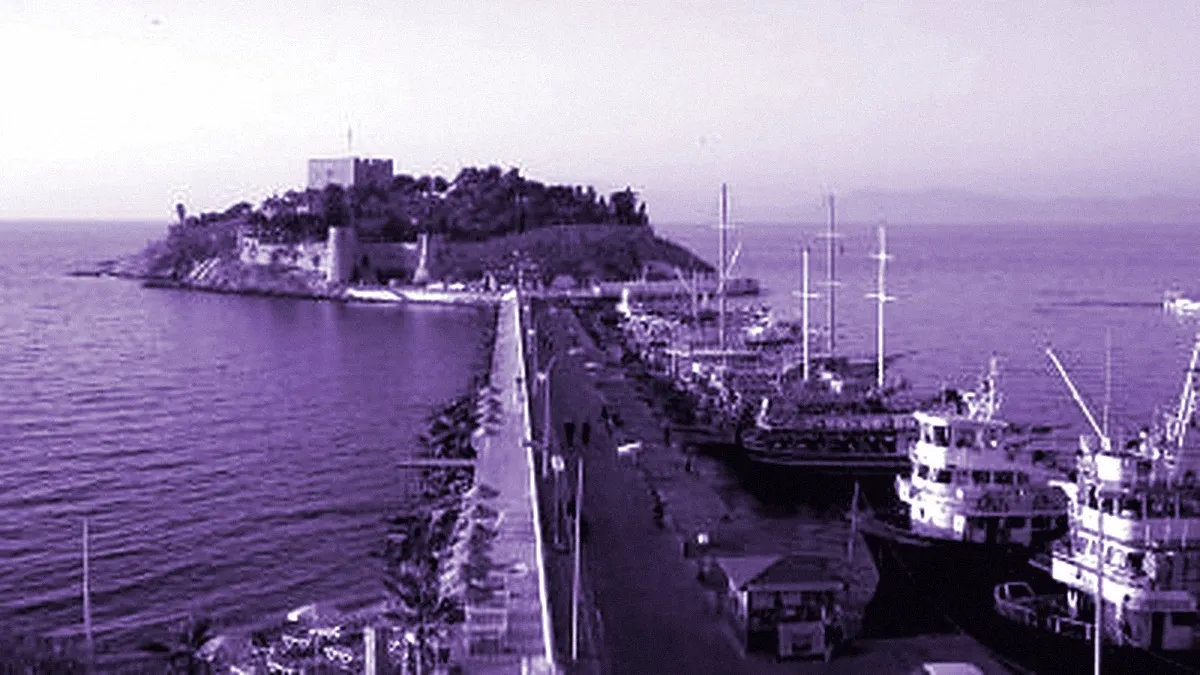
Güvercinada Castle, or Pigeon Island Castle
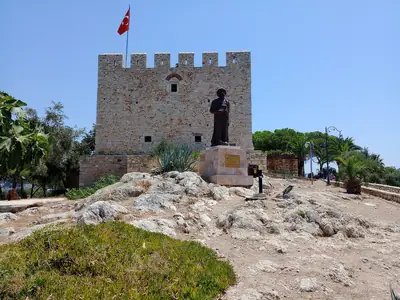
Güvercinada Castle stands on a rocky islet just off the coast, connected to the mainland by a man-made causeway. The fortress is built around a square inner keep at the island’s highest point, with an outer defensive wall and towers around the shoreline.
Its origins reach back to the Byzantine era. Genoese and Ottoman rulers later expanded and reshaped the fortifications, which protected the harbour from pirates and rival fleets. Much of the surviving appearance reflects Ottoman rebuilding.
The island is one of Kuşadası’s defining sights. Walking across the causeway brings the castle, sea, and town into a single view.
Kuşadası Lighthouse
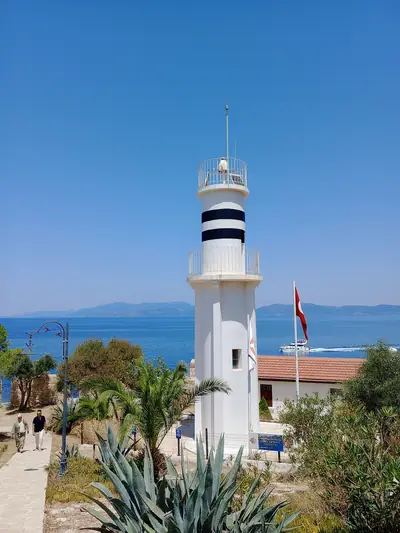
The white Kuşadası Lighthouse, also known as Kuşadası Deniz Feneri, stands on Pigeon Island beside the castle. The tower remains active, guiding vessels into the port with two flashes every ten seconds, visible up to eight nautical miles away.
The lighthouse itself is closed to visitors, but the island can be explored. Its cafés and promenade create a contrast with the older fortress walls, bringing together Kuşadası’s modern maritime life and its defensive past.
İsmail Cem Dostluk ve Barış Meydanı
The Kuşadası Promenade follows the Aegean shore through a landscaped waterfront lined with palm trees, gardens, benches, and views across the sea. Boats move through the marina, while the port and distant islands form the backdrop.
The promenade also passes several visible landmarks, including the Atatürk Monument, the Cruise Pier, and the causeway leading to Pigeon Island Castle. It is one of the easiest places to enjoy Kuşadası’s relationship with the sea.
El Heykeli
El Heykeli is a modern waterfront sculpture also known as the Pigeons in Hand or the Hand of Peace. A pale stone hand rises from a pedestal, carrying black pigeons and a single white dove.
The sculpture takes on a different appearance as the light changes. During sunset, the hand and birds form a silhouette against the sea, making the monument a popular subject for photographs.
Oleatrium Olive and Olive-Oil Museum
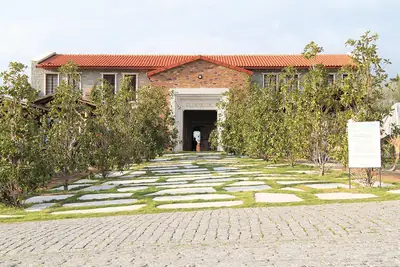
Oleatrium is dedicated to the history of olives and olive oil, products deeply connected with Aegean culture. The museum includes eleven exhibition halls arranged chronologically, from the Archaic period through the Industrial era and beyond.
Displays include ancient pressing tools, Roman cosmetic oils, Byzantine relics, early industrial machinery, artefacts, and dioramas. The complex also has gardens, shaded paths, a pond with wooden terraces, and a farm shop featuring award-winning olive oils bottled under the Yerlim brand.
İbramaki Art Gallery
İbramaki Art Gallery occupies a building that was once a hospital in the Kuşadası district. Its earlier use gives the gallery an additional layer of local history and makes it one of the town’s cultural stops.
Türkmen Cami
Türkmen Cami is a mosque in Kuşadası, in Aydın Province in southwestern Turkey. It adds another religious landmark to the town’s collection of Ottoman-era and modern places of worship.
Mount Mycale and the Battle of Mycale
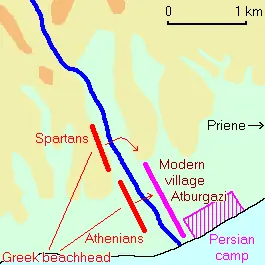
The slopes of Mount Mycale, on the Ionian coast opposite the island of Samos, were the setting for the Battle of Mycale in 479 BC. The battle was fought between an alliance of Greek city-states, including Sparta, Athens, and Corinth, and the Persian Empire of Xerxes I.
Together with the Battle of Plataea, it marked the end of the second Persian invasion of Greece. The site connects the Kuşadası area with the wider history of the Greco-Persian Wars.
A Kuşadası Self-Guided Walking Tour with Neywo
Neywo’s free audio guide lets you explore Kuşadası independently. The app tells the story of each place as you reach it, at your own pace, with no group and no schedule. Narration is available in 11 languages.
The Kuşadası tour is a 1.61-kilometre walk lasting 53 minutes, with six narrated stops:
- Kaleiçi Mosque
- Öküz Mehmed Pasha Caravanserai
- Port of Kuşadası
- Kuşadası Clock Tower
- Güvercinada Castle
- Kuşadası Lighthouse
Download Neywo and follow the route from the Ottoman inn to Pigeon Island, listening to the city’s history as you walk. Kuşadası is part of Turkey, a country with many other destinations to discover.
Places with an audio guide in Kuşadası
8 places in Kuşadası with a Neywo audio guide. Each one starts telling its story as you reach it.
Self-guided tours in Kuşadası
1 tour in Kuşadası, free in the Neywo app. Each stop tells its story as you reach it.
- Walk
From Ottoman Inn to Pigeon Island
Start in the Ottoman old quarter with the 1618 Kaleici mosque and the caravanserai built by the same grand vizier, drop down to the cruise port and the seaside clock tower, then follow the causeway out to Pigeon Island, where a fortress, a maritime museum and a working lighthouse look over the Aegean.
Kaleiçi Mosque · Öküz Mehmed Pasha Caravanserai · Port of Kuşadası · Kuşadası Clock Tower · Güvercinada Castle · Kuşadası Lighthouse
Open this tour: From Ottoman Inn to Pigeon Island
Walk Kuşadası with Neywo
Neywo turns Kuşadası into a self-guided audio tour. Stories arrive as you reach the place they belong to, and the route reshapes when you wander off it.

