Visiting Ankara, Turkey: Top Sights on Foot
Things to Do in Ankara: What to See in Turkey’s Capital
Ankara is Turkey’s capital, a city where ancient Anatolian civilizations, the Ottoman past and the history of the Turkish Republic meet. The best things to do in Ankara range from exploring Ankara Castle and Roman ruins to visiting museums, memorials and striking modern landmarks. Neywo offers a free audio guide for Ankara with 209 narrated places.
What to See in Ankara
Ankara Castle
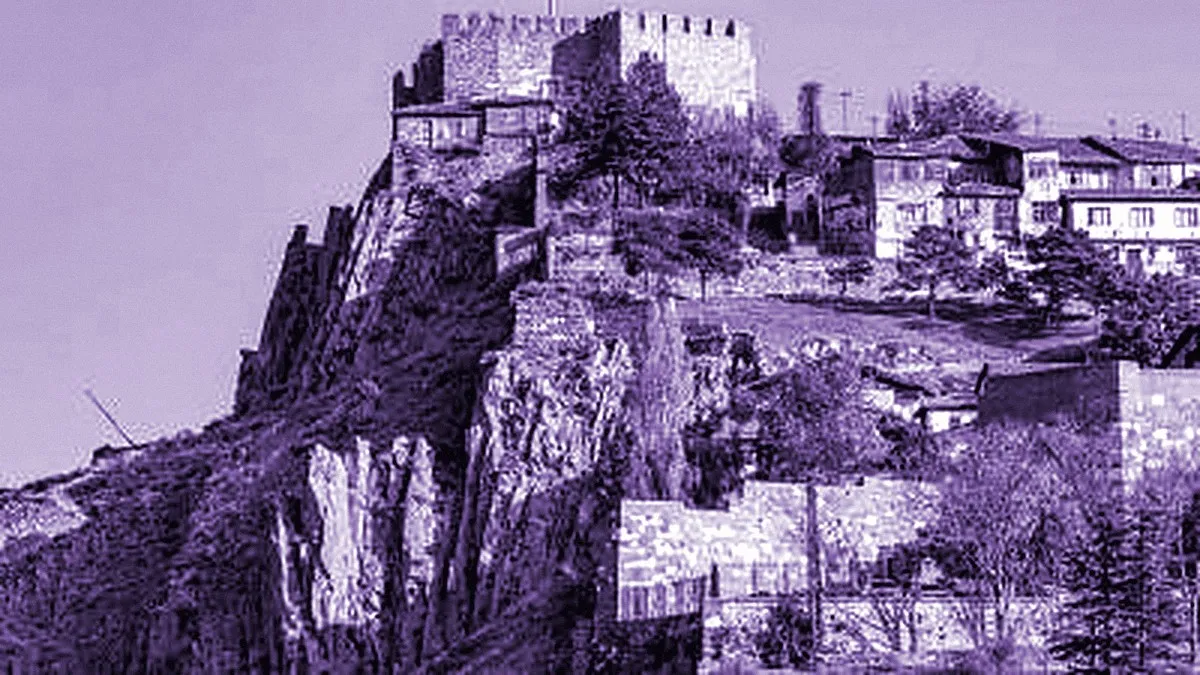
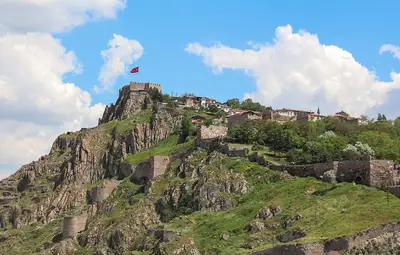
Ankara Castle crowns a hill in the Altındağ district and is one of the city’s defining landmarks. Its earliest walls date to the eighth century BCE, when the Phrygians built the first fortifications. Galatians, Romans, Byzantines, Seljuks and Ottomans later repaired and expanded the site.
The castle is larger inside than it first appears. Narrow lanes and old houses fill the space within the walls, while the ramparts provide views across Ankara. Exploring the fortress also leads into the city’s oldest historic neighbourhoods.
Museum of Anatolian Civilizations
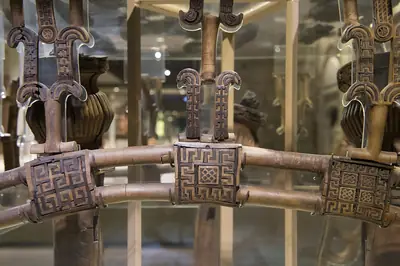
Set against the southern side of Ankara Castle in the Atpazarı district, the Museum of Anatolian Civilizations occupies two restored Ottoman buildings: the Kurşunlu Han and the Mahmut Paşa Bedesteni. These former merchant and caravan buildings now contain an archaeological collection covering the major civilizations of Anatolia.
The displays are arranged chronologically, beginning with the Paleolithic era and Neolithic settlements such as Çatalhöyük and Hacılar. The collection continues through the Early Bronze Age, Assyrian trading colonies, the Hittite Empire, Phrygian and Urartian cultures, and the Greek, Hellenistic, Roman, Byzantine, Seljuk and Ottoman periods. It is one of the most useful places to visit in Ankara for understanding the region’s long history.
Temple of Augustus in Ankara
Beside Hacı Bayram Mosque stand the remains of the Temple of Augustus and Rome, built around 25–20 BCE after Rome conquered central Anatolia and established the province of Galatia.
The temple is especially important because its walls preserve the Monumentum Ancyranum, the most complete surviving copy of Augustus’s account of his achievements, known as the Res Gestae Divi Augusti. The inscription appears in Latin on the interior walls and Greek on the exterior. The site had previously held a Phrygian temple, which was destroyed in the second century BCE.
Roman remains
Ankara’s ancient history is also visible in several Roman monuments included in the city’s historic centre. The Roman theatre once held thousands of spectators, while the Roman Baths reveal the scale of public life in Roman Ankara. The Column of Julian is another reminder of the city’s imperial past.
Together with the Temple of Augustus, these remains show how ancient sites remain woven into the modern city rather than standing apart from it.
Anıtkabir
Anıtkabir is the monumental mausoleum of Mustafa Kemal Atatürk, founder and first president of the Turkish Republic. The complex stands on a hill in Ankara’s Çankaya district and combines architecture, sculpture and landscaped spaces to tell the story of modern Turkey.
Atatürk died on November 10, 1938. His body was placed temporarily in the Ethnography Museum of Ankara while the mausoleum was planned. An international competition was held in 1941, and the winning design came from Turkish architects Emin Onat and Orhan Arda. Construction began in 1944 and finished in October 1953. Atatürk’s remains were transferred there on November 10 of that year.
The approach begins along the 262-metre Lions’ Road. The complex is one of the essential places to see in Ankara for understanding the country’s republican history.
Ethnography Museum of Ankara
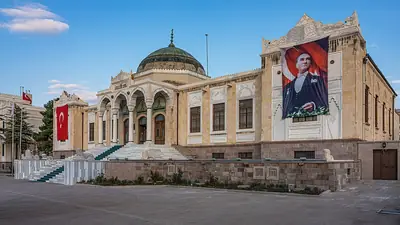
The Ethnography Museum stands on Namazgâh Hill in the historic Ulus district. Designed by Arif Hikmet Koyunoğlu and built between 1925 and 1928, it reflects the architectural vision of the early Republican period.
The museum focuses on the cultures of Turkic civilizations. It also played a temporary role in the story of modern Turkey: from 1938 to 1953, it housed Mustafa Kemal Atatürk’s sarcophagus while Anıtkabir was being built.
Republic Museum
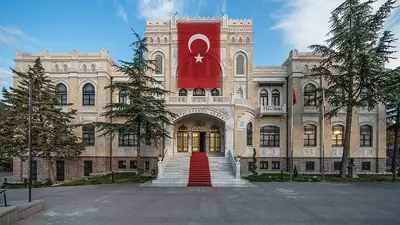
The Republic Museum occupies the building that served as the second home of the Turkish Grand National Assembly. Designed by Vedat Tek, it was completed in 1923, and parliament moved into it in 1924. The assembly remained there for 36 years.
Today, the museum presents the development of the republican era through portraits of presidents and prime ministers, banknotes and coins, photographs, models and illustrated displays. It offers a direct connection between Ankara’s buildings and the institutions formed in the early years of modern Turkey.
War of Independence Museum
The War of Independence Museum is housed in the first Turkish Grand National Assembly building beside Ulus Square. Built from local andesite stone, the single-storey structure was completed during the years before the Turkish Republic.
On April 23, 1920, the new assembly opened here. The building served as the seat of Turkey’s first parliament until 1924, before becoming a museum in 1961. Its setting and collections make it one of the most significant stops for anyone interested in Ankara’s role during the War of Independence.
Ankara Painting and Sculpture Museum
On Namazgâh Hill, the Ankara Painting and Sculpture Museum occupies a building designed by Arif Hikmet Koyunoğlu and constructed between 1927 and 1930. It was created for the Turkish Hearths Central Building under Atatürk’s direction and reopened as a museum in 1980 after restoration.
The collection follows Turkish painting and sculpture from the late nineteenth century to the present. Works by Osman Hamdi Bey, Şeker Ahmet Paşa, İbrahim Çallı, Abdülmecid Efendi, Fikret Mualla, Şevket Dağ, Şefik Bursalı and Abidin Dino trace the development of modern Turkish art. The building also contains the historic Türkocağı Stage, which has hosted performances since 1967.
Kocatepe Mosque
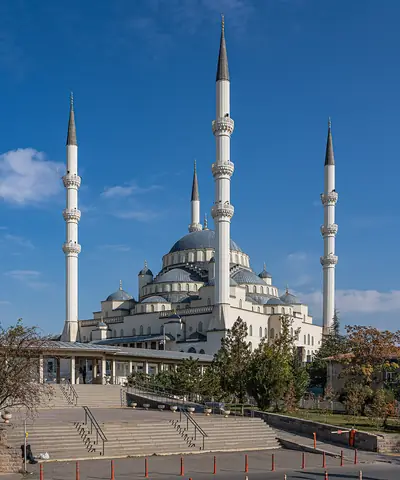
Kocatepe Mosque dominates the skyline in the Kocatepe quarter of Kızılay. It is Ankara’s largest mosque and was completed over two decades, from 1967 to 1987.
Its neo-classical Ottoman design draws on the Selimiye Mosque in Edirne and the Şehzade and Sultan Ahmet mosques in Istanbul. The result is a monumental modern building with clear references to the Ottoman architectural tradition.
Gordion
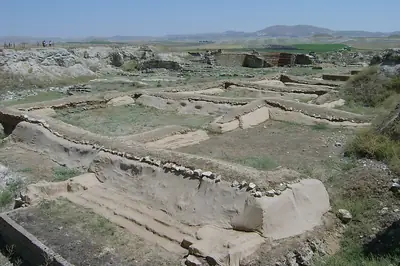
About 80 kilometres southwest of modern Ankara, Gordion was the ancient capital of Phrygia. The site lies at Yassıhüyük, where the Sakarya and Porsuk rivers meet, near an important route between Lydia and Assyria.
People lived on the mound continuously from the Early Bronze Age, around 2300 BCE, through the fourth century CE. The Citadel Mound covers about 13.5 hectares, while the settlement at its height extended across nearly 100 hectares. The surrounding tumuli, or burial mounds, add another important dimension to the archaeological landscape.
More museums and historic sites
Ankara’s attractions extend beyond the central historic districts. The Stamp Museum, opened in 2013, is Turkey’s first and only museum dedicated entirely to stamps and postal history, with roughly 6,000 stamps from Turkey and other countries.
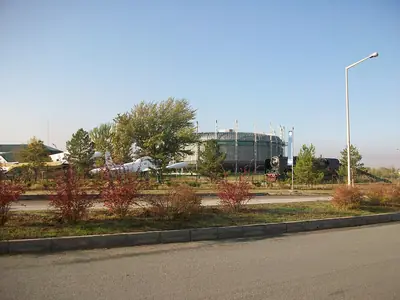
The METU Science and Technology Museum explores technology in Anatolia from 7000 BCE to the jet age. Its complex includes the Great Silo, a transportation-history hangar and the UFO Applied Science Center, with more than 50 interactive experiments.
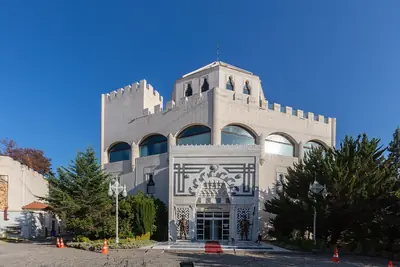
In Keçiören, Estergon Castle is a full-scale replica of the castle in Hungary and houses a traditional bazaar, restaurants, an ethnography museum and the Asian Gardens. Kalecik Kalesi is another historic fortress, located in Ankara’s Kalecik District.
The Alagöz Karargâh Museum occupies the farmhouse that served as the headquarters of the Western Front Command during the Battle of Sakarya in 1921. Mustafa Kemal Atatürk worked, slept and took meals there, and the restored building preserves its wartime room layout.
Explore Ankara with Neywo
Neywo makes an Ankara self-guided walking tour simple: the app tells the story of each place as you reach it, at your own pace, with no group and no schedule. Narration is available in 11 languages.
The Ankara audio guide includes six walking tours and one bus route:
- Ancient Ankara: Citadel, Theatre and Temple of Augustus — 3.38 km, 118 minutes and 12 narrated stops.
- Birth of the Republic: Ulus on Foot — 2.02 km, 104 minutes and 12 narrated stops.
- Capital Icons: From the Hittite Sun to Kocatepe — 2.87 km, 88 minutes and 8 narrated stops.
- Atatürk’s Ankara: Railway Station to Anıtkabir — 4.33 km, 105 minutes and 8 narrated stops.
- Hamamönü and Hacettepe: Old Ankara Neighbourhoods — 3.12 km, 85 minutes and 8 narrated stops.
- Çankaya Hill: Cartoons, Villas and Atakule — 3.61 km, 76 minutes and 5 narrated stops.
- Bus 259: Ulus to Kızılay, Along Atatürk Boulevard — 3.3 km, 14 minutes and 7 narrated stops.
Download Neywo and explore Ankara while its history unfolds around you. You can also continue travelling through Turkey, from Cappadocia to Antalya and İstanbul.
Places with an audio guide in Ankara
8 places in Ankara with a Neywo audio guide. Each one starts telling its story as you reach it.
Self-guided tours in Ankara
7 tours in Ankara, free in the Neywo app. Each stop tells its story as you reach it.
- Bus ride
Bus 259: Ulus to Kızılay, Along Atatürk Boulevard
A local EGO bus from the old Ulus quarter, with the Roman baths, the parliament and museum buildings, south down Atatürk Boulevard past Opera Square and the Hittite Sun at Sıhhiye to Victory Square and Kızılay, the modern centre. The cheapest way to see how Ankara grew from the old town to the new capital.
Byzantine Tomb of Lapidarium of Caracalla Bath · War of Independence Museum · Ziraat Bank Museum · Opera Square · Hittite Sun Course Monument · Marshal Atatürk Monument …
Open this tour: Bus 259: Ulus to Kızılay, Along Atatürk Boulevard - Walk
Ancient Ankara: Citadel, Theatre and Temple of Augustus
Climb from the world-class Anatolian museum and the private archaeology museum beside it past two of Turkey's oldest wooden-columned mosques to the Phrygian-Galatian citadel, then descend through Roman Ankara: a buried theatre, the temple that preserves Augustus's own autobiography on its walls, a Sufi mosque built beside it, a slender column raised for an emperor and the ruins of the Roman baths. Three thousand years in a stroll.
Museum of Anatolian Civilizations · Erimtan Arkeoloji ve Sanat Müzesi · Aslanhane Mosque · Ahi Elvan Mosque · Sultan Alaeddin Mosque · Zindan Tower …
Open this tour: Ancient Ankara: Citadel, Theatre and Temple of Augustus - Walk
Birth of the Republic: Ulus on Foot
Follow the footsteps of modern Turkey's founders from Namazgâh Hill, where Atatürk's coffin once rested, along the museums and banks of Atatürk Boulevard to Opera Square and Ulus Square with its bronze Victory Monument. Stop at the first and second parliament buildings, the grand hotel where the deputies lived and the bank museums that tell how the republic financed itself.
Ethnography Museum of Ankara · Ankara Painting and Sculpture Museum · Ankara Vakıf Museum · Opera Square · Stamp Museum · Küçük Theatre …
Open this tour: Birth of the Republic: Ulus on Foot - Walk
Capital Icons: From the Hittite Sun to Kocatepe
Walk Ankara's modern spine, Atatürk Boulevard: a railway workshop turned art centre, Sıhhiye Square, the bronze Hittite sun that became the city's emblem, the monuments of Güvenpark and Kızılay, and the giant Kocatepe Mosque that dominates the skyline.
CerModern · Sıhhiye Square · Hittite Sun Course Monument · Marshal Atatürk Monument · Kızılay Meydanı · Güvenlik Monument …
Open this tour: Capital Icons: From the Hittite Sun to Kocatepe - Walk
Atatürk's Ankara: Railway Station to Anıtkabir
Trace the capital's founding story from the defence-industry and aviation museums to Atatürk's residence inside the historic railway station. Then climb to Maltepe Mosque and the great mausoleum of Anıtkabir, where the museum beneath the Hall of Honor tells the story of the War of Independence.
Anadolu Square · MKE Sanayi ve Teknoloji Müzesi · Museum of Turkish Aeronautical Association · Ankara Arena · Atatürk's Residence and Railway Museum · Maltepe Mosque …
Open this tour: Atatürk's Ankara: Railway Station to Anıtkabir - Walk
Hamamönü and Hacettepe: Old Ankara Neighbourhoods
Wander the restored old quarter of Hamamönü: from the prison that held thousands to the New Mosque and the wooden house where the poet of the national anthem lived. Pass the Seljuk and Ottoman mosques on the Hacettepe campus, an art museum and the world's most unusual chess museum.
Ulucanlar Prison Museum · Cenabi Ahmet Paşa Mosque · Tacettin Sultan Mosque · Mehmet Akif Ersoy Museum House · Karacabey Mosque · Hacettepe Art Museum …
Open this tour: Hamamönü and Hacettepe: Old Ankara Neighbourhoods - Walk
Çankaya Hill: Cartoons, Villas and Atakule
Climb to the leafy hill where the republic's leaders lived: a museum to a beloved cartoon character in Kavaklıdere, the elegant Tunalı Hilmi Avenue, the Pink Villa and Çankaya Mansion, finishing under the 125-metre Atakule tower.
Cin Ali Museum · Tunalı Hilmi Avenue · Pembe Köşk · Çankaya Mansion · Atakule
Open this tour: Çankaya Hill: Cartoons, Villas and Atakule
Walk Ankara with Neywo
Neywo turns Ankara into a self-guided audio tour. Stories arrive as you reach the place they belong to, and the route reshapes when you wander off it.

