Visiting Bursa, Turkey: Top Sights on Foot
Things to do in Bursa: Ottoman history beneath Uludağ
Bursa is a historic city in Turkey known as the first capital of the Ottoman Empire, with monumental mosques, lively bazaars, museums, and the mountain landscape of Uludağ. It is worth visiting for the concentration of early Ottoman architecture and the way the city connects religious, commercial, and civic history. Neywo’s free audio guide for Bursa covers 182 narrated places.
What to see in Bursa
Bursa Grand Mosque
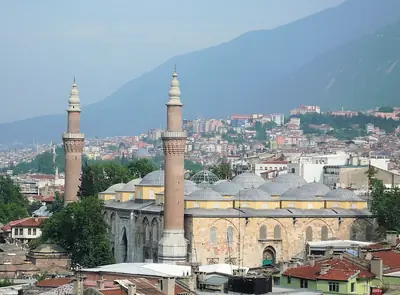
Bursa Grand Mosque, or Ulu Cami, stands in the city centre on Atatürk Avenue and is one of Bursa’s defining landmarks. Commissioned by Bayezid I and built between 1396 and 1400, it is a monumental example of the multi-support mosque plan, with twenty domes and the largest interior congregational space among mosques in Turkey.
Inside, the kündekari minbar is especially important: its craftsmanship reflects the transition from Seljuk carving to Ottoman wood carving. The walls display 192 examples of calligraphy, written by different calligraphers during the second half of the nineteenth century and the early twentieth century. Another distinctive feature is the şadırvan, a fountain beneath a dome open at the top.
The historic khans
Bursa’s historic khans preserve the city’s long connection with trade. These courtyards once served commercial purposes and remain part of the everyday character of the historic centre. They are a useful place to experience Bursa’s urban rhythm alongside its Ottoman architectural heritage.
Orhan Gazi Mosque
The Orhan Gazi Mosque is among the historic religious buildings associated with Bursa’s early Ottoman development. Its setting helps show how worship, commerce, and community life were brought together in the city’s traditional urban structure.
Panorama 1326
At the eastern end of the Hanlar District, Panorama 1326 presents the foundation of the Ottoman Empire through a continuous, 360-degree panorama. The central event is the Ottoman capture of Bursa Fortress on April 6, 1326, portrayed as taking place without bloodshed.
The museum occupies 4,300 square metres in Kamberler, an area transformed into a city park. Opened to visitors in 2018, it is crowned by a dome 42 metres in diameter and is described as one of the world’s largest fully panoramic museums.
Bursa Green Mosque
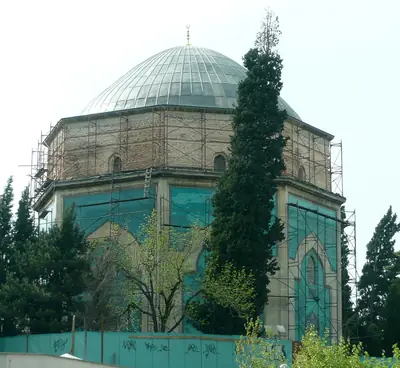
Bursa Green Mosque, or Yeşil Camii, forms part of the Yeşil Külliye complex and is one of the city’s most memorable early Ottoman buildings. Its tiled surfaces hold a distinctive place in fifteenth-century Ottoman tile art, giving the mosque its characteristic green appearance.
The mosque is also included on the route through Turkey’s early Ottoman heritage offered by Neywo’s city walks.
Emir Sultan Mosque
Emir Sultan Mosque stands in the Emir Sultan neighbourhood beside the Emir Sultan Cemetery, among cypress and plane trees. Hundi Fatma Hatun, the daughter of Yıldırım Bayezid, commissioned it in honour of her husband, Emir Sultan.
The original building had a single dome. A courtyard and a three-domed portico were added in 1507, while the mosque was rebuilt in 1804 after an earthquake. Its current design includes a single dome on an octagonal drum, stone minarets at the corners of the northern façade, and a broad rectangular courtyard with wooden porticoes and a central fountain.
Kara Timurpaşa Mosque
Kara Timurpaşa Mosque, also known as Timurtaş Paşa Mosque or Demirtaş Mosque, began as a religious and social lodge at the end of the fourteenth century and was converted into a mosque in 1573. Its unusual inverted T-shaped plan is paired with a separate minaret rising above a fountain.
The six brick supports beneath the minaret create the building’s most distinctive feature: a six-fountain minaret. The original structure was rebuilt in 1966 and restored again in 2017.
Bursa City Museum
Bursa City Museum stands beside the Bursa Governorship Building at Heykel Square, south of the Atatürk Monument. Housed in the city’s former courthouse since 2004, it presents Bursa’s history and culture across seven thousand years of change and transformation.
Bursa Archaeological Museum
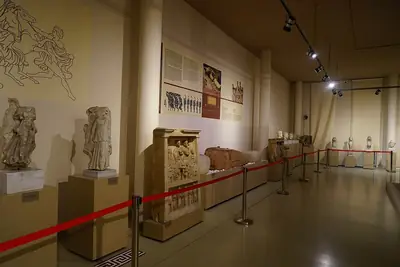
Located in Bursa Kültürparkı, Bursa Archaeological Museum brings together objects from Bithynia and Mysia, spanning the period from around 3000 BCE to the end of the Byzantine period. Established in 1904 as a branch of the Istanbul Archaeological Museum, it is the third-oldest museum in Turkey after the museums in Istanbul and Konya.
Its collection contains about twenty-five thousand objects, with around two thousand on display.
Bursa Atatürk Museum
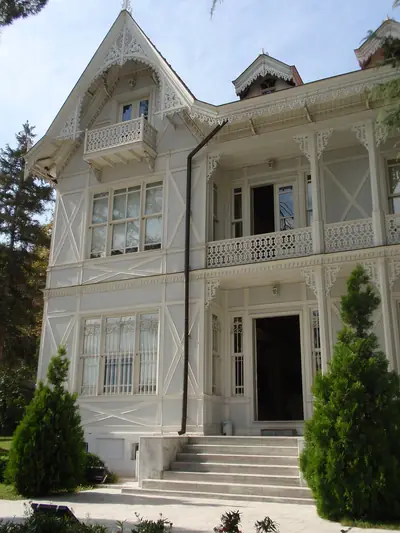
Bursa Atatürk Museum is a historic house museum in Osmangazi. The mansion was completed in 1895 and offers another perspective on the city’s architectural and historical heritage.
Muradiye Madrasa
Muradiye Madrasa, also known as Muradiye Medresesi, is located in Osmangazi District. It is one of the historic places included in the Muradiye quarter, where museums and Ottoman religious buildings form a concentrated area for exploring Bursa’s past.
Uludağ
Uludağ rises above Bursa as the highest mountain in the Marmara Region, reaching 2,543 metres. It stretches for almost 40 kilometres from northwest to southeast and is one of Turkey’s leading centres for winter and outdoor sports.
The mountain’s true highest point lies five kilometres southeast of Keşiş Tepesi, a 2,486-metre high point that can appear to be the summit when viewed from Bursa or the hotel area. Uludağ also contains the remains of an abandoned tungsten mine and processing plant built in 1974 and closed in 1989.
Bursa beyond the city centre
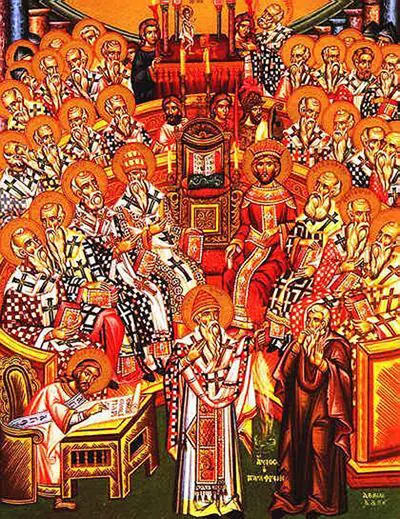
Bursa’s wider area adds further historical depth. In İznik, the First Council of Nicaea took place in 325 after being convened by the Roman Emperor Constantine the First. The council addressed teachings associated with Arius and sought a common date for celebrating Easter.
İznik also contains Hagia Sophia, or Ayasofya, a Byzantine-era church built where the roads from the city’s four gates meet. The Seventh Council, where important decisions about Christianity were made, is thought to have met there in 787. After İznik was conquered by Orhan Gazi in 1331, the building was converted into a mosque, with additions made during the reign of Sultan Süleyman the Magnificent by the architect Mimar Sinan.
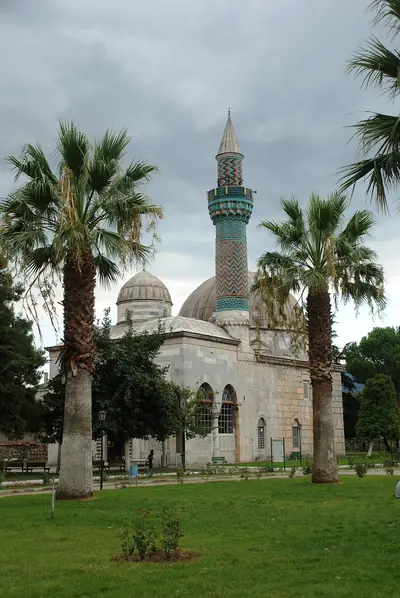
The Yeşil Mosque in İznik stands near the Lefke Gate. Its minaret, decorated with turquoise, green, and purple tiles in zigzag patterns, gives the mosque its name. İznik Museum houses archaeological objects from the city and its surrounding area in a purpose-built museum building.
In Mudanya, the Mudanya Armistice House occupies the historic house where the Mudanya Armistice was signed, bringing the Turkish War of Independence to an end. The two-storey wooden house has thirteen rooms and two large halls, including the room where the armistice was signed and İsmet İnönü’s office.
Explore Bursa with a free audio guide
Download Neywo to explore Bursa with a Bursa self-guided walking tour rather than following a group. The app offers three walking tours:
- Bazaars, Inns and the Great Mosque: 2.38 km, 96 minutes, 11 narrated stops
- The Green City: Where the Ottoman Story Began: 3.74 km, 103 minutes, 10 narrated stops
- Muradiye: A Sultan’s Quarter and Its Museums: 4.83 km, 114 minutes, 9 narrated stops
Each story plays as you reach the place, at your own pace, with no group and no schedule. Narration is available in 11 languages, making Neywo a practical Bursa audio guide for discovering the city’s mosques, museums, historic quarters, and Ottoman landmarks.
Places with an audio guide in Bursa
8 places in Bursa with a Neywo audio guide. Each one starts telling its story as you reach it.
Self-guided tours in Bursa
3 tours in Bursa, free in the Neywo app. Each stop tells its story as you reach it.
- Walk
Bazaars, Inns and the Great Mosque
Walk Bursa's old trading heart from the castle-side mosques of Hisar to the Great Mosque. You pass the Mosque of Martyrs rebuilt after the 1855 earthquake, the minaret of Şehreküstü behind Osman Gazi's statue, two Ottoman inns of the covered bazaar and the first mosque of Orhan Gazi, then finish at the city museum in the old courthouse and a Levantine church.
Şahadet Mosque · Veled-i Yaniç Mosque · Şehreküstü Mosque · Tavukçu Mosque · Geyve Han · Emir Han …
Open this tour: Bazaars, Inns and the Great Mosque - Walk
The Green City: Where the Ottoman Story Began
Follow the UNESCO trail of the Ottoman founders: the saint's mosque of Emir Sultan, the Green Tomb that watches over the city, the tiled Green Mosque, the Islamic Art museum in the old madrasa, Irgandı Bridge with its craft shops, and the shield-walled mosques of Kamberler Park beside the 1326 conquest panorama.
Emir Sultan Mosque · Yeşil Türbe · Bursa Green Mosque · Türk İslam Eserleri Müzesi · Umurbey Mosque · Irgandı Bridge …
Open this tour: The Green City: Where the Ottoman Story Began - Walk
Muradiye: A Sultan's Quarter and Its Museums
A walk through the Muradiye district, named for Sultan Murad II, and on towards Çekirge. See his mosque with its carved door and Iznik tiles, a madrasa now home to Ottoman folk costumes, the archaeological museum and the mansion where Atatürk stayed, then follow Çekirge Avenue to the forestry and Karagöz museums and the two-storey mosque-medrese of Murad I.
Bursa Museum of Migration History · Muradiye Mosque · Muradiye Madrasa · Osmanlı Halk Kıyafetleri ve Takıları Müzesi · Bursa Archaeological Museum · Bursa Atatürk Museum …
Open this tour: Muradiye: A Sultan's Quarter and Its Museums
Walk Bursa with Neywo
Neywo turns Bursa into a self-guided audio tour. Stories arrive as you reach the place they belong to, and the route reshapes when you wander off it.

