Things to Do in Montpellier, France: Walking Guide
Things to Do in Montpellier: What to See in the Historic City Centre
Montpellier is a historic city in Occitania, in southern France, known for medieval streets, monumental squares, religious buildings, art museums, and elegant country estates. The city is especially rewarding on foot: its old centre brings together Gothic architecture, former fortifications, historic institutions, and lively urban spaces. Neywo offers a free audio guide for Montpellier with 171 narrated places.
What to See in Montpellier
Place de la Comédie and the Fontaine des Trois Grâces
Place de la Comédie is one of Montpellier’s defining public spaces and a central point for discovering the city. At its heart stands the Fontaine des Trois Grâces, an eighteenth-century sculptural fountain created in marble by Étienne Dantoine in 1777. The version on the square is a resin cast; the original sculpture is recognized as a historic monument.
The square also features in a walk focused on Montpellier’s showpiece spaces, which continues towards the Esplanade Charles de Gaulle, the Musée Fabre, and several other cultural landmarks.
Musée Fabre
Close to Place de la Comédie, the Musée Fabre is one of the most important museums in Montpellier and a major art museum in southern France. Its collection covers European painting and ancient ceramics from the fifteenth to the twentieth centuries, with works connected to France, Italy, Spain, Britain, the Low Countries, and other parts of Europe.
The museum was founded in 1825 by François-Xavier Fabre, a Montpellier painter and student of Jacques-Louis David. Fabre used his wealth to establish an art school and develop the collection that later became the museum. Its origins also include a gift of thirty paintings made in 1802.
Montpellier Cathedral
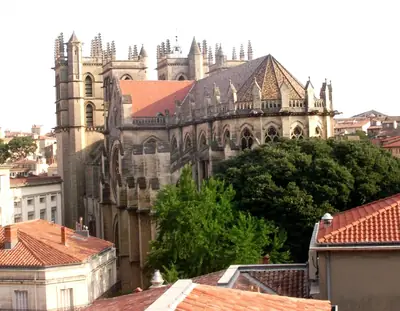
Montpellier Cathedral, or Cathédrale Saint-Pierre, is the city’s most important Gothic monument. It began as a Benedictine convent chapel dedicated to Saints Benedict and Germain, founded by Pope Urban V in 1364, and became a cathedral in 1536. Today, it is dedicated to Saint Peter and serves as the seat of the Archbishops of Montpellier.
Its unusual façade gives the building a fortress-like appearance. Two enormous free-standing cylindrical pillars support the main porch, while four towers mark the corners of the nave. Inside, the church has a single nave, five bays, and fourteen side chapels.
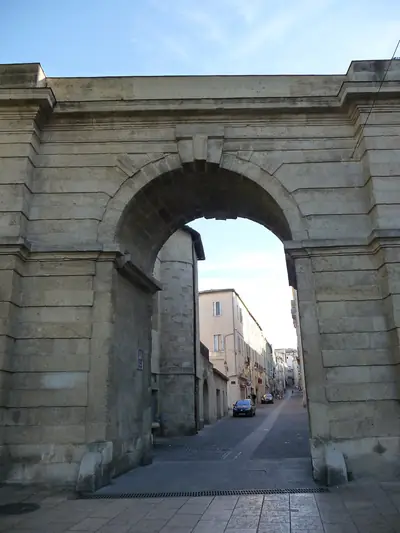
Porte de la Blanquerie
The Porte de la Blanquerie, also called the Old Gate, is a surviving fragment of Montpellier’s former fortifications. It stands where Rue de l’Université meets Boulevard Louis Blanc and offers a reminder of the defensive structures that once surrounded the historic city.
Citadel of Montpellier
The Citadel of Montpellier is an early modern fortress in the heart of the historic centre. Built between 1624 and 1627 on the orders of Louis XIII, it was intended to watch over the city and help secure it after several rebellions.
The fortress later became the Joffre Barracks. Since 1947, it has housed the Lycée and Collège Joffre, also known as the Lycée général et technologique Joffre. Its military past and present academic role make it one of Montpellier’s most distinctive historic sites.
Saint-Mathieu Church
Saint-Mathieu Church began as a Dominican chapel in 1624, although the site had already undergone several changes. An earlier church was destroyed in 1568, rebuilt in 1617, and demolished again in 1626. The present building was erected soon afterwards.
Its Corinthian façade was added in 1829. Inside, seventeenth-century altarpieces and paintings preserve an important part of the church’s religious and artistic history.
The Ursuline Convent
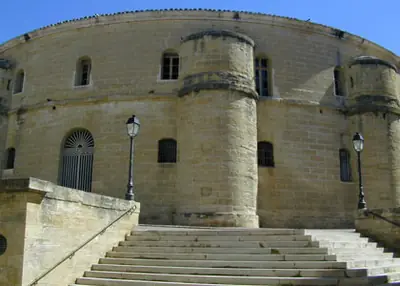
The former Ursuline convent, or Couvent des Ursulines, was built in 1641 under the direction of architect Jean Bonnassier. Six nuns from the Sainte-Ursule order of Pézenas founded it as a religious and educational institution. From 1682 to 1791, it provided education for young girls, including girls from underprivileged backgrounds.
The French Revolution transformed the building into a women’s prison. During the nineteenth century and the Second World War period, it alternated between prison and barracks; during the German occupation, it also served as a detention and interrogation centre for the Gestapo. Military offices remained there until the mid-1980s. The building later took on a new role connected with dance and the arts.
Château d’O and Montpellier’s Country Estates
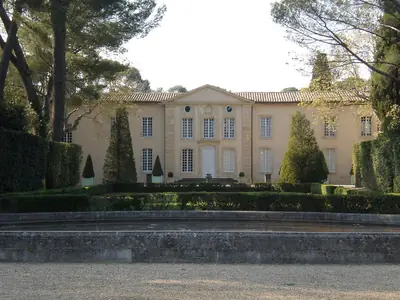
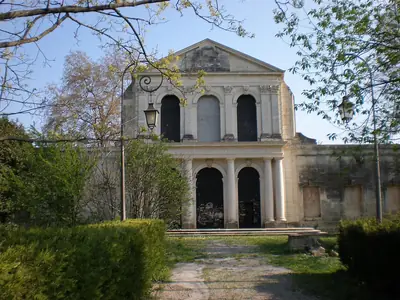
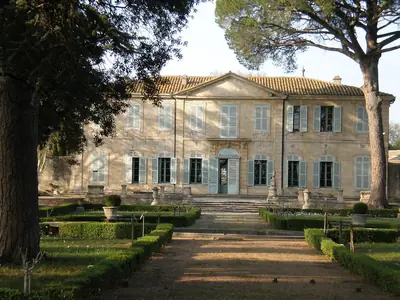
Château d’O, also known as the Domaine d’O, combines an eighteenth-century château, formal French gardens, the Bassin d’O pond, and an open-air theatre. The estate is one of Montpellier’s “folies”: elegant country residences built around the city by wealthy merchants from the eighteenth century onwards.
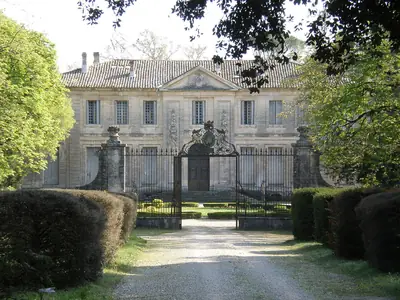
The estate places historic architecture beside contemporary performance spaces, including the Théâtre Jean-Claude Carrière and Théâtre d’O. Other folies around Montpellier include Château de la Mosson, beside the Mosson River on the boundary between Montpellier and Juvignac; Château de la Piscine, built in the second half of the eighteenth century; and Château Levat, a private residence built in 1763 and 1764 for merchant Jean David Levat.
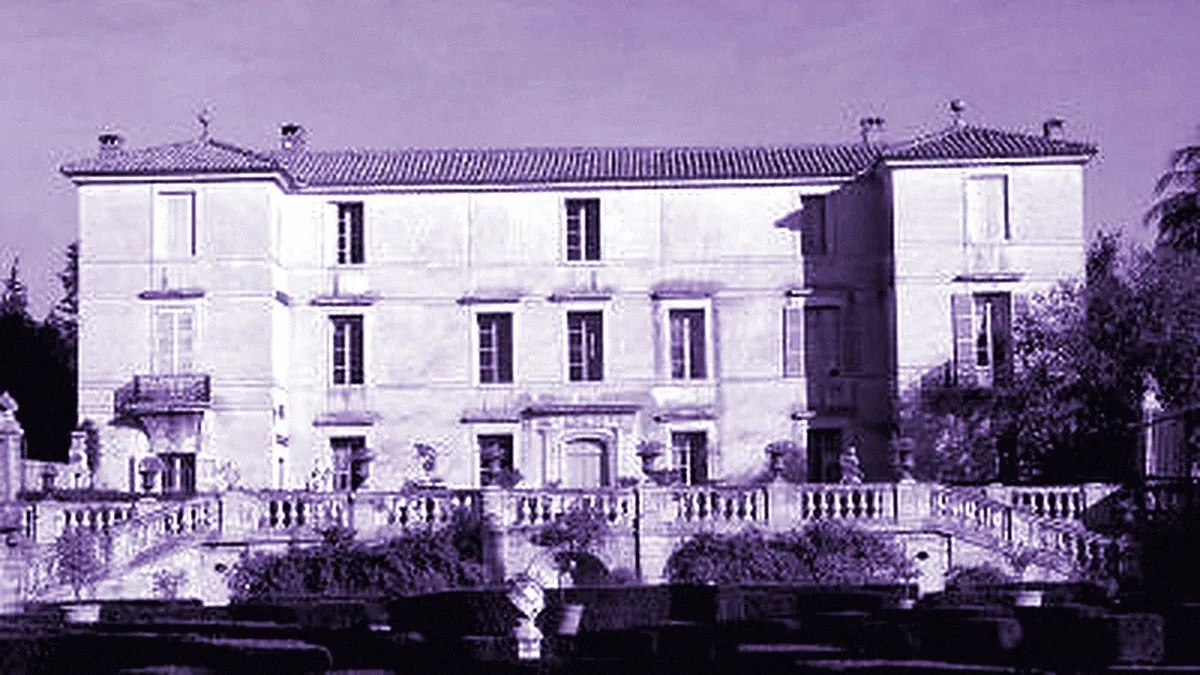
Château de Flaugergues
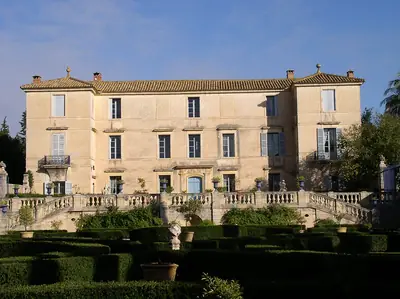
Château de Flaugergues is an elegant country residence built in 1696 and still surrounded by a working vineyard. The estate is listed as a historic monument and has the characteristic appearance of a Montpellier folie, with a central building, two wings, cut-stone façades, and a design recalling a seventeenth-century Italian villa.
Its formal French-style garden contains 10,000 boxwood shrubs and two statues created in 1728 by Jean-Louis Guyon: La Paix, or Peace, and L’Abondance, or Abundance. Beyond the garden lies a three-hectare English-style park.
Château de la Mogère
Near the modern Odysseum district, Château de la Mogère is another Montpellier folie. Built in 1715, it was designed by architect Jean Giral after Fulcran Limouzin purchased the grounds in 1706. The château has been protected as a historic monument since 1945.
Its rooms retain an eighteenth-century character, with antique furniture and family portraits spanning three centuries, including paintings by Jean Jouvenet, Hyacinthe Rigaud, and Jacques-Louis David. The gardens combine formal and English styles, with a large fountain assembled from thousands of small seashells.
St Croix Church of Celleneuve
In Celleneuve, the Church of Sainte-Croix is one of Montpellier’s oldest churches. The Romanesque building dates from the twelfth and fourteenth centuries and is listed as a historic monument.
It has survived the Hundred Years’ War, the Wars of Religion, and the French Revolution. Today, it is the only Romanesque church in Montpellier that remains open for worship.
Explore Montpellier with a Self-Guided Audio Tour
For a Montpellier self-guided walking tour, download Neywo and explore at your own pace. The app has four walking tours and one bike route in the city, covering 51 narrated stops in total. Narration is available in 11 languages, and each story plays as you reach the place: no group and no schedule.
The four walks are:
- The Egg, the Graces and the Fabre: Montpellier’s Showpiece Squares — 2.87 km, 108 minutes, 11 stops.
- Ramparts, Cathedral and the World’s Oldest Medical School — 2.32 km, 109 minutes, 11 stops.
- The Sun King’s Terrace: Peyrou and the Water Tower — 1.27 km, 62 minutes, 9 stops.
- Antigone: A Greek Dream in Concrete — 1.81 km, 71 minutes, 10 stops.
There is also one bike route:
- From the Egg to Antigone on Two Wheels — 4.1 km, 20 minutes, 6 stops.
Download Neywo’s free Montpellier audio guide and let the city’s history unfold as you reach each place. After exploring Montpellier, continue discovering the region with Sète, Nîmes, or Narbonne.
Places with an audio guide in Montpellier
8 places in Montpellier with a Neywo audio guide. Each one starts telling its story as you reach it.
Self-guided tours in Montpellier
5 tours in Montpellier, free in the Neywo app. Each stop tells its story as you reach it.
- Bike ride
From the Egg to Antigone on Two Wheels
Leave the Place de la Comédie and the Three Graces fountain and follow Montpellier's cycle lanes east past the photography pavilion into Ricardo Bofill's Antigone. Roll through the Golden Number plaza and Place Zeus to the Olympic pool, and finish beneath the Hôtel de Région above the Lez. About 4 km, almost flat.
Fontaine des Trois Grâces · Popular Pavilion · Place of the Golden Number · Place Zeus · Antigone Olympic Pool · Regional Council of Languedoc-Roussillon
Open this tour: From the Egg to Antigone on Two Wheels - Walk
The Egg, the Graces and the Fabre: Montpellier's Showpiece Squares
Begin on the oval Place de la Comédie, nicknamed the Egg, beside the Three Graces fountain. Stroll the Esplanade past the photography pavilion to the 17th-century Citadel, then to the pink marble Corum and its opera house. Step into the Musée Fabre, the opulent Sabatier d'Espeyran mansion and the Languedoc Museum before ending at the baroque basilica that carries the city's medieval name.
Comedy Square · Fontaine des Trois Grâces · Esplanade Charles de Gaulle · Popular Pavilion · Citadel of Montpellier · Le Corum …
Open this tour: The Egg, the Graces and the Fabre: Montpellier's Showpiece Squares - Walk
Ramparts, Cathedral and the World's Oldest Medical School
Follow the medieval heart of Montpellier from the Tour de la Babotte, a rampart tower that once served as an observatory, through a neo-Gothic church and a lively plane-tree square. Pass a surviving city gate and a convent turned prison to the oldest square in town. Then reach the fortress-like cathedral with its two giant porch pillars, the thirteenth-century Tour des Pins and the faculty where Nostradamus and Rabelais once studied.
Tour de la Babotte · Church Saint-Roch of Montpellier · Place Jean-Jaurès · Saint-Mathieu Church of Montpellier · Convent of the Ursulines of Montpellier · Porte de la Blanquerie …
Open this tour: Ramparts, Cathedral and the World's Oldest Medical School - Walk
The Sun King's Terrace: Peyrou and the Water Tower
Walk from the soaring steeple of Sainte-Anne along Rue Foch to Montpellier's grandest set piece, the Promenade du Peyrou. Pass under Louis XIV's triumphal arch, meet his bronze statue, admire the neoclassical Water Tower at the end of the aqueduct, then wind down in France's oldest botanical garden.
Church St. Anne of Montpellier · Foch street · Palais de Justice de Montpellier · Gate of Peyrou · Equestrian statue of Louis XIV · Promenade of Peyrou …
Open this tour: The Sun King's Terrace: Peyrou and the Water Tower - Walk
Antigone: A Greek Dream in Concrete
Montpellier's most surprising district is Ricardo Bofill's Antigone, a modern city built with columns, pediments and golden-ratio squares. Walk its one-kilometre axis from the Polygone mall and the Triangle tower through the Golden Number plaza, Millennium Square and Place de Thessalie, past the Dionysos statue and the Olympic pool, to the glass-and-concrete triumphal arch of the Hôtel de Région above the Lez.
Polygone · Tower The Triangle · Place of the Golden Number · Place of the Millennium · Place Zeus · Thessaly Square …
Open this tour: Antigone: A Greek Dream in Concrete
Walk Montpellier with Neywo
Neywo turns Montpellier into a self-guided audio tour. Stories arrive as you reach the place they belong to, and the route reshapes when you wander off it.


More in Occitania
Elsewhere in France
- Aix-en-ProvenceProvence-Alpes-Côte d'Azur
- AntibesProvence-Alpes-Côte d'Azur
- ArlesProvence-Alpes-Côte d'Azur
- AvignonProvence-Alpes-Côte d'Azur
- Bouc-Bel-AirProvence-Alpes-Côte d'Azur
- CannesProvence-Alpes-Côte d'Azur
- CassisProvence-Alpes-Côte d'Azur
- CavaillonProvence-Alpes-Côte d'Azur
- ÈzeProvence-Alpes-Côte d'Azur
- FréjusProvence-Alpes-Côte d'Azur
- MarseilleProvence-Alpes-Côte d'Azur
- MentonProvence-Alpes-Côte d'Azur