Collioure, France: Self-Guided Walking Tour
Things to Do in Collioure: A Self-Guided Walk Through Its Forts, Churches and Art
The best things to do in Collioure are concentrated around its historic port, fortified landmarks, churches and museums. This coastal town combines layers of military history with religious heritage and a strong connection to modern art, making it rewarding to explore on foot. Neywo offers a free audio guide for Collioure with 9 narrated places, available in 11 languages.
Collioure is in Occitania, in southern France. Its monuments reveal how the town developed from a medieval royal residence and maritime settlement into a fortified port and an artistic destination.
What to See in Collioure
Château Royal de Collioure
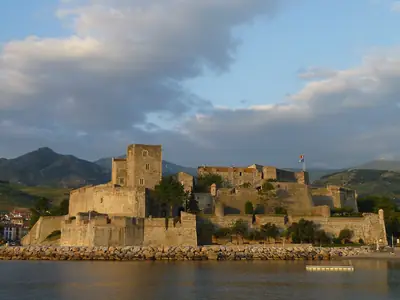
The Château Royal de Collioure stands at the heart of the town’s port and is one of its defining landmarks. The present complex developed over seven centuries, bringing together a medieval royal residence and a later citadel.
The castle was built on the site of a fortified village dating from the seventh century, while its first recorded mention dates from the beginning of the thirteenth century. From the late thirteenth century to the seventeenth century, the buildings were repeatedly modified and incorporated into a larger defensive complex. In the seventeenth century, Vauban extensively reshaped the fortress to meet new military needs.
The result is not a single-period monument but a layered site whose changing architecture reflects Collioure’s transformation from royal home to military stronghold. The expansion of the fortifications also pushed the town’s homes towards the two coves on either side of the castle.
Église Notre-Dame-des-Anges de Collioure
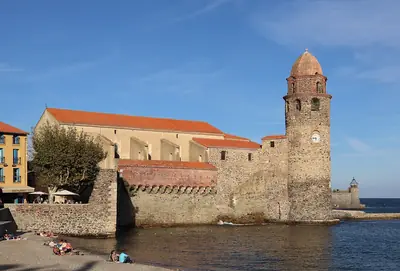
At the edge of the old town and the Port d’Amunt, the Église Notre-Dame-des-Anges de Collioure stands beside the sea. Built between 1684 and 1691, it is particularly recognisable for its unusual bell tower.
The tower was originally a beacon tower marking the position of Collioure’s port. Surrounded by the sea on three sides, it signalled by smoke during the day and by fires at night before being reused as the church’s bell tower. The building therefore preserves a visible connection with the town’s maritime past.
Chapelle Saint-Vincent de Collioure
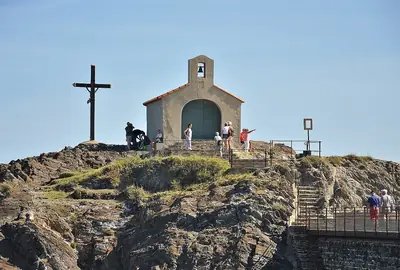
The Chapelle Saint-Vincent occupies a rocky outcrop near the parish church of Santa Maria dels Àngels, at the northeastern edge of the old town. The rock was once an islet and was later joined to the mainland.
Dedicated to Saint Vincent of Collioure, the small chapel adds another religious landmark to the shoreline and is notable for its setting as much as for its size.
Couvent des dominicains de Collioure
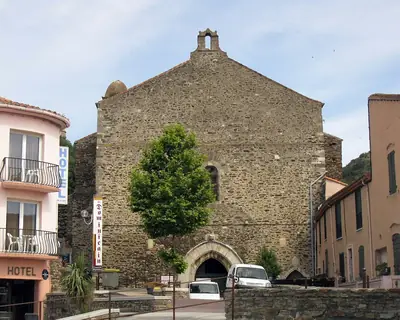
The former Dominican convent is part of Collioure’s religious heritage. Its church, Sant Domènec de Cotlliure—also known as Sant Domingo—stands at the eastern edge of the Raval district, in the Port d’Avall area.
The site offers a glimpse into the town’s Dominican past and extends the historic centre beyond the better-known monuments around the main port.
Modern Art Museum of Collioure
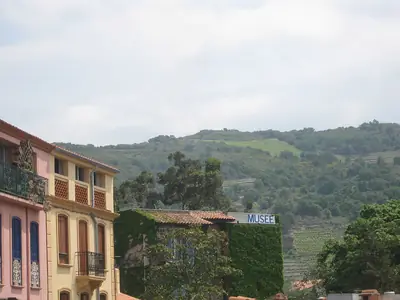
The Modern Art Museum of Collioure, also called the Jean Peské Municipal Museum, grew from the enthusiasm of Jean Peské, a painter of Russian and Polish origin who was drawn to the town’s artistic appeal.
In the early 1930s, Peské persuaded the municipality to let him open a room in the town hall. He assembled paintings, drawings and lithographs requested from artist friends, creating an initial collection of 190 works. That beginning developed into a collection of almost 1,400 pieces of modern and contemporary art.
The original collection included artists such as Louis Valtat, Georges d’Espagnat and Yves Brayer. The museum was taken over by the municipality of the Pyrénées-Orientales in 1985 and was managed jointly with the Modern Art Museum of Céret until 2019. Its story reflects Collioure’s lasting role as a place of artistic creation and exhibition.
Fort Saint-Elme
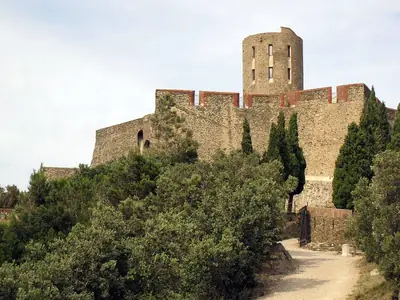
Fort Saint-Elme rises above Collioure and offers a broad panorama across the surrounding region. The French military fort was built between 1538 and 1552 under Charles V, but its history reaches further back: it developed from a watchtower established by the Moors in the eighth century.
Its terrace is one of the site’s highlights, combining the fort’s military history with an expansive landscape view. Fort Saint-Elme also helps explain the defensive organisation of Collioure, alongside the other fortifications positioned around the town and port.
Fort Dugommier
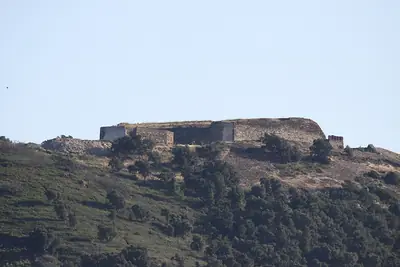
South of Collioure and southwest of Fort Saint-Elme, Fort Dugommier once formed part of the town’s defensive network. Its position allowed it to work with Fort Saint-Elme to protect the castle and port.
The fort is now abandoned. The buildings that once stood inside it have disappeared, leaving the perimeter walls as the clearest surviving reminder of its former military role.
Temple protestant
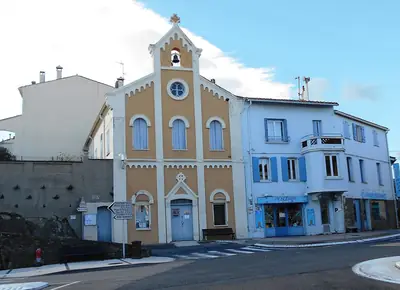
The Protestant Temple on Rue du Temple serves Collioure’s Protestant community and is also known as the Église réformée de France. It belongs to the United Protestant Church of France, created in 2012 through the union of the Lutheran and Reformed traditions.
The temple adds a further layer to the town’s religious history, alongside its Catholic churches, chapel and former Dominican convent.
Santa Maria del Castell dels Templers
Within the Royal Castle are the remains of Santa Maria del Castell dels Templers, also known as Santa Maria d’Orla. The church was once the chapel of the now-vanished Castle of Orla, which had been given to the Knights Templar.
Its remains were later enclosed within the Royal Castle during Vauban’s expansion. Visiting the castle therefore also means encountering traces of a building that disappeared long ago, incorporated into the larger fortified structure.
A Collioure Self-Guided Walking Tour
Neywo’s walking tour, “Collioure: Castle, Beacon Tower and Painters’ Port,” connects the town’s main historic and artistic sites. The route includes the Protestant Temple, Château Royal de Collioure, Église Notre-Dame-des-Anges, Chapelle Saint-Vincent, former Dominican convent, Modern Art Museum, Fort Saint-Elme and Fort Dugommier.
It covers 3.58 km, takes 107 minutes and has 8 narrated stops. This makes it a practical way to discover what to see in Collioure while following the town’s monuments in a clear sequence.
Download Neywo to Explore Collioure
Download Neywo and explore Collioure with a free audio guide that brings together 9 narrated places. The app offers 1 walking tour: a 3.58 km route lasting 107 minutes, with 8 narrated stops.
Each story plays as you reach the place, at your own pace. There is no group and no schedule, so you can explore independently while the app explains the history of Collioure’s castles, churches, fortifications and art.
Places with an audio guide in Collioure
8 places in Collioure with a Neywo audio guide. Each one starts telling its story as you reach it.
Self-guided tours in Collioure
1 tour in Collioure, free in the Neywo app. Each stop tells its story as you reach it.
- Walk
Collioure: Castle, Beacon Tower and Painters' Port
Collioure is the Catalan fishing port that drew Matisse and the Fauves. Walk from the Rue du Temple to the royal castle on the water, circle the old beacon tower that became a church belfry, and climb to the Vauban-era forts on the hills for views over the Côte Vermeille.
Temple protestant · Château Royal de Collioure · Église Notre-Dame-des-Anges de Collioure · Chapelle Saint-Vincent de Collioure · Couvent des dominicains de Collioure · Modern Art Museum of Collioure …
Open this tour: Collioure: Castle, Beacon Tower and Painters' Port
Walk Collioure with Neywo
Neywo turns Collioure into a self-guided audio tour. Stories arrive as you reach the place they belong to, and the route reshapes when you wander off it.


More in Occitania
Elsewhere in France
- Aix-en-ProvenceProvence-Alpes-Côte d'Azur
- AntibesProvence-Alpes-Côte d'Azur
- ArlesProvence-Alpes-Côte d'Azur
- AvignonProvence-Alpes-Côte d'Azur
- Bouc-Bel-AirProvence-Alpes-Côte d'Azur
- CannesProvence-Alpes-Côte d'Azur
- CassisProvence-Alpes-Côte d'Azur
- CavaillonProvence-Alpes-Côte d'Azur
- ÈzeProvence-Alpes-Côte d'Azur
- FréjusProvence-Alpes-Côte d'Azur
- MarseilleProvence-Alpes-Côte d'Azur
- MentonProvence-Alpes-Côte d'Azur