Visiting Sarlat-la-Canéda, France: Top Sights on Foot
Things to do in Sarlat-la-Canéda
Sarlat-la-Canéda is a historic town in the Nouvelle‑Aquitaine region of France, renowned for its exceptionally preserved medieval and Renaissance architecture set among the limestone valleys of the Dordogne. Visitors come to wander its honey‑coloured stone streets, explore landmarks such as the Saint‑Sacerdos Cathedral and the former Sainte‑Marie church turned market, and enjoy the lively weekly markets that showcase Périgord specialties. Neywo offers a free audio guide for Sarlat-la-Canéda with 19 narrated places to enrich your self‑guided walk.
Explore the town’s highlights
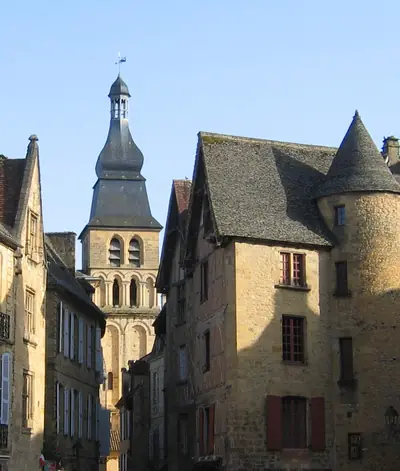
Sarlat Cathedral
The Cathedral of Saint‑Sacerdos traces its origins to 1317, when the Diocese of Sarlat was created and the former Benedictine abbey church became the cathedral. Its tower is Romanesque, dating from the twelfth century, with later additions from the seventeenth and eighteenth centuries. The church itself is Gothic, displaying a late‑Gothic character, and is dedicated to Saint Sacerdos of Limoges; his relics disappeared during the Wars of Religion. The building has been listed as a historic monument since 1840.
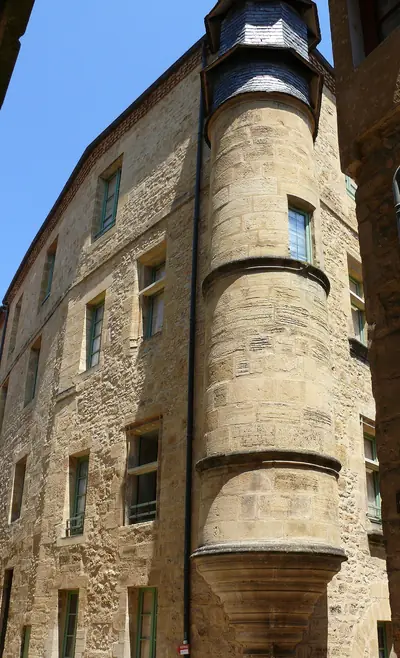
Couvent Sainte-Claire
Situated at the corner of Rue Jean‑Jacques‑Rousseau and Rue de La‑Boétie, the Couvent Sainte‑Claire (also known as the Sainte‑Claire Convent) is a modest religious complex that forms part of the town’s historic fabric.
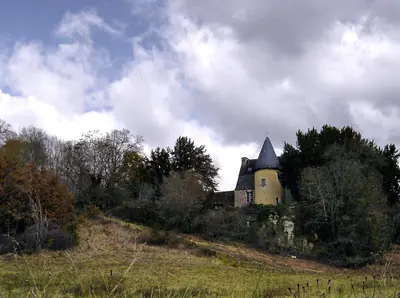
Château de Campagnac
About four kilometres northwest of Sarlat‑la‑Canéda lies the Château de Campagnac. Constructed over several periods from the fourteenth century through the sixteenth and into the nineteenth century, it was linked to the parish of Saint‑Martin in the Diocese of Sarlat. The name Campagnac‑l’Évêque was used from 1657 until 1792, when the parish was attached to the commune of Sarlat.
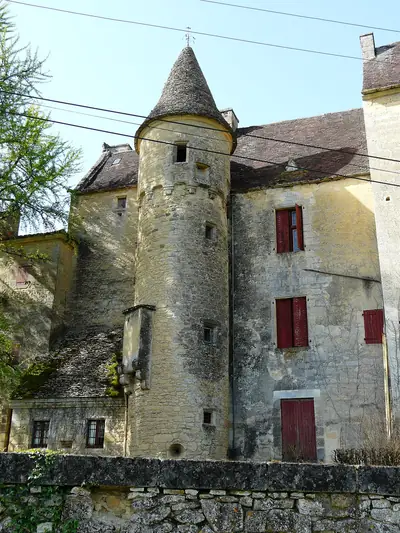
Château de la Boétie
A short distance further on, the Château de La Boétie stands as a fortified house near the Vitrac road (D46). It is located within the commune of Sarlat‑la‑Canéda in the Dordogne department.
Ancien évêché
The Ancien Évêché, also called the Ancien Hôtel de ville, is a former rectory that has served various functions over time—including as a city hall, a market, and a theater—before becoming one of the notable buildings to notice in Sarlat.
Église Sainte-Marie (Sarlat)
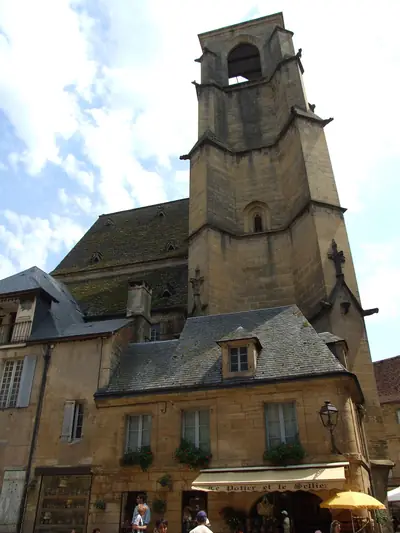
Begun in 1368 and consecrated in 1507, this former Gothic church was confiscated during the French Revolution in 1794 and subsequently used for purposes ranging from a bakery to a post office. It was protected as a historic monument in 1905 and later transformed into a covered market by architect Jean Nouvel. The market occupies four hundred square metres; its entrance features two metal doors that rise fifteen metres high and weigh eleven tonnes each, and a panoramic lift was installed in the former bell tower.
Château de Temniac
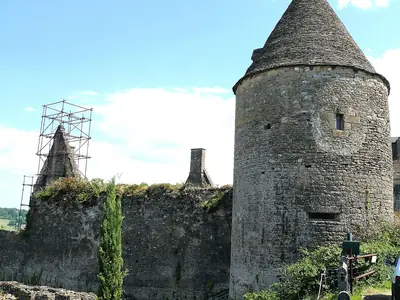
The ruins of the Château de Temniac (also known as Temniac Castle) lie in Sarlat‑la‑Canéda, Nouvelle‑Aquitaine. Nearby, the Église Notre‑Dame de la Nativité de Temniac—a pilgrimage church—has been classified as a Monument historique since 1920.
Église de La Canéda
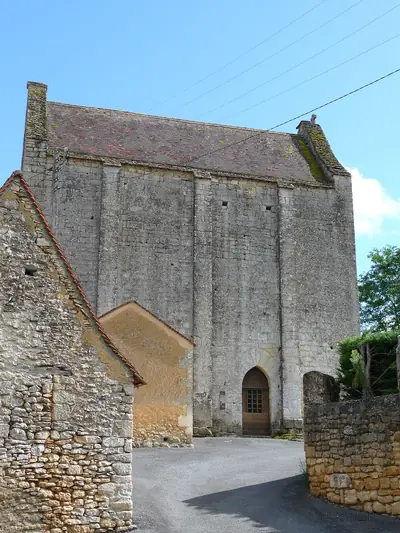
A short walk from the town centre brings you to the Église de La Canéda, also known as the Church of Saint John the Baptist of La Canéda, located in the Dordogne region of France.
Europe des arts
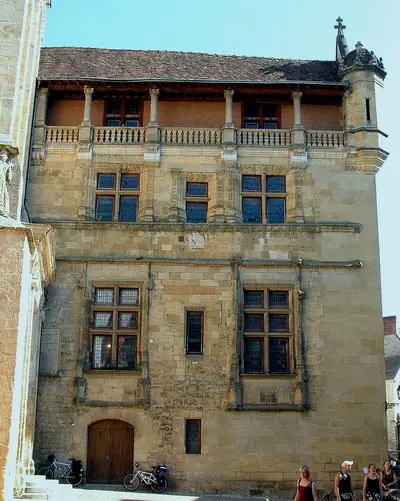
The Hôtel de Vienne (also referred to as the Hôtel de Maleville or Hôtel de Brons) is a town palace formed from three separate structures that were joined in the mid‑sixteenth century. It later belonged to the De Maleville family; its central section is narrow and rises high above the entrance, with medallions above the gateway depicting King Henry IV and a woman’s portrait. The right‑hand façade ends in a gable facing Place de la Liberté, and the building has been protected as a historic monument since 1889.
Croix de la Bouquerie
This monumental cross in the Dordogne stands as a simple yet striking symbol, its scale giving it a strong presence in the town’s streetscape.
Chapelle des Pénitents Bleus
Probably dating from the twelfth century and later remodeled in the sixteenth century, the Chapelle des Pénitents Bleus (also known as the Chapelle Saint‑Benoît) is a Catholic chapel that reflects several centuries of architectural change.
Maison de La Boétie
At number 10 on Place du Peyrou, the Maison de La Boétie is a historic private mansion closely associated with one of Sarlat’s most notable figures. It has been recognized as a historic monument, with protection recorded in 1889 and again in 1970.
Hôtel de Mirandol
Also known as the Hôtel de Tapinois de Beton and the Maison dite des Consuls, this building stands beside the Hôtel de Plamon, a medieval town palace. The Hôtel de Plamon’s façade shows construction phases: ground and first floor from the fourteenth century, second floor from the fifteenth century, with a square tower and monumental entrance gateway added in the seventeenth century. The palace is arranged as three wings forming a U around a central courtyard and belonged to the Plamon family, merchants who were later raised to the nobility. It has been protected as a historic monument since 1889.
Hôtel de ville de Sarlat‑la‑Canéda
The town hall has served as the city hall since 1900, though its origins reach back to the ninth century. The present building was erected between 1623 and 1625, and its façades and roofs have been protected as historic monuments since 1947.
Maison, 5 rue des Armes
This half‑timbered house at 5 Rue des Armes—known locally as the Maison à colombages—invites passersby to notice the traditional building character of the street.
Discover Sarlat with Neywo
Neywo provides one walking tour in Sarlat‑la‑Canéda: “Sarlat, the Medieval Jewel of the Périgord.” The route covers 1.35 km, takes about 98 minutes, and includes 12 narrated stops such as the town hall, Sainte‑Marie Church, Hôtel de Mirandol, the half‑timbered house on Rue des Armes, Couvent Sainte‑Claire, Hôtel de Vienne, Maison de La Boétie, Maison Anne de Dautrery, Ancien évêché, the cathedral, Chapelle des Pénitents Bleus, and Croix de la Bouquerie. As you walk, the app plays the story of each place exactly when you reach it, allowing you to explore at your own pace with no group and no schedule. Download Neywo for a free, self‑guided audio experience and see why so many travelers search for things to do in Sarlat‑la‑Canéda, what to see in Sarlat‑la‑Canéda, a Sarlat‑la‑Canéda self‑guided walking tour, a Sarlat‑la‑Canéda audio guide, or a free walking tour Sarlat‑la‑Canéda.
Places with an audio guide in Sarlat-la-Canéda
8 places in Sarlat-la-Canéda with a Neywo audio guide. Each one starts telling its story as you reach it.
Self-guided tours in Sarlat-la-Canéda
1 tour in Sarlat-la-Canéda, free in the Neywo app. Each stop tells its story as you reach it.
- Walk
Sarlat, the Medieval Jewel of the Périgord
Lose yourself in the golden-stone lanes of Sarlat, one of France's best-preserved medieval towns. You pass a Gothic church turned covered market by Jean Nouvel, the town palaces of the Plamon and Maleville families, the birthplace of the philosopher La Boétie and the cathedral of Saint-Sacerdos.
Hôtel de ville de Sarlat-la-Canéda · Église Sainte-Marie (Sarlat) · Hôtel de Mirandol · Maison, 5 rue des Armes, Sarlat-la-Canéda · Couvent Sainte-Claire · Hôtel de Vienne …
Open this tour: Sarlat, the Medieval Jewel of the Périgord
Walk Sarlat-la-Canéda with Neywo
Neywo turns Sarlat-la-Canéda into a self-guided audio tour. Stories arrive as you reach the place they belong to, and the route reshapes when you wander off it.

