Carcassonne, France: Self-Guided Walking Tour
Things to do in Carcassonne
Carcassonne is a hill‑top fortified city in the Occitania region of southern France, famous for its double‑walled medieval citadel and the lively bastide that lies across the Aude River. Visitors come to walk its ancient ramparts, explore centuries‑old churches and wells, and enjoy the relaxed atmosphere of a place where history is woven into everyday streets. Neywo provides a free audio guide for Carcassonne with 54 narrated places to help you discover the city at your own pace.
Key sights in Carcassonne
Cité de Carcassonne
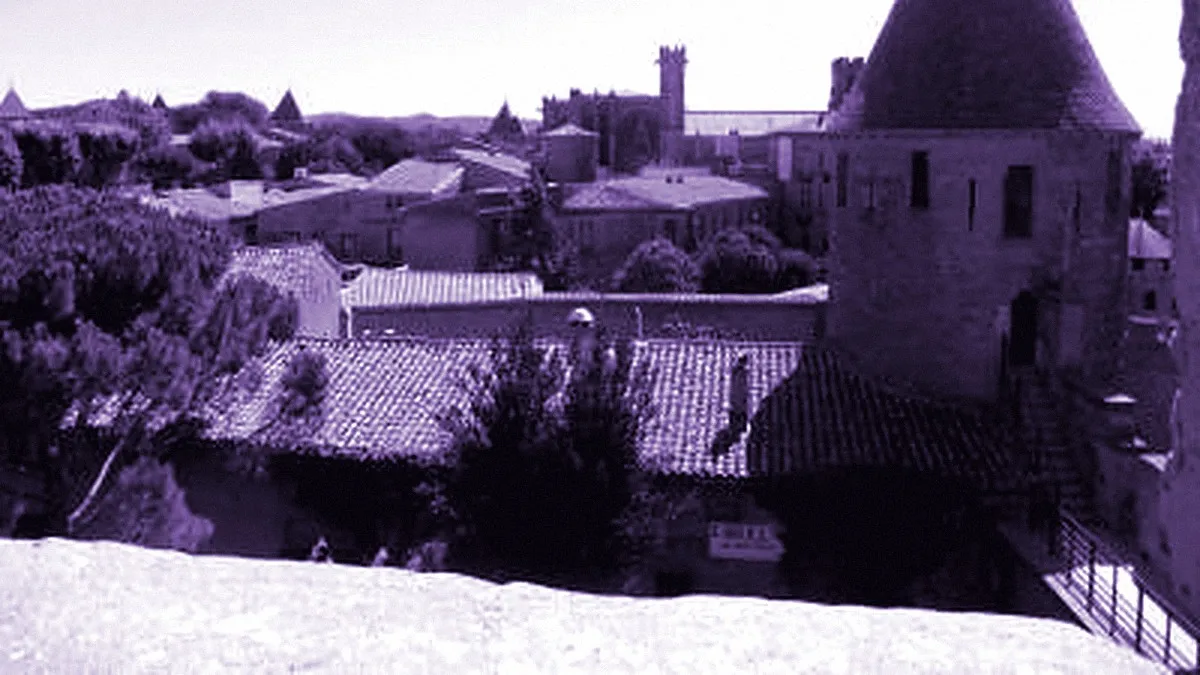
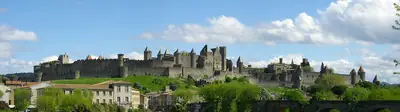
The citadel dominates the skyline with two concentric walls stretching nearly three kilometres and punctuated by fifty‑two towers. Inside the enclosure lie the Château Comtal and the Basilica of Saint‑Nazaire. The site’s story begins as a Celtic Iron Age oppidum, became a Roman town in the first century BCE, and later hosted Visigoths, Umayyads and Crusaders. It served as the seat of the counts and viscounts of Carcassonne and a royal military headquarters before falling into disrepair; restoration started in 1853 under the architect Eugène Viollet‑le‑Duc and the citadel was inscribed as a UNESCO World Heritage Site in 1997.
Carcassonne Cathedral
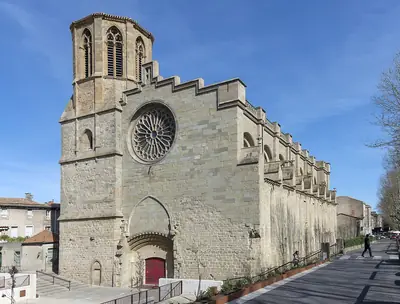
Located in the bastide Saint‑Louis, the Cathedral of Saint‑Michael became the seat of the Diocese of Carcassonne and Narbonne in 1803. Its origins date to the thirteenth century as a parish church dedicated to Saint Michael; after suffering damage in the Hundred Years’ War it was rebuilt as a fortified church. The nave extends over eight bays with side chapels, while a high ceiling is pierced by small round windows near the top of the vault. Stained glass bathes the interior in a soft glow, and the side aisles are supported by alternating round and square columns.
Basilica of St. Nazaire and St. Celse
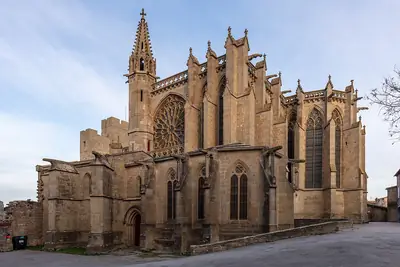
One of the citadel’s most important landmarks, this Roman Catholic church blends Romanesque and Gothic elements. The nave, the oldest part of the building, is Romanesque, while the transept and choir are Gothic. The western wall has a fortress‑like appearance. An original church stood here in the sixth century under the Visigothic king Theodoric the Great; a Carolingian cathedral was destroyed in the twelfth century and replaced by a thirteenth‑century Gothic reconstruction. The basilica became a historical monument in 1840, a minor basilica in 1898 and is also a national monument.
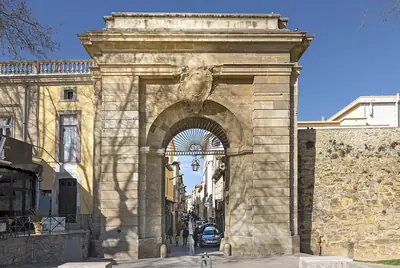
Portail des Jacobins
Also known as the Saint Louis Gate, this monumental gate was one of four openings made in the city walls between 1355 and 1359. Rebuilt in 1779, it is the sole remaining original gate that leads from the lower town into the medieval city. The reconstruction removed the royal badges and shields that once adorned the structure.
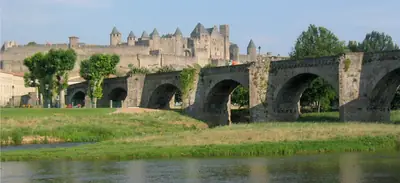
Pont‑Vieux (Old Bridge)
The stone Pont‑Vieux replaced an earlier wooden crossing farther upstream and was completed in 1320. Its twelve arches vary in width from about thirty‑three to forty‑six feet, reflecting the incremental nature of its construction. The bridge has changed little since the fourteenth century; two arches collapsed in 1436 and were repaired, further modifications occurred in 1559, and the eastern end was rehabilitated in 1999. The bridge measures roughly seven hundred and thirty‑nine feet in length.
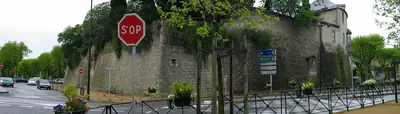
Bastion de Montmorency
Situated near the Old Bridge, this bastion is a surviving element of the defensive ring that once protected the lower city. It dates from the Wars of Religion in the late sixteenth century and formed part of the fortifications guarding the Bastide Saint‑Louis. The bastion displays a lug‑type design and may have contained a countermine gallery to detect underground attacks. Traces of foliage remain visible on the frieze, and pedimented niches appear on its southern and eastern faces.
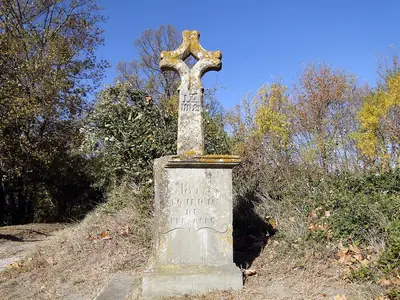
Croix du Pont‑Rouge
This monumental cross stands in the Aude region, marking a point of reflection for visitors exploring the outskirts of the city.
La Grand Puit
Known in English as the Grand Well, this is said to be the oldest and most mysterious of Carcassonne’s twenty‑two wells. Its rim dates to the fourteenth century, while the columns and fittings were added during the Renaissance. Legend claims that the Visigoths hid King Solomon’s treasure here to keep it from Attila, though no treasure has ever been found. The well reaches a depth of about one hundred and thirty‑one feet and its opening measures thirteen feet across.
Château comtal de Carcassonne
The inner castle of the citadel, also called the Château Comtal or Musée du Château, sits at the heart of the fortified town. A separate Inquisition Museum occupies a seventeenth‑century building on Saint‑Jean Street, tracing the tribunal’s activities from 1234, when Dominican brothers began campaigns against alleged heretics, through the execution of the last Cathar leader, Guilhem Bélibaste, in 1321. Displays include instruments of interrogation and punishment.
Maison Cotte
This modest house offers a glimpse into the residential architecture that lines Carcassonne’s streets, illustrating everyday life within the historic walls.
Water supply basin
The former water tower, known as the Ancien bassin de distribution des eaux, was built to distribute water across the town and now stands as a reminder of the city’s infrastructural past.
Notre‑Dame‑de‑Santé Chapel
Located at the entrance to the Pont‑Vieux, this chapel has stood on the site since around 1500, replacing an earlier structure from 1397 that served pilgrims on the Way of Saint James. Local benefactors funded its enlargement: Pierre Jauffre donated money in 1497, and Jean de Saix contributed in 1527 to create a hospital for plague victims. The exterior features a balustrade decorated with gargoyles and a pointed portal that still shows traces of Jean de Saix’s influence. Inside, the vaulted space is patterned with lierne and trefoil designs, and the polygonal apse is lit by narrow lancet windows that give the interior a gentle, almost ethereal glow. Later additions include a sacristy rising above the Aude River and extensions toward the riverbank.
Palais de la Micheline
This building contributes to the varied urban fabric of Carcassonne, reflecting the city’s architectural evolution over the centuries.
Croix de Montlegun
Another monumental cross situated in the Aude department, it marks a point of interest for those exploring the surrounding countryside.
Le Musée de l’École
Housed in the former city community school, this museum presents a collection of French primary‑education material gathered by Francis Loubes starting in 1980. It now occupies five rooms on Plo Street and has been linked to the Musée des Beaux-Arts de Carcassonne since 2009. Visitors can view teaching aids from 1880 to 1960, see mannequins dressed as period pupils, and try writing with an old quill pen or the sergeant‑major metal pen—though caution is advised with the purple ink.
Explore Carcassonne with Neywo
Neywo’s free audio guide lets you discover Carcassonne on your own terms. The app offers three walking tours and one bus route:
- Inside the Cité: Two Walls, a Count’s Castle and a Treasure Well – 0.94 km, about 75 minutes, 7 stops
- Over the Old Bridge: From the Bastide to the Medieval Citadel – 1.43 km, about 58 minutes, 6 stops
- The Bastide Saint-Louis: Gates, Fountains and Gothic Towers – 1.82 km, about 96 minutes, 11 stops
- Bus 3: From the Lower Town to the Medieval Cité – 2.4 km, about 10 minutes, 5 stops
Each narrated story plays automatically as you reach a site, allowing you to move at your own pace without a group or a fixed schedule. The guide is available in eleven languages, so you can choose the one that suits you best.
Ready to experience Carcassonne’s layers of history? Download Neywo, start a tour, and let the city reveal its stories as you walk.
Places with an audio guide in Carcassonne
8 places in Carcassonne with a Neywo audio guide. Each one starts telling its story as you reach it.
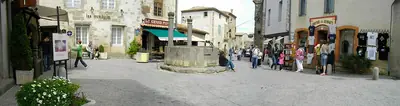
Self-guided tours in Carcassonne
4 tours in Carcassonne, free in the Neywo app. Each stop tells its story as you reach it.
- Bus ride
Bus 3: From the Lower Town to the Medieval Cité
Ride the RTCA city bus 3 from the Bastide Saint-Louis, past the last medieval gate and the Montmorency bastion, to Square Gambetta and up to the walls of the Cité.
Portail des Jacobins · Bastion de Montmorency · Square Gambetta · Palais de la Micheline · Monument à Joseph Poux
Open this tour: Bus 3: From the Lower Town to the Medieval Cité - Walk
Inside the Cité: Two Walls, a Count's Castle and a Treasure Well
Step through the gates of Europe's best-preserved medieval fortress, a World Heritage site with fifty-two towers and a double ring of walls. Visit the Count's Castle, the well said to hide King Solomon's treasure, the Gothic basilica with its 13th-century glass and the open-air theatre built on a ruined cloister.
Cité de Carcassonne · La Grand Puit · Château comtal de Carcassonne · Église Saint-Gimer de Carcassonne · Théâtre Jean-Deschamps · Basilica of St. Nazaire and St. Celse …
Open this tour: Inside the Cité: Two Walls, a Count's Castle and a Treasure Well - Walk
Over the Old Bridge: From the Bastide to the Medieval Citadel
Cross the River Aude the way medieval pilgrims and rival townsfolk did. Start at the tree-lined Square Gambetta, pass the surviving Montmorency bastion and the pilgrim chapel at the foot of the 14th-century Pont-Vieux, then climb to the abbey church below the walls of the Cité.
Square Gambetta · Le Dôme · Bastion de Montmorency · Notre-Dame-de-Santé · Pont-Vieux (Old Bridge) · Église Notre-Dame-de-l'Abbaye de Carcassonne
Open this tour: Over the Old Bridge: From the Bastide to the Medieval Citadel - Walk
The Bastide Saint-Louis: Gates, Fountains and Gothic Towers
Explore the lower town laid out in the 13th century on a grid beside the Aude. Walk from the fortified cathedral through the last surviving gate of the old walls to the Art Deco theatre, Carnot Square with its Neptune fountain, and the churches of Saint-Vincent and the Carmelites.
Chapelle des Jésuites · Carcassonne Cathedral · Portail des Jacobins · Théâtre Jean-Alary · Hôtel de Rolland · Musée des Beaux-Arts de Carcassonne …
Open this tour: The Bastide Saint-Louis: Gates, Fountains and Gothic Towers
Walk Carcassonne with Neywo
Neywo turns Carcassonne into a self-guided audio tour. Stories arrive as you reach the place they belong to, and the route reshapes when you wander off it.


More in Occitania
Elsewhere in France
- Aix-en-ProvenceProvence-Alpes-Côte d'Azur
- AntibesProvence-Alpes-Côte d'Azur
- ArlesProvence-Alpes-Côte d'Azur
- AvignonProvence-Alpes-Côte d'Azur
- Bouc-Bel-AirProvence-Alpes-Côte d'Azur
- CannesProvence-Alpes-Côte d'Azur
- CassisProvence-Alpes-Côte d'Azur
- CavaillonProvence-Alpes-Côte d'Azur
- ÈzeProvence-Alpes-Côte d'Azur
- FréjusProvence-Alpes-Côte d'Azur
- MarseilleProvence-Alpes-Côte d'Azur
- MentonProvence-Alpes-Côte d'Azur