Things to Do in Narbonne, France: Walking Guide
Things to Do in Narbonne: Roman Heritage, Historic Churches and Museums
Narbonne is a historic city in Occitania, in southern France, where Roman archaeological sites, medieval religious buildings and later cultural landmarks come together. The city is worth visiting for its cathedral, Roman remains, former archiepiscopal complex and museums, all set within a walkable historic centre. Neywo has a free audio guide for Narbonne with 35 narrated places.
What to See in Narbonne
Narbonne Cathedral
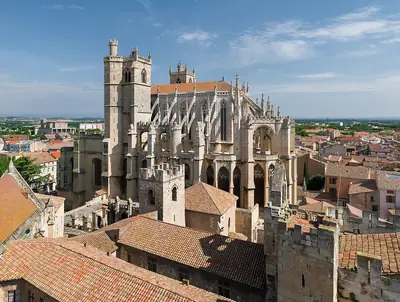
The Cathédrale Saint-Just-et-Saint-Pasteur is one of Narbonne’s most striking landmarks. Its choir rises to about 41 metres, making it the fourth-highest in France by this measure, although the cathedral was never completed beyond the choir.
Construction began in 1272, replacing earlier places of worship that had stood in the centre of Narbonne since the fourth century. The building belongs to the southern French Gothic tradition and was protected as a historic monument in 1840. Its cloister received the same protection in 1914.
The cathedral also has important religious distinctions: it became a minor basilica in 1886 and has been a co-cathedral since 2006.
The Archbishop’s Palace
The Palais des Archevêques forms an exceptional architectural ensemble on the Place de l’Hôtel de Ville. It brings together the Old Palace, the New Palace, the Madeleine and Saint-Marcel towers, and Narbonne Cathedral.
Several periods of architecture can be read across the complex, including Carolingian, Romanesque, Gothic and Renaissance elements. The Romanesque Old Palace stands beside the fourteenth-century Saint-Marcel Tower, while the Gothic New Palace lies behind the town hall. The Gil Aicelin Tower, built between 1290 and 1311 over the remains of the Roman wall, reaches 40 metres and was intended to express episcopal power.
The complex now houses the Narbonne Archaeological Museum in the Old Palace and the Narbonne Museum of Art and History in the New Palace. The town hall on the square was built between 1846 and 1852 by Eugène Viollet-le-Duc.
The Horreum
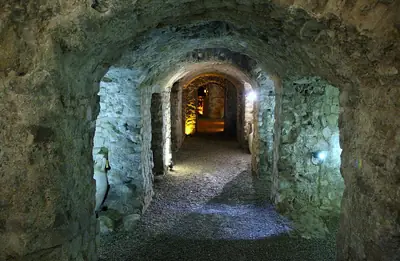
The Horreum, or Roman Horreum, is an underground Roman monument in the centre of Narbonne. Located about 100 metres north of the Archbishops’ Palace, it offers a direct connection with the city’s Roman past.
The site has been protected as a Historic Monument since 1960 and 1961. Its surviving spaces provide a distinctive archaeological stop beneath the modern city.
Narbo Via
Narbo Via is a museum devoted to Narbonne’s Roman archaeological collections. Opened on 19 May 2021, it presents the material remains of Roman Narbonne in a contemporary building designed by Foster + Partners.
For visitors interested in the origins of the city, Narbo Via complements the underground Horreum and the Roman remains scattered across Narbonne. Together, these sites show different sides of the city’s ancient history.
Clos de la Lombarde
The Vestiges archéologiques du Clos de la Lombarde are mostly Gallo-Roman remains discovered during archaeological excavations in Narbonne. The site is particularly notable for its exceptional collection of mosaics and wall paintings.
These features led to its classification as a historic monument in 2007. It is one of the city’s most revealing places for understanding the decoration and domestic life of the Gallo-Roman period.
Montlaurès
The Oppidum de Montlaurès lies a little outside Narbonne and preserves the remains of a settlement occupied from the pre-Roman era into the Middle Ages. The hill was a place of settlement, trade and defence, and excavations have uncovered ceramics, coins and other objects.
When the Romans founded Narbo Martius in 118 BC, Montlaurès did not immediately disappear. The two settlements continued to exist alongside one another, and the oppidum remained intensely occupied for almost 70 years before it was gradually abandoned.
Some writers have suggested that Montlaurès may have been the capital of the Élisyques, known in ancient sources as Narbo or Naro, and that the Roman settlement may have taken its name from it. This remains a suggestion rather than an established fact.
Basilique Saint-Paul de Narbonne
The Basilique Saint-Paul de Narbonne, also called the Basilique Saint-Paul-Serge, is a Catholic minor basilica and former collegiate church. Its history continues that of an earlier religious establishment already in existence at the beginning of the ninth century.
The church was probably founded during the period of Visigothic rule. After the Revolution, the former monastery and church became a secular collegiate church, leaving Narbonne with another important reminder of its long religious history.
Notre-Dame de Lamourguier
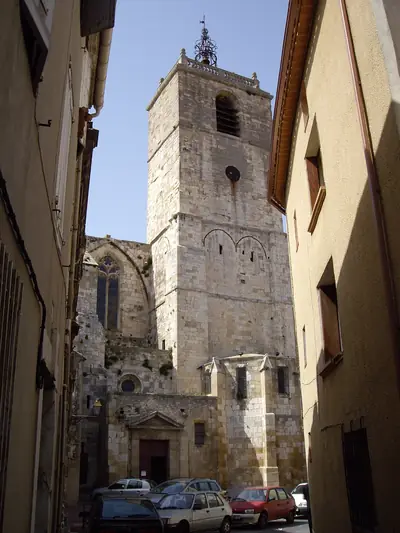
The former Église Notre-Dame de Lamourguier, also known as Notre-Dame de la Mourguier, was once the church of a priory in Narbonne. Today, it is the only surviving part of that priory.
Its changed role makes it an interesting stop when exploring the city’s historic centre: the building preserves a connection with Narbonne’s religious past while also reflecting the transformation of its historic institutions.
The Chapels and Historic Churches
Narbonne has several smaller religious landmarks that reward a slower walk through its streets.
The Chapelle des Pénitents blancs, also known as Notre-Dame de Grâces and the former Chapelle des Pénitents-Blancs, was formerly the church of the Augustinians. Located on Rue de Belfort, it has been protected as a historic monument since 1986.
The Église des Carmes and the Église des Jacobins de Narbonne add further historic churches to the city’s architectural landscape. The former Notre-Dame de Lamourguier, the Église des Carmes and the Jacobins church can all be included in a walk through Narbonne’s old streets and squares.
The Church of Saint Sebastian, associated with the Couvent des Carmélites de Narbonne, is dedicated to Saint Sebastian and belongs to the Diocese of Carcassonne and Narbonne. It was listed as a historic monument in 1913.
Maison Trenet
Maison Trenet is the birthplace of Charles Trenet. The house offers a cultural connection with the celebrated figure and with Narbonne’s modern identity, beyond the city’s Roman and medieval monuments.
Fontfroide Abbey
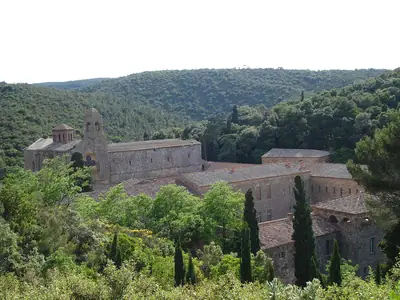
Near Narbonne, Fontfroide Abbey is one of the best-preserved Cistercian monastic ensembles from the twelfth and thirteenth centuries. Much of the medieval complex remains intact, including the twelfth-century church and the thirteenth-century cloister.
Fontfroide began in 1093 as a Benedictine abbey, founded by Aimery I, Viscount of Narbonne. It joined the Cistercian order between 1144 and 1145. Donations from Ermengarde of Narbonne and later gifts from Olivier de Termes helped provide the land and resources for further construction.
The abbey’s history also includes severe disruption. The Black Death reached Narbonne in 1348 and decimated almost the entire community. Fontfroide was dissolved during the French Revolution in 1791, restored by monks from Sénanque Abbey in 1858 and abandoned after its community went into exile in Spain in 1901.
Ernest Ferroul’s Monument
The monument commemorating Ernest Ferroul honours a figure connected with Narbonne and the winegrowers’ revolt of 1907. Ferroul was first elected mayor of Narbonne in 1891 and held the office again from 1903 until his death. He also represented the Aude as a deputy on two occasions, between 1888 and 1902.
Exploring Narbonne with a Self-Guided Audio Tour
A Narbonne self-guided walking tour with Neywo lets you explore the city independently. The app tells the story of each place as you reach it, at your own pace, with no group and no schedule.
Narbonne has three walking tours and one bus route:
- Narbo Martius: Romans, Archbishops and a Singer’s Birthplace — 2.56 km, 111 minutes and 11 narrated stops.
- Market Halls, Cordeliers and the Old Town Squares — 1.77 km, 84 minutes and 10 narrated stops.
- Roman Mosaics to Narbo Via — 4.71 km, 113 minutes and 8 narrated stops.
- Bus 1 Across Narbonne — 6.3 km, 27 minutes and 5 narrated stops.
The walks connect places such as Maison Trenet, the Basilique Saint-Paul, the Chapelle des Pénitents blancs, the Via Domitia, the Archbishop’s Palace, Narbonne Cathedral, the Horreum, Clos de la Lombarde and Narbo Via. The bus route adds another way to reach places across the city, including Maison Trenet and the Église Notre-Dame de Lamourguier.
Download Neywo and Explore Narbonne
Download Neywo for a free audio guide to Narbonne with 35 narrated places. Choose one of the three walking tours or the bus route, then follow the city at your own pace. Each story plays as you reach the place, with narration available in 11 languages, no group and no schedule.
Places with an audio guide in Narbonne
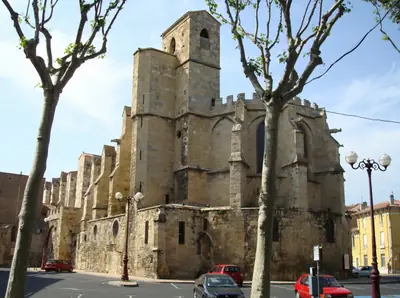
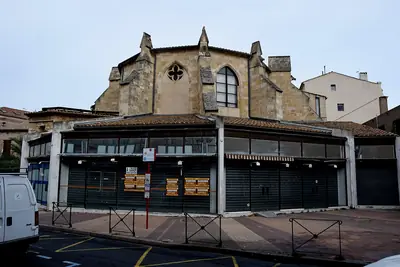
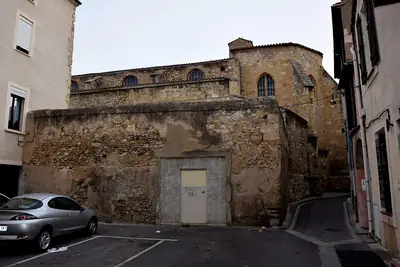
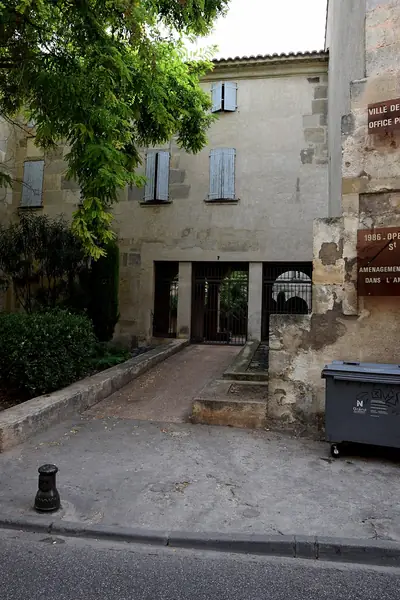
8 places in Narbonne with a Neywo audio guide. Each one starts telling its story as you reach it.
Self-guided tours in Narbonne
4 tours in Narbonne, free in the Neywo app. Each stop tells its story as you reach it.
- Bus ride
Bus 1 Across Narbonne
Take Citibus line 1, the main line of the network, from Bonne Source towards La Coupe. It passes Sainte-Thérèse, the Protestant temple, the Cordeliers, Notre-Dame de Lamourguier and Charles Trenet's birthplace, an easy ride through the town centre.
Église Sainte-Thérèse de Narbonne · Temple de Narbonne · Église et couvent des Cordeliers · Église Notre-Dame de Lamourguier · Maison Trenet
Open this tour: Bus 1 Across Narbonne - Walk
Narbo Martius: Romans, Archbishops and a Singer's Birthplace
Narbonne was the first Roman colony in Gaul and a power of the medieval Church. Walk from the quiet streets of the old town to the Archbishops' Palace with its anchor-marked tower, then to the unfinished Gothic cathedral and the underground Roman Horreum.
Église Saint-Bonaventure de Narbonne · Maison Trenet · Basilique Saint-Paul de Narbonne · 20 rue Marceau, Narbonne · Chapelle des Pénitents blancs de Narbonne · Via Domitia …
Open this tour: Narbo Martius: Romans, Archbishops and a Singer's Birthplace - Walk
Market Halls, Cordeliers and the Old Town Squares
A loop around the lively heart of Narbonne: the covered market, the former Jacobin and Lamourguier churches, then the squares and churches around Place de Verdun. Stop in the market for local produce before you start.
Église des Jacobins de Narbonne · Église Notre-Dame de Lamourguier · Place Émile Digeon · Les Halles de Narbonne · Église de la Major de Narbonne · Place de Verdun …
Open this tour: Market Halls, Cordeliers and the Old Town Squares - Walk
Roman Mosaics to Narbo Via
Leave the old town past La Major and Saint-Sébastien, then head east to the Gallo-Roman mosaics and wall paintings of the Clos de la Lombarde and the quiet churches of the newer quarters. End at Narbo Via, the Foster + Partners museum that brings Roman Narbonne's treasures together.
Église de la Major de Narbonne · Église Saint-Sébastien de Narbonne · Église et couvent des Cordeliers · Vestiges archéologiques du Clos de la Lombarde · Église Notre-Dame des Champs de Narbonne · Église Sainte-Thérèse de Narbonne …
Open this tour: Roman Mosaics to Narbo Via
Walk Narbonne with Neywo
Neywo turns Narbonne into a self-guided audio tour. Stories arrive as you reach the place they belong to, and the route reshapes when you wander off it.


More in Occitania
Elsewhere in France
- Aix-en-ProvenceProvence-Alpes-Côte d'Azur
- AntibesProvence-Alpes-Côte d'Azur
- ArlesProvence-Alpes-Côte d'Azur
- AvignonProvence-Alpes-Côte d'Azur
- Bouc-Bel-AirProvence-Alpes-Côte d'Azur
- CannesProvence-Alpes-Côte d'Azur
- CassisProvence-Alpes-Côte d'Azur
- CavaillonProvence-Alpes-Côte d'Azur
- ÈzeProvence-Alpes-Côte d'Azur
- FréjusProvence-Alpes-Côte d'Azur
- MarseilleProvence-Alpes-Côte d'Azur
- MentonProvence-Alpes-Côte d'Azur