Sète, France: Self-Guided Walking Tour
Things to do in Sète: museums, churches and Mediterranean views
Sète is a port city in southern France shaped by the sea, with a maritime museum, historic churches, military fortifications and museums devoted to two of its best-known cultural figures. Built around canals and overlooked by Mont Saint-Clair, it is worth visiting for the way its waterfront, cultural landmarks and Mediterranean landscape come together. Neywo offers a free audio guide for Sète with 20 narrated places.
What to see in Sète
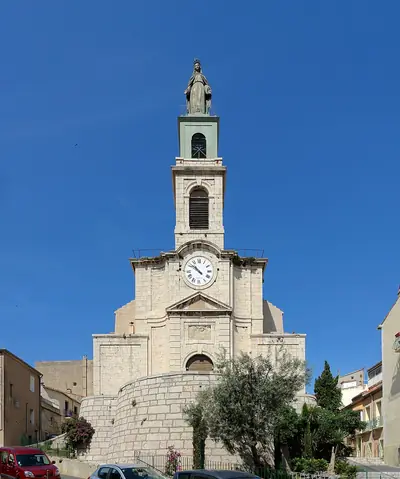
Église Saint-Louis
The Église Saint-Louis is the oldest and most important church in Sète. It stands in the heart of the Haut de Sète district and was built towards the end of the seventeenth century by the architect Augustin-Charles d’Aviler. Its name, “décanale”, refers to its role as the church of the dean, explaining its prominent place among the city’s religious buildings.
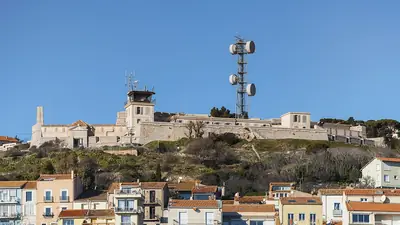
Fort Richelieu
Fort Richelieu is a military fortification on Sète’s coast. Together with the Redoute du Castellas, it recalls the city’s defensive past and the importance of protecting its harbour from threats at sea.
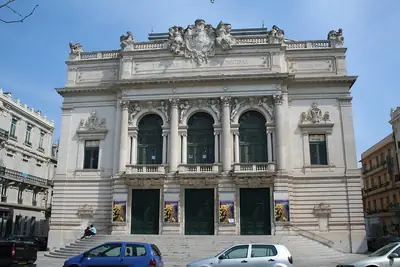
Théâtre municipal Molière
The Théâtre municipal Molière is a cultural landmark in the centre of Sète. It represents the tradition of the French municipal theatre, which became an important part of civic life and provided towns with a prominent setting for performances.
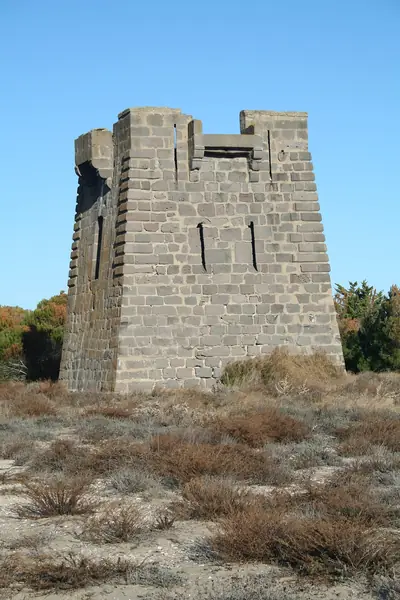
Redoute du Castellas
The Redoute du Castellas is a small historic fortification and a quiet reminder of Sète’s military history. Its coastal position evokes the role of defensive structures in watching over the Mediterranean and the town’s busy harbour.
Espace Georges Brassens
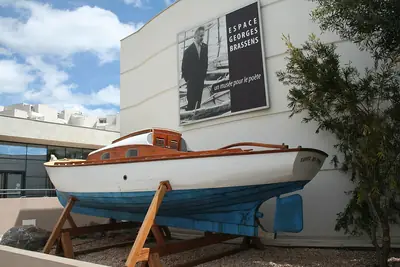
Sète was the birthplace of the French singer-songwriter Georges Brassens, and the Espace Georges Brassens is dedicated to his life and work. It is the city’s most visited museum, attracting around 50,000 visitors each year.
Musée de la Mer
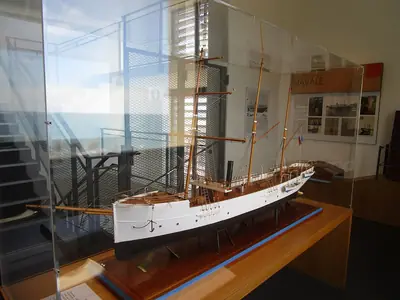
The Musée de la Mer explores Sète’s close relationship with the sea. The maritime museum stands on the waterfront, between the town’s marine cemetery and the open-air Théâtre de la Mer, making its setting part of the experience.
Musée Paul Valéry
The Musée Paul Valéry is dedicated to the French poet Paul Valéry. It is located on the slopes of Mont Saint-Clair and overlooks the Cimetière Marin, where Valéry is buried. Its position above the port connects the poet’s legacy with the landscape of Sète and the Mediterranean.
Musée International des Arts Modestes
Known locally as the MIAM, the Musée International des Arts Modestes celebrates everyday, playful and overlooked forms of art. Hervé Di Rosa and Bernard Belluc founded the museum in 2000 to create a space for what they called “modest art”. The result is a collection that feels familiar and accessible while remaining imaginative and unexpected.
Chapelle Notre-Dame-de-la-Salette
At the summit of Mont Saint-Clair, the Chapelle Notre-Dame-de-la-Salette is one of Sète’s distinctive landmarks. Its elevated position overlooks the town and makes it a natural stop when exploring the hill.
Cimetière Marin
The Cimetière Marin de Sète, also called the Saint-Charles cemetery, occupies a high position above the Gulf of Lion. From the cemetery, the Mediterranean stretches out towards the horizon, giving the site a strong connection with the sea that has shaped the lives and stories associated with Sète.
Other churches in Sète
Sète has several other religious landmarks worth including in a visit. The Église du Sacré-Cœur-de-Jésus, Église Saint-Joseph, Église Notre-Dame-Souveraine-du-Monde and Église Saint-Pierre each form part of the city’s architectural and religious heritage.
The Chapelle des Pénitents offers a smaller and quieter setting. Tucked away from Sète’s busier areas, it is a peaceful place for a brief pause. The Église Saint-Pierre, meanwhile, is the main church of the port town and has long served as both a place of worship and a recognizable feature of its skyline.
Explore Sète with a self-guided audio tour
A Sète self-guided walking tour with Neywo lets you discover the city without joining a group or following a fixed schedule. The app tells the story of each place as you reach it, at your own pace.
Sète has two walking tours and one bus route:
- Valéry’s Sea Cemetery and the Fort Facing the Mediterranean: a 2.59 km walk lasting 82 minutes, with 7 narrated stops. It includes the Môle Saint Louis Lighthouse, Fort Richelieu, Théâtre de la Mer, Musée de la Mer, Cimetière Marin, Musée Paul Valéry and Église Saint-Louis.
- Sète’s Singular Isle: Churches, Theatre and Modest Art: a 2.78 km walk lasting 78 minutes, with 7 narrated stops. The route includes the Chapelle des Pénitents, Église Saint-Joseph, the temple of the Église protestante unie de France, the MIAM, Église Saint-Pierre, Théâtre municipal Molière and Église du Sacré-Cœur-de-Jésus.
- Line 3 through Sète: From the Station to the Sea Museum: a 2.7 km bus route lasting 12 minutes, with 5 narrated stops, including Théâtre municipal Molière, Église Saint-Pierre, the MIAM, Chapelle des Pénitents and Musée de la Mer.
Neywo’s narration is available in 11 languages. Download the free Sète audio guide and explore with the story playing as you arrive at each place—no group and no schedule.
Sète is part of Occitania, a region with many other cities to explore, including Montpellier, before continuing through France.
Places with an audio guide in Sète
8 places in Sète with a Neywo audio guide. Each one starts telling its story as you reach it.
Self-guided tours in Sète
3 tours in Sète, free in the Neywo app. Each stop tells its story as you reach it.
- Bus ride
Line 3 through Sète: From the Station to the Sea Museum
Sète's frequent city bus 3 runs from the theatre and the Saint-Pierre church through the town centre past the modest-art museum and the penitents' chapel, ending near the Musée de la Mer by the sea. A cheap way to cross the island town.
Théâtre municipal Molière · Église Saint-Pierre de Sète · Musée international des arts modestes · Chapelle des pénitents de Sète · Musée de la Mer, Sète
Open this tour: Line 3 through Sète: From the Station to the Sea Museum - Walk
Valéry's Sea Cemetery and the Fort Facing the Mediterranean
Follow the Sète waterfront from the lighthouse at the harbour mouth to the forts and the slopes of Mont Saint-Clair. Visit the museum of the poet Paul Valéry, the sea cemetery he made famous, an open-air theatre built inside an old fort, and end at the town's oldest church.
Môle Saint Louis Lighthouse · Fort Richelieu · Théâtre de la Mer · Musée de la Mer, Sète · Cimetière Marin, Sète · Musée Paul Valéry …
Open this tour: Valéry's Sea Cemetery and the Fort Facing the Mediterranean - Walk
Sète's Singular Isle: Churches, Theatre and Modest Art
Wander the streets between the canals and the hill, linking the churches that shaped the port town with its most playful museum, the MIAM. Finish at the Molière theatre, the town's cultural heart.
Chapelle des pénitents de Sète · Église Saint-Joseph de Sète · Temple de l'Église protestante unie de France de Sète · Musée international des arts modestes · Église Saint-Pierre de Sète · Théâtre municipal Molière …
Open this tour: Sète's Singular Isle: Churches, Theatre and Modest Art
Walk Sète with Neywo
Neywo turns Sète into a self-guided audio tour. Stories arrive as you reach the place they belong to, and the route reshapes when you wander off it.


More in Occitania
Elsewhere in France
- Aix-en-ProvenceProvence-Alpes-Côte d'Azur
- AntibesProvence-Alpes-Côte d'Azur
- ArlesProvence-Alpes-Côte d'Azur
- AvignonProvence-Alpes-Côte d'Azur
- Bouc-Bel-AirProvence-Alpes-Côte d'Azur
- CannesProvence-Alpes-Côte d'Azur
- CassisProvence-Alpes-Côte d'Azur
- CavaillonProvence-Alpes-Côte d'Azur
- ÈzeProvence-Alpes-Côte d'Azur
- FréjusProvence-Alpes-Côte d'Azur
- MarseilleProvence-Alpes-Côte d'Azur
- MentonProvence-Alpes-Côte d'Azur