Visiting Meissen, Germany: Top Sights on Foot
Things to do in Meissen: a self-guided walk through Saxony’s porcelain town
Looking for things to do in Meissen? This historic town on the Elbe combines a late Gothic castle, churches, monasteries, museums and the story of European porcelain. Its compact old town and hilltop landmarks make Meissen especially rewarding to explore on foot.
Neywo has a free audio guide for Meissen with 21 narrated places, available in 11 languages. For more ideas across the region, see our guide to Saxony and discover other destinations in Germany.
What to see in Meissen
The best way to understand Meissen is to move between its old-town streets, religious buildings, museums and the Burgberg above the Elbe. These are some of the most important places to include in a visit.
Albrechtsburg
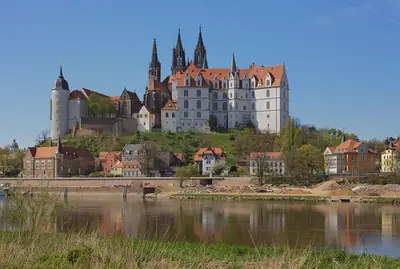
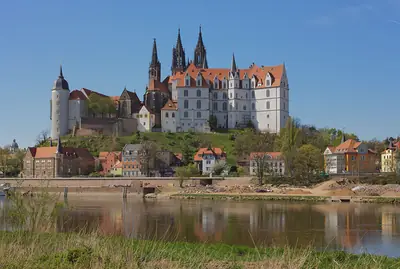
Albrechtsburg is one of Meissen’s defining landmarks. The Late Gothic castle stands on the Burgberg beside Meissen Cathedral and is regarded as Germany’s first palace building. The Wettin electors and dukes of Saxony commissioned it in 1471, and construction continued until about 1495 on the site of an older medieval castle.
The building was created as a residence for the ruling dynasty. Later, from 1710, it became the first production site of the Meissen porcelain manufactory, which operated there until 1863. Today, a permanent exhibition explores the changing history of the site, whose rooms were redesigned and decorated with historical paintings after 1864.
Meissen Cathedral Museum
Next to Albrechtsburg, the Meißen Cathedral Museum adds another layer to the hilltop complex. It is one of the narrated stops on the walking routes through the city and is a natural place to include when exploring the castle hill.
Meissen Manufactory
Meissen’s porcelain tradition began in the early eighteenth century. Porcelain was developed in 1708 at the command of Augustus the Strong, Elector of Saxony, and the Royal Polish and Electoral Saxon Porcelain Manufactory was founded in 1710. The earliest production took place at Albrechtsburg.
Since 1864, Meissen porcelain has been produced in a purpose-built manufactory in the town. Visitors can learn about its production in an immersive experience world and see the crossed swords in cobalt blue, the manufactory’s distinctive mark. Its range includes tableware, figures, fine art, jewellery and home decoration.
Nikolaikirche
Nikolaikirche is one of Meissen’s oldest and most distinctive churches. First documented in 1220, it is regarded as the oldest building in the town and now belongs to the Evangelical Lutheran St. Afra congregation.
Since 1929, the church has served as a memorial to Meissen’s victims of the First World War. Its interior contains epitaphs and other details made from Meissen porcelain, connecting the building’s religious and commemorative role with the town’s best-known craft.
Church of Our Lady
The Church of Our Lady, or Frauenkirche, is a Protestant late Gothic hall church in the centre of Meissen. Its central location makes it an easy stop while walking between the old town’s museums, churches and historic streets.
Stadtmuseum Meißen
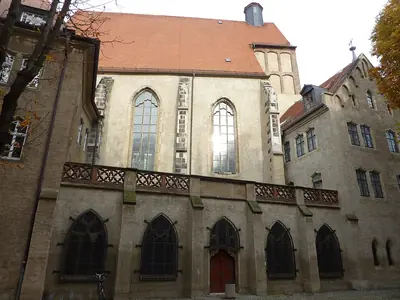
The Stadtmuseum Meißen occupies the former Franciscan monastery in the historic centre. Its collections focus on the city’s economic, legal and artistic history, with particular attention to regional ceramics and porcelain production.
The museum complex includes the Neo-Gothic House, the cloister and the former church of St. Peter and Paul. Exhibits range from long-term and special exhibitions to educational programmes and guided tours. Among the highlights are the exhibition Meißen as the Cradle of Saxony, four centuries of historic funerary monuments in the cloister, and original drawings for The Nibelungen by Julius Schnorr von Carolsfeld in the former church.
Prälatenhaus
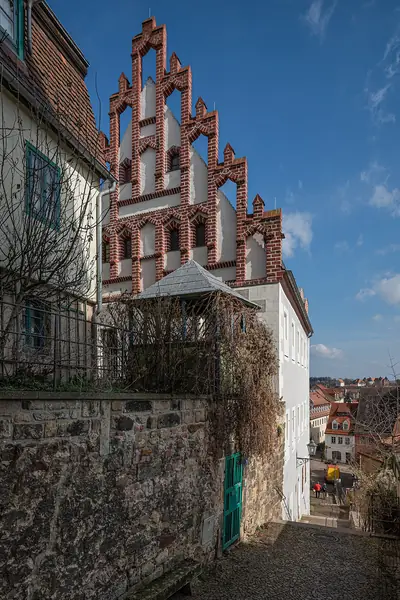
The Prälatenhaus is one of the oldest houses in Meissen’s old town. This late Gothic architectural monument is particularly notable for its richly decorated late Gothic brick gable, which contributes to the picturesque western view of the historic centre.
Inside, surviving late Gothic wall paintings offer a glimpse of the artistic decoration associated with the building’s period.
Polish-Saxon Post Milestone
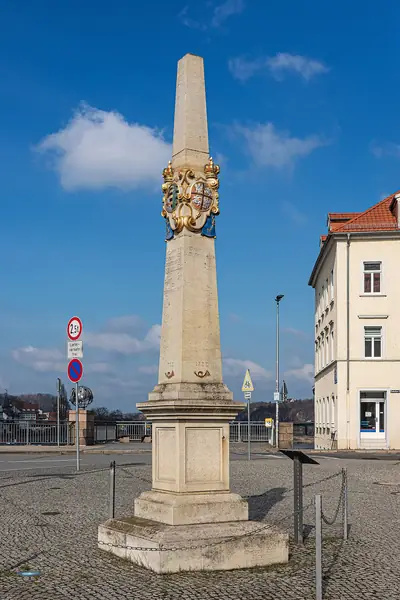
The Polish-Saxon Post Milestone, also known as the Kursächsische Postmeilensäule, is a replica of a Saxon post milestone. It is a small but distinctive historical feature to look out for while exploring the town.
Kloster St. Afra
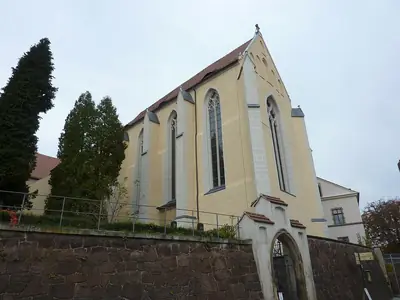
Kloster St. Afra reflects Meissen’s religious and educational history. The former Augustinian canons’ monastery was founded in 1205 by Bishop Dietrich II of Kittlitz. During the Reformation, it was secularized and later became the site of Saxony’s first princely and state school.
Burgberg Meißen
Burgberg Meißen is the hill on which the castle and cathedral stand. It provides the setting for Meissen’s historic upper town and places the city’s most prominent landmarks above the Elbe.
Castle Siebeneichen
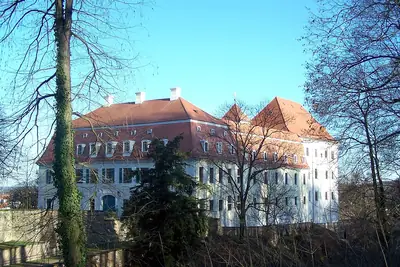
Castle Siebeneichen, or Schloss Siebeneichen, stands beside the Elbe and connects Meissen’s built history with its surrounding landscape. The castle was built in the sixteenth century by Ernst von Miltitz, replacing an older complex on the site.
Johanneskirche
In Meissen’s Cölln district, Johanneskirche is an evangelical church regarded as one of Saxony’s important examples of Historicism-era church architecture. Its Neo-Gothic design has a cruciform layout and central-plan character, while the interior architecture and artistic decoration form a unified programme.
A renovation was completed with a festive service on October 29, 2023, an occasion that also marked the church’s 125th anniversary.
Lutherkirche
Lutherkirche is an Evangelical Neo-Gothic hall church in Meissen’s Triebischtal district. It belongs to the St. Afra parish area within the Meißen-Großenhain church district of the Evangelical Lutheran Church of Saxony.
Martinskapelle
The Martinskapelle is a small evangelical chapel in Plossen, a district of Meissen. It is a Romanesque hall church with a single main space and serves as a place of burial. The chapel also belongs to the St. Afra parish area.
Kloster Heilig Kreuz
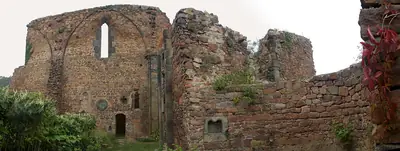
Kloster Heilig Kreuz is a former Benedictine abbey on the banks of the Elbe. Preserved today as a monastery ruin, it offers a glimpse of the site’s former religious purpose and is included on the bike route along the river.
Exploring Meissen with a self-guided tour
A Meissen self-guided walking tour lets you explore the town without joining a group or following a fixed schedule. Neywo’s app tells the story of each place as you reach it, at your own pace.
In Meissen, Neywo offers:
- Two walking tours
- Porcelain, Gothic Stone and the Cradle of Saxony: 3.34 km, 108 minutes and 10 narrated stops.
- Across the Elbe: From Cölln to the Castle Hill: 4.11 km, 105 minutes and 8 narrated stops.
- One bike route
- Elbe Riverside Ride: Abbey Ruins to Plossen: 2.9 km, 14 minutes and 3 narrated stops.
The walks include major sights such as Meissen porcelain, Nikolaikirche, the Church of Our Lady, Stadtmuseum Meißen, Prälatenhaus, Kloster St. Afra, Albrechtsburg and the Meißen Cathedral Museum. The bike route links Kloster Heilig Kreuz, the Polish-Saxon Post Milestone and Martinskapelle.
Download Neywo and explore Meissen at your own pace
Download Neywo to explore Meissen with a free audio guide that brings 21 places to life. Choose one of the two walking tours or the bike route, then let the app play each story as you arrive at the next stop. There is no group and no schedule: you decide the pace and follow the city’s history from the Elbe and its monasteries to the porcelain manufactory and the castle hill.
Places with an audio guide in Meissen
8 places in Meissen with a Neywo audio guide. Each one starts telling its story as you reach it.
Self-guided tours in Meissen
3 tours in Meissen, free in the Neywo app. Each stop tells its story as you reach it.
- Bike ride
Elbe Riverside Ride: Abbey Ruins to Plossen
A short ride on the cycle paths beside the Elbe, from the ruined Benedictine abbey of Heilig Kreuz to the old post milestone and the Romanesque chapel at Plossen. Flat, easy and quiet.
Kloster Heilig Kreuz · Polish-Saxon Post Milestone Meißen · Martinskapelle (Meißen)
Open this tour: Elbe Riverside Ride: Abbey Ruins to Plossen - Walk
Porcelain, Gothic Stone and the Cradle of Saxony
Start where Europe's first hard-paste porcelain still comes out of the kilns, then climb through the old town's medieval churches and cloisters to the castle where it all began in 1710. A compact loop through Saxony's oldest town, ending at the Albrechtsburg above the Elbe.
Meissen porcelain · Nikolaikirche (Meißen) · Church of Our Lady · Stadtmuseum Meißen · Polish-Saxon Post Milestone Meißen · Theater Meißen …
Open this tour: Porcelain, Gothic Stone and the Cradle of Saxony - Walk
Across the Elbe: From Cölln to the Castle Hill
Leave the old town behind and follow the river's right bank: Renaissance Siebeneichen castle beside the water, the neo-Gothic Johanneskirche and the Baroque Sankt Urban church of Cölln, the Romanesque Martinskapelle, and the old Margraviate that gave the city its name. Then cross back to the Burgberg for the Albrechtsburg and the cathedral museum.
Castle Siebeneichen · Johanneskirche (Meißen) · Sankt-Urban-Kirche Cölln (Meißen) · Martinskapelle (Meißen) · Margraviate of Meissen · Burgberg Meißen …
Open this tour: Across the Elbe: From Cölln to the Castle Hill
Walk Meissen with Neywo
Neywo turns Meissen into a self-guided audio tour. Stories arrive as you reach the place they belong to, and the route reshapes when you wander off it.

