Visiting Hanover, Germany: Top Sights on Foot
Things to Do in Hanover: What to See in the City
Looking for things to do in Hanover? The city combines royal history, Gothic churches, grand civic buildings, museums and neighbourhood churches shaped by centuries of change. Its reconstructed Old Town and distinctive landmarks make Hanover well suited to exploring on foot. Neywo’s free audio guide for Hanover covers 516 narrated places, so you can discover the city while walking at your own pace.
What to See in Hanover
Market Church
The Market Church, or Marktkirche, is Hanover’s oldest surviving parish church and the city’s main Lutheran church. Together with the nearby Old Town Hall, its red-brick exterior is one of the southernmost examples of North German Brick Gothic architecture.
The church’s western tower rises 97 metres and includes medieval symbols near the summit. Its bronze western doors, created by Gerhard Marcks, contrast scenes of suffering with images of peace and reconstruction, reflecting the church’s revival after the destruction of the 1943 air raid.
Church of the Holy Cross
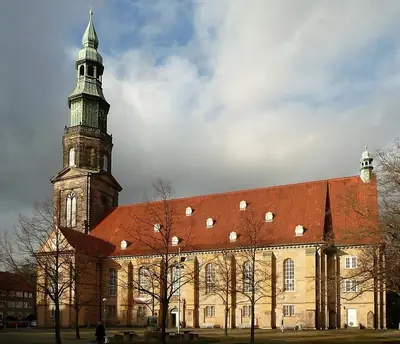
The Church of the Holy Cross, known locally as the Kreuzkirche, dates from 1284 and is Hanover’s oldest parish church. It is one of the city centre’s three historic churches, together with the Market Church and Aegidien Church.
The Gothic hall church contains architectural layers from the Middle Ages to the twentieth century. Highlights include a decorative altar painted by Lucas Cranach in 1537 and a Renaissance pulpit made in 1594. The altar originally stood in the Palace Church, which was destroyed during the Second World War and never rebuilt.
Neustädter Hof- und Stadtkirche St. Johannis
In Neustädter Markt, the Neustädter Hof- und Stadtkirche St. Johannis is a prominent Lutheran parish church beside Hanover’s regional church administration. Built between 1666 and 1670, it is the oldest local example of an aisleless Protestant hall church.
Its early Baroque design centres on a spacious hall intended to focus attention on the sermon. The building also has a narrower eastern chancel, a western organ gallery and side balconies. Music remains important here: the Kantorei St. Johannis choir, founded in 1958, performs at services and concerts.
New Town Hall
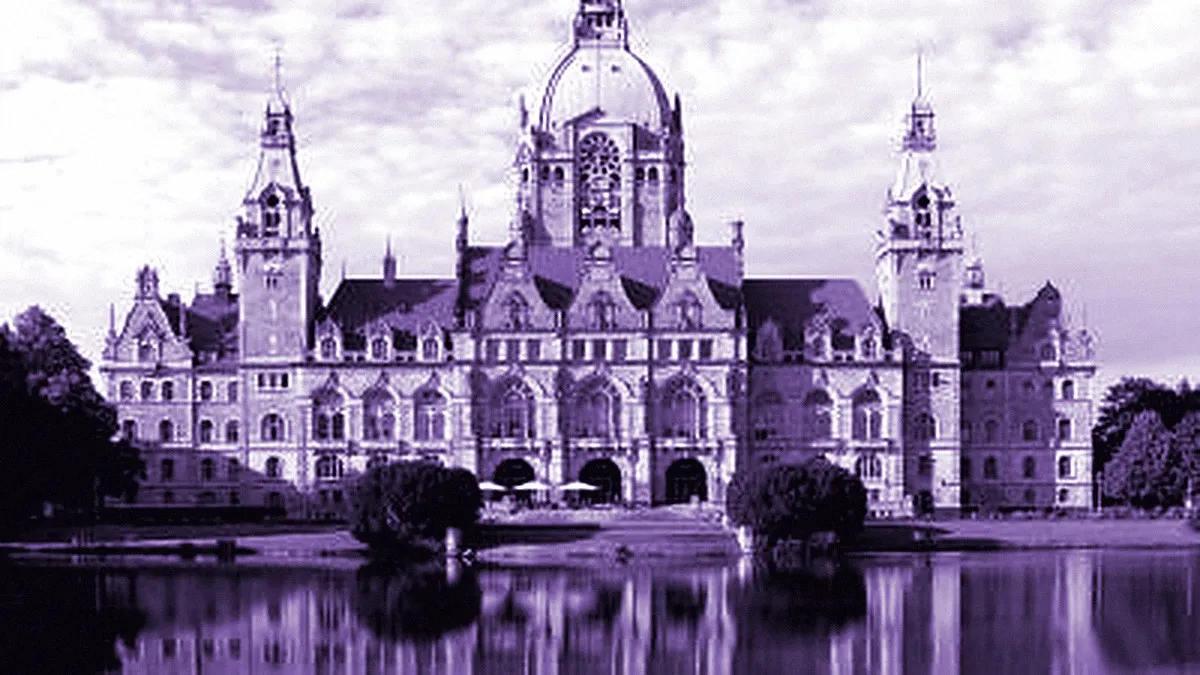
The New Town Hall, or Neues Rathaus, looks more like a palace than a modern administrative building. Completed in 1913 after twelve years of construction, it stands in the ten-hectare Maschpark at the southern edge of the inner city.
Its eclectic Wilhelminian architecture and castle-like appearance make it one of Hanover’s most recognisable sights. The building was constructed on marshy ground, requiring more than six thousand wooden piles for its foundation. It survived the Second World War largely intact and became the setting for the proclamation of Lower Saxony in 1946. Inside, the 38-metre-high ground-floor rotunda contains detailed scale models.
Wangenheim Palace
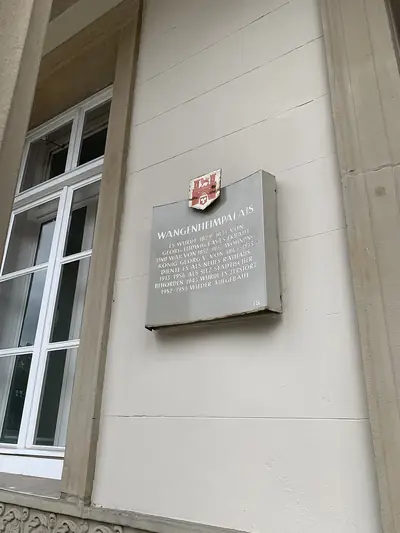
Wangenheim Palace, or Wangenheimpalais, stands on Friedrichswall and now houses the Lower Saxony Ministry of Economic Affairs. Designed by court architect Georg Ludwig Friedrich Laves, it was built in 1832 and is considered Hanover’s first Neoclassical building. Laves later added a winter garden in 1844.
The palace was once the residence of George V, the last king of Hanover, and later served as the city hall from 1863 to 1913. An air raid destroyed it during the Second World War. Although the building was reconstructed, part of it was later demolished to make room for the Friedrichswall and Leibnizufer roads.
Opera House
Hanover’s Opera House is a major cultural landmark on the eastern edge of the Old Town. It is home to the Hanover State Opera and hosts opera, ballet and concerts.
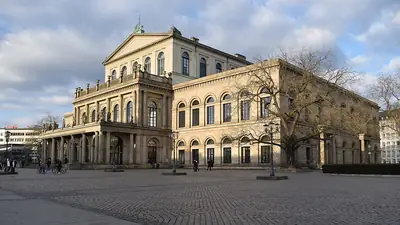
The original building was constructed between 1845 and 1852 in a late Classicist style, with a symmetrical façade and columned portico. Its first production was Mozart’s The Marriage of Figaro. After the historic building was destroyed by bombing during the Second World War, a close replica reopened in 1950. The exterior retained its historic appearance while the interior adopted a modernist design. The auditorium has a traditional horseshoe layout and seats around 1,200 spectators.
August Kestner Museum
Next to the New Town Hall, the August Kestner Museum explores around six thousand years of human creativity through applied arts and ancient treasures. It is Hanover’s oldest municipal museum.
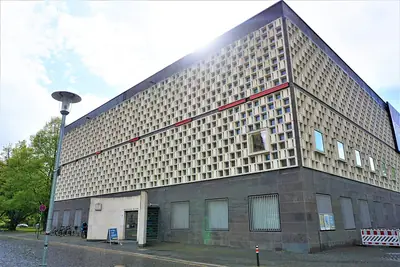
The building itself is unusual: a protected glass-and-concrete shell from 1961 surrounds the original 1889 museum. Parts of the nineteenth-century staircase, side wings and entrance façade remain visible inside. The collections include an internationally significant Ancient Egyptian section, with objects dating from 4000 BC to the Roman period, as well as classical antiquities from Greece, Rome and Etruria.
Landesmuseum Hannover
Opposite the New Town Hall and beside Maschpark, the Landesmuseum Hannover is Lower Saxony’s largest state museum. Its collections are arranged around nature, humanity and art, giving it the character of a broad “World Museum”.
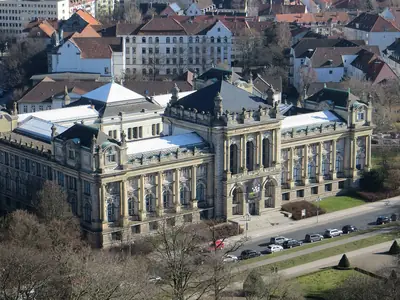
The Neo-Renaissance building opened at this location in 1902 after the museum’s collections expanded. Its State Gallery presents paintings and sculptures from the Middle Ages to the early twentieth century, including Renaissance and Baroque works, German art and Impressionist pieces. The museum also includes historic coins, natural-history displays, a life-sized dinosaur and a vivarium with native species.
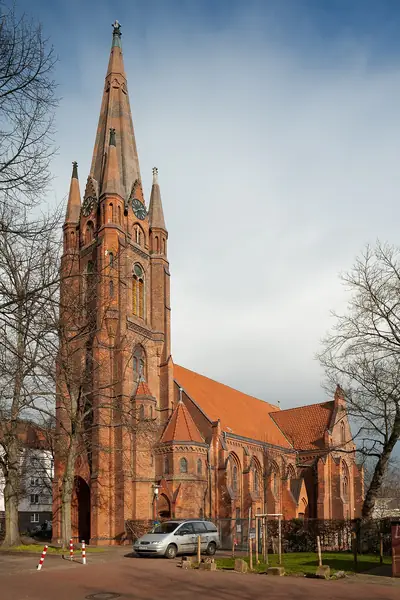
Churches across Hanover’s neighbourhoods
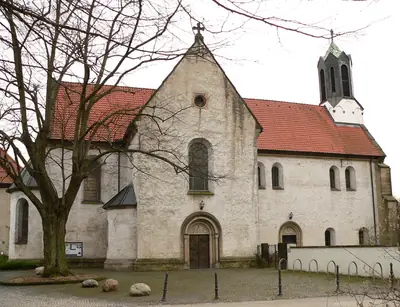
Hanover’s religious heritage extends beyond the central landmarks. The Klosterkirche Marienwerder serves the Marienwerder monastery in the city’s northwest. St. Elisabeth in the Zoo district is Hanover’s third-oldest Catholic church, after St. Clemens and St. Marien.
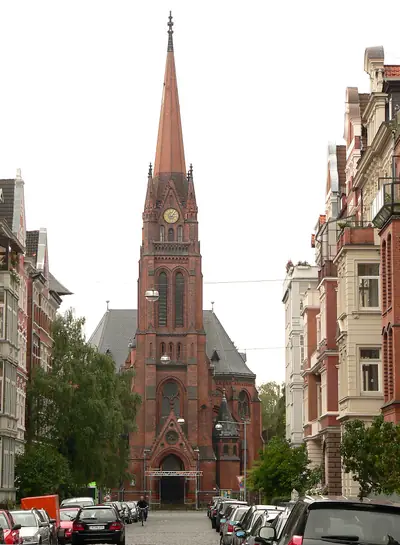
In the List district, Marcus Church is known for its concerts and church choir. Dreifaltigkeitskirche is an Evangelical Lutheran Trinity church in Oststadt, while Erlöserkirche in Linden-Süd was known as Zionskirche until 1943. St. Marienkirche is a notable Lutheran church in Hainholz, and St. Petri Church in Döhren has origins reaching back to the fourteenth century.
Explore Hanover with a Self-Guided Audio Tour
A Hanover self-guided walking tour lets you explore without joining a group or following a fixed departure time. Neywo’s city guide includes four walking tours, one bus route and one bike route, with narration available in 11 languages.
The walks include:
- Brick Gothic Hanover: The Old Town After the Bombs — 1.3 km, 88 minutes and 11 narrated stops.
- Kings, Palaces and a Philosopher’s Grave — 1.42 km, 91 minutes and 9 stops.
- The Castle-Like Town Hall and the Maschpark — 2.35 km, 117 minutes and 12 stops.
- Herrenhausen: The Guelph Summer Court — 4.09 km, 110 minutes and 9 stops.
The Erlebnislinie 100: Linden, the List and the Maschpark bus route covers 13 km in 56 minutes and has 10 stops. The From the Leine to the Maschsee bike route covers 1.8 km in 9 minutes and has 7 stops.
Download Neywo and explore Hanover with a free audio guide that tells the story of each place as you reach it. Move at your own pace, with no group and no schedule, and use the app to connect the Old Town, Maschpark, Herrenhausen and the city’s wider neighbourhoods. Hanover is part of Germany, with other destinations to discover including Hamburg, Goslar and Berlin.
Places with an audio guide in Hanover
8 places in Hanover with a Neywo audio guide. Each one starts telling its story as you reach it.
Self-guided tours in Hanover
6 tours in Hanover, free in the Neywo app. Each stop tells its story as you reach it.
- Bike ride
From the Leine to the Maschsee
A short, flat ride on the cycle lanes along the Leine and the Friedrichswall: from the Goethe Bridge past the Nanas on the Leibnizufer, the Castle Bridge and the Wangenheim Palace site to the New Town Hall, the State Museum and the Maschsee shore. Ideal as a quick introduction to the city centre.
Goethebrücke · Nanas · Castle Bridge · Stadttafel Wangenheimpalais · New Town Hall · Landesmuseum Hannover …
Open this tour: From the Leine to the Maschsee - Bus ride
Erlebnislinie 100: Linden, the List and the Maschpark
Hanover's circular sightseeing line runs from Linden through Nordstadt and the List to the Aegidientor, the Landesmuseum and the park of the New Town Hall. Ride it to cross the whole city in one loop, and hop off at the churches, fountains and memorials on the way.
Erlöserkirche (Hanover) · Egestorff memorial · Watchman fountain · Christuskirche · Dreifaltigkeitskirche (Hannover) · Neues Haus …
Open this tour: Erlebnislinie 100: Linden, the List and the Maschpark - Walk
Brick Gothic Hanover: The Old Town After the Bombs
The Old Town was flattened in 1943, yet its red-brick heart was rebuilt. Start at the medieval Old Town Hall and the tall Market Church, then follow the lanes to the Holy Cross church, the Ballhof, the Historical Museum with its last medieval tower, and the reconstructed house where Leibniz lived.
Market Hall · Old Town Hall · Market Church · Church of the Holy Cross · Ballhof · Hanover Historical Museum …
Open this tour: Brick Gothic Hanover: The Old Town After the Bombs - Walk
Kings, Palaces and a Philosopher's Grave
Walk the royal side of Hanover, when its Guelph rulers were also kings of Great Britain and then of Hanover. See the neoclassical palaces of the architect Laves, the Leine Palace that now seats the state parliament, the church where Leibniz lies buried, and a rare Venetian Baroque basilica.
Laveshaus · Stadttafel Wangenheimpalais · Sieltürmchen · The Göttingen Seven · Schlossbrunnen · Neustädter Hof- und Stadtkirche St. Johannis …
Open this tour: Kings, Palaces and a Philosopher's Grave - Walk
The Castle-Like Town Hall and the Maschpark
From the opera house, cross the old Aegidien quarter to Hanover's fairy-tale New Town Hall and its curved dome lift. Pass the city's oldest municipal museum, the ruined Aegidien church and a medieval defence tower, and finish in the Maschpark beside the State Museum.
Kröpcke clock · Opernplatz · Opera House · Mahnmal für die ermordeten Juden Hannovers · Aegidienkirche · Borgentrick tower …
Open this tour: The Castle-Like Town Hall and the Maschpark - Walk
Herrenhausen: The Guelph Summer Court
Stroll the Baroque and landscape gardens where the electors of Hanover held court. Visit the Wilhelm Busch museum, the Great Garden, the rebuilt Herrenhausen Palace, the museum in the old princely house and the Welf family mausoleum.
Leibniz Universität · Wilhelm Busch Museum · Leibniztempel · Friederikenbrücke über die Graft (Hannover) · Großer Garten · Herrenhausen Palace …
Open this tour: Herrenhausen: The Guelph Summer Court
Walk Hanover with Neywo
Neywo turns Hanover into a self-guided audio tour. Stories arrive as you reach the place they belong to, and the route reshapes when you wander off it.


More in Germany
Elsewhere in Germany
- Baden-BadenBaden-Württemberg
- BlaubeurenBaden-Württemberg
- Esslingen am NeckarBaden-Württemberg
- FreiburgBaden-Württemberg
- HeidelbergBaden-Württemberg
- KarlsruheBaden-Württemberg
- Kirchheim unter TeckBaden-Württemberg
- Leutkirch im AllgäuBaden-Württemberg
- StuttgartBaden-Württemberg
- TribergBaden-Württemberg
- AugsburgBavaria
- BambergBavaria