Things to Do in Hamburg, Germany: Walking Guide
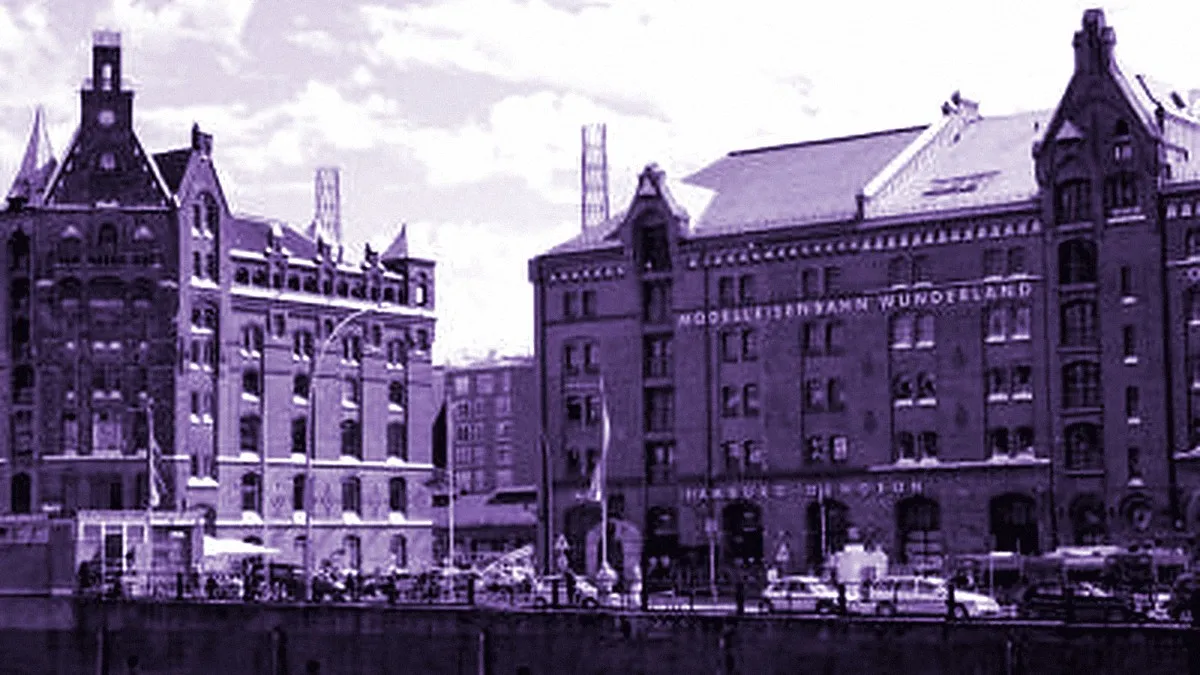
Things to Do in Hamburg: What to See in Germany’s Port City
Looking for things to do in Hamburg? The city brings together major museums, historic churches, Brick Expressionist architecture, concert halls, and neighborhoods shaped by trade and theatre. It is a rewarding destination for exploring on foot, and Neywo offers a free audio guide for Hamburg with 218 narrated places.
What to See in Hamburg
Hamburger Kunsthalle
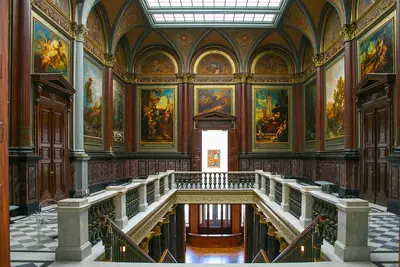
The Hamburger Kunsthalle is one of Germany’s most important public art collections and occupies more than 13,000 square meters of exhibition and event space. Its collection covers eight centuries, from the Middle Ages to the present day, with dedicated areas for 19th-century art, the Old Masters, Classical Modernism, and modern and contemporary art.
The museum consists of three connected buildings: the main building from 1869, the Kuppelsaal from 1921, and the Galerie der Gegenwart from 1997. Its permanent collections include North German painting from the 14th century, Dutch, Flemish, and Italian paintings from the 16th and 17th centuries, and French and German art from the 19th century.
St. Nicholas Church
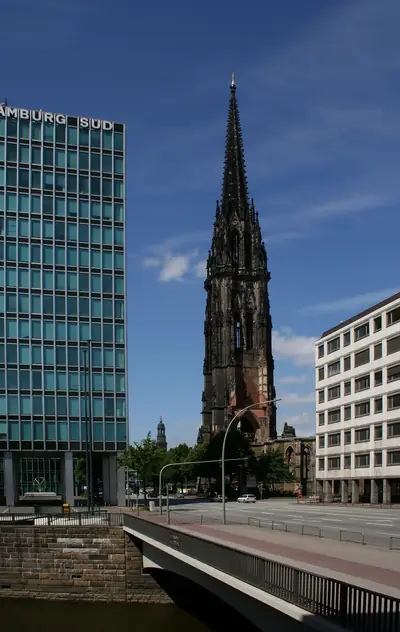
The ruins of St. Nicholas Church, or Kirchenruine St. Nikolai, preserve the tower and crypt of one of Hamburg’s historic parish churches. The site began with a wooden church founded in 1195, later replaced by a brick building as the city expanded.
St. Nicholas became an important setting for theological debate during the Reformation. In 1528, Johannes Bugenhagen became its preacher and helped establish Lutheranism in Hamburg. After the Great Fire of Hamburg destroyed the church in 1842, it was rebuilt in Neo-Gothic style by 1874, with a tower that reached about 147 metres. Bombing during the Second World War destroyed most of the rebuilt church, leaving the striking ruins visible today.
Chilehaus and the Kontorhaus District
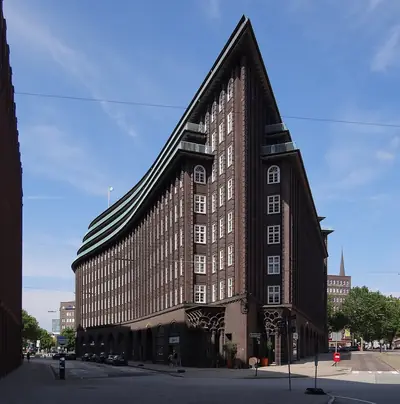
The Chilehaus is a defining example of 1920s Brick Expressionism. Designed by Fritz Höger and completed in 1924, the ten-storey office building is distinguished by its sharp corners and a prow-like form that resembles a ship.
Built between 1922 and 1924 as a Kontorhaus, it combines Brick Gothic inspiration with the dramatic vertical emphasis of Expressionism. Recessed upper storeys make the large structure appear lighter, while reinforced-concrete construction provides its stability. The building covers about 5,950 square metres of ground area and has around 36,000 square metres of gross floor space.
Jenisch House
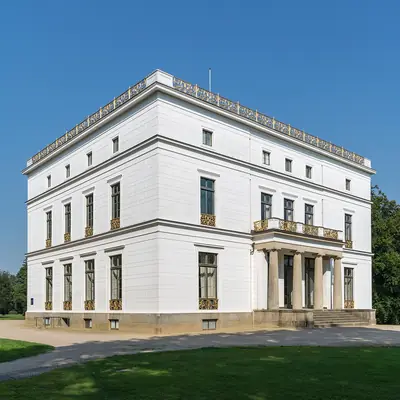
Jenisch House is a 19th-century country home built in a neoclassical style. The building itself is part of the attraction, offering an insight into Hanseatic lifestyle through its architecture and representative interiors.
Today, Jenisch House is an exterior location of the Altonaer Museum and houses the Museum für Kunst und Kultur an der Elbe. The ground floor contains representative halls, while the upper floors host changing exhibitions focused especially on 19th-century art and cultural history.
Altonaer Museum
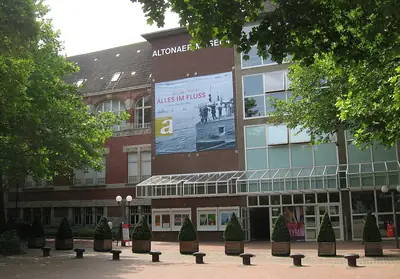
The Altonaer Museum explores the cultural history of Northern Germany through a collection of more than 300,000 objects. It developed from the municipal museum of Altona, which remained an independent city until 1938.
The museum association was established in February 1863, when Altona was still part of Denmark. After periods of relocation and development, the museum moved into a new building at Kaiserplatz in 1901. Its collections tell the story of the region and its cultural life, including the transformation of Altona into an important industrial centre.
Museum am Rothenbaum
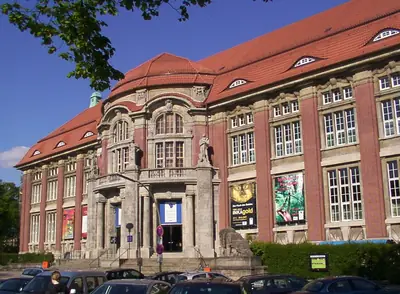
The Museum am Rothenbaum – Kulturen und Künste der Welt is a Hamburg museum devoted to cultures and arts from around the world. It offers another perspective on the city’s cultural institutions beyond local and European history.
Glasmuseum Hamburg
The Glasmuseum Hamburg is dedicated to contemporary glass art. The Achilles-Stiftung Glasmuseum Hamburg opened in October 2022 in Hamburg-Barmbek-Nord, inside Quartier 21, a listed and renovated building from the former Barmbek hospital.
Its collection covers roughly 1,000 square metres and includes more than 400 modern glass sculptures. The works are displayed in light-filled rooms with ceilings more than four metres high. The museum also presents changing special exhibitions, hosts openings, and participates annually in the Long Night of Museums.
Medizinhistorisches Museum Hamburg
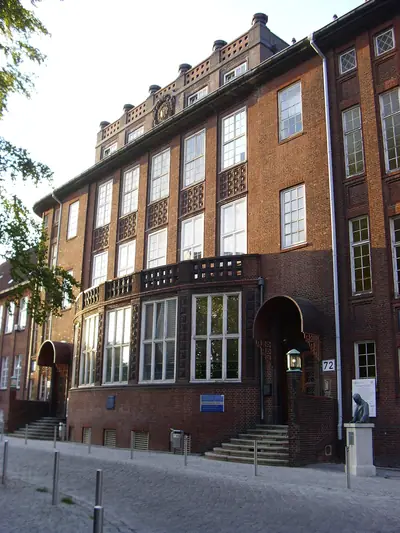
The Medizinhistorisches Museum Hamburg focuses on the history of medicine. Founded in October 2007 and opened to the public in June 2010, it presents a permanent exhibition alongside regular special exhibitions.
The museum is located in the Fritz-Schumacher-Haus at the University Medical Center Hamburg-Eppendorf, at Martinistraße 52, building N 30.
Rieckhuus
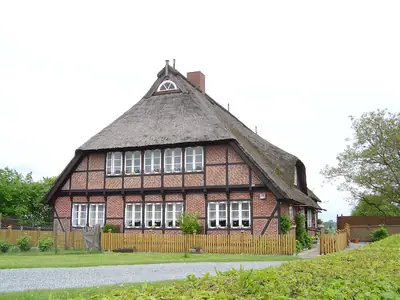
The Rieckhuus, also called the Rieck-Haus, is an open-air museum in Hamburg-Curslack. It focuses on rural life in the Vierlanden before industrialisation.
The museum occupies a historic farmstead with a hall house on the Curslacker Elbdeich. The Rieck family farmed the property until around 1940, and since the 1950s it has formed part of the Bergedorfer Museumslandschaft as the Freilichtmuseum Rieck Haus.
Saint Pancras
Saint Pancras, or St. Pankratius, is a Protestant-Lutheran parish church in Hamburg-Neuenfelde. Built between 1682 and 1687, it is particularly notable for its Baroque interior and its organ built by Schnitger.
The church contains a unified group of Baroque furnishings completed by 1731. Highlights include a floor plaque connected with Schnitger, preserved church seating, and one of North Germany’s oldest pulpit altars.
Hamburg State Opera
The Hamburg State Opera brings together the Staatsoper Hamburg, the Philharmonische Staatsorchester, and the Hamburg Ballett. Its history reaches back more than three centuries to the opera founded at the Gänsemarkt in 1678.
The original venue closed in 1738 because of financial difficulties, and the building was later demolished. A new opera building was established at the current location on Dammtorstraße in 1827. The theatre’s history is also connected with Gotthold Ephraim Lessing and performances of works by Schiller, Goethe, and Shakespeare.
Museum für Hamburgische Geschichte
The Museum für Hamburgische Geschichte presents Hamburg’s history from around 800 to the present. Established in 1908 and opened at its current location in 1922, it occupies a building at Holstenwall designed according to plans by Fritz Schumacher.
The displays cover three floors and focus especially on Hamburg as a harbour city. Historical objects, prints, paintings, models, and maps show how the city developed. The museum also contains a miniature railway system, a glass-covered courtyard, and the portal of Saint Petri Church.
Elbphilharmonie
The Elbphilharmonie is one of Hamburg’s most recognisable landmarks. The concert hall stands on the Grasbrook peninsula beside the Elbe and opened in January 2017.
Its modern glass structure rises above Kaispeicher A, a brick warehouse built in 1963. The upper form has been compared with a raised sail, waves, icebergs, and a quartz crystal. At 110 metres, the Elbphilharmonie is described as Hamburg’s tallest inhabited building.
Museum of Art and Crafts Hamburg
The Museum of Art and Crafts Hamburg, or Museum für Kunst und Gewerbe Hamburg, brings together fine, applied, and decorative arts from European, ancient, and Asian cultures. Founded in 1877, it now holds more than 600,000 objects arranged across fourteen areas.
Its highlights include the Spiegelsaal from the Budge-Palais, the “Pariser Zimmer,” and Verner Panton’s mirrored “Spiegel-Kantine.” The collections include Chinese and Japanese art, art from the Near East, Buddhist and Islamic art, Jugendstil objects, Bauhaus materials, porcelain, faience, textiles, carpets, and musical instruments.
Explore Hamburg with a Self-Guided Audio Tour
Neywo makes it easy to turn these sights into a Hamburg self-guided walking tour. The app tells the story of each place as you reach it, at your own pace, with no group and no schedule. Narration is available in 11 languages.
Hamburg has six walking tours, one bus route, and one bike route:
- St Georg to the Elbphilharmonie: two walking versions, covering 4.02 km in 185 minutes with 12 stops, or 5.16 km in 238 minutes with 15 stops.
- The Rathaus and the old city churches: 2.12 km, 128 minutes, and 12 stops.
- St Michaelis, the Bismarck monument and the city museum: 1.26 km, 69 minutes, and 7 stops.
- The Reeperbahn: 0.56 km, 31 minutes, and 5 stops.
- Große Freiheit: the Beatles in Hamburg: 0.22 km, 20 minutes, and 4 stops.
- MetroBus 12: From the Hauptbahnhof through St. Pauli to Altona: 7 km, 30 minutes, and 11 stops.
- Harbour Ride: Neuer Kran to the Museum Ships: 1.2 km, 6 minutes, and 4 stops.
Download Neywo and explore Hamburg with its free audio guide, whether you are visiting the museums around the centre, walking towards the Elbphilharmonie, discovering the old churches, or following the city’s theatre and harbour routes. You can continue exploring Germany and compare Hamburg with nearby destinations such as Kiel, Hanover, or Berlin.
Places with an audio guide in Hamburg
8 places in Hamburg with a Neywo audio guide. Each one starts telling its story as you reach it.
Self-guided tours in Hamburg
8 tours in Hamburg, free in the Neywo app. Each stop tells its story as you reach it.
- Bike ride
Harbour Ride: Neuer Kran to the Museum Ships
A short, flat ride along the Elbe waterfront from the historic Neuer Kran crane past the brick Slomanhaus to the museum ships Cap San Diego and Rickmer Rickmers. Harbour views all the way; the Elbphilharmonie is a few steps off the path.
Neuer Kran · Slomanhaus · Cap San Diego · Rickmer Rickmers
Open this tour: Harbour Ride: Neuer Kran to the Museum Ships - Bus ride
MetroBus 12: From the Hauptbahnhof through St. Pauli to Altona
A regular HVV line that leaves the main station and the Kunsthalle, crosses the Alster on the Lombard Bridge, passes Stephansplatz and the concert halls, then the Millerntor. It runs the length of the Reeperbahn past the Beatles-Platz and ends in Altona at the Kaiser Wilhelm monument. One ticket covers the city's nightlife district and the western centre.
Hamburg Hauptbahnhof · Hamburger Kunsthalle · Lombard Bridge · Stephansplatz · Laeiszhalle · Gewerbehaus …
Open this tour: MetroBus 12: From the Hauptbahnhof through St. Pauli to Altona - Bus ride
Line 111 · HafenCity to Altona
Board at Osakaallee (Überseequartier), alight at Rathaus Altona. 6 narrated places along the way: Fleetschlösschen, Spicy's Gewürzmuseum, Slomanhaus, St. Pauli Landing Stages, Beatles-Platz, Kaiser-Wilhelm-Denkmal, Hamburg.
Fleetschlösschen · Spicy's Gewürzmuseum · Slomanhaus · St. Pauli Landing Stages · Beatles-Platz · Kaiser-Wilhelm-Denkmal, Hamburg
Open this tour: Line 111 · HafenCity to Altona - Walk
The Rathaus and the old city churches
Hamburg's civic centre: the neo-Renaissance town hall on its market square, St Peter's and St Catherine's, and the tower of St Nicholas left as a ruin — the tallest building in the world for two years, and now a memorial to the firestorm.
St. Catherine's Church, Hamburg · Zollenbrücke · Trostbrücke · St. Nicholas Church, Hamburg · Boerse Hamburg - Regulierter Markt · Alte Post …
Open this tour: The Rathaus and the old city churches - Walk
St Michaelis, the Bismarck monument and the city museum
The western old town: the baroque Michel with the best view in Hamburg from its tower, the enormous granite Bismarck above the harbour, the Hamburg history museum, and the Brahms and C.P.E. Bach museums.
St. Thomas a Becket Church · Bismarck Monument · Millerntorplatz · Museum für Hamburgische Geschichte · Brahms-Museum · Carl Philipp Emanuel Bach Museum …
Open this tour: St Michaelis, the Bismarck monument and the city museum - Walk
The Reeperbahn
Five hundred metres of St Pauli: the musical theatres, the Schmidt, the Davidwache police station of 1914, and the Herbertstrasse screens. Different city after dark.
Operettenhaus · Spielbudenplatz · Schmidt Theater · Davidwache · Herbertstraße
Open this tour: The Reeperbahn - Walk
Große Freiheit: the Beatles in Hamburg
Two hundred metres, and the reason a lot of people come to St Pauli. The Star-Club site where the band played 98 nights in 1962, Große Freiheit 36, and the Beatles-Platz roundabout laid out like a vinyl record.
Beatles-Platz · Große Freiheit · Star-Club · Große Freiheit 36
Open this tour: Große Freiheit: the Beatles in Hamburg - Walk
St Georg to the Elbphilharmonie
Five and a half kilometres across the city — the Kunsthalle's seven centuries of painting, the applied arts museum, the main station, and down to the maritime museum and the glass wave of the Elbphilharmonie.
Hamburger Kunsthalle · Trinity church in Hamburg-St.Georg · Deutsches Schauspielhaus · Hamburg Hauptbahnhof · Museum of Art and Crafts Hamburg · Oberhafenkantine …
Open this tour: St Georg to the Elbphilharmonie
Walk Hamburg with Neywo
Neywo turns Hamburg into a self-guided audio tour. Stories arrive as you reach the place they belong to, and the route reshapes when you wander off it.


More in Germany
Elsewhere in Germany
- Baden-BadenBaden-Württemberg
- BlaubeurenBaden-Württemberg
- Esslingen am NeckarBaden-Württemberg
- FreiburgBaden-Württemberg
- HeidelbergBaden-Württemberg
- KarlsruheBaden-Württemberg
- Kirchheim unter TeckBaden-Württemberg
- Leutkirch im AllgäuBaden-Württemberg
- StuttgartBaden-Württemberg
- TribergBaden-Württemberg
- AugsburgBavaria
- BambergBavaria