What to See in Piraeus, Greece: Free Audio Guide
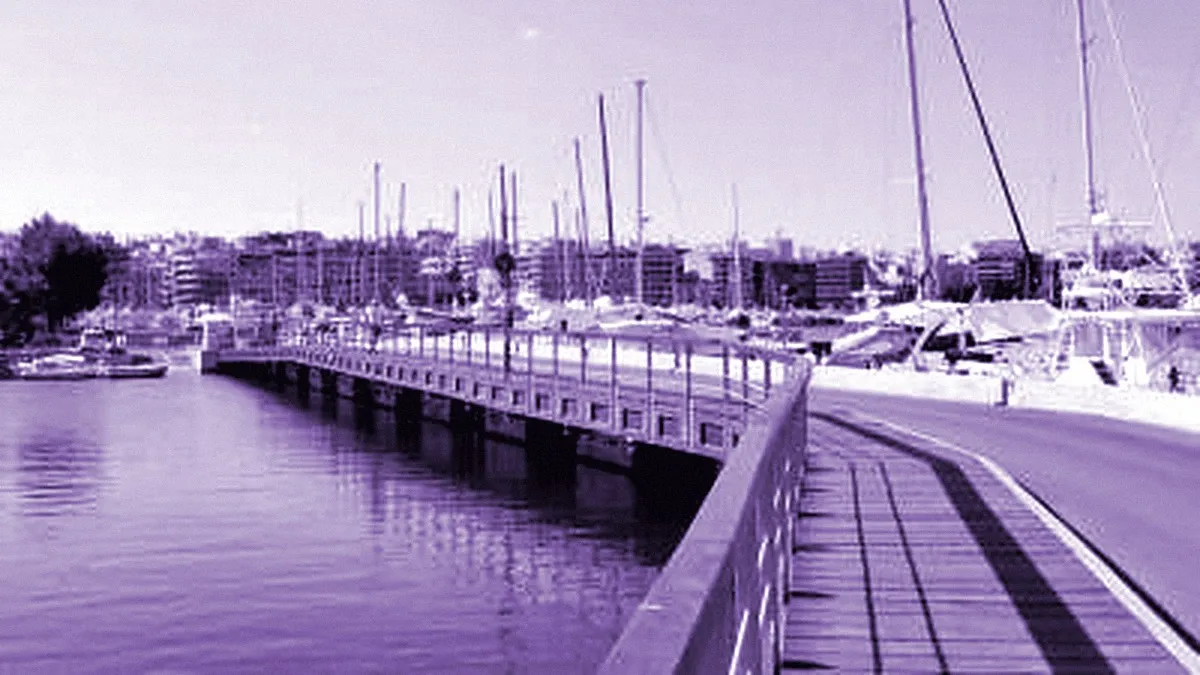
Things to Do in Piraeus: What to See in Greece’s Historic Port
Piraeus is Greece’s major port and a city with its own history, neighborhoods, churches, archaeological sites, and waterfront landscapes. From ancient theatres and memorials to railway heritage and the hills above the sea, there are plenty of reasons to explore Piraeus rather than simply pass through on the way to the islands. Neywo offers a free audio guide for Piraeus with 40 narrated places.
What to See in Piraeus
The best way to discover the city is to follow its changing relationship with the sea, from the port and railway stations to Zea, Kastella, Neo Faliro, and the surrounding neighborhoods.
Piraeus railway station
Piraeus railway station is one of the main starting points of Greece’s rail network, with trains serving Thessaloniki and destinations on the Athens suburban railway. It opened on June 30, 1884, as the terminus of the metre-gauge line from Piraeus to Patras.
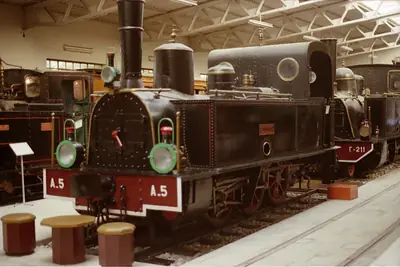
Until 2005, it was commonly known as the Peloponnese Station. The station was connected to the port, allowing freight trains to move goods between ships and the railway. After reconstruction, it reopened as a suburban railway station on June 4, 2007. Older railway structures around the station preserve part of Piraeus’s industrial history.
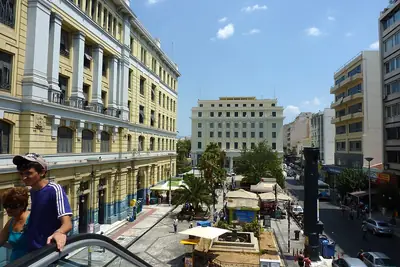
Georgios Karaiskakis Square
The area around the statue of Georgios Karaiskakis introduces Piraeus as Greece’s largest port and Athens’s maritime connection to the Aegean. Ferries, cruise ships, passenger traffic, and freight activity all contribute to the city’s everyday rhythm.
Piraeus covers about 10.9 square kilometres and had a population of 163,572 in the 2021 census. Its role as Athens’s port dates back to antiquity, and it was chosen again as the port of the new Athens during the rebuilding that began in 1834.
Holy Trinity Cathedral
The Holy Trinity Cathedral, or Hagia Triada, is the cathedral and metropolitan seat of the Holy Metropolis of Piraeus. The present building is neo-Byzantine, with a large dome, a bell tower, vaults, and eight great arches.
Its history reflects the difficult events that shaped the city. The first church on the site was built between 1839 and 1845 but was destroyed during the Allied bombing of Piraeus on January 11, 1944. A temporary church served the parish for twelve years before construction of the present cathedral began in 1956. The building was inaugurated in 1964 and completed in 1979.
Inside, the cathedral covers about 835 square metres and can accommodate more than 3,000 people. Forty windows illuminate the dome, where a painting of Christ Pantocrator can be seen from throughout the interior.
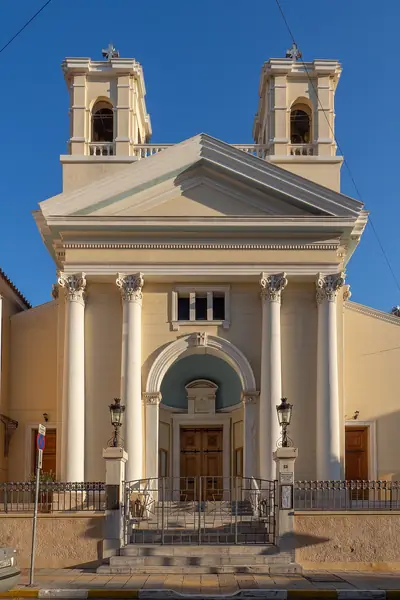
Church of St Paul
On Filonos Street, the Church of Saint Paul represents the growth of Piraeus’s Catholic community alongside the expanding harbour. Its pale façade features four Corinthian columns, pilasters, a pediment, and twin bell towers. A pale blue semi-dome above the entrance adds colour to the light exterior.
The church dates from the 1840s. Before it was built, Mass was celebrated in a chapel inside the home of Freiderikos Markettis, a wealthy tradesman and naval agent. After the property was sold in 1837, the community used a rented house as a chapel while plans for a permanent church developed. The wooden roof dates from 1896, when the front of the building was extended.
Church of Saint Nicholas
Near the port, the Church of Saint Nicholas is dedicated to the patron saint of sailors. Completed in 1902, it combines neoclassical and Byzantine influences and is designated a preserved historical monument.
Its grand marble portico extends across the western and northern façades, with twelve ornate Corinthian capitals. The church has a cross-in-square design, a central elliptical dome, two smaller domes, and bell towers rising above the western façade. It remains one of Piraeus’s clearest reminders of the city’s connection with maritime life.
Theatre of Zea
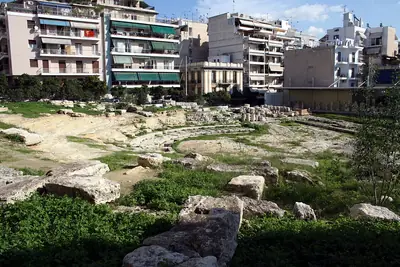
At Pasalimani, the remains of the Theatre of Zea stand near the Archaeological Museum of Piraeus. The theatre takes its name from the ancient Zea harbour and was built during the Hellenistic period, around 200 to 100 years before the Common Era.
It was the second theatre of Piraeus, alongside a larger and older theatre on the western slope of Munychia Hill. The better-preserved Theatre of Zea follows the familiar semicircular design, with a circular orchestra, a stage building, and an auditorium divided into upper and lower sections by a passage known as a diazoma. The lower section had thirteen seating sectors and the upper section twenty-four.
Siraggion
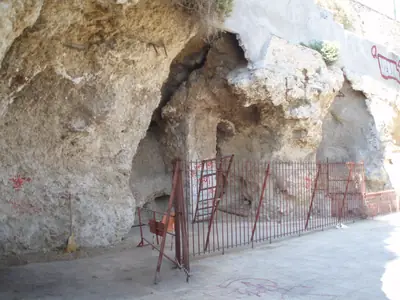
Siraggion, also called the Serangheion Bath or the Cave of Paraskevas, is an unusual archaeological site on the eastern side of Kastella, above the sea at Votsalakia. The natural cave extends about twelve metres into the rock beneath the coastal boulevard.
Its circular main chamber contains mosaics dating from the fourth century BC. One depicts Scylla, while another shows a young man riding a four-horse chariot. The figure has been interpreted as Glaucus, a sea deity, or the hero Siraggos. The cave may have included a bathhouse, and a stone altar dedicated to Apollo suggests that it also had an earlier sacred role. The site was discovered in 1897.
Pontic Greek Genocide Memorial
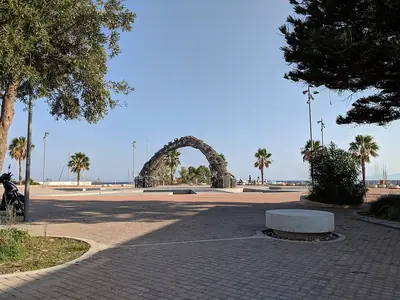
At Alexandra Square, the Pontic Greek Genocide Memorial commemorates the genocide of the Pontic Greeks. Known as “Pyrrhic Flight,” the contemporary sculpture consists of seventeen compositions depicting the flight of people from Pontus and their arrival in a homeland unprepared to receive them.
Created by Panagiotis Tanimanidis, the memorial is fifteen and a half metres long and seven point one metres high. It is made of stainless steel with brass details and was officially unveiled in Piraeus on May 21, 2017.
Karaiskakis Stadium and Neo Faliro
Karaiskakis Stadium in Neo Faliro is the home ground of Olympiacos and can hold 33,334 people. It is named after Georgios Karaiskakis, a military commander and national hero of the Greek War of Independence who was mortally wounded in the area.
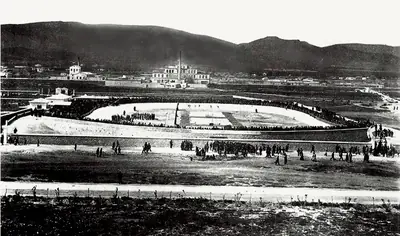
The site also has an Olympic history. A velodrome was built here in 1895, and the Neo Phaliron Velodrome hosted six cycling events during the 1896 Summer Olympics. Nineteen male cyclists from five nations competed on April 8, 11, 12, and 13. The venue became Karaiskakis Stadium in 1964, before the present stadium was built in 2004.
Churches and neighbourhood landmarks
Several churches offer a closer look at Piraeus’s neighborhoods. The Church of Saint Nile the Myroblyte in Kallipoli was first established as a small church in 1928. The present building was reconstructed from 1956 and inaugurated in November 1973. The neighborhood known as Agios Nile is associated with local cultural references, including songs by Bayanderas and Manos Loizos, with lyrics by Lefteris Papadopoulos.
The Church of Evangelistria in the Evangelistria district was built between 1893 and 1898. Its neoclassical exterior includes Corinthian capitals, flat corner stones, and pseudo-isodomic masonry. Agioi Anargyroi is a smaller Orthodox church, while Elias Church stands at the summit of Kastella Hill.
The Monument to the National Resistance, 1941 to 1944, was created by Apostolos Fanakidis in 1994. Its present damaged condition forms part of the experience of viewing this public artwork.
Exploring Piraeus with a self-guided audio guide
Neywo’s Piraeus self-guided walking tour experience includes three walking tours and one bus route, with 40 narrated places in total. The walks range from 1.25 to 3.41 km and from 37 to 98 minutes:
- Heart of Piraeus: Squares, Cathedral and Opera Stage — 2.85 km, 96 minutes, 10 stops.
- Harbours and Hills: Zea, Kastella and the Sea — 3.41 km, 98 minutes, 10 stops.
- Neo Faliro: Stadium Nights by the Bay — 1.25 km, 37 minutes, 4 stops.
- Bus 906: Around Piraeus by City Bus — 5.7 km, 24 minutes, 4 stops.
The app tells the story of each place as you reach it, at your own pace, with no group and no schedule. Narration is available in 11 languages, making it a practical way to explore the port, historic centre, hills, churches, memorials, and waterfront.
Piraeus is part of Attica and connects naturally with nearby Athens. It is also a useful starting point for discovering more of Greece, including destinations such as Poros.
Download Neywo and explore Piraeus
Download Neywo’s free audio guide to explore Piraeus independently. Choose a walk or the bus route, follow the map, and listen as each story begins when you arrive at the next place. With three walks, one bus route, distances from 1.25 to 5.7 km, durations from 24 to 98 minutes, and 40 narrated places, you can discover Piraeus without a group or a fixed schedule.
Places with an audio guide in Piraeus
8 places in Piraeus with a Neywo audio guide. Each one starts telling its story as you reach it.
Self-guided tours in Piraeus
4 tours in Piraeus, free in the Neywo app. Each stop tells its story as you reach it.
- Bus ride
Bus 906: Around Piraeus by City Bus
Ride OASA's circular 906 from Karaiskaki Square, past the Holy Trinity cathedral rebuilt after the 1944 bombing and the neoclassical church of Saint Spyridon, patron saint of Piraeus, up to Saint Nile in Kallipoli. A cheap way to see central Piraeus and a quieter neighbourhood on the hill.
Holy Trinity Church · Saint Spyridon church · Holy Nile of Myrovliti
Open this tour: Bus 906: Around Piraeus by City Bus - Walk
Heart of Piraeus: Squares, Cathedral and Opera Stage
Start at the old Peloponnese railway station and walk through central Piraeus: a neo-Byzantine cathedral rebuilt after the 1944 bombing, the neoclassical Old Post Office, the 1895 Municipal Theatre and lively Korai Square. The route ends on the site of the ancient Hippodamian Agora and a Roman-era archaeological park.
Piraeus railway station · Saint Spyridon church · Holy Trinity Church · Municipal Art Gallery of Piraeus · Church of St Paul in Piraeus · Piraeus Municipal Theatre …
Open this tour: Heart of Piraeus: Squares, Cathedral and Opera Stage - Walk
Harbours and Hills: Zea, Kastella and the Sea
Follow Piraeus's three ancient harbours. See the Pagoda terminal and the sailors' church by the commercial port, the ruins of the ancient Theatre of Zea, Greece's largest maritime museum and the Pontic memorial, then climb the Kastella hill past a sea cave to its hilltop church and open-air theatre.
Piraeus Port Passenger Terminal · Theatre of Zea · Hellenic Maritime Museum · Pontic Greek Genocide Memorial in Piraeus · Votsalakia beach · Siraggion …
Open this tour: Harbours and Hills: Zea, Kastella and the Sea - Walk
Neo Faliro: Stadium Nights by the Bay
A short seaside stroll through the Faliro Bay district, home of Olympiacos. Pass the open-air Dolphinarium Menandreio Theatre, the Peace and Friendship Stadium (SEF) and Karaiskakis Stadium beside the Neo Faliro metro station.
Peace and Friendship Stadium · Karaiskakis Stadium · Faliro metro station
Open this tour: Neo Faliro: Stadium Nights by the Bay
Walk Piraeus with Neywo
Neywo turns Piraeus into a self-guided audio tour. Stories arrive as you reach the place they belong to, and the route reshapes when you wander off it.

